
Costa Rica’s national parks offer very different visits: a coastal wetland near Tamarindo, a volcanic trail outside Liberia and a demanding Chirripó hike require different plans. Start with the specific park and sector. Then confirm access, reservations, transport and the conditions for your activity.
Official SINAC and OVSICORI information checked September 8, 2026. Conditions, opening hours and access restrictions can change; this guide is not a live park-status bulletin.
National parks and hiking near Tamarindo
Marino Las Baulas National Park is in Tamarindo Bay, in Santa Cruz canton. It is the natural starting point when comparing protected-area visits from Tamarindo. A coastal or wetland visit is different from a mountain hike: identify the entrance and activity you are booking, and ask which areas are currently open.
Do not assume that a beach path, estuary trip and turtle-viewing activity have the same rules. Ask the park about permitted access and any activity-specific reservation or guide requirements. Keep away from wildlife, follow posted restrictions and avoid treating an estuary as a swimming area.
For a longer hiking excursion from Tamarindo, compare the full round trip to Rincón de la Vieja with the time you will have on its trails. Confirm the correct sector and entrance rather than navigating to the name of the volcano. Leave room for road delays and the park’s last permitted entry time. A transfer advertised as a day trip does not mean every trail is suitable for every visitor.
National parks to consider from Liberia
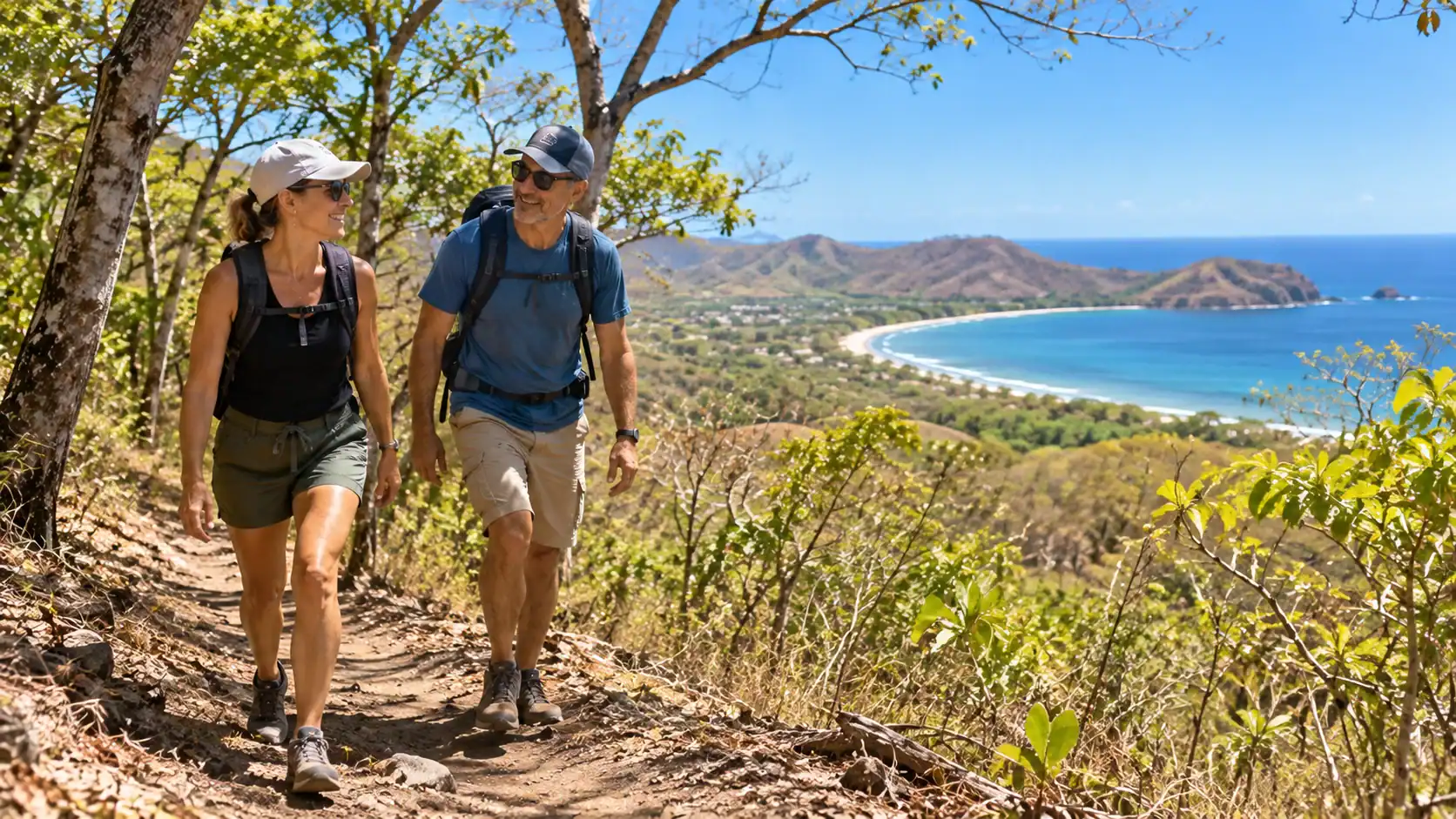
Rincón de la Vieja National Park has distinct Las Pailas and Santa María sectors. SINAC describes Las Pailas as a circular trail through forest and open areas with volcanic features. Hot mud, steam and thermal water are natural hazards; remain on authorized paths and respect barriers. Do not enter a thermal feature because it resembles a bathing pool.
Santa Rosa is another park to compare for a Guanacaste itinerary. The SINAC reservation FAQ directs Santa Rosa visitors to its separate Guanacaste reservation service. Choose a park for the experience you want, then confirm its current booking method. Do not buy a ticket for one park or sector expecting it to cover another.
For either destination, arrange the return journey before setting out. Check drinking-water availability, footwear, shade, trail difficulty and accessibility with the park. Avoid promising a fixed driving time from Liberia without considering the actual entrance, traffic and road conditions.
Planning a Chirripó hike
Chirripó National Park is a reservation-based visit. SINAC describes advance online booking and distinguishes admission from services such as accommodation, food and baggage transport. Confirm the chosen route and all necessary services before committing to a departure date.
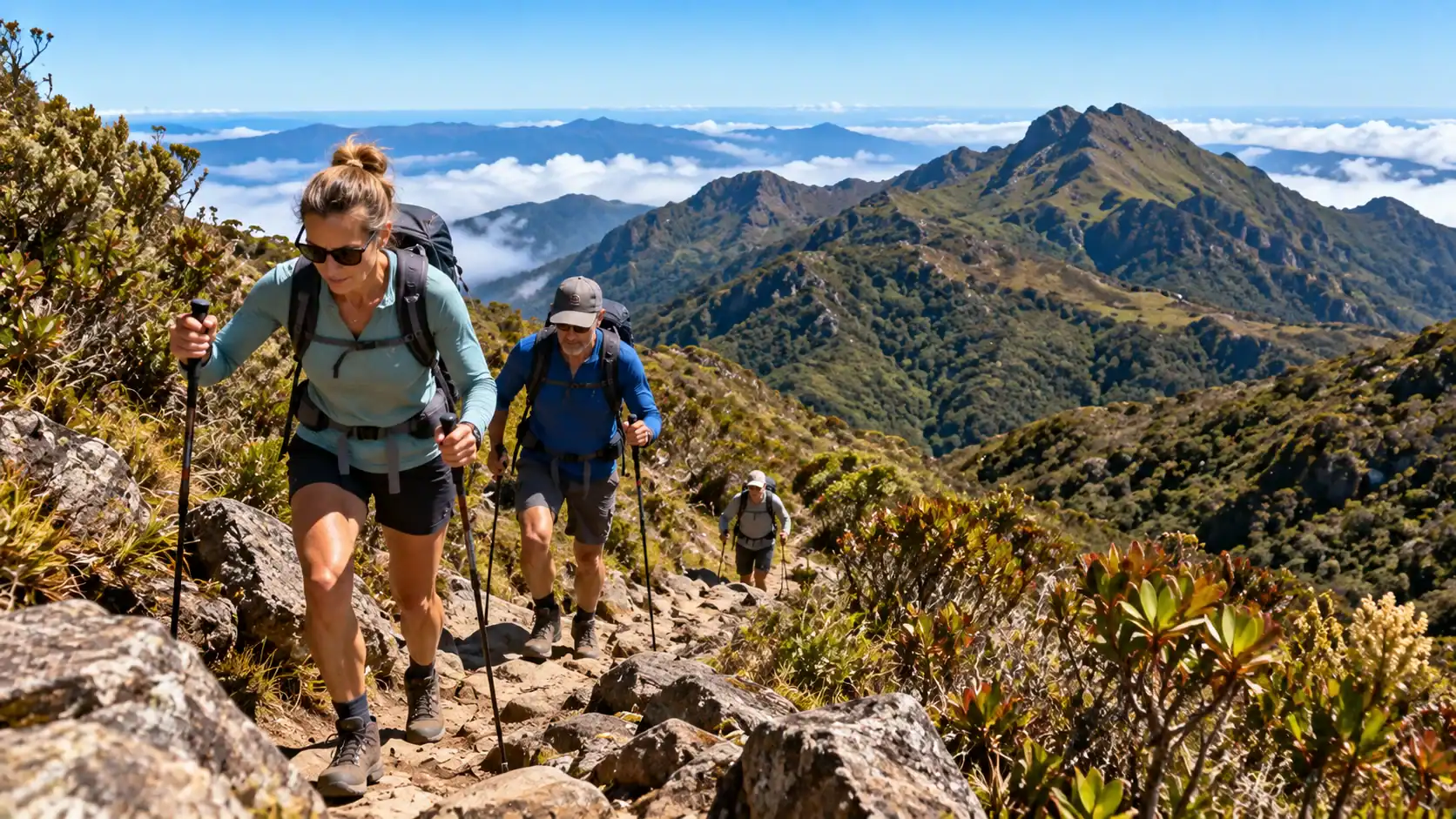
This is a mountain undertaking, not an interchangeable alternative to a short lowland walk. Review your fitness, equipment and ability to cope with changing weather and elevation. Seek individualized medical advice when a health condition may affect a strenuous hike. Ask the park or authorized service provider about the current itinerary, limits and contingency arrangements.
SINAC’s Chirripó contact page identifies the booking contact and concession-service coordination. Keep your confirmations and understand what each payment covers. A reservation does not override a closure or an instruction to turn back.
Are Costa Rica’s volcanoes still active?
Yes. Costa Rica has active volcanoes, but activity is not the same at every volcano or on every date. Use OVSICORI’s dated volcanic-monitoring bulletins to check scientific observations. Read the date and the name of the volcano; an old report or a photograph of an eruption does not describe today’s conditions.
Separately, check SINAC’s current access instructions for the park. An active volcano may have authorized visitor areas, while a route or entire park may be closed when conditions require it. Scientific monitoring is not a booking confirmation, and a reservation is not permission to ignore a restriction.
Volcano-visit precautions
- Use the authorized entrance and stay on approved routes.
- Follow park staff, barriers and closure notices.
- Ask about conditions before travelling, and keep an alternative plan.
- Do not approach fumaroles, unstable edges or thermal water.
- Review any health or mobility concerns before booking an activity.
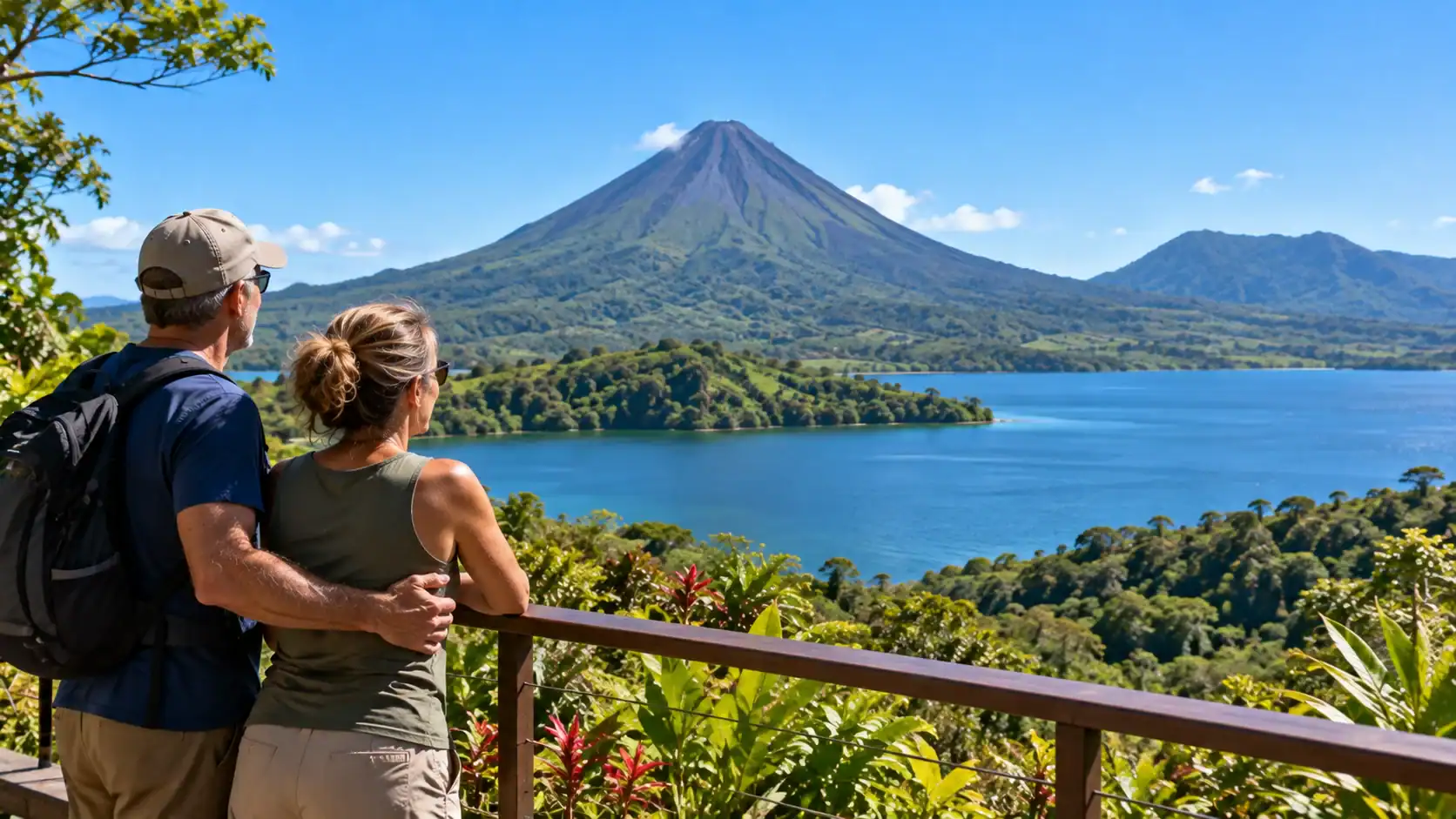
For Arenal Volcano National Park, SINAC expressly prohibits climbing the cone and its immediate surroundings. An open trail does not make a summit climb permissible. See our La Fortuna safety guidance for planning the town portion of your stay.
Choosing an ecotourism outing
Look beyond the word “eco” in an advertisement. Ask where the outing takes place, whether entry is authorized, who leads it, and how wildlife is observed. Choose activities that keep their distance from animals and do not depend on feeding, holding or chasing them for photographs. Carry out waste and leave plants, rocks and animals where they belong.
Match the experience to the group. Ask about walking surfaces, steps, toilets, shade, pace and return transport. A generic forest image cannot establish that an actual trail is accessible. SINAC publishes accessibility information; confirm the particular facilities you need directly before visiting.
National Parks Day: August 24
SINAC’s reservation FAQ identifies August 24 as National Parks Day and states that admission is free for visitors that day under the cited decree. Free admission does not mean unrestricted access or that transport, tours, food and accommodation are included. Confirm reservations, capacity and operating arrangements for the park before travelling.
Lake Arenal: reservoir history and visit planning
Lake Arenal is part of Costa Rica’s hydroelectric infrastructure as well as a landscape visited by travellers. It should not be confused with Arenal Volcano National Park or treated as a single attraction with one admission ticket. Lakeside roads, private properties, tour departure points and national-park sectors have different access arrangements.
How was Lake Arenal made?
ICE’s historical account of electrical development from 1949 to 2021 dates construction of the Arenal reservoir to 1973–1979. The modern reservoir resulted from an engineering project; descriptions of its present extent should not be presented as a photograph or measurement of the earlier landscape.
ICE’s 45th-anniversary account describes a surface area of 87 square kilometres and the reservoir’s role in storing rainy-season water for electricity production during drier months. That is an operator’s description, not a claim that the waterline stays fixed every day.
The human history matters too
The project also involved moving settlements. ICE’s anniversary account discusses that relocation, but an infrastructure operator’s account should not be treated as the complete personal history of every family affected. When learning about the area, distinguish the engineering timeline, the former settlements and the communities that developed after the project.
Old photographs, local histories and residents’ accounts can answer different questions. Check the date and location of an image before using it to describe the pre-reservoir landscape. An AI-generated lake picture cannot establish what a submerged settlement looked like.
Planning time around the lake
Choose the activity and departure location first. Ask a boat or other tour operator where to meet, what equipment is supplied, how weather affects cancellation and how you will return. Do not assume that seeing the lake from a road gives access to a safe swimming or launching point.
If you are combining a lake outing with a park walk, make separate arrangements for the relevant national-park sector. Allow for road travel rather than estimating the journey from a straight line on the map. For a possible move to the region, assess everyday access to shops, transport and services separately from the appeal of a holiday excursion.
Lake-history sources reviewed September 8, 2026. Current water levels and operating conditions should be checked with the responsible operator.
Before you book
Use the official SINAC park directory to find the appropriate park page and booking instructions. Confirm the date, sector, visitor details and cancellation rules. Our weather and natural-hazard guide and wildlife precautions cover additional planning considerations.
Related: Costa Rica volcanoes: which one is best to visit?
Related: The best waterfalls in Costa Rica
Thinking of moving to Costa Rica?
Get a free residency assessment. Tell Johanna, our immigration expert, about your situation, and she will tell you which residency fits you and what you need.
WhatsApp Johanna: +506 8373 2085Free assessment
Or email info@crie.cr