
Costa Rica’s wildlife includes sloths, monkeys, wild cats, deer, crocodiles, frogs and a remarkable variety of birds. What you can see depends on habitat, elevation, season and luck. Choose the place and activity first; a species list is not a guarantee of sightings.
Reviewed September 8, 2026 using SINAC, UCR, the National Museum and the Asociación Ornitológica de Costa Rica (AOCR). Illustrations show selected animals and are not identification charts.
How many bird species are in Costa Rica?
The AOCR scientific committee’s online list, labelled as updated in June 2026, lists 944 species. That is a dated national checklist, not the number a visitor will encounter at one lodge or reserve. New documented records and taxonomic changes can alter the total.
The National Museum’s May 2025 Greater Metropolitan Area catalogue records 502 species for that particular region. Regional and national totals answer different questions. Resident, migratory and occasional records should also be distinguished when planning a birding trip.
For a first outing, use binoculars, move quietly and allow time to observe behaviour. Record the date and location if asking an expert to help identify a bird. Do not approach a nest or disturb an animal to obtain a clearer photograph.
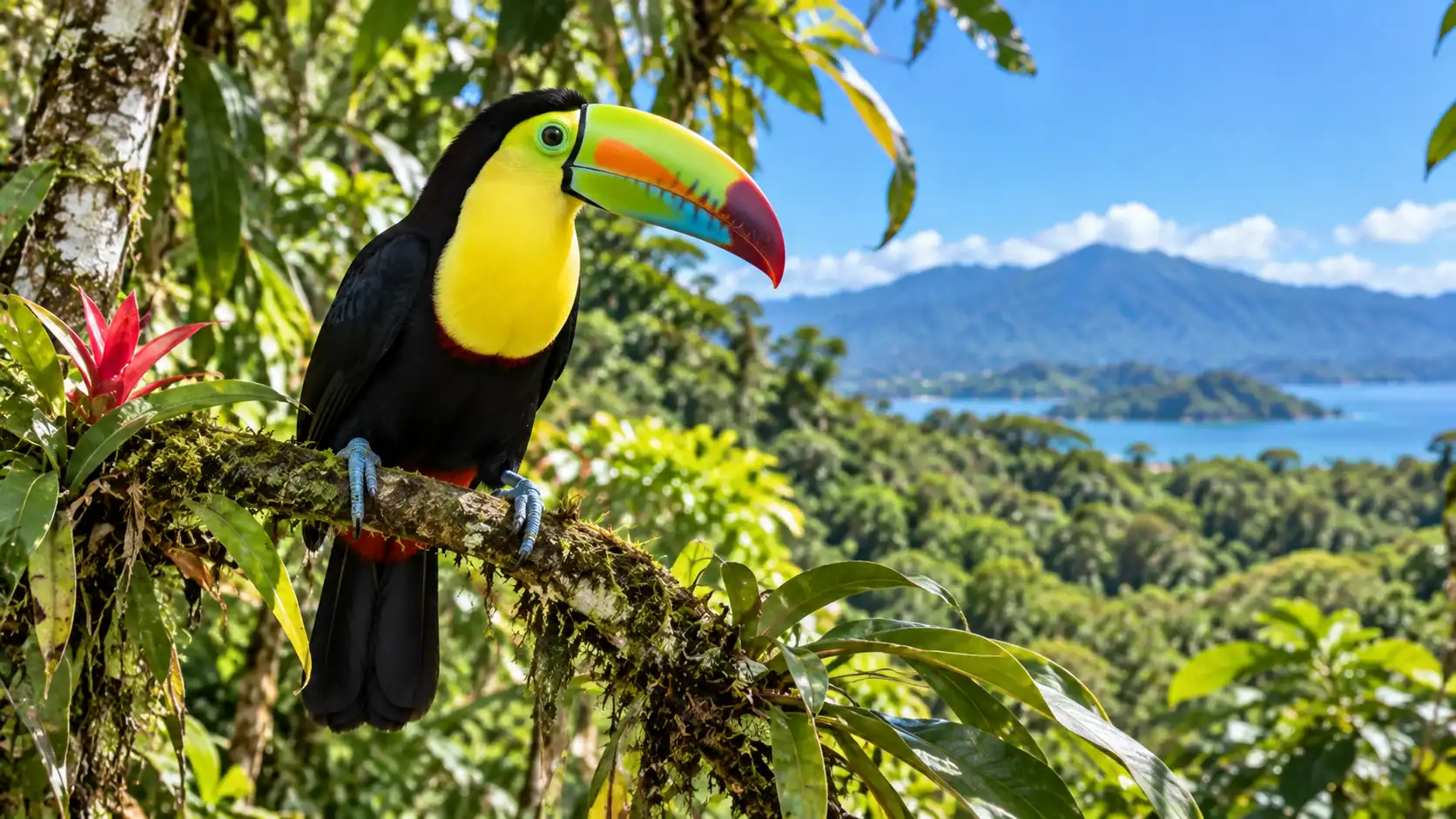
Macaws: scarlet and great green
Costa Rica’s macaws include the scarlet macaw, Ara macao, and great green macaw, Ara ambiguus. They are different species. SINAC’s Barra del Colorado wildlife guide describes the great green macaw as predominantly green with blue in the wings. The scarlet macaw illustrated below has the familiar red, yellow and blue plumage.
Habitat protection matters as much as a sighting. SINAC’s Tapiria management plan identifies almendro trees as important for great green macaw feeding and nesting. Ask a local guide which species occurs in the area you are visiting, and avoid tours that promise a close encounter through feeding or handling.
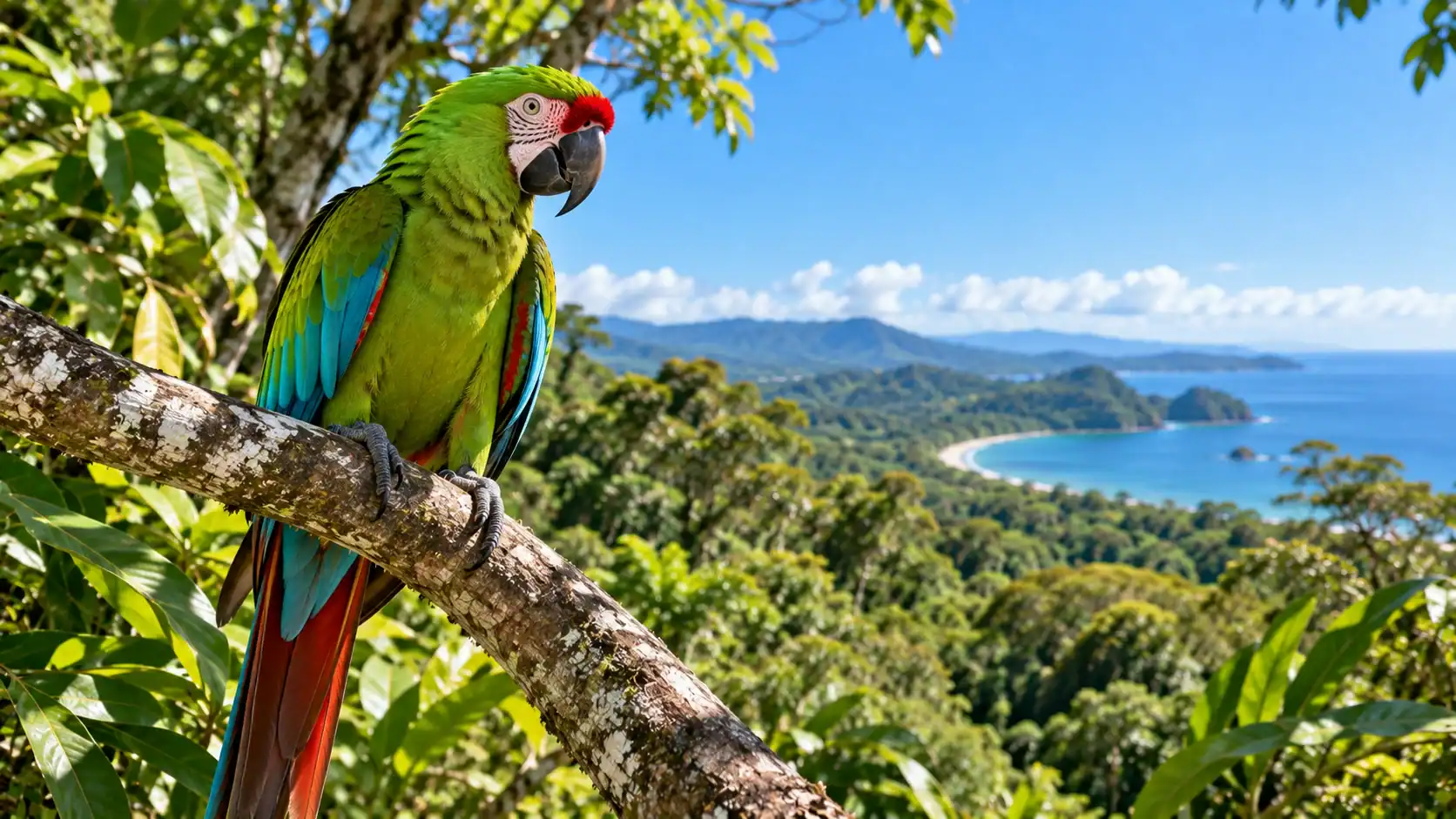
Sloths: two different species
Costa Rica has Hoffmann’s two-toed sloth, Choloepus hoffmanni, and the brown-throated three-toed sloth, Bradypus variegatus. UCR research on urban mammals records both and discusses the pressures associated with fragmented green spaces. Sloths are wildlife even when they appear close to homes or roads.
Observe from a distance, keep pets away and never move a sloth for a photograph. A guide may help you find an animal in the canopy, but sightings remain uncertain. If an animal appears injured or at risk near a road or electrical infrastructure, contact trained local wildlife assistance rather than attempting a rescue yourself.
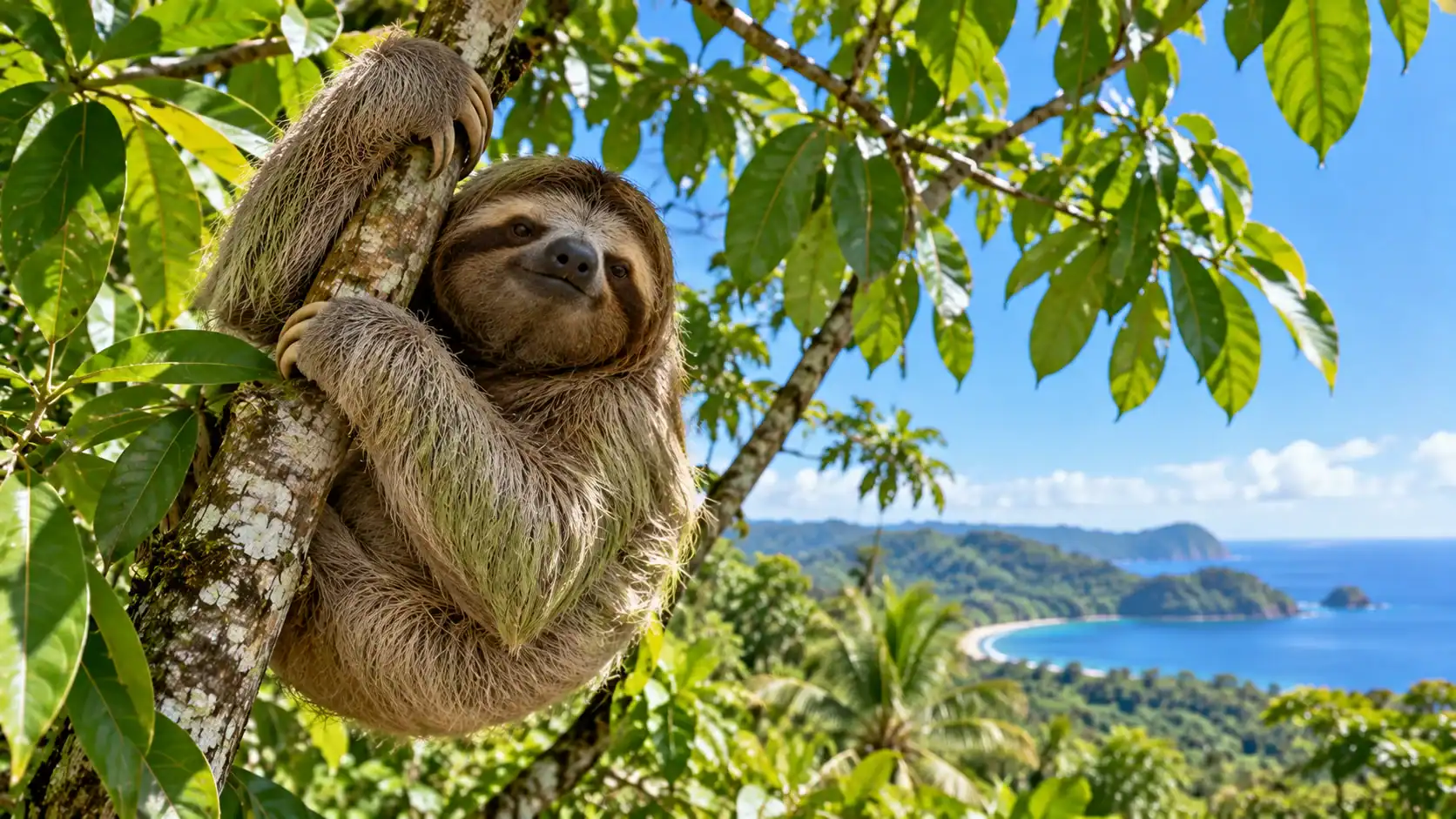
Monkeys, deer and wild cats
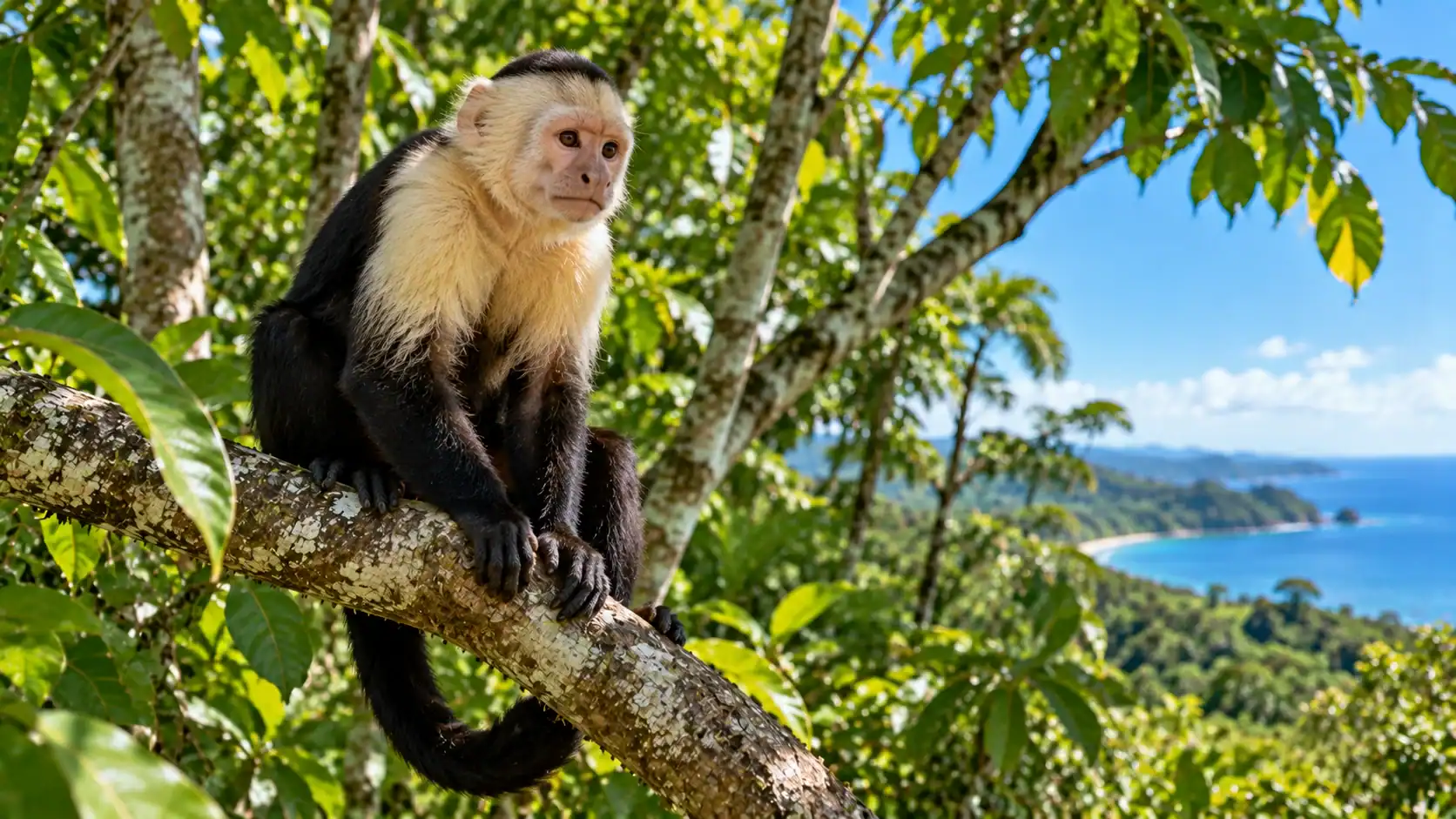
SINAC’s Piedras Blancas information describes four monkey species in its forests: squirrel, white-faced, spider and howler monkeys. Their presence in that park does not mean all four occur at every destination. Keep food secured and do not feed monkeys or entice them toward people.
White-tailed deer and large cats are other examples of Costa Rica’s mammal diversity. SINAC describes six wild-cat species nationally in its Arenal Tempisque conservation information. Jaguars and pumas are among them. Give all wildlife space, remain on authorized trails and follow park staff instructions. Our wild-cat precautions address encounters separately.
Frogs, reptiles and smaller wildlife
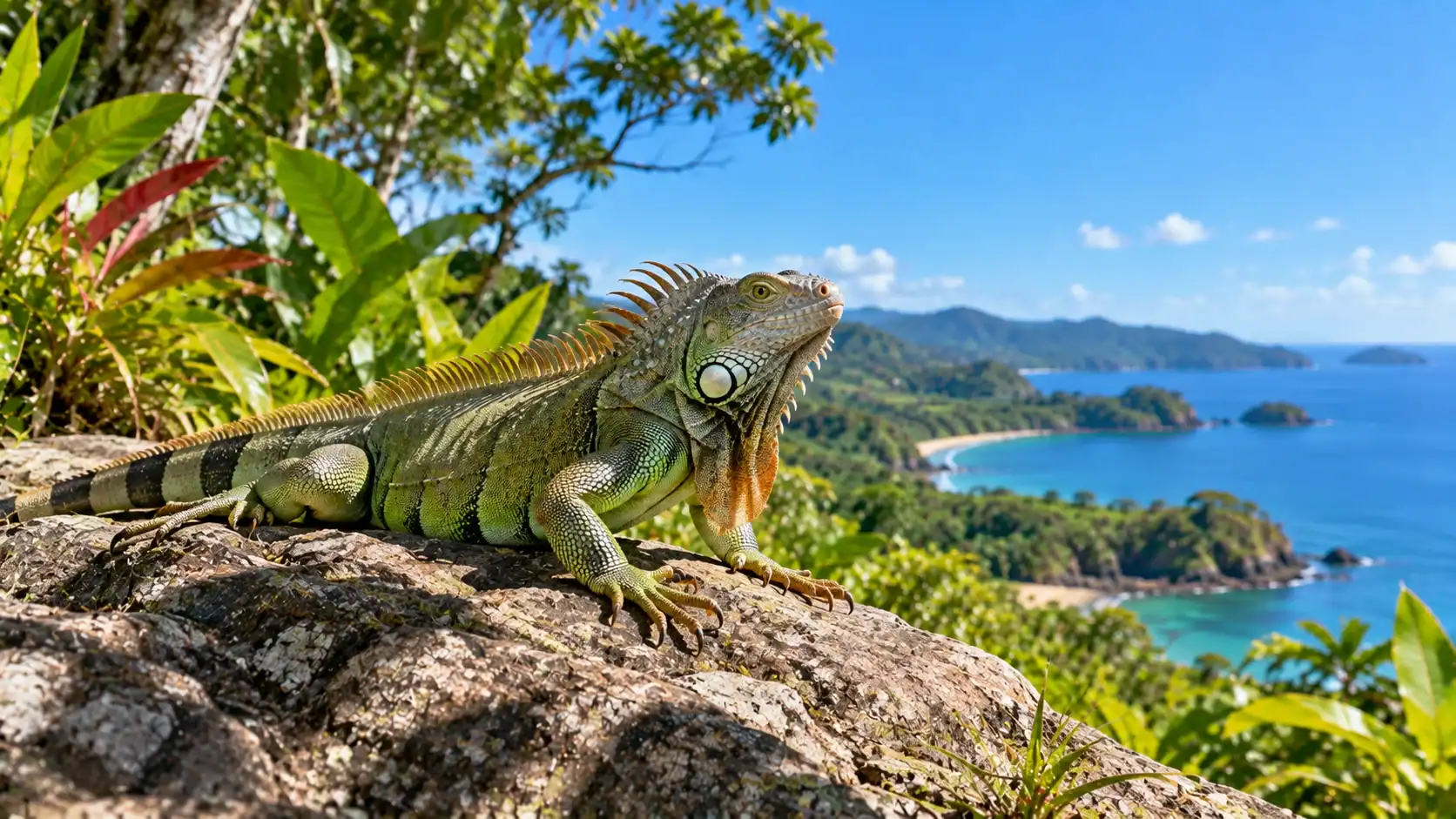
Small animals deserve time and distance too. A frog on a leaf, a butterfly along a path or a reptile near water can be the highlight of an outing. Do not use colour, a common name or an AI illustration to decide whether an animal is safe to touch.
Our poison-frog guide distinguishes species and their chemical defences. The red-eyed tree frog shown here is a different animal. For crocodiles, snakes, spiders and stinging insects, use our wildlife-safety guide. Never enter a river or estuary merely because a photograph makes it look inviting.
Choosing a wildlife night tour
A guided night walk is different from nightlife in a town. Confirm that the operator has permission to use the location after dark, and ask about the route, walking surface, group size, lighting and return transport. A daytime park ticket should not be assumed to allow an independent night visit.
Choose a guide who observes animals without handling, feeding or chasing them. Follow instructions about light use and keep hands out of concealed spaces. Wear suitable closed footwear, carry the recommended equipment and tell the guide about mobility needs before booking. Do not accept a guaranteed sighting as proof that an encounter is responsible.
Wildlife, national symbols and conservation
A famous animal and a legally designated national symbol are not the same thing. Our national-animal guide explains the official designations. Keeping those distinctions clear helps avoid misleading claims about quetzals, macaws and other familiar species.
Use the national-parks planning guide to choose an authorized visit and check current access. Spend time learning about the habitat rather than treating a checklist as a race to collect photographs.
Thinking of moving to Costa Rica?
Get a free residency assessment. Tell Johanna, our immigration expert, about your situation, and she will tell you which residency fits you and what you need.
WhatsApp Johanna: +506 8373 2085Free assessment
Or email info@crie.cr