
Costa Rica has venomous snakes, large crocodiles, Africanized bees, mosquitoes, scorpions, sharks and big cats. That sounds intimidating, but the right precautions depend on where you stay and what you do.
The country’s wildlife deserves respect, but not panic. Road conditions, swimming conditions and mosquito protection also deserve attention when planning a visit. This guide explains which animals actually deserve attention, which risks are commonly overstated, and how to enjoy Costa Rica safely.
The most dangerous animals in Costa Rica at a glance
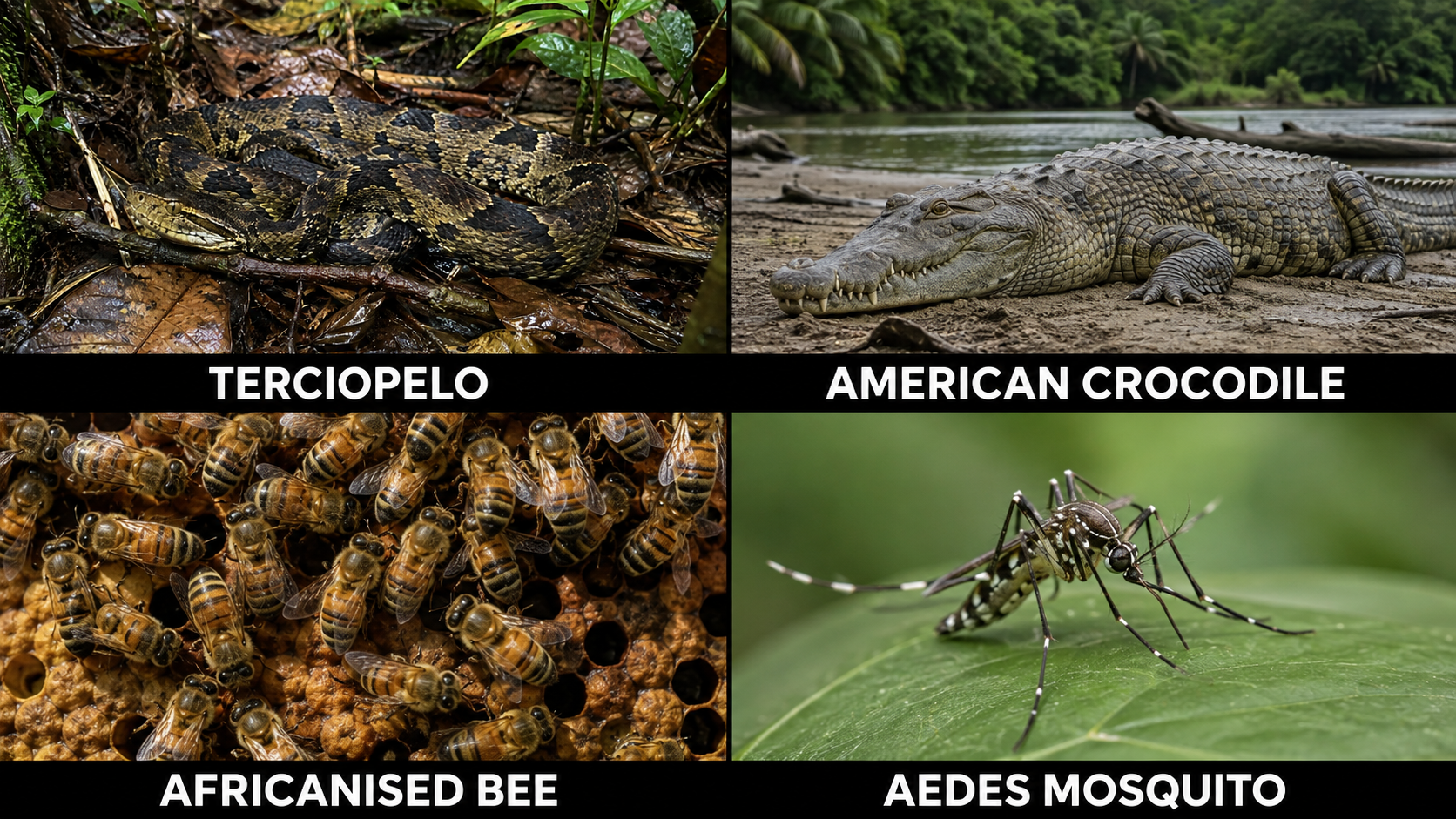
- Mosquitoes: the most common health risk, because they can carry dengue and other illnesses.
- Venomous snakes: above all the terciopelo (fer-de-lance) in warm, wet lowlands.
- Africanized bees: dangerous when a colony is disturbed.
- American crocodiles: in rivers, river mouths, estuaries and mangroves on both coasts.
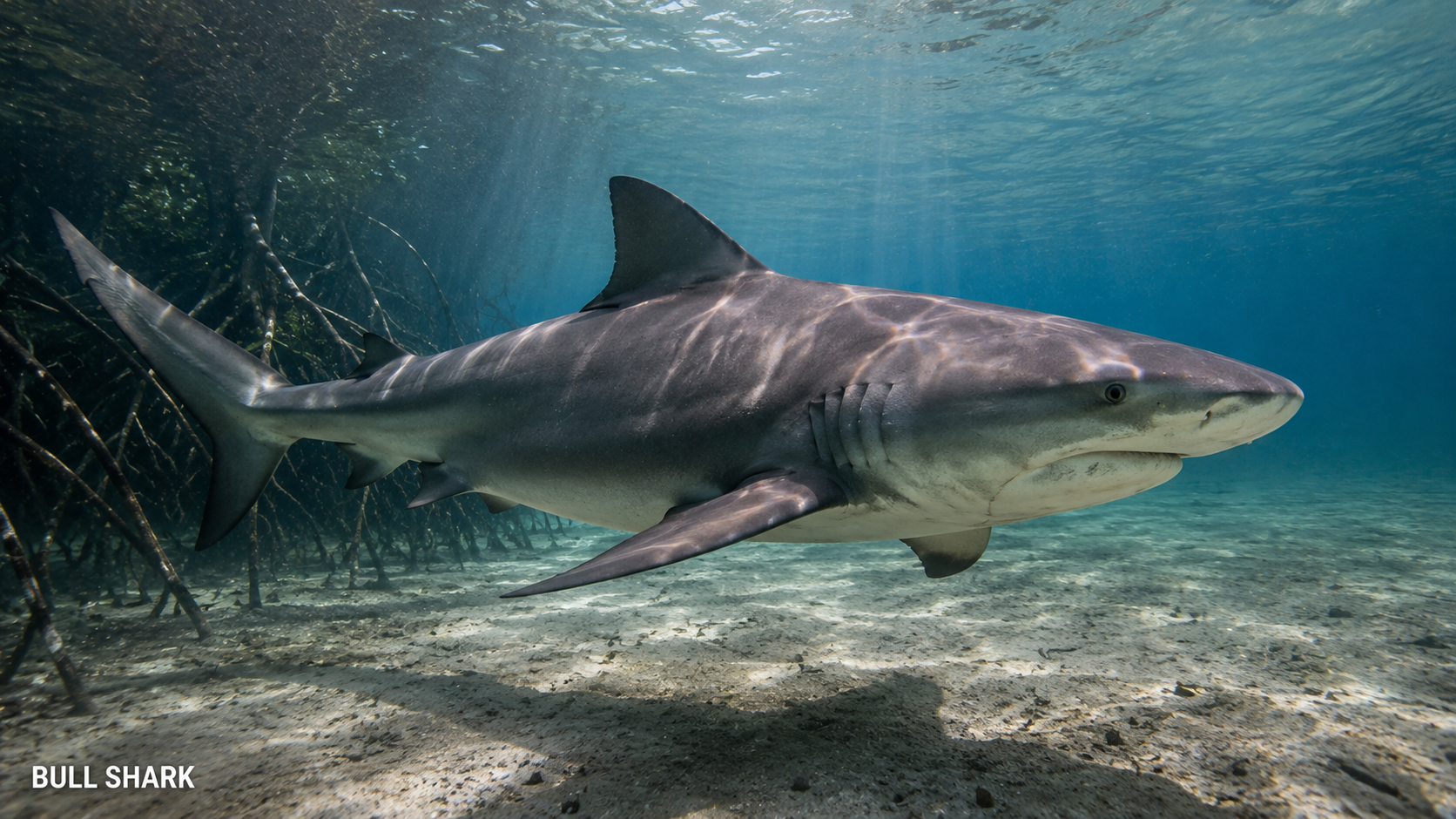
- Bull sharks: can move into river mouths and estuaries.
- Scorpions and spiders: painful, but rarely life-threatening for healthy adults.
- Poison dart frogs: harmless as long as you do not handle them.
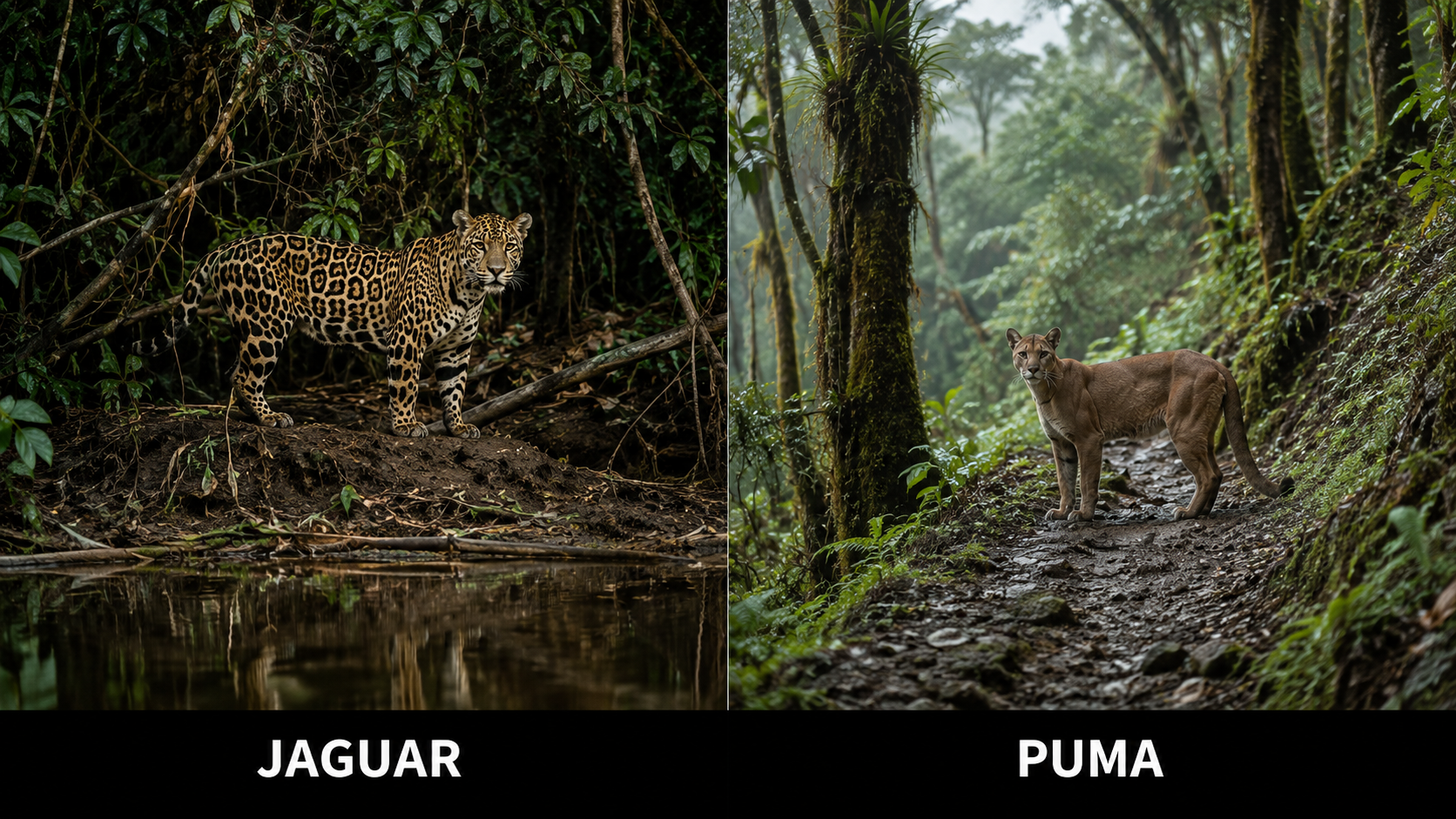
- Jaguars and pumas: rarely seen, and they avoid people.
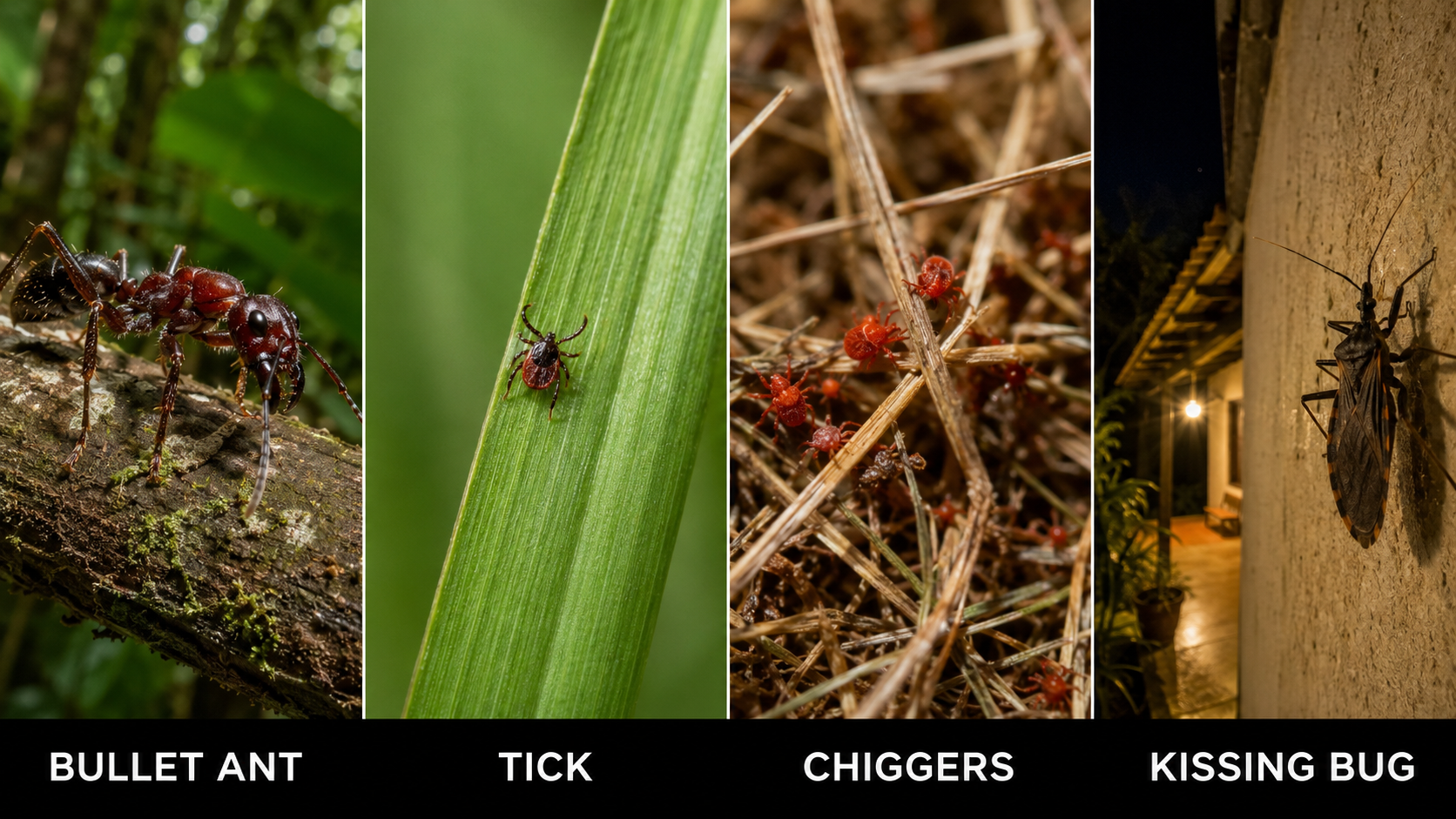
- Small but unpleasant: bullet ants, ticks, chiggers and kissing bugs.
Match precautions to your activities
Most people worry about jaguars, snakes and crocodiles before arriving in Costa Rica. In practice, mosquitoes and bees affect far more people than big cats do.
Useful precautions depend on where you stay and what you do. The main ones to plan for:
- Mosquitoes and mosquito-borne illness.
- Snakebite, mainly for people in rural areas, wet lowlands or dense vegetation.
- Bee stings, especially if a colony is disturbed.
- Crocodiles near rivers, estuaries and mangrove channels.
- Other bites, stings and encounters: avoid handling wildlife and seek help for concerning symptoms.
The simple rule is this: use insect repellent, watch where you step, carry a light after dark, and never swim near a river mouth or estuary.
Venomous snakes: watch where you step
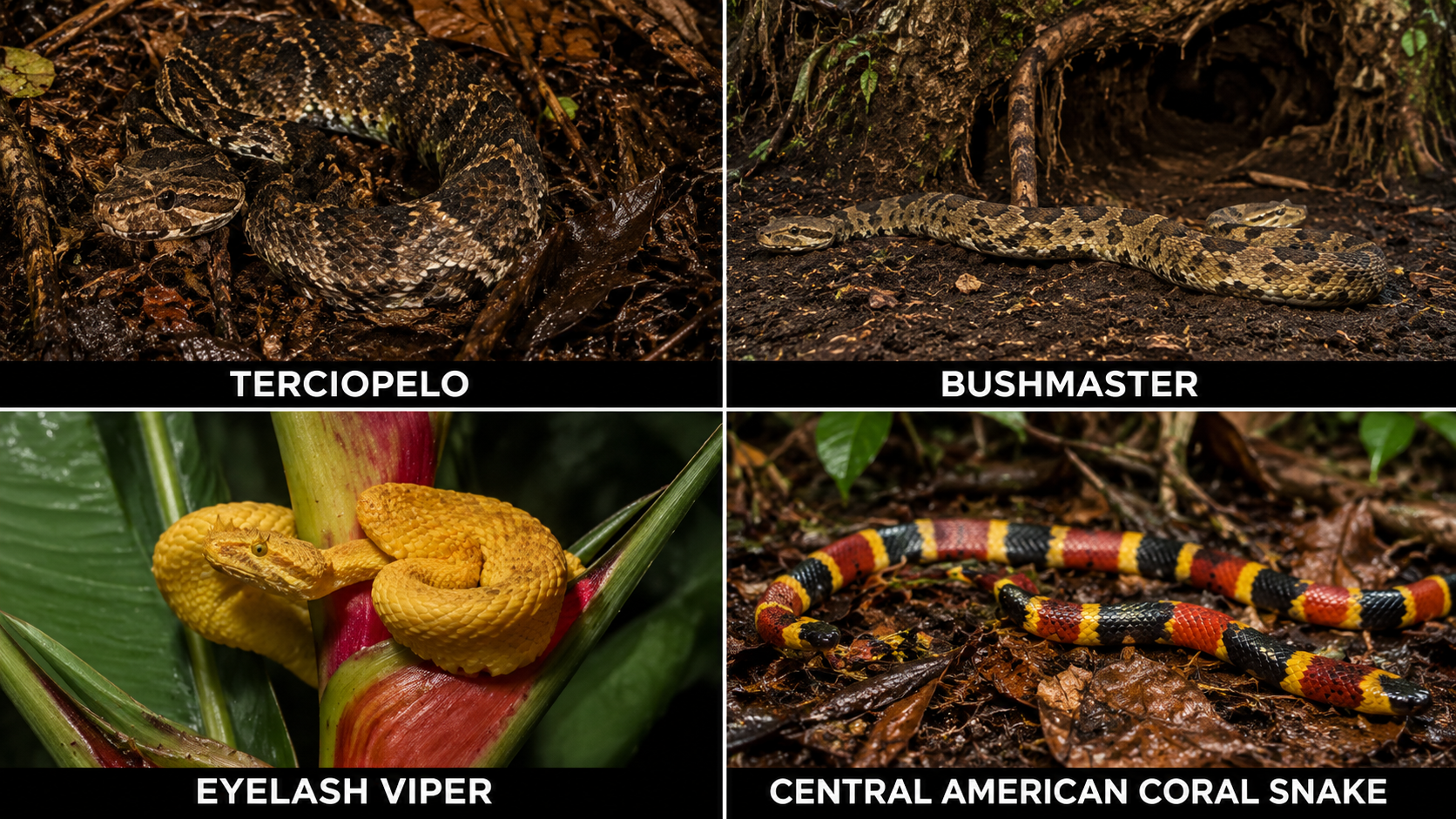
Costa Rica has many snake species, but only a small number are medically important. The snake most often associated with serious bites is the terciopelo, also called the fer-de-lance in English.
The terciopelo lives mainly in warm, wet lowland areas. It is common around plantations, pasture edges, drainage areas, riverbanks, rural gardens and overgrown lots. It is not looking for people. The problem is its camouflage: it may remain still in leaf litter or vegetation until someone steps close to it or reaches near it.
Other venomous snakes worth knowing include the bushmaster, eyelash viper and Central American coral snake. The same rule applies to every snake: do not touch, move, photograph closely or try to identify it from a few feet away.
Why a “top 10 deadliest snakes” ranking is misleading
A visitor’s risk cannot be ranked reliably from venom potency alone. Encounter circumstances, the species involved and timely medical care matter. The Instituto Clodomiro Picado’s species directory is a better starting point than a sensational countdown.
The institute distinguishes vipers from elapids, which include coral snakes and a marine snake. Examples in its directory include Bothrops asper (terciopelo), Lachesis stenophrys (a bushmaster), Crotalus simus (rattlesnake) and Micrurus nigrocinctus (a coral snake).
The institute explicitly explains that coral-snake colour mnemonics are not infallible. Do not use a rhyme, head shape or illustration to decide that a snake is safe to handle. Leave unfamiliar snakes alone and follow the emergency advice below after a bite.
How to avoid snakebite
- Wear closed shoes or boots in rural areas, gardens and on unpaved trails.
- Carry a flashlight or headlamp after dark.
- Do not put your hands into leaf litter, holes, stacked wood or thick plants.
- Step onto logs first, look down, then step off carefully.
- Stay on established trails and use a guide in unfamiliar areas.
If someone is bitten, call 9-1-1 and get to a hospital or health centre immediately. Keep the person calm and still. Do not cut the wound, use a tourniquet, apply ice, try to suck out venom or go looking for the snake.
American crocodiles: a real risk near water
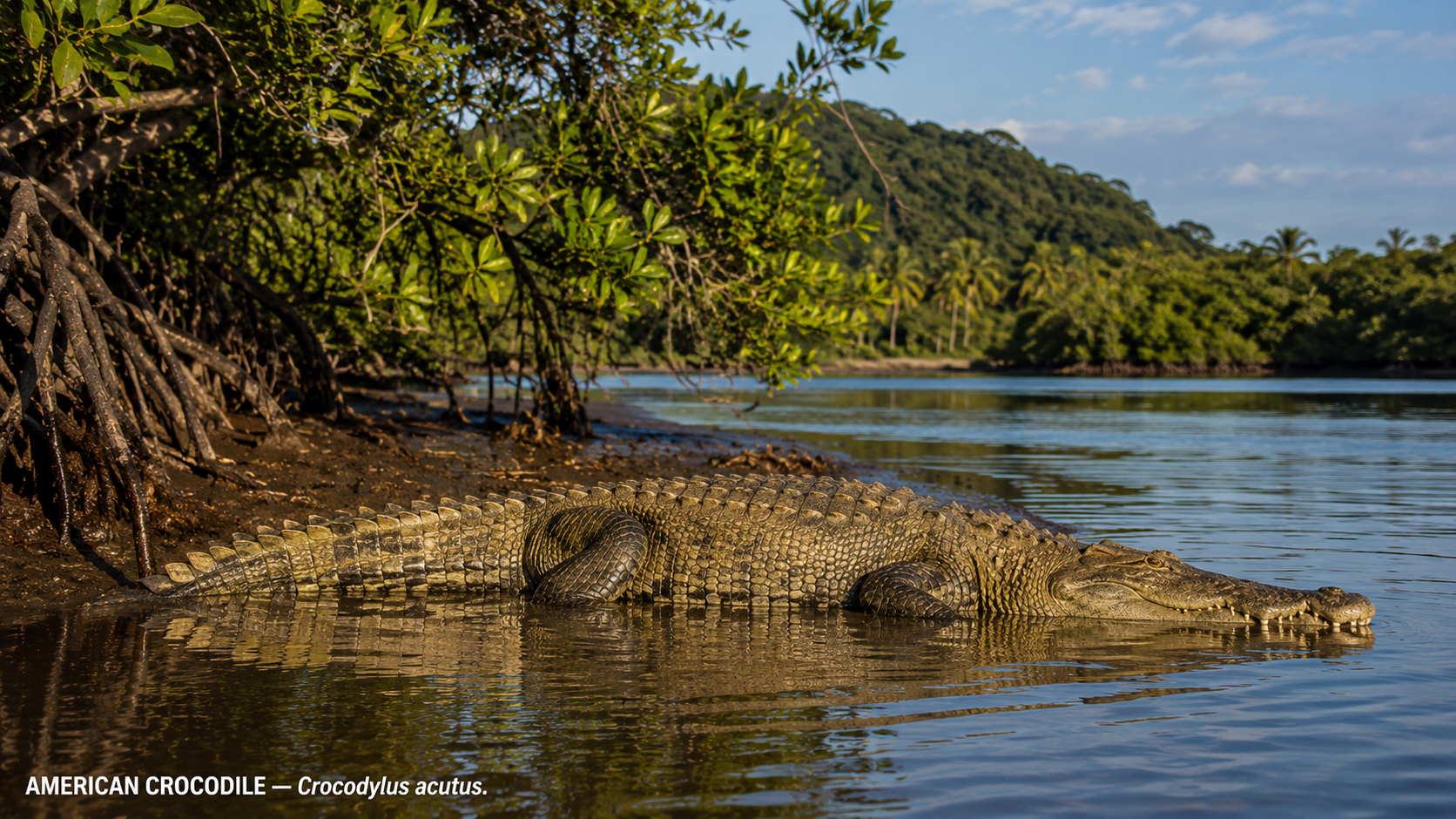
American crocodiles occur on both the Pacific and Caribbean sides of Costa Rica. SINAC cautions that they can occupy fresh, brackish and salt water. They live in rivers, river mouths, estuaries, mangrove channels, lagoons and some coastal waterways.
The danger is not from seeing a crocodile at a safe distance. The danger comes from entering water where crocodiles may be present, standing too close to a riverbank, fishing at the edge of an estuary, or feeding a crocodile until it loses its natural fear of people.
Crocodile safety rules
- Do not swim, wade or paddle in river mouths, estuaries, lagoons or mangrove channels.
- Do not stand close to the edge of a riverbank.
- Do not clean fish or leave food scraps at the water’s edge.
- Never feed a crocodile.
- Take crocodile warning signs seriously.
A beautiful beach beside a river mouth is not automatically a safe swimming area. Ask lifeguards or park personnel about designated swimming areas and current conditions. Other people swimming there does not make it safe.
The Tárcoles crocodile bridge
The bridge over the Río Grande de Tárcoles is a well-known place to look for crocodiles from above. SINAC’s Carara National Park information places the park’s main entrance two kilometres south of the bridge and describes crocodiles in the river habitat. Confirm current park access with SINAC.
Treat the bridge as a roadside stop with traffic and wildlife hazards. Use a suitable designated pedestrian area only where it is safe and permitted, keep children close and never climb or lean over a barrier. If pedestrian access is closed or conditions are unsafe, skip the stop. Park lawfully and keep valuables with you rather than leaving them in the vehicle.
Never descend to the riverbank for a closer photograph, throw food from the bridge or approach an animal. Seeing crocodiles from above does not make the river a swimming area. How many crocodiles you see varies from day to day. If booking a boat outing, ask the operator about safety equipment and its wildlife-viewing practices; reject feeding or close-contact encounters.
Read the story of Chito and Pocho as a separate historical account, never as an example to imitate with a wild crocodile.
Africanized bees: avoid disturbing a colony
Even one bee sting can cause a serious allergic reaction. Disturbing a colony and receiving many stings creates an additional risk.
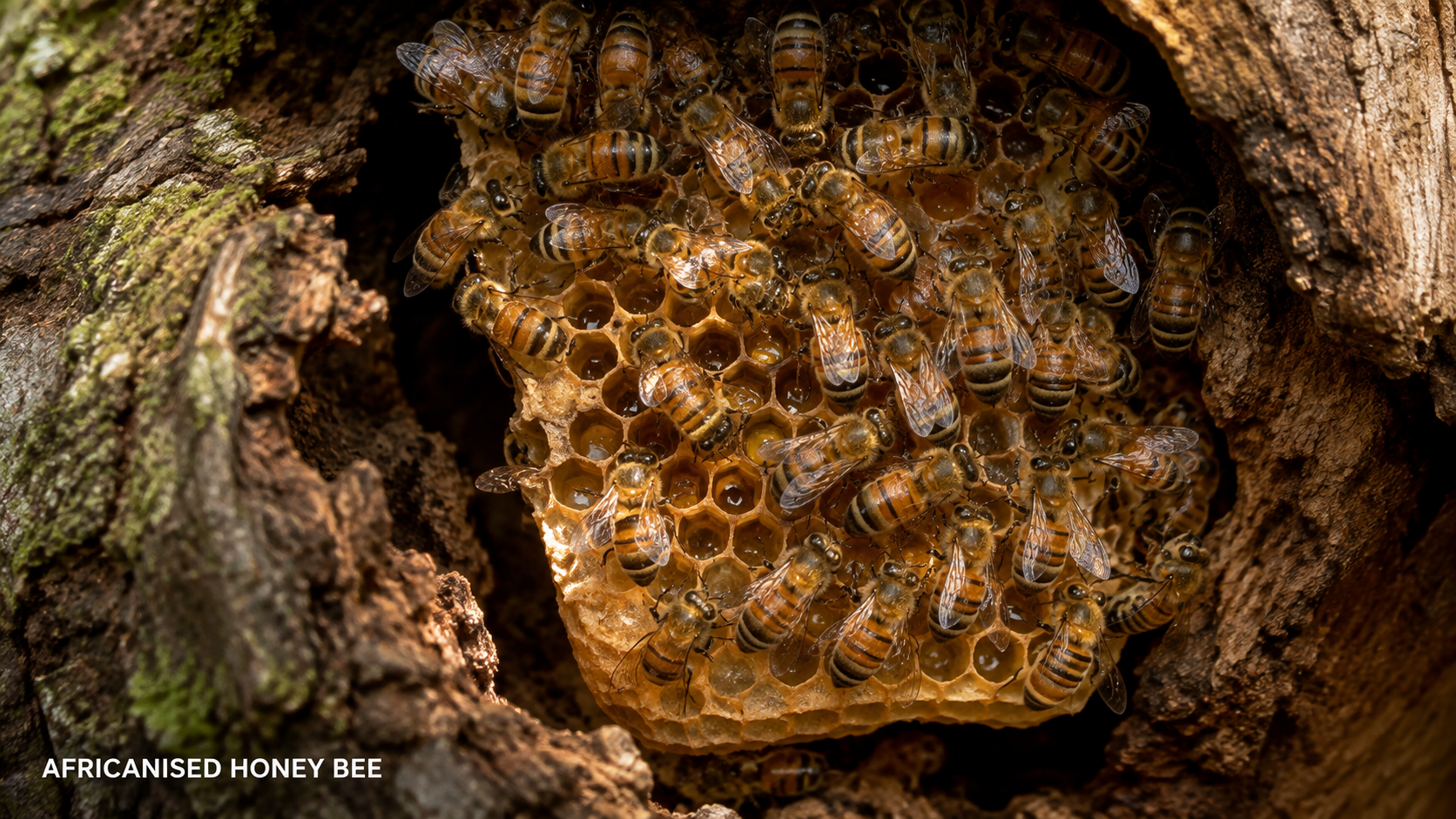
Africanized honey bees look much like other honey bees. The difference is their defensive behaviour. They can respond more strongly when a nest is disturbed and may pursue a person farther than expected.
If bees begin swarming around you, move away quickly in a straight line, cover your face and get indoors or into a vehicle. Do not stop to swat at them. Do not jump into water, because bees may remain nearby when you surface.
Never attempt to remove a nest yourself. Bomberos advises calling 9-1-1 when a swarm presents a danger, keeping people and animals away and waiting for trained assistance.
Mosquitoes: the everyday health risk
Mosquito protection is a useful everyday precaution in Costa Rica. Dengue is one concern; mosquito-borne risks vary by place and time. Consult its current Costa Rica travel-health notices before a trip.
The mosquito most associated with dengue, Aedes aegypti, often bites during the day. That means mosquito protection matters at breakfast, by the pool, during sightseeing and while relaxing outdoors—not only at night.
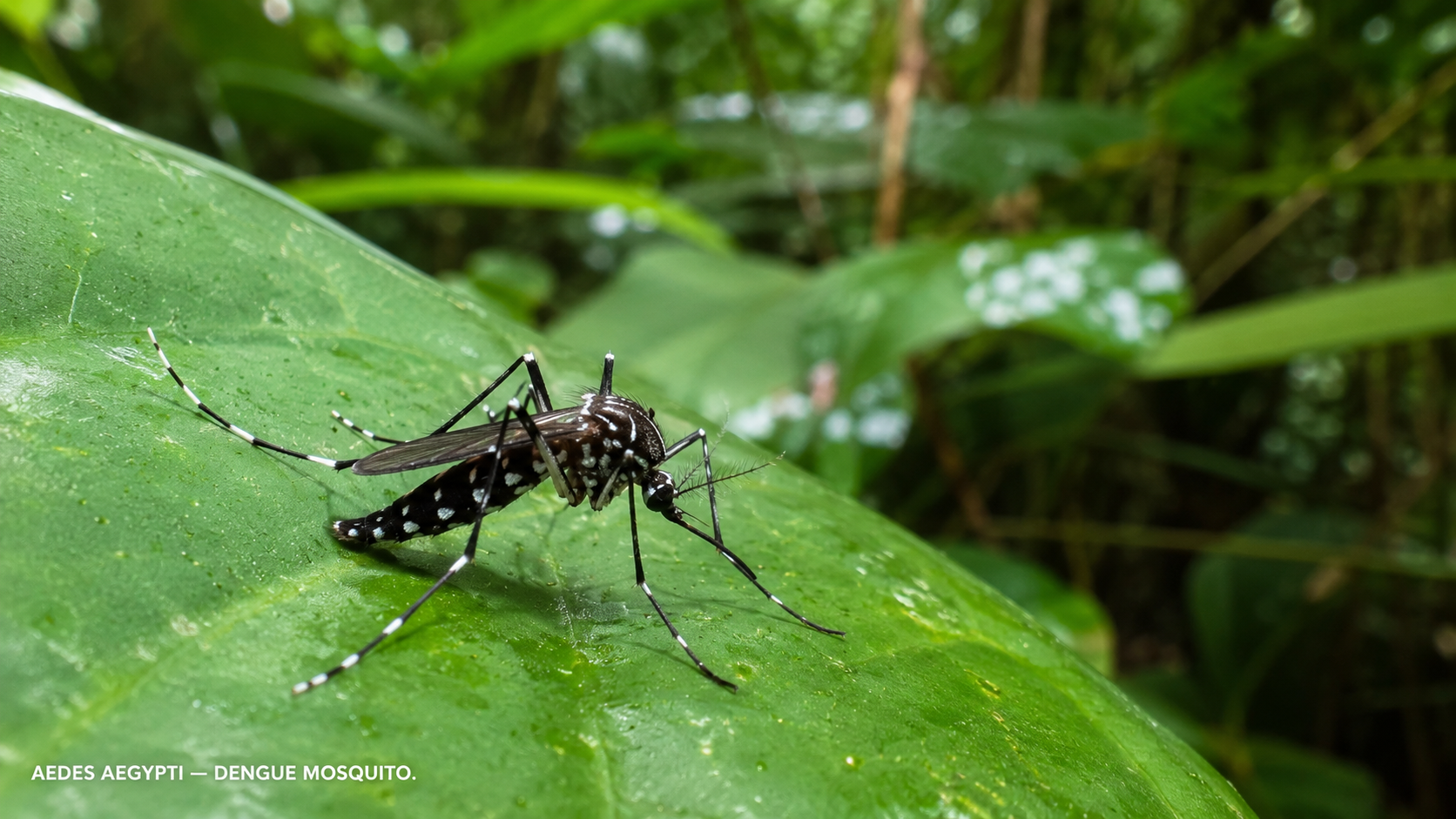
Simple mosquito protection
- Use a quality repellent containing DEET or picaridin.
- Wear long sleeves and trousers when practical, especially in high-mosquito areas.
- Choose accommodation with screens, air conditioning or good mosquito control.
- Keep doors and windows closed or screened in the evening.
- Do not allow standing water to collect around a home or rental property.
Tarantulas in Costa Rica
Tarantulas are spiders, not insects: they have eight legs and a hairy body. Their appearance is not a reason to kill them or an invitation to handle them. UCR describes defensive hairs that can be released when the animal is threatened. Give an animal room to retreat and keep children and pets from touching it.
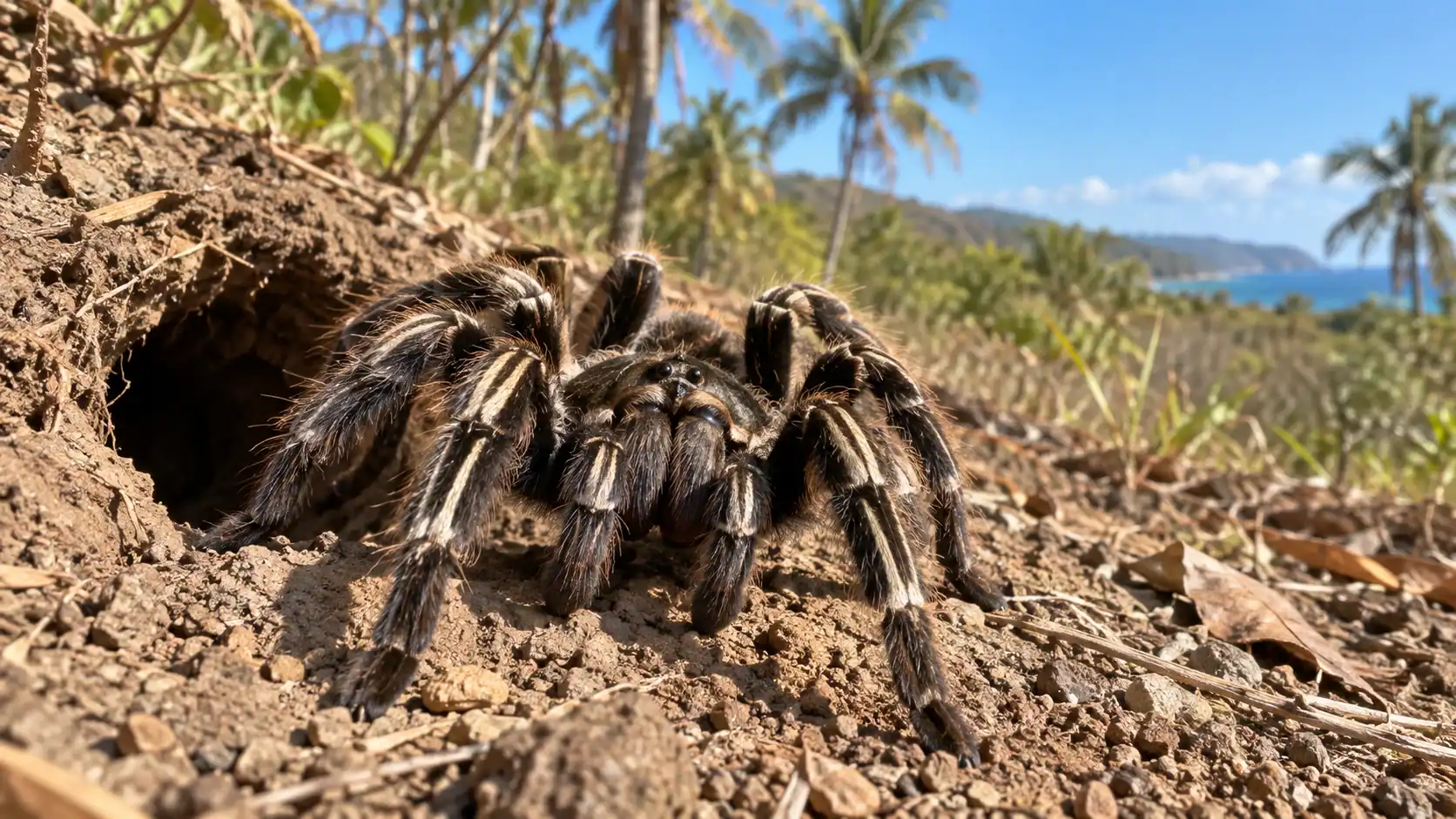
UCR research also studies tarantula venom. Not every large spider is harmless, and a photo is not enough to identify one. Keep your hands out of holes and concealed spaces. If a spider is inside a home where it presents a concern, seek competent local help rather than picking it up.
Scorpions and spiders: avoid handling and assess symptoms
Scorpions are common in some parts of Costa Rica, especially in drier areas and around rural homes. Their sting can hurt, but Costa Rican scorpions are not generally considered a major life-threatening risk for healthy adults.
Shake out shoes, towels and clothing that have been left on the floor or outdoors. This is especially useful in Guanacaste, rural areas and simple cabins where scorpions may shelter in dry spaces.
Common names such as “banana spider” can refer to different animals. Do not use a common name, size or an illustration to decide that a spider is harmless. Leave spiders alone.
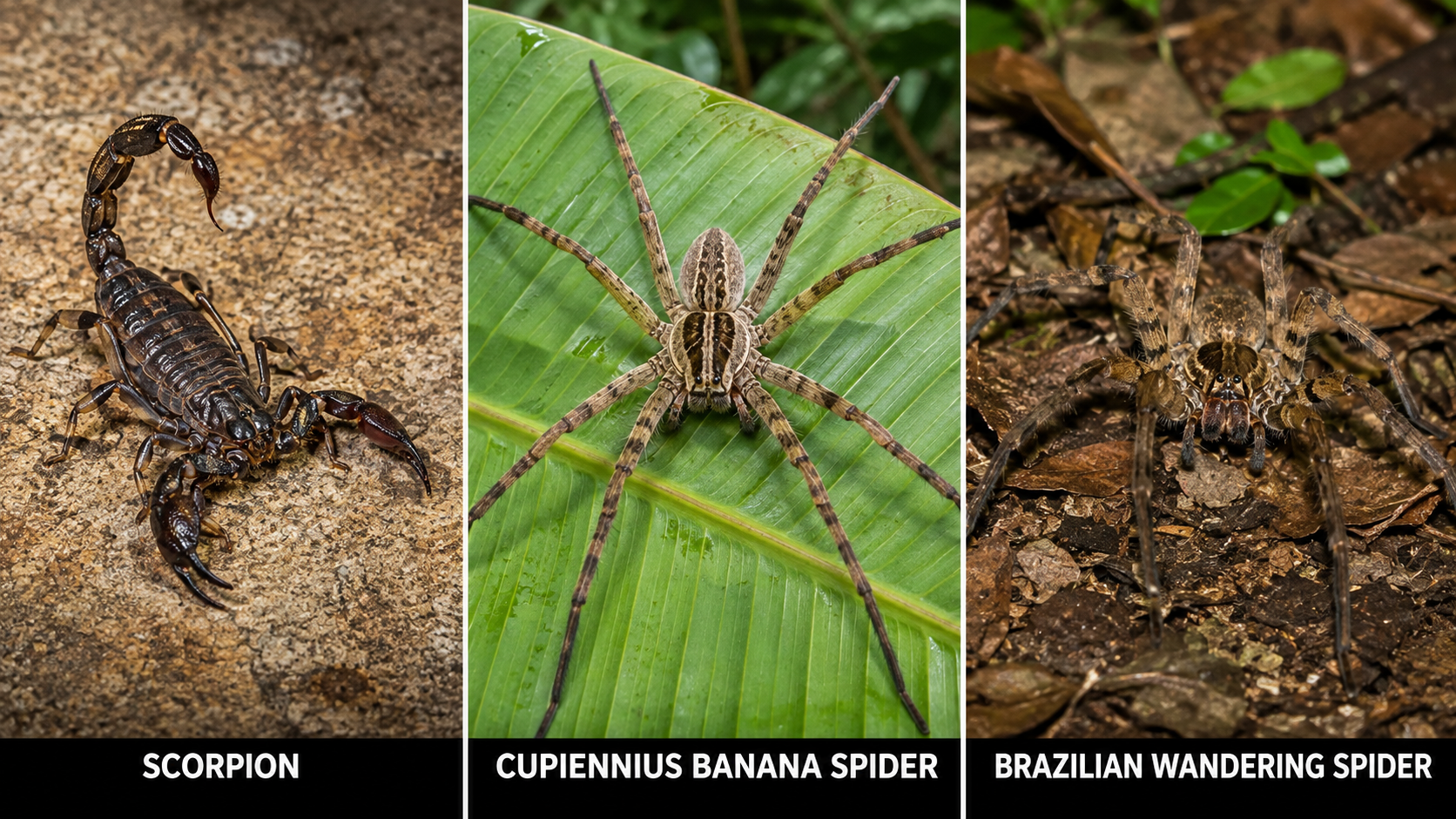
If you are bitten or stung and develop severe symptoms, an allergic reaction, breathing difficulty, facial swelling or rapidly worsening pain, seek medical help immediately.
Poison frogs: observe without touching
Costa Rica’s colourful poison dart frogs are among its most photographed animals. The familiar red-and-blue strawberry poison dart frog is often called the blue jeans frog.
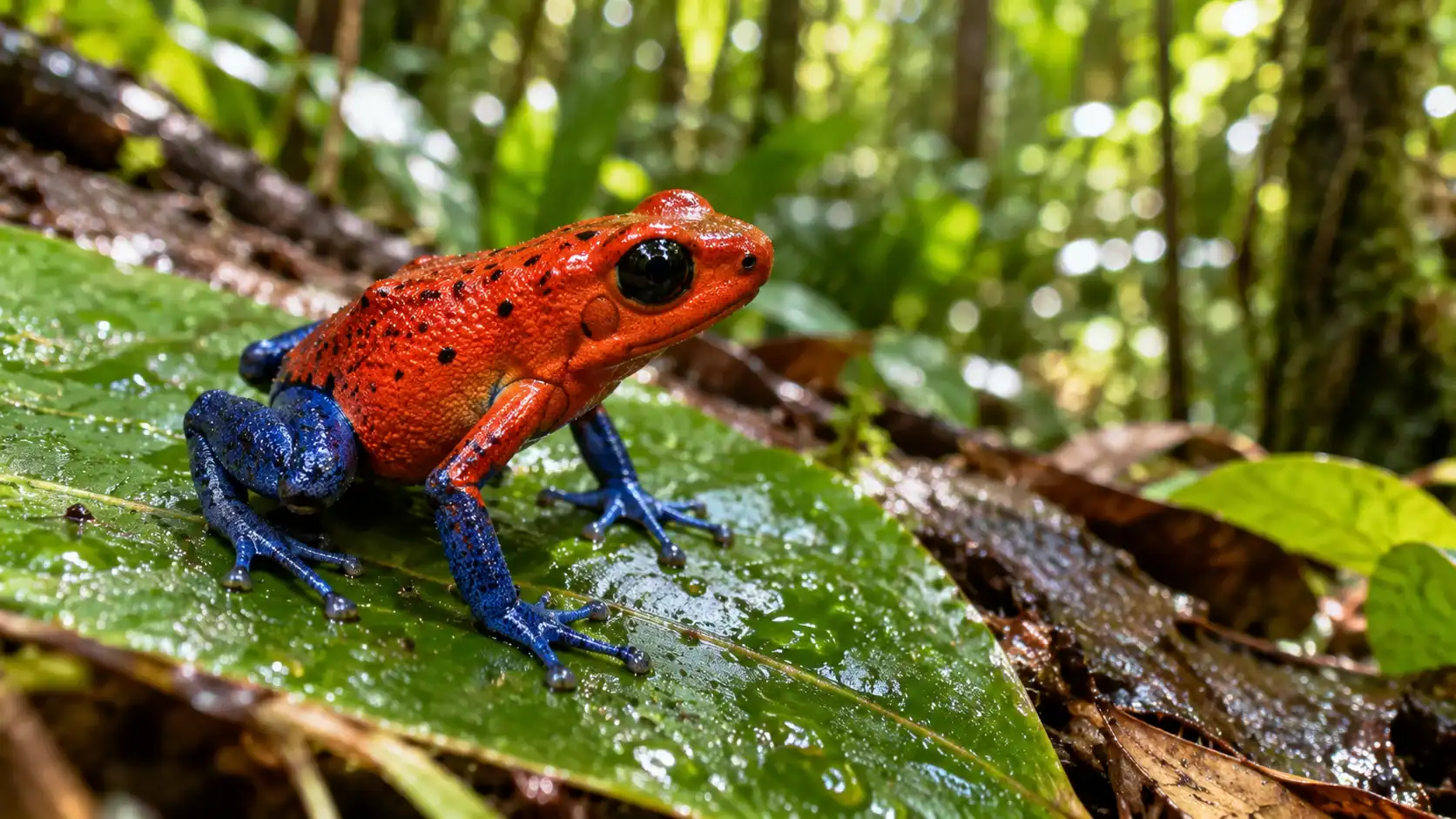
Observe frogs without touching or moving them. Their chemical defences vary; see our poison-frog species guide for more detail.
Bull sharks: follow local water-safety guidance
Bull sharks can live in both saltwater and freshwater, which is why people sometimes worry about rivers and estuaries. The Florida Museum’s species profile explains their use of salt and fresh water.
Check current local swimming restrictions and lifeguard advice; do not swim near river mouths, murky estuaries or mangrove channels.
Other sharks and marine habitats
Bull sharks are only part of Costa Rica’s shark diversity. SINAC’s Coco marine conservation information describes hammerhead and whitetip sharks around Isla del Coco. A remote-island dive expedition is a different activity from swimming at a mainland beach. Ask a qualified operator about conditions, experience requirements and emergency arrangements, and follow protected-area rules.
Jaguars and pumas: give large cats space
Jaguars and pumas live in Costa Rica. SINAC reports six wild-cat species in the country, so the two largest cats do not represent the whole group. Its Osa management plan identifies jaguar, puma, jaguarundi, ocelot and margay in that peninsula. You are unlikely to see them on a short walk. Observe any sighting from a distance and follow park personnel’s instructions.
Do not treat a sighting as an invitation to approach. Never approach, feed or attempt to follow a big cat. If one does approach unusually closely, stand tall, speak firmly, avoid running, and back away slowly while facing the animal.
Small animals that can genuinely ruin a day
Some of Costa Rica’s smaller creatures are more likely to affect your comfort than its headline animals.
- Bullet ants have an exceptionally painful sting. Leave them alone and watch where you place your hands on trees and branches.
- Ticks and chiggers can cause irritating bites after time in long grass or brush. Wear long trousers and check yourself after hiking.
- Kissing bugs can carry the parasite that causes Chagas disease. CDC explains that transmission can occur when infected bug feces enter broken skin or the eyes; the bite alone is not the usual transmission route. Avoid handling suspected bugs.
- Manchineel trees are not animals, but they are worth mentioning. Their sap can irritate skin, and sheltering beneath one during rain is a bad idea.
The sensible Costa Rica wildlife checklist
- Use mosquito repellent every day.
- Wear closed shoes and carry a flashlight after dark.
- Do not reach into places you cannot see.
- Stay out of river mouths, estuaries and mangrove channels.
- Do not feed, handle or approach wildlife.
- Take rip currents and unfamiliar roads seriously.
- Call 9-1-1 in a genuine medical or wildlife emergency.
Costa Rica’s wildlife is one of the country’s greatest strengths. Respect it, give it space and follow a few practical rules. Then it becomes what it should be: one of the best reasons to visit, not a reason to stay away.
Frequently asked questions
What is the most dangerous animal in Costa Rica?
For most people it is the mosquito, because it can carry dengue and other illnesses. Among the animals people fear, the terciopelo (fer-de-lance) is the snake most often associated with serious bites.
Is it safe to swim in Costa Rican rivers?
Stay out of river mouths, estuaries, lagoons and mangrove channels, where crocodiles and bull sharks may be present. Swim at beaches with lifeguards and ask about current conditions.
Are there jaguars in Costa Rica?
Yes. Jaguars and pumas live in Costa Rica, mainly in large protected forests such as the Osa Peninsula. They are rarely seen and avoid people.
What should I do after a snakebite?
Call 9-1-1 and get to a hospital or health centre immediately. Keep the person calm and still, and do not cut the wound, use a tourniquet or try to suck out venom.
Are Costa Rican scorpions deadly?
They are not generally considered a major life-threatening risk for healthy adults, but get medical help quickly for severe symptoms, breathing difficulty or an allergic reaction.
Thinking about making Costa Rica home?
Learning the practical side of life here is part of planning a successful move. CRIE — Costa Rica Immigration Experts helps people with Costa Rica residency applications, renewals and citizenship.
Start with our guide to the types of residency in Costa Rica, or contact our team to discuss your situation.
Sources and further reading
- Instituto Clodomiro Picado: Venomous Snakes of Costa Rica
- Instituto Clodomiro Picado: Snakebite First Aid
- University of Costa Rica: Scorpions in Costa Rica