
Gilberto “Chito” Shedden and the crocodile Pocho became one of Costa Rica’s best-known wildlife stories. Their unusual relationship drew visitors to Siquirres and international attention. It is a remarkable historical account, not a model for interacting with wild crocodiles.
How Chito and Pocho’s story began
Chito rescued a crocodile injured by a gunshot to its left eye and cared for it near his home. The Tico Times’ later interview with Chito dates the rescue to 1989 and describes a relationship lasting more than twenty years. Earlier reporting gives a different duration. Retellings should acknowledge that disagreement rather than present every detail as settled.
Chito named the animal Pocho. As the crocodile recovered, their close contact developed into the encounters that made them famous: swimming together, physical contact and demonstrations for visitors.
The Sunday shows in Siquirres
Contemporary reporting describes weekly shows in an artificial lake at Finca Las Tilapias. Chito said Pocho responded to signals, and audiences watched interactions that would normally be extraordinarily dangerous. Reports described Pocho as roughly five metres long; size and age figures in these stories are reported estimates, not measurements verified for this article.
The 2011 account also says the environment ministry monitored Chito’s keeping of Pocho and that veterinary and biological expertise were involved. That historical arrangement should not be interpreted as permission for anyone else to capture or keep a crocodile.
When did Pocho die?
Pocho died in October 2011. The Tico Times article published on October 12 says he died the previous Tuesday; its October 11, 2015 retrospective marks the fourth anniversary. Those reports point to October 11, 2011, rather than confusing the publication date with the date of death.
The newspaper reported plans for a public funeral. Its 2015 interview described Pocho’s preserved body in a museum near Chito’s home. That is a historical report, not confirmation of current museum hours or visitor access.
Why the story still attracts attention
The documentary Touching the Dragon brought the relationship to another audience in 2013. La Nación’s reporting from a screening with Chito describes his emotional reaction to watching Pocho again.
Photographs and film document the close interactions. They cannot establish exactly what the crocodile experienced internally or prove that crocodiles can safely be treated as pets. Avoid confidently diagnosing Pocho’s behaviour as either human-like affection or a specific effect of his injury.
Crocodiles and caimans in Costa Rica
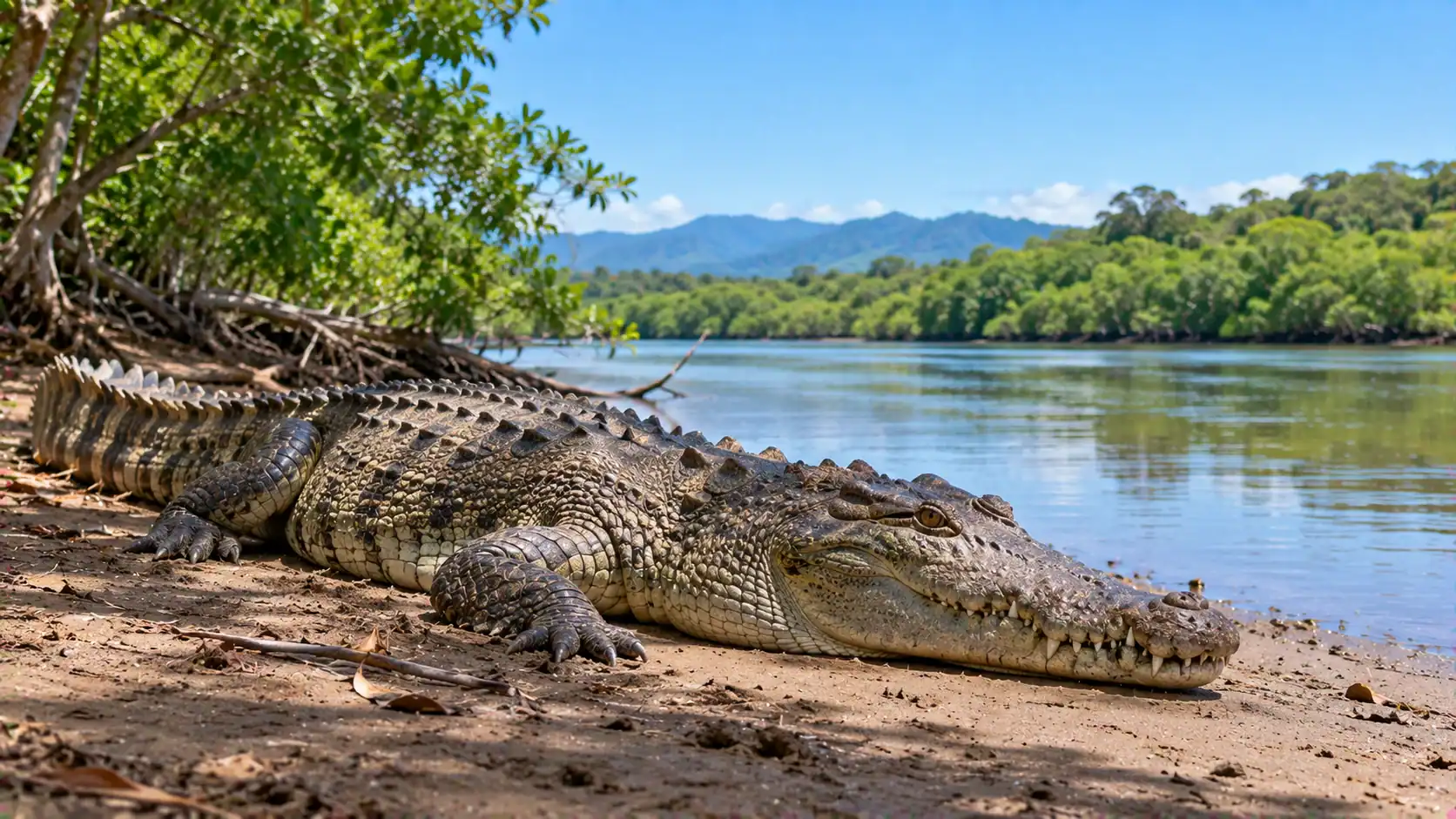
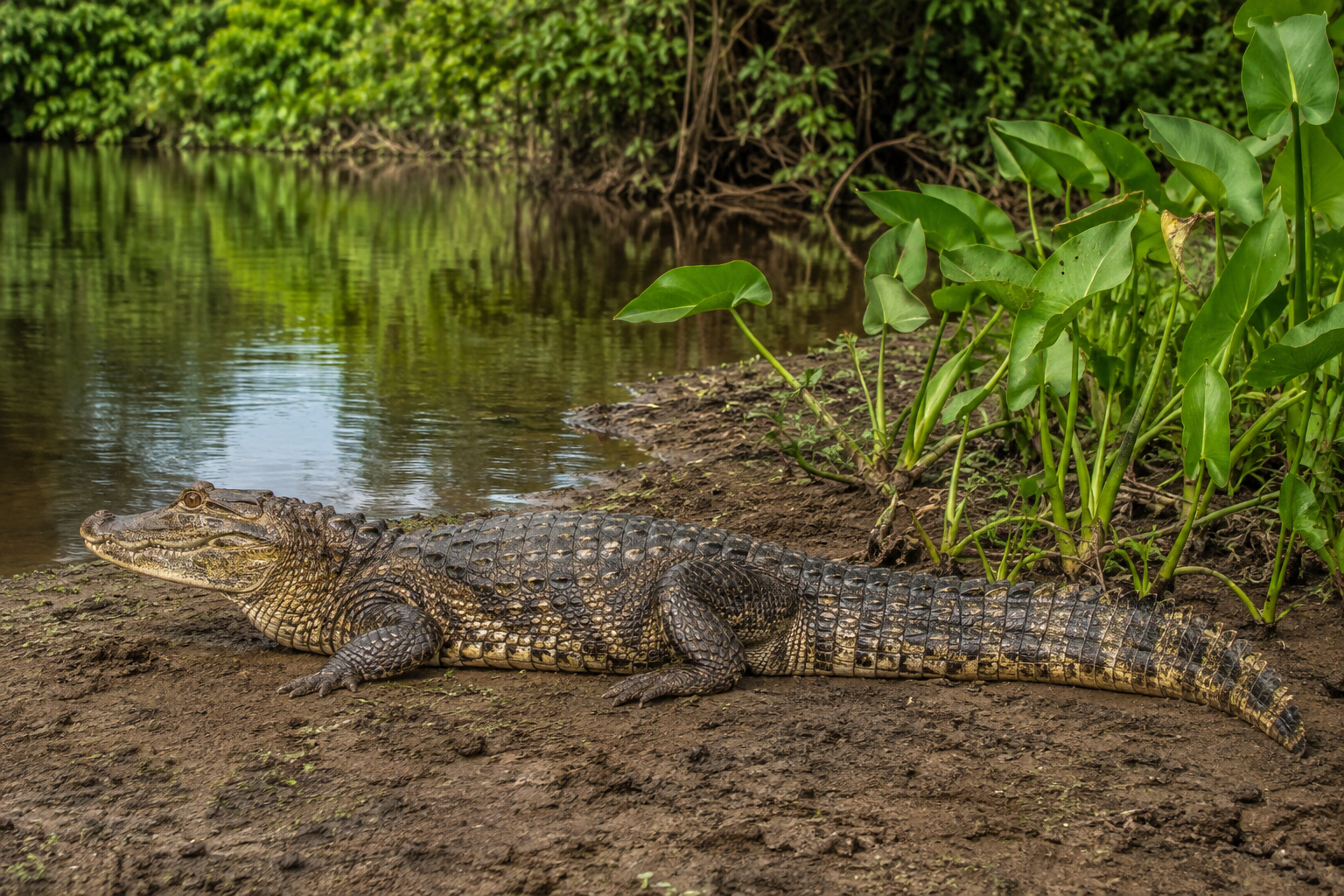
Costa Rica has American crocodiles (Crocodylus acutus) and spectacled caimans (Caiman crocodilus). Both are wildlife to observe without approaching or handling. A smaller caiman should not be described as harmless.
Observe wildlife without repeating the show
Costa Rica Silvestre’s crocodile and caiman guidance explains that these reptiles use varied aquatic habitats and that feeding them can alter behaviour and create risks.
- Do not feed, approach, handle or attempt to capture a crocodile or caiman.
- Check local warnings and ranger advice before using waterways.
- Keep children and pets under close supervision near water.
- Keep away from the water’s edge where crocodiles occur; do not lean over boats or branches above the water.
- Dispose of fish waste away from places where people gather.
Pocho’s story is worth remembering. Responsible observation gives today’s visitors a way to appreciate crocodiles without trying to recreate it.
Sources and dates
Reviewed September 6, 2026. Historical reporting is identified by date; current visitor access is not verified.
- The Tico Times: contemporary report, October 12, 2011
- The Tico Times: interview and retrospective, October 11, 2015
- La Nación: Chito at the documentary screening
- Costa Rica Silvestre: crocodiles, caimans and safe coexistence
Interested in living in Costa Rica?
Explore residency options or contact CRIE about your plans.