
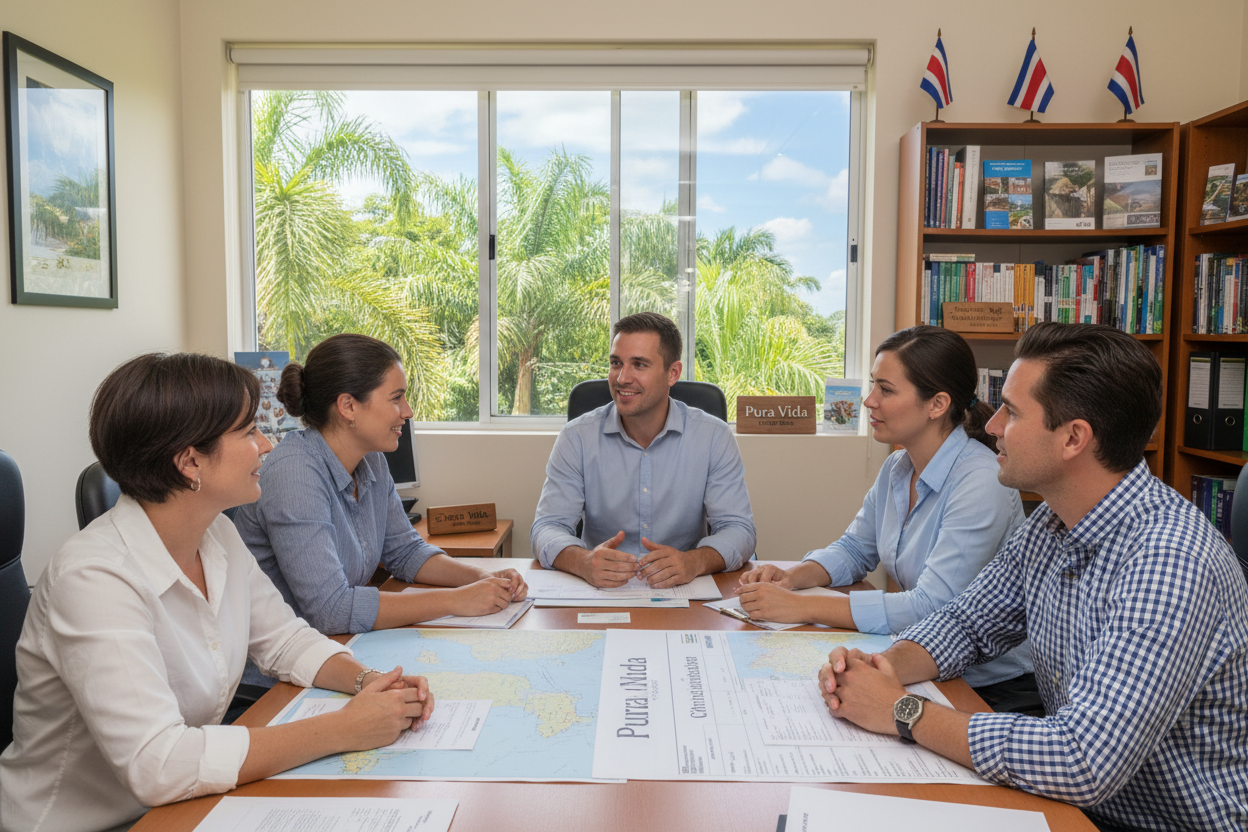
Dreaming of a life in this beautiful Central American nation? The path to Costa Rica citizenship begins with legal residency. We focus exclusively on guiding you through that essential first step.
This country offers specific residency pathways like Pensionado, Rentista, and Investor options. Each has clear financial thresholds. We provide transparent information on requirements so you know exactly what to prepare.
It’s crucial to understand that Digital Nomad status is not a residency category. It does not count toward the years required for citizenship. We help identify the right residency path for your goals.
Our partnership approach means we work with you from the start. We confirm eligibility and help gather documents like apostilled birth certificates. This prevents common errors that cause long delays.
This guide will walk you through who qualifies, what documents you need, and realistic timelines. For direct support, contact us on WhatsApp at +506 8706 3888 or email info@crie.cr.
Overview of Costa Rica’s Residency Process with CRIE
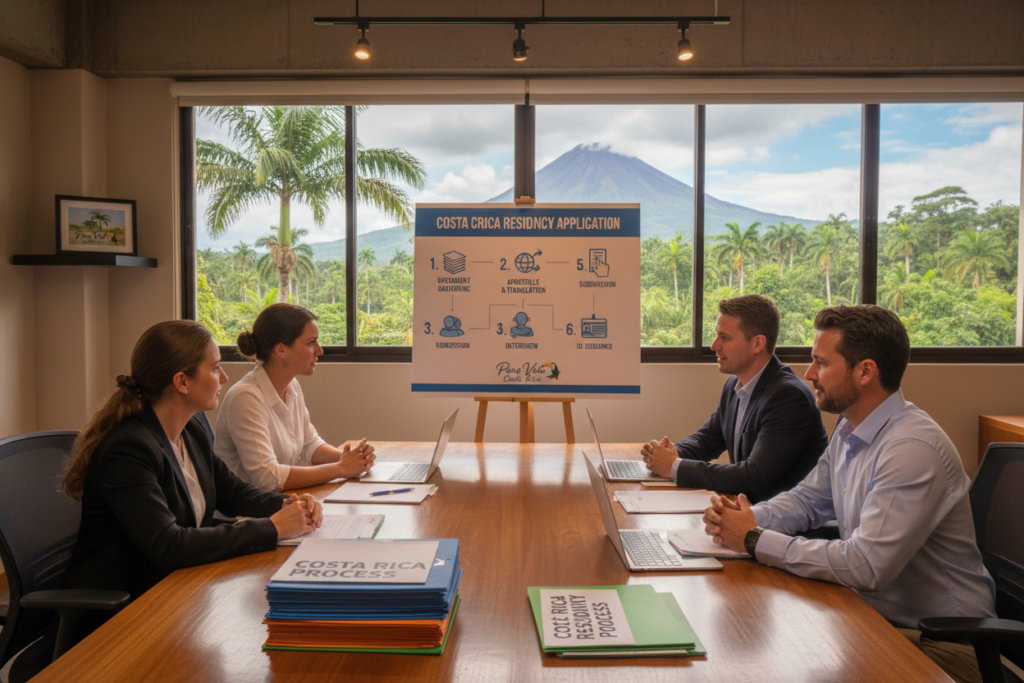
The journey to living permanently in Costa Rica begins with navigating its official residency procedures. All applications are reviewed by the immigration authority, the Dirección General de Migración y Extranjería (DGME). You can find their official information at migracion.go.cr. Approval hinges on submitting a complete file that matches the government’s current internal criteria.
Understanding the Process and Its Benefits
Gaining legal status in this country provides significant advantages. It allows for long-term residence and access to local services. For most categories, like Pensionado (Pensionado) or Inversionista (Investor), it also grants the right to work legally after final registration.
Starting from Home: Why Document Readiness Matters
Your single biggest step is preparing documents before you arrive. Foreign papers like birth certificates need authentication—either an apostille or consular legalization. They must also be translated into Spanish by an official translator in Costa Rica.
Incomplete packets cause delays of months. We help you gather everything correctly from the start. This includes ensuring name consistency across all records. Our role is to prepare clean filings and guide you through each step. We do not make guarantees about outcomes, as the Costa Rican government sets all rules and timelines.
Understanding Children’s Rights in Costa Rica Citizenship with CRIE
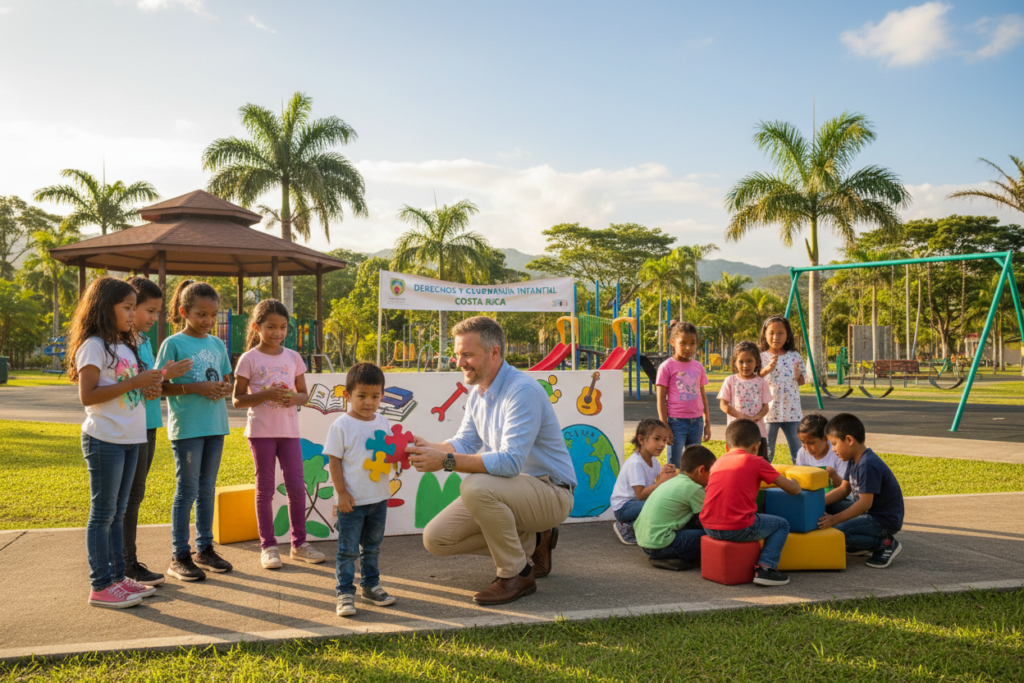
The rights of minors are a cornerstone of Costa Rican law, directly impacting residency and citizenship pathways. Any child born in Costa Rica has the right to be registered at the civil registry, regardless of their parents’ nationality. This birth registration is the foundational step for accessing services and future legal status.
Costa Rica ratified the Convention on the Rights of the Child in 1990. This international treaty holds higher authority than domestic laws under the Constitution. It shapes robust protections for all children, including those from minority ethnic communities.
Proper registration must occur before the child turns 18. Late birth registration is a common issue we help families resolve. Unregistered foreign births can cause significant delays in family-based residency applications.
If your child has a Costa Rican parent but was born abroad, civil registry recognition is required before filing for residency. We confirm parentage and birth documentation to prevent costly mistakes. Costa Rica guarantees free primary education for all children, regardless of migration status.
We emphasize that exploring citizenship for a child starts with residency and registration steps. There are no shortcuts. Proper documentation—like apostilled birth certificates—is non-negotiable. For detailed pathways, see our guide to Costa Rica citizenship by.
Step-by-Step Eligibility and Requirements for Residency
Costa Rica offers several distinct residency pathways, each with specific financial and personal criteria. Your first task is to identify which of the four main categories fits your situation.
Who Qualifies and the Role of Family Ties
If you have a Costa Rican parent, you may qualify for a family-ties route. This pathway bypasses income thresholds but requires your parentage to be formally recorded in Costa Rican civil registry records.
Thresholds for Pensionado, Rentista, and Investor
The Pensionado (Pensionado) category requires a guaranteed lifetime pension of at least US$1,000 per month. For the Rentista (Rentista) status, you must prove stable foreign income of US$2,500 monthly for two years.
The Inversionista (Investor) route demands a minimum investment of US$150,000 in a qualifying activity. A critical rule: the asset must be held in your personal name, not by a corporation.
Clarifying What Doesn’t Qualify: The Digital Nomad Scenario
The Digital Nomad visa is a temporary permit. It does not grant residency status and does not count toward the years required for citizenship. For remote workers with verifiable income, the Rentista category is often the closest legitimate residency option.
Essential Documents to Prepare Before Arrival
The foundation of a successful residency application lies in meticulous document preparation before you even set foot in the country. Starting from home with a complete file is the single biggest factor in avoiding long delays.
Key Documentation: Birth Certificates, Parentage Proof, and Identity Documents
Every applicant needs a valid passport, a long-form birth certificate, and a police clearance. The birth certificate must show your parents’ names, which is crucial for family-ties cases.
You may also need a marriage certificate or name change documents. For family-based applications, proof of your Costa Rican parent’s status—like their birth record or cédula—is required.
Apostilles, Translations, and Other Authentication Requirements
Foreign documents must be authenticated. If your home country is part of the Hague Convention, you need an apostille. Others require consular legalization. This proves the document is genuine to the Costa Rican government.
All non-Spanish documents must be translated by an official Spanish translator in Costa Rica. Translations done abroad are not accepted.
Time your police clearance request carefully, as they expire. Also, ensure name consistency across all records to prevent registration problems.
Timelines and Process Flow for a Smooth Application
Timelines for obtaining legal status in Costa Rica are not fixed and depend on multiple factors. The immigration authority, or DGME, reviews each case based on its complexity and current workload. We set realistic expectations upfront because no one can guarantee a specific approval date.
Understanding the Approval and Registration Steps
The journey follows a clear sequence. It starts with confirming your eligibility and preparing a complete document packet. After filing, the government reviews your case and may request additional information.
Approval is the first major milestone. However, you must complete final registration to get your residency ID card, called a DIMEX. This final step is when legal work authorization typically begins in the country.
Planning Ahead: Tips for Meeting Critical Timelines
Smart planning prevents bottlenecks. Police clearances and other documents have strict validity windows. You must time their acquisition carefully to avoid expiration before submission.
If you are including family, their documents must align with yours. Certain age cutoffs apply for dependent children. Filing as a single package avoids re-submission and extra fees.
Our role is to make the process as predictable as possible. We control the quality of your submission and respond swiftly to any government requests. This proactive approach minimizes avoidable delays and keeps your case moving forward.
Common Pitfalls and Mistakes to Avoid When Applying
Proper document preparation is crucial, yet many applicants fall into predictable traps that cost them months. We see the same avoidable errors causing significant delays in residency filings.
Name Mismatches and Unregistered Foreign Births
Inconsistent names across documents is a top issue. If your passport, birth certificate, and marriage license show different variations, the Costa Rican civil registry will request proof. This adds weeks to your timeline.
For family-based cases, an unregistered foreign birth is critical. If a child was born abroad to a Costa Rican parent, that birth must be recorded in the civil registry first. Many discover this costly oversight after gathering other documents.
Omitting Required Documents and Missteps in Authentication
Submitting a short-form birth certificate instead of the required long-form version is common. The long-form shows parents’ names and is mandatory.
Authentication errors also cause rejections. An apostille from the wrong state authority or an unofficial translation will stop your application. Police clearances have strict validity windows—timing is everything.
We review every document for these issues before filing. Our goal is to catch inconsistencies and ensure your packet is complete. This prevents frustrating delays and keeps your case moving forward smoothly.
Final Thoughts and Next Steps for Your Costa Rica Journey
Successfully navigating Costa Rica’s residency system is about preparation, patience, and expert guidance. The key takeaways are clear: start your document preparation from home, ensure everything is authenticated and translated, and avoid common pitfalls like name mismatches.
Our role is to make this process predictable. We prevent costly errors by preparing clean filings and responding swiftly to government requests. We do not make guarantees, but we use our experience to guide you. You can always verify current requirements at migracion.go.cr for official information.
Ready to move forward? The next step is to confirm your eligibility. Reach out for a personalized residency assessment. Contact us on WhatsApp at +506 8706 3888 or email info@crie.cr.
We’ll review your situation and map out the cleanest path to help you live in Costa Rica with the right legal status. Let’s get started.
FAQ
What are the key rights for children under Costa Rican law?
Costa Rican law, guided by its ratification of the UN Convention on the Rights of the Child, provides robust protections. Every child has the right to a name and nationality through birth registration, access to free primary education and mandatory pre-school, and healthcare through the public system. The national child welfare agency, PANI, actively works to protect children from abuse, neglect, and exploitation.
How does a child born in Costa Rica acquire citizenship?
A child born in Costa Rica to at least one Costa Rican parent automatically receives citizenship by birthright. For children born in the country to foreign parents, the process is different; they do not gain automatic citizenship but are registered as foreigners. They can later apply for naturalization after meeting specific residency requirements as adults.
Is birth registration mandatory, and what happens if it’s delayed?
Yes, registering a birth with the Civil Registry is a legal requirement and fundamental to establishing a child’s legal identity. While late birth registration is possible, it involves a more complex judicial process, additional documentation, and potential fines. We strongly advise completing registration promptly to avoid complications with healthcare, education, and future legal procedures.
Do children of foreign residents have access to public education and healthcare?
Absolutely. In Costa Rica, a child’s right to public education and access to the national healthcare system (CCSS) is not dependent on their migration status or that of their parents. All children living in the country, regardless of nationality, are entitled to enroll in public schools and receive medical care, upholding the principle of universal access.
What government body is responsible for protecting children’s rights?
The primary authority is the Patronato Nacional de la Infancia (PANI), the national childhood and youth council. PANI is mandated to ensure the protection and promotion of children’s rights, offering services from family support to intervention in cases of vulnerability. They work alongside other institutions to safeguard the welfare of all children in the country.
Are there specific protections for children from minority or indigenous communities?
A> Yes, Costa Rican law and policy recognize the need for culturally sensitive protection. Children from minority ethnic communities, including indigenous populations, are entitled to the same fundamental rights. Programs and services aim to respect cultural identity while ensuring access to education, health, and protection from discrimination, aligning with the inclusive spirit of the Convention on the Rights of the Child.
Article by Glenn Tellier (Founder of CRIE and Grupo Gap)
Don't wait, contact us right now!
Call or WhatsApp Costa Rica +506 8373 2085 or +506 8706 3888
Call USA/Canada +1 305-906-6784