
Citizenship in Costa Rica
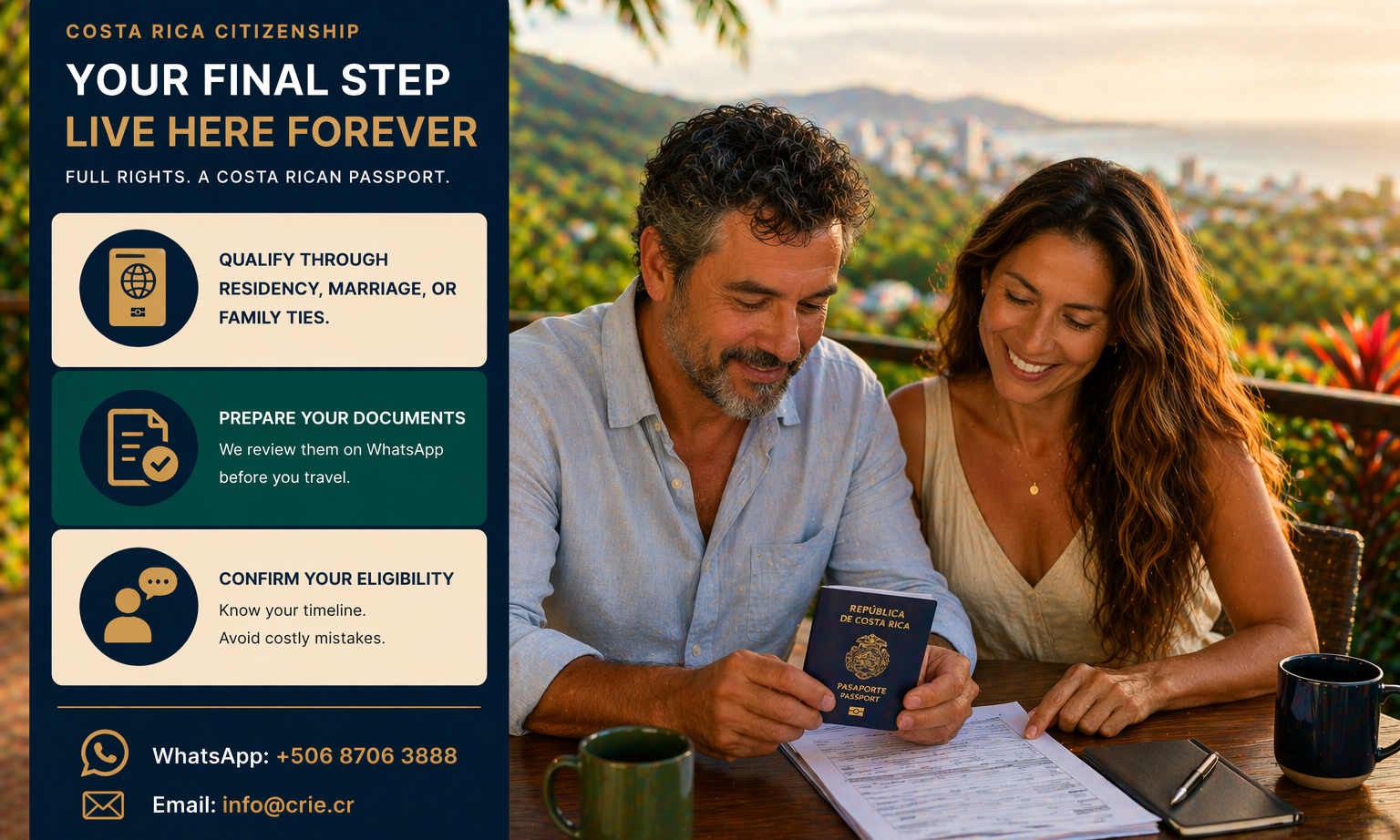
Costa Rican citizenship is the final step for many long-term residents who want the highest level of legal status. It removes immigration renewals and provides full rights, including the ability to work without restrictions.
Most applicants qualify for citizenship through one of three paths: long-term legal residency, marriage to a Costa Rican citizen, or qualifying family ties. The correct path depends on your history, timeline, and documentation.
On this page, you will find a clear overview of how citizenship works, the main requirements, the process, the most common mistakes, and how to determine if this is the right next step for you.
What This Residency Category Is
Citizenship is the highest immigration status in Costa Rica. It is typically reached after maintaining legal residency and meeting naturalization requirements.
The most common paths to citizenship include:
- Naturalization by residency: usually after 5 or 7 years of legal residency, depending on nationality group.
- Naturalization by marriage: typically after 2 years married to a Costa Rican citizen and physically residing in Costa Rica.
- Family-based routes: certain applicants may qualify through Costa Rican parent or child relationships.
If you are not yet eligible for citizenship, you will typically first move through Permanent Residency after holding a qualifying temporary residency such as Pensionado, Rentista, or Investor. The Digital Nomad Visa is not residency and does not count toward citizenship timelines.
Requirements
Citizenship applications are document-driven and timeline-based. The most important factors are proving your eligibility route, maintaining good standing, and ensuring all documents are properly prepared.
- Qualifying timeline: residency, marriage, or family-based eligibility.
- Valid passport: copies prepared in the correct format.
- Birth certificate: properly issued and prepared for Costa Rica.
- Police clearance: from the correct authority and within validity windows.
- Proof of integration: evidence of a stable life in Costa Rica.
- Spanish and civics: required in many cases, with some exemptions.
- Supporting documents: records that confirm identity and consistency.
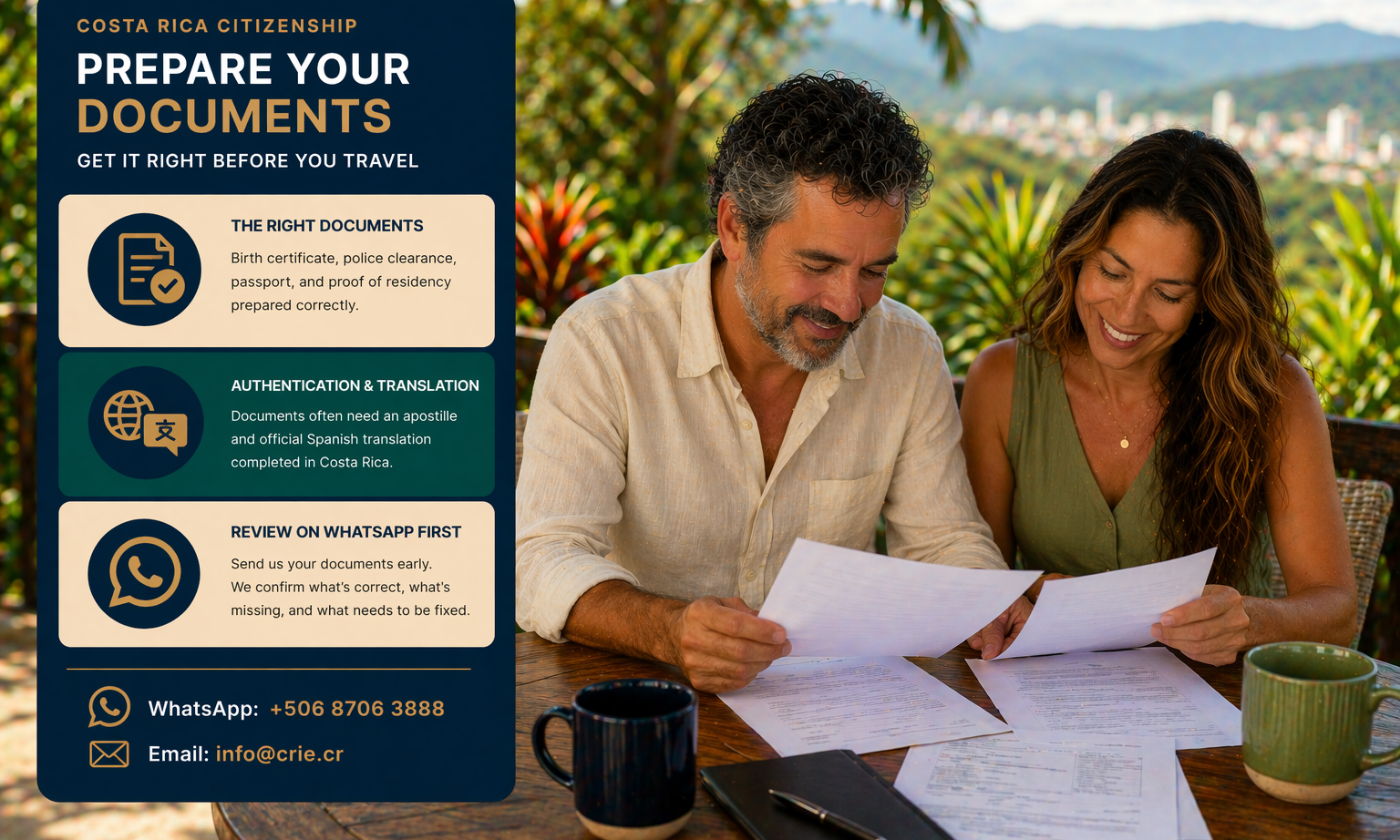
- Authentication and translation: foreign documents usually require apostille or legalization and official Spanish translation in Costa Rica.
Start Your Residency Process From Home First
If possible, begin your preparation before you travel to Costa Rica. This gives you time to send your documents to us on WhatsApp so we can review them early and confirm they are correct for your category.
This is especially important for citizenship cases where document timing, validity windows, and eligibility routes must be correct. Fixing issues early helps avoid delays and unnecessary complications later.
Step-by-Step Process
The citizenship process is structured, but success depends on choosing the correct pathway and preparing documents properly before filing.
- Confirm category fit: determine which citizenship route applies to your case.
- Verify timeline: confirm that your residency or marriage timeline meets requirements.
- Plan your documents: identify required civil and supporting documents.
- Prepare documents correctly: handle authentication and legal requirements.
- Send documents to CRIE on WhatsApp: early review prevents delays.
- Complete translations: ensure proper format for immigration.
- Build the application: assemble a clean and consistent file.
- Submit and monitor: respond to follow-up requests and requirements.
- Finalize citizenship: complete the naturalization process and documentation.
Common Mistakes
- Wrong pathway: applying under the wrong eligibility route.
- Timeline errors: miscalculating residency or marriage requirements.
- Expired documents: falling outside validity windows.
- Authentication issues: missing apostille or incorrect legalization.
- Translation errors: incorrect or unofficial translations.
- Name inconsistencies: mismatches across documents.
- Unprepared language requirement: not planning for Spanish/civics where required.
- Assuming Digital Nomad counts: it does not lead to citizenship.
- Incomplete file: missing key supporting documents.
Who This Is Best For
- Long-term residents ready to formalize their status.
- Permanent residents seeking full legal rights.
- Spouses of Costa Rican citizens meeting timeline requirements.
- Applicants with qualifying family ties.
- Individuals planning a permanent life in Costa Rica.
If you are not yet eligible, the typical path begins with Permanent Residency after holding a qualifying temporary residency.
FAQ
How long do I need to live in Costa Rica before applying?
Common timelines are 5 or 7 years for residency-based applications, or 2 years for marriage-based applications.
Does the Digital Nomad Visa count?
No. It is not residency and does not count toward citizenship.
Do I need to speak Spanish?
Many applicants must demonstrate Spanish and knowledge of Costa Rica, with some exemptions.
Can I work as a citizen?
Yes. Citizenship removes immigration-based work restrictions.
Do documents need translation?
Yes. Foreign documents must typically be officially translated into Spanish in Costa Rica.
Is citizenship automatic through marriage?
No. You must meet timeline and documentation requirements.
What is the first step?
Confirm your eligibility route before preparing documents.
Quick Comparison
Message us on WhatsApp
If citizenship is your goal, the smartest first step is confirming your eligibility and timing. If you are still in your home country, even better. We can review your situation early and help you avoid delays.
WhatsApp: +506 8706 3888
Email: info@crie.cr
Professional Disclaimer
This page is provided for general informational purposes only. Immigration rules, internal criteria, and required documentation can change. Information on this page is based on Costa Rica’s official immigration authority (Migración/DGME): https://migracion.go.cr/.