
Many Americans dream of opening a new chapter in a beautiful, peaceful country. This Central American nation is famous for its “pura vida” lifestyle—a philosophy emphasizing simplicity and joy.
The practical appeal is strong. Your cost of living here can be 30% to 50% lower than in major U.S. metropolitan areas.
For U.S. citizens, there are four primary legal pathways to establish a long-term stay. Relocating is a significant life event that demands careful planning, particularly around your legal status.
We help you navigate these complexities. Our team provides clear, actionable steps for your transition. We prioritize transparency in every part of the process because we understand that living in Costa Rica is a major dream.
Understanding the nuances of your residency is the first step toward a successful move. Costa Rica remains a top destination, offering a unique blend of tropical beauty and a stable democratic government.
For a deeper look at what draws people here, we recommend exploring the benefits of retiring to Costa Rica with our. We invite you to contact us to discuss your specific goals for this exciting new beginning.
Understanding Your Costa Rica Residency Options
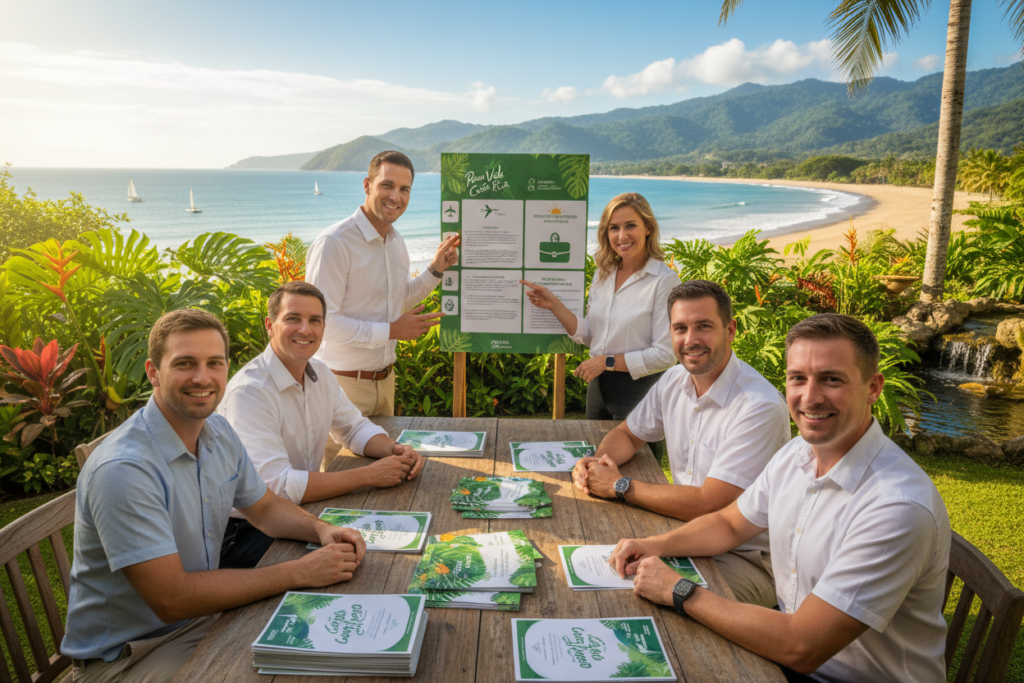
Your long-term plans should directly inform your choice between a temporary permit and a formal residency category. We clarify this distinction to set you on the correct path from the start.
Overview of Residency Programs
Costa Rica has established formal programs for those seeking permanent status. The Pensionado, Rentista, and Inversionista categories are designed for specific financial profiles.
Each one provides a clear, three-year pathway to permanent residency. This framework ensures a sustainable process for the country and long-term security for you.
Digital Nomad vs. Traditional Residency Explained
The Digital Nomad visa is a temporary permit. It allows a 12-month stay, which can be extended, but it carries a crucial limitation.
This visa does not count toward permanent residency or future citizenship in Costa Rica. It offers flexibility but lacks the legal foundation for a permanent move.
If your goal includes eventual citizenship, we recommend the traditional residency programs. Choosing the right option aligns your legal status with your life goals.
Who Qualifies for Costa Rica Residency
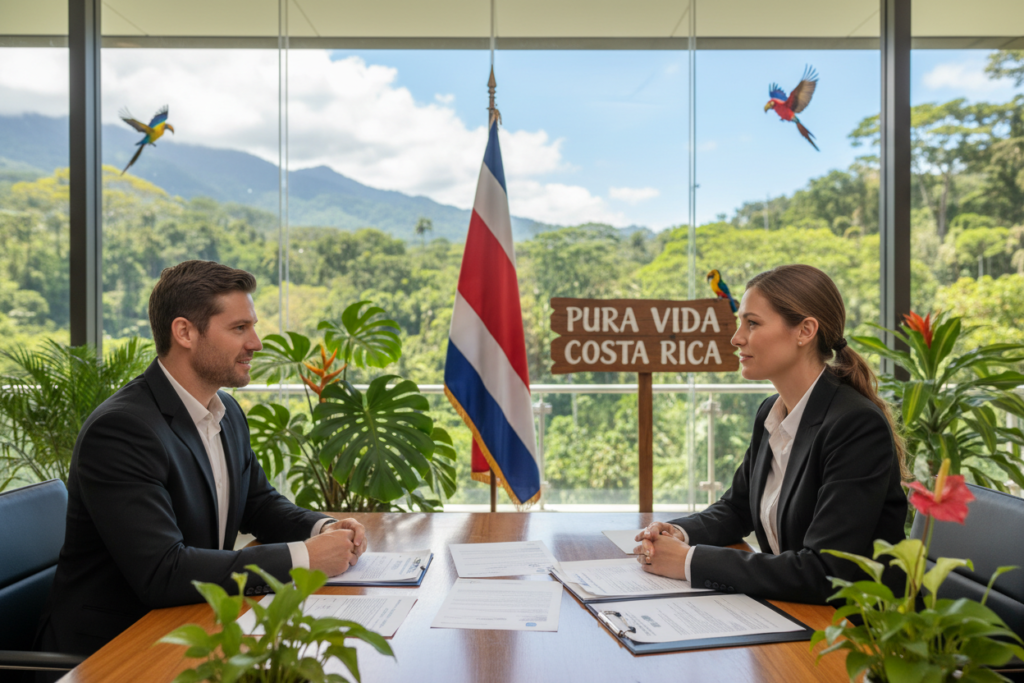
Determining your eligibility for long-term stay hinges on meeting specific financial criteria set by immigration authorities. The programs are designed to ensure applicants can support themselves without local employment.
Eligibility Criteria for U.S. Citizens
For many people, the Pensionado program is the most accessible route. It requires proof of a lifetime pension of at least US$1,000 per month.
For the Rentista category, DGME requires documentation issued by a competent authority showing stable and permanent income of at least US$2,500 per month for at least two years. If the income comes from abroad, the supporting documentation must be legalized and authenticated, or apostilled, by the corresponding authorities.
We assist you in evaluating your financial documents. Our goal is to ensure they meet the specific requirements set by officials in Costa Rica.
Understanding these income thresholds early is essential. It leads to a smooth application and avoids unnecessary delays in your journey.
Step-by-Step Guide to Preparing Your Documents Before Arrival
A smooth transition to life in Costa Rica hinges on one critical, upfront task: getting your documents ready before you arrive. We guide you to begin this essential work from home. This proactive approach is the single best way to control your timeline.
Apostilles, Translations, and Notarization Requirements
All U.S. documents must undergo two official steps. First, they need an apostille from the U.S. Department of State. Second, every page requires translation into Spanish by an authorized translator in Costa Rica.
This includes your birth certificate and FBI background check. Properly apostilled and translated paperwork is non-negotiable for acceptance.
Pre-Arrival Document Checklist
Start compiling your file while still in the United States. The entire residency process can take from three to twelve months. Early preparation saves valuable time and reduces filing stress.
For a complete list, refer to our detailed permanent residency document checklist. Having everything validated and translated before you land puts you months ahead.
Navigating the Application Process and Timelines
Submitting your residency application marks the official start of your legal transition in Costa Rica. This phase moves you from preparation to active processing with the government.
We guide you through each formal step to ensure nothing is missed.
Application Submission Steps
Your completed dossier must be filed with the Dirección General de Migración y Extranjería (DGME). This initiates the official legal review.
The submission involves paying government fees and formally lodging your request. You will receive proof that your residency process is officially underway.
It’s crucial to understand the document validity rules for Costa Rica at this stage. This ensures your paperwork remains current throughout the review.
Understanding Processing Timelines
The application process typically takes between 3 and 12 months. The exact timeline depends on your category and current government volume.
Staying organized is key. The immigration office may request additional information or clarifications.
We help you manage expectations for this waiting period. A key part of this is ensuring you remain compliant with your tourist visa status.
Our team provides ongoing support. We keep you informed at every stage to ensure your application moves as efficiently as possible.
Avoiding Common Pitfalls in Your Residency Application
Protecting your investment in a move to Costa Rica begins with sidestepping frequent application mistakes. Even small oversights can create major delays or legal complications. We focus on helping you navigate these potential traps from the start.
Common Mistakes to Avoid
One critical error is overstaying your tourist visa while waiting for approval. This violates immigration law in Costa Rica and can jeopardize your entire case. We advise strict adherence to all visa rules to keep your path clear.
Another common issue involves document preparation. Failing to get U.S. papers properly apostilled is a top cause for rejection. Many applicants also lose valuable time by not checking expiration dates on police records.
Relying on outdated information leads to errors. That’s why consulting with current experts is so important. By avoiding these pitfalls, you protect your investment of time and money. This careful approach ensures a more predictable outcome as you plan for the long-term benefits of Costa Rica residency.
Essential Steps for starting-life-costa-rica-residency
Organizing your essential paperwork from your home office sets the stage for a stress-free arrival. This proactive approach is the cornerstone of a seamless transition.
Getting Started from Home with Your Documents
We guide you to begin compiling your file while still in the United States. Creating a dedicated folder for apostilled certificates and background checks keeps everything streamlined.
Having these items ready before you land allows you to focus on settling in. You won’t need to scramble for paperwork during those first exciting weeks.
Our team at CRIE provides clear guidance on the specific records required for your application. This support ensures every detail receives professional care from the outset.
Proper preparation at home forms the foundation of a successful legal status request. It directly contributes to a peaceful and organized start in this beautiful country.
Requirements and Income Thresholds for Pensionado, Rentista, and Inversionista
Meeting specific income or investment thresholds is the cornerstone of a successful residency application. The three main categories—Pensionado, Rentista, and Inversionista—each have distinct financial benchmarks you must meet.
Pensionado Income Criteria
This program is designed for retirees. It requires proof of a lifetime pension of at least US$1,000 per month.
This stable income demonstrates your ability to support yourself without local employment.
Rentista and Investor Thresholds
The Rentista category suits those with a guaranteed income stream. You must show US$2,500 per month for a two-year period.
For the Inversionista path, a minimum investment of US$150,000 is required. Crucially, this investment must be held in your personal name, not a corporate entity.
We help you structure your proof of income or investment. Our goal is to ensure your documents satisfy the government’s strict criteria for these programs.
Preparing Financial and Personal Documentation from Home
Assembling your proof of income and financial statements from home is a proactive step that streamlines the entire immigration process. This preparation directly addresses the government’s need for verified financial stability.
Organizing Financial Statements and Proof of Income
Your financial statements require official verification. They must be stamped by your bank or a certified accountant to be accepted. This validation is non-negotiable.
Proof of income is the most critical component for Rentista or Pensionado applications. We assist you in preparing clear financial letters and accountant certificates. Every document must be properly authenticated.
Your financial documentation must align precisely with the income thresholds for your chosen category. Consistency here prevents delays.
We recommend maintaining both digital and physical copies of all records. Having your financial proof ready demonstrates your commitment. It facilitates a smoother review for your residency application in Costa Rica.
Tips to Successfully Transition Into Life in Costa Rica
After securing your legal status, the real work of building your daily life begins. This phase is about turning paperwork into practical comfort. We focus on the essential systems that make a house a home.
Setting Up Local Services and Bank Accounts
Opening a local bank account is a fundamental step. It allows you to pay utilities and manage expenses directly in the local currency. This simplifies your monthly budgeting in Costa Rica.
For medical needs, many people use a hybrid approach. They join the public Caja system for a solid foundation. Then, they supplement it with private insurance for faster access to specialists.
Building connections with other expats provides invaluable local knowledge. This network can recommend reliable internet providers and trusted doctors. It helps you navigate services and feel settled more quickly.
Our goal is to ensure your move is as smooth as possible. We provide practical guidance so you can enjoy your new lifestyle without unnecessary stress.
Maximizing Your Legal Stay and Future Citizenship Pathways
We help clients view their residency not as an endpoint, but as the foundation for their long-term goals. Your legal stay here is a sequential process. Careful planning is required to transition from temporary status to permanent residency and, ultimately, citizenship.
Renewal Requirements and Permanent Residency Options
After three full years of holding temporary status, you become eligible to apply for permanent residency. This status offers greater stability and fewer renewal obligations in Costa Rica.
Maintaining your legal status during those years is crucial. You must spend a minimum number of days in the country each year. We guide you through the renewal requirements to ensure full compliance with the law.
Steps Toward Citizenship After Residency
Citizenship by naturalization becomes an option after official residence of five or seven years, depending on nationality (TSE). This timeline is reduced to five years if you are married to a Costa Rican national.
The key requirement is uninterrupted legal status. Our team helps you plan for this long-term goal from the beginning. We ensure every step supports your path toward permanent residency or citizenship in Costa Rica.
Final Reflections: Embracing Your New Life in Costa Rica
The path from applicant to established resident is a transformative experience that reshapes your perspective. We are honored to guide expatriates through this significant life change.
Whether relocating with a spouse or your entire family, securing your legal status unlocks essential benefits. These include access to healthcare and the ability to own property.
Embracing the ‘pura vida’ lifestyle becomes your daily reality. The effort invested in the application process yields a lifetime of opportunity.
Your new chapter in this beautiful country awaits. Contact us via WhatsApp at +506 8706 3888 or email info@crie.cr to begin.
We look forward to helping you settle into the welcoming community that defines life here.
FAQ
What are the main differences between a Digital Nomad visa and a traditional residency status?
The Digital Nomad visa is a temporary, one-year permit for remote workers and entrepreneurs with foreign-source income. It’s simpler to obtain but doesn’t lead to permanent residency. Traditional options, like Pensionado or Rentista, require more documentation and a higher income threshold but provide a direct path to permanent status and eventual citizenship.
How much monthly income do I need to prove for the Pensionado program?
For the Pensionado (retirement) program, you must prove a lifetime pension of at least $1,000 per month. This proof of income must come from a legitimate source, like a government or corporate pension, and be documented with apostilled or authenticated statements.
What is the most common mistake people make during the application process?
The most frequent pitfall is submitting incomplete or incorrectly legalized documents. Every foreign-issued document, from birth certificates to bank statements, typically requires an apostille and an official Spanish translation. Missing this step can delay your process by months.
How long does it take to get residency approval after submitting my application?
The government’s processing time can vary, and Article 27 of the Reglamento de Extranjería gives DGME up to three months to resolve once all requirements are met. After approval, you’ll receive a DIMEX card, which is your official physical ID. The entire timeline, from document preparation to receiving your card, often spans 6 to 9 months.
Can I open a local bank account as a tourist, or do I need residency first?
While it’s challenging, some banks may allow you to open an account with just a tourist visa and proof of local address. However, the process is significantly easier once you have your DIMEX card from your residency application. We recommend securing residency first for smoother financial setup.
What are the financial requirements for the Rentista (proof of income) category?
For the Rentista category, DGME requires documentation issued by a competent authority showing stable and permanent income of at least US$2,500 per month for at least two years. If the income comes from abroad, the supporting documentation must be legalized and authenticated, or apostilled, by the corresponding authorities.
When can I apply for permanent residency or citizenship?
You can apply for permanent residency after maintaining your temporary status for three years. The path to citizenship requires seven years of legal residency, including three years as a permanent resident. You must also pass a Spanish language and Costa Rican history and culture test.
,000 per month. This proof of income must come from a legitimate source, like a government or corporate pension, and be documented with apostilled or authenticated statements.
What is the most common mistake people make during the application process?
The most frequent pitfall is submitting incomplete or incorrectly legalized documents. Every foreign-issued document, from birth certificates to bank statements, typically requires an apostille and an official Spanish translation. Missing this step can delay your process by months.
How long does it take to get residency approval after submitting my application?
The government’s processing time can vary, and Article 27 of the Reglamento de Extranjería gives DGME up to three months to resolve once all requirements are met. After approval, you’ll receive a DIMEX card, which is your official physical ID. The entire timeline, from document preparation to receiving your card, often spans 6 to 9 months.
Can I open a local bank account as a tourist, or do I need residency first?
While it’s challenging, some banks may allow you to open an account with just a tourist visa and proof of local address. However, the process is significantly easier once you have your DIMEX card from your residency application. We recommend securing residency first for smoother financial setup.
What are the financial requirements for the Rentista (proof of income) category?
For the Rentista category, DGME requires documentation issued by a competent authority showing stable and permanent income of at least US$2,500 per month for at least two years. If the income comes from abroad, the supporting documentation must be legalized and authenticated, or apostilled, by the corresponding authorities.
When can I apply for permanent residency or citizenship?
You can apply for permanent residency after maintaining your temporary status for three years. The path to citizenship requires seven years of legal residency, including three years as a permanent resident. You must also pass a Spanish language and Costa Rican history and culture test.
Rentista financial requirement verified September 6, 2026 against DGME: Residencia Temporal — Rentista y sus Dependientes. The published checklist specifies proof of income; it does not state that every applicant must deposit US$60,000.