Thinking about making a life in this beautiful country? You’re not alone. Many people from the United States and elsewhere dream of it. The journey to legal stay, however, hinges on one critical detail: your paperwork must remain valid throughout the entire application.

We created this guide to walk you through every step. It cuts through the confusion about timelines and specific criteria. We cover the primary pathways—Pensionado, Rentista, and Inversionista—and what each requires.

Starting your application from home with properly prepared documents is the smartest first move. Expired or incorrect forms can cause major delays. We’re here to offer clear, honest information to help you navigate this process successfully.

Understanding the Residency Process and Starting from Home

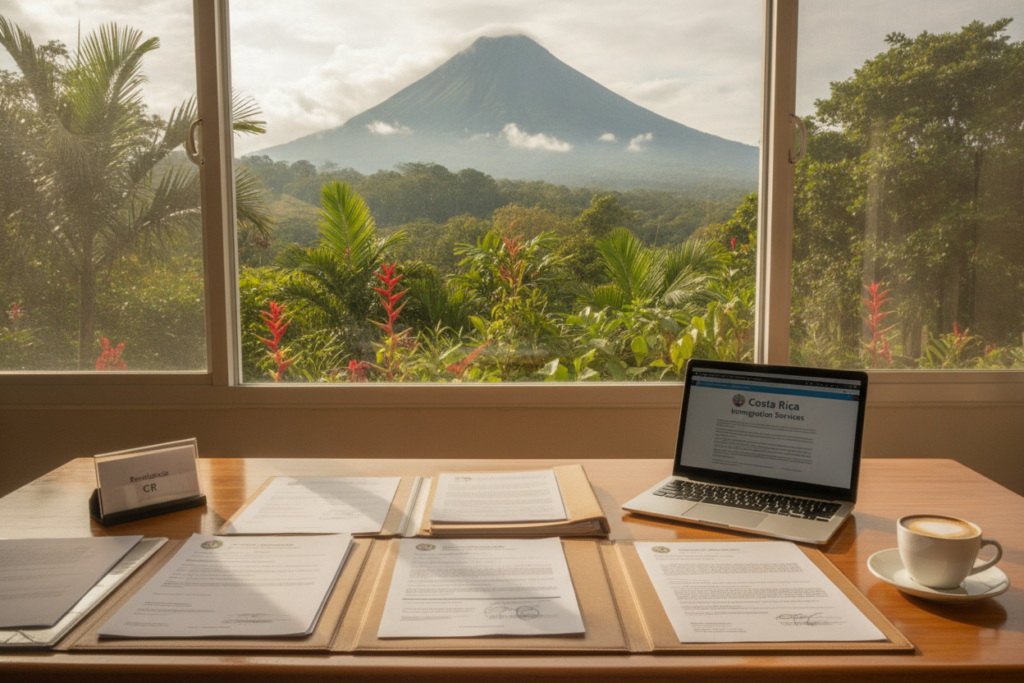
A cozy home office scene featuring a Caucasian individual in business casual attire, sitting at a desk with a laptop open, displaying the website for the "Pura Vida Costa Rica" residency application. The foreground includes a steaming cup of coffee, neatly arranged documents, and a potted plant for a touch of greenery. In the middle, the person is focused on the screen, their expression one of determination and hope. The background showcases a bright window with natural light streaming in, illuminating the workspace and creating a warm, inviting atmosphere. The overall mood is one of optimism and professionalism, perfect for someone beginning their Costa Rica residency journey.

Initiating your legal stay application from abroad provides control and minimizes potential delays upon arrival. We recommend this strategic approach because proper preparation is the key to a smoother experience.

Essential First Steps and Document Readiness

Your first task is identifying which category suits your situation. Understand the specific paperwork needed for that path.

Creating a realistic timeline is crucial, as some papers have expiration dates. Starting from home gives you easy access to vital records like birth certificates and police clearances.

You can obtain proper apostilles from the issuing jurisdiction and arrange certified translations without the pressure of a ticking clock.

Benefits of Starting Your Application from Home

This preparation offers strategic flexibility. You can enter the country on a tourist visa, sign your papers, get fingerprinted, and then return home.

This is possible as long as your file is formally submitted to Costa Rican authorities before that initial visa expires. Once filed, you are permitted to stay even if your tourist status lapses.

Proper groundwork typically helps your case move through the system more efficiently. Missing or incorrect items create delays that extend an already lengthy process—currently beyond one year due to backlogs. Getting it right the first time saves significant time and stress.

Who Qualifies for Costa Rica Residency

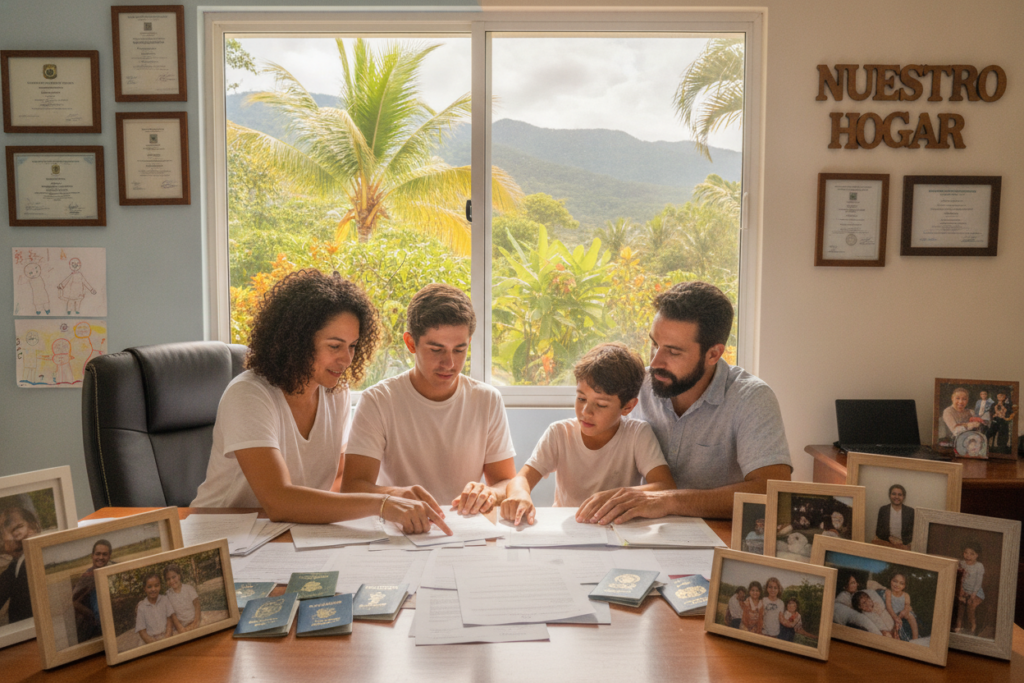
A visually engaging infographic illustrating the qualification categories for Costa Rica residency. In the foreground, portray diverse Caucasian individuals dressed in business casual attire, such as polo shirts and button-downs, exchanging ideas around a table filled with documents and maps of Costa Rica. In the middle ground, include simplified icons or graphics representing various residency categories, like "Pensionado," "Rentista," and "Investor." The background features a lush tropical landscape of Costa Rica with serene beaches and vibrant flora. Use soft, natural lighting to create an inviting atmosphere, and capture the scene with a warm, slightly elevated angle to provide depth. Ensure the brand name "Pura Vida Costa Rica" is subtly integrated into the design without overwhelming the visual elements.

Foreign nationals seeking to establish long-term roots have several distinct options. Each category has specific financial thresholds. Your choice depends on your life stage and source of funds.

Residency Options: Pensionado (Pensionado), Rentista (Rentista), and Inversionista (Inversionista)

The Pensionado category is for retirees. It requires proof of a lifetime pension of at least US$1,000 per month.

The Rentista path demands a guaranteed income of US$2,500 per month for two years. This is often shown with a bank letter.

The Inversionista option needs a minimum investment of US$150,000. This is usually in real estate. A critical rule: the property must be in your personal name, not a corporation’s.

Note: the Digital Nomad visa is not a residency status. It doesn’t count toward permanent status or future citizenship. For actual residency, you must use one of these three financial categories.

Eligibility Requirements and Inclusion of Family Members

A major benefit is including your family. The main applicant can add a legally married spouse and children under 18. There’s an exemption for older kids in higher education.

Be aware of work rules. Temporary residents under these programs can only work in their own business locally. To work as an employee, you must first become a permanent resident. That takes three years.

Gaining legal status is the first step. Citizenship is a much longer journey. For most, it requires seven years as a resident. You’ll also need to pass Spanish and history tests. For a detailed breakdown of Costa Rica immigration residency, review our complete guide.

Document Preparation and the Role of Apostilles & Translations

Navigating the paperwork maze requires understanding two key processes: apostilles and translations. Having your papers authenticated and translated before you arrive is mandatory. This upfront work prevents major delays later.

Checklist of Required Documents Before Arrival

Every applicant needs a core set of papers. This includes a birth certificate for each person. A marriage certificate is required if applying with a spouse.

You also need a police clearance from your home country. It must show a clean record. Gather these items well in advance of your move.

How to Obtain Apostilles and Certified Translations

The U.S. Embassy does not provide apostille services. You must get the stamp from the state or federal authority where your paper was issued.

For birth or marriage certificates, contact your state’s Secretary of State. FBI background checks need federal authentication. After apostilling, a certified translator must convert everything into Spanish.

U.S. citizens must also complete consular inscription. This involves a notarial appointment and a fee. Remember, an apostilled marriage certificate is often needed later for local social security (CCSS) dependency registration.

Costa Rica Residency Document Validity Rules

Many newcomers are surprised to learn that their legal status card has an expiration date. Even a “permanent” status requires regular renewal to keep your rights active.

Understanding Document Validity and Renewal Timelines

Your initial temporary residency card is typically valid for two years. Later renewals might extend this period to three years.

You can start the renewal process up to three months before the expiration date. We advise starting early to avoid issues.

If you miss the date, a grace period of up to three months exists. After that, a lawyer’s letter explaining the delay is mandatory. Temporary residents overdue by three months must renew through Migracion directly.

An expired card brings real restrictions. You cannot open new bank accounts or cell phone plans. You’ll also pay higher, non-resident fees at parks and services.

After three years of maintained legal temporary status, you become eligible for permanent residency. This status doesn’t require ongoing financial proof.

Officially, a new card arrives within 22 business days. In practice, wait times can stretch to two months or more. Plan your renewal timeline accordingly.

Step-by-Step Guidance: Timelines, Requirements, and Avoiding Mistakes

A clear timeline is your best ally when navigating the path to legal status. We’ll break down the entire journey from initial filing through renewal.

Key Timelines for Submission and Renewal

Start gathering documents 2-4 months before you plan to move. You must file your complete application while your tourist visa is valid.

Once submitted, you can stay legally while waiting. Approval currently takes about one year, often longer due to backlogs.

For renewal, begin the process up to three months before your card’s expiration date. Officially, it takes 22 business days. Real-world wait times can stretch to two months.

Common Pitfalls and How to Avoid Them

The biggest mistake is waiting until you arrive to start your paperwork. This forces you to get apostilles remotely under time pressure.

For renewal, proof of current CCSS (Caja) payments is mandatory. You must show as “active and covered” in the system.

Dependent status linked to a spouse’s policy lapses every couple of years. You must visit a local office to renew it.

Navigating this process alone can extend timelines by years. Knowledgeable legal counsel provides constant monitoring for the shortest possible processing time.

Navigating the Application Process: Practical Tips and Useful Thresholds

Understanding the financial thresholds for your chosen path is more than just hitting a number. It’s about proving your qualifications in a way that satisfies local verification processes. We’ll clarify what “meeting requirements” truly means on the ground.

Meeting Financial and Property Ownership Criteria

For the Investor category, the US$150,000 minimum typically involves real estate. A critical rule is that the title must be in your personal name, not a corporation’s.

If you buy land below the value but plan to build, you can count the construction cost. Your application, however, must wait until building is complete and the new value is registered officially.

The Rentista path requires a formal bank letter. It must commit to providing US$2,500 monthly for two years. This can come from a foreign or a local financial institution.

Some Costa Rican banks offer a practical solution. They may issue the letter if you place a US$60,000 certificate of deposit with them and provide full documentation.

Remember your work options. As a temporary resident, you can run your own business locally. You cannot, however, work as an employee for another company until you gain permanent status.

Final Steps to Secure Your Residency and Next Actions

With the foundational knowledge in place, the focus now shifts to practical execution. Begin gathering your essential papers—like birth and marriage certificates—from your home country. This initial groundwork is crucial for a smooth process.

Remember, the Digital Nomad visa does not lead to permanent status. If your goal is citizenship, you must first complete the residency pathway. That journey requires several years of maintained legal status.

You can work remotely for a foreign company under temporary status. Renewals are needed every few years. After three years, you may apply for permanent residency.

For personalized guidance, contact us via WhatsApp at +506 8706 3888 or email info@crie.cr. Visit crie.cr for resources and migracion.go.cr for official information.

FAQ

How long are my documents valid for during the application process?

Most crucial papers, like your birth certificate and marriage certificate, must be issued within six months of your submission date to the authorities. This rule ensures all information is current. Police clearance reports from your home country also have a strict validity window, typically three to six months.

Can I include my spouse and children in my application?

Yes, you can. Your spouse and dependent children under 25 can be included as dependents on most residency categories. You’ll need to provide proof of your relationship, such as a marriage certificate and your children’s birth certificates, all properly apostilled and translated into Spanish.

What are the main financial categories for qualifying?

The three primary paths are Pensionado, Rentista, and Inversionista. The Pensionado category requires a guaranteed lifetime pension of at least

FAQ

How long are my documents valid for during the application process?

Most crucial papers, like your birth certificate and marriage certificate, must be issued within six months of your submission date to the authorities. This rule ensures all information is current. Police clearance reports from your home country also have a strict validity window, typically three to six months.

Can I include my spouse and children in my application?

Yes, you can. Your spouse and dependent children under 25 can be included as dependents on most residency categories. You’ll need to provide proof of your relationship, such as a marriage certificate and your children’s birth certificates, all properly apostilled and translated into Spanish.

What are the main financial categories for qualifying?

The three primary paths are Pensionado, Rentista, and Inversionista. The Pensionado category requires a guaranteed lifetime pension of at least $1,000 per month. The Rentista category requires proof of a $2,500 monthly income for two years. The Inversionista path requires a minimum $150,000 investment in property or approved business projects.

Do I need to get my documents apostilled and translated?

Absolutely. Any legal document from outside the country, like your birth certificate or police record, requires an apostille from the issuing nation to verify its authenticity. After that, every document must be translated into Spanish by a certified translator recognized by the local Ministry of Foreign Affairs for official submission.

What is the most common mistake people make in the process?

A frequent error is submitting documents that have expired or using uncertified translations. The timelines for document validity are strict. Another common pitfall is not planning for the notarization and certification steps required locally after you arrive, which can cause significant delays in your timeline.

How long does the entire process take from start to finish?

The timeline varies, but you should generally plan for several months. After submitting your complete application package, the initial review by immigration can take 3 to 6 months. Once approved, you’ll receive a temporary permit and must later apply for your official identity card. The entire process requires patience and precise follow-up.

,000 per month. The Rentista category requires proof of a ,500 monthly income for two years. The Inversionista path requires a minimum 0,000 investment in property or approved business projects.

Do I need to get my documents apostilled and translated?

Absolutely. Any legal document from outside the country, like your birth certificate or police record, requires an apostille from the issuing nation to verify its authenticity. After that, every document must be translated into Spanish by a certified translator recognized by the local Ministry of Foreign Affairs for official submission.

What is the most common mistake people make in the process?

A frequent error is submitting documents that have expired or using uncertified translations. The timelines for document validity are strict. Another common pitfall is not planning for the notarization and certification steps required locally after you arrive, which can cause significant delays in your timeline.

How long does the entire process take from start to finish?

The timeline varies, but you should generally plan for several months. After submitting your complete application package, the initial review by immigration can take 3 to 6 months. Once approved, you’ll receive a temporary permit and must later apply for your official identity card. The entire process requires patience and precise follow-up.


Article by Glenn Tellier (Founder of CRIE and Grupo Gap)

Don't wait, contact us right now!
Call or WhatsApp Costa Rica +506 8373 2085 or +506 8706 3888
Call USA/Canada +1 305-906-6784

See If You Qualify For Residency Today!