
Residency Requirements in Costa Rica
Costa Rica residency is not complicated because there are too many categories. It becomes complicated because the documents must be prepared correctly, within specific timing windows, and in a format that immigration will accept.
When applications get delayed, it is rarely because someone did not try. It is usually because a document was issued incorrectly, expired too early, was not properly authenticated, or the wrong residency category was chosen from the start.
This page explains the core residency requirements, the most common document issues, and how to approach the process the right way from the beginning.
If you want to avoid mistakes before you start ordering documents, you can message our team on WhatsApp and we will help you confirm your category and document plan first.

Why Residency Applications Get Delayed
Check documents, timing and the category before filing. DGME may also request clarification during its review.
- Police records that expire before submission
- Birth certificates that were not prepared in the correct format
- Apostilles or authentication done incorrectly
- Translations that are not valid for Costa Rica immigration
- Choosing a category that does not match the applicant’s situation
These problems usually do not appear until the process is already underway, which is why fixing them later becomes expensive and time-consuming.
Residency Requirements at a Glance
- Most common categories: Pensionado, Rentista, Investor, and certain Family Ties pathways
- Key thresholds: Pensionado US$1,000/month, Rentista US$2,500/month for two years, Investor US$150,000
- Core documents: birth certificate, police record, passport copies, and category-specific proof
- Authentication: many documents must be apostilled or legally authenticated
- Translations: documents not in Spanish typically require official translation in Costa Rica
- Digital Nomad: not residency and does not lead to permanent residency
Core Documents Most Applicants Need
Most residency applications begin with the same basic foundation. While each category has its own requirements, these core documents appear in almost every case.
Birth Certificate
Your birth certificate must be issued in the correct format, authenticated, and later translated into Spanish for use in Costa Rica.
Police Record
A police clearance from the appropriate authority is required in most cases. Timing is critical, as these documents can expire before submission if ordered too early.
Passport and Copies
A valid passport is essential. Full copies are often required, and missing pages or poor-quality scans can create delays.
Category Proof
Each residency category requires specific supporting documents. This is where most applications succeed or fail depending on how well the documentation matches the category rules.
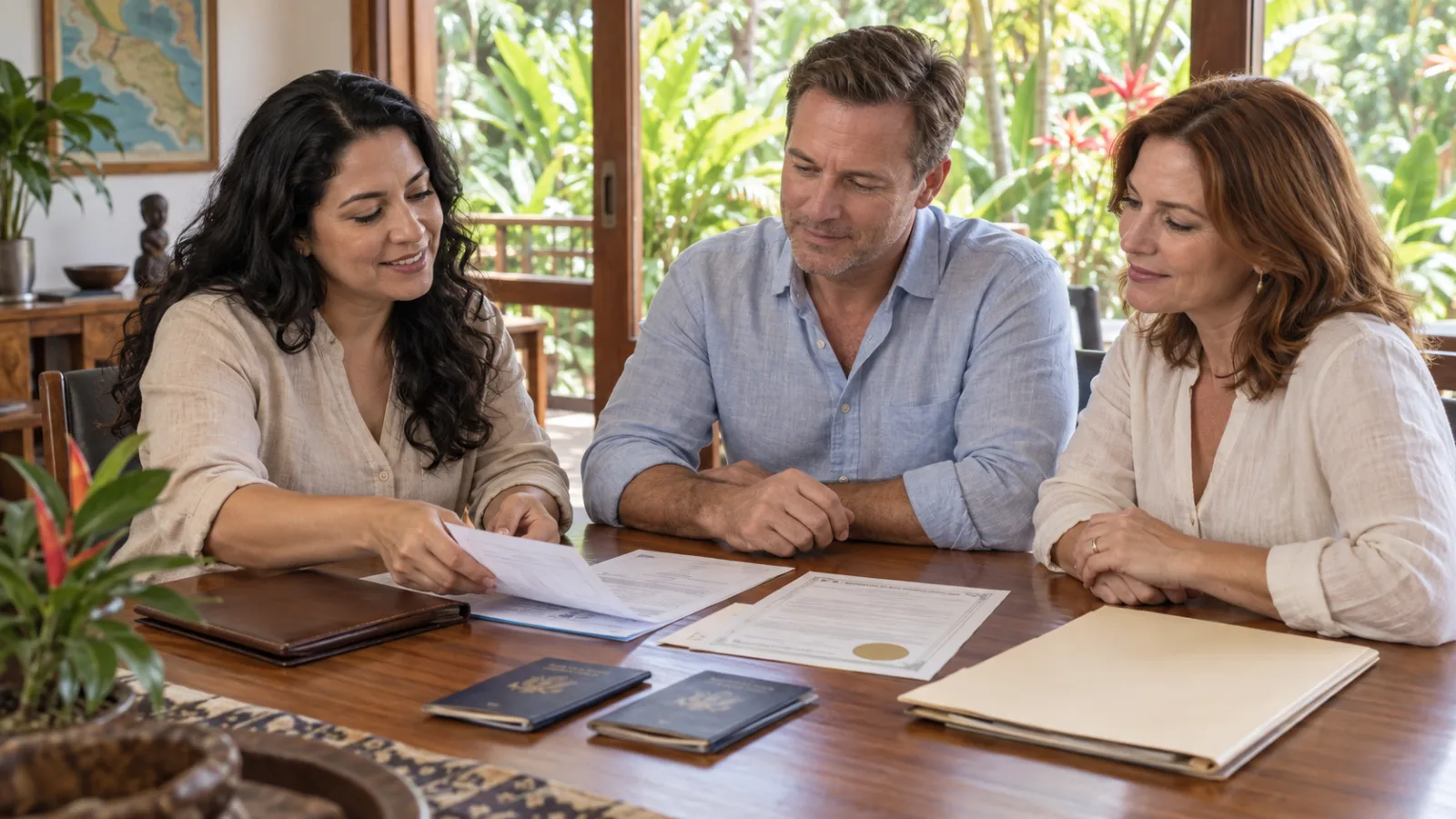
The Most Common Document Problems
Incorrect Authentication
Many documents must be apostilled or otherwise authenticated depending on the country. Using the wrong method or applying it incorrectly is one of the most common causes of delay.
Translation Issues
Documents often need official Spanish translation in Costa Rica. Translations done incorrectly or too early can result in documents being rejected.
Timing Mistakes
Some documents must still be valid at the time of submission. Ordering documents too early can be just as problematic as ordering them too late.
Main Residency Paths in Costa Rica
Choosing the correct category is one of the most important decisions in the entire process.
- Pensionado: Based on a lifetime pension of at least US$1,000 per month. Disability pensions may qualify if they meet the lifetime requirement.
- Rentista: Requires at least US$2,500 per month in stable income for two years.
- Investor: Requires a qualifying investment of at least US$150,000.
- Family Ties: Based on qualifying relationships with a Costa Rican citizen.
If you are currently looking at the Digital Nomad visa, it is important to understand that it is not residency and does not lead to permanent residency. Many people later transition into a residency category such as Rentista.
How the Process Usually Works
- Choose the correct residency category
- Plan your documents and timing
- Obtain and authenticate documents in your home country
- Translate documents into Spanish in Costa Rica
- Submit your application
- Respond to any immigration requests
- Complete post-approval steps and obtain your DIMEX
Start Your Residency Process From Your Home Country First
One of the biggest mistakes people make is traveling to Costa Rica before confirming that their documents are correct.
It is much better to start the process from your home country and send your documents to us on WhatsApp for review. This allows us to confirm:
- Your documents are in the correct format
- Authentication is done properly
- Nothing is missing
- Timing will not cause documents to expire
This approach helps you avoid delays, additional costs, and unnecessary travel complications.
Common Mistakes
- Choosing the wrong residency category
- Ordering documents too early or too late
- Incorrect apostille or authentication
- Using translations that are not valid
- Name inconsistencies across documents
- Assuming Digital Nomad is residency
How CRIE Helps
Residency is much smoother when your category is correct and your documents are prepared properly from the beginning.
- Confirm the correct residency category
- Provide a clear document plan
- Review documents before submission
- Identify issues before they cause delays
- Guide the process step by step

Frequently Asked Questions
Do all residency categories require the same documents?
Most share core documents, but category-specific proof is different and must match the rules exactly.
Can I apply with my family?
Yes, many categories allow dependents, but each person requires proper documentation.
Do translations need to be done in Costa Rica?
In most cases, yes. Official translations must follow the accepted format for immigration use.
How long does the process take?
Timelines vary by category, workload and the circumstances of the file. Preparation does not guarantee an approval date.
Quick Comparison
Message CRIE on WhatsApp
If you are planning to apply for residency in Costa Rica, the most important step is starting with the correct category and document plan.
Send us your situation on WhatsApp and we will help you review your documents before you begin.
WhatsApp: +506 8373 2085
Email: info@crie.cr
Professional Disclaimer
This page is provided for general informational purposes only. Immigration rules, internal criteria, and required documentation can change. Information on this page is based on, and checked against, Costa Rica’s official immigration authority (Migración/DGME): https://migracion.go.cr/.
Check the current document rules
DGME’s general requirements include exceptions for qualifying older birth certificates and explain the national scope of criminal records. Do not apply a blanket expiry rule to every document. Read our detailed document checklist for those distinctions and the accepted translation methods.
DGME category and general requirements checked September 7, 2026.