
Daily life in Costa Rica depends on your neighborhood, household and routine. A beach visit tells you little about school runs, grocery trips or managing a home through the rainy season. Before making a long commitment, spend time doing ordinary weekday tasks in the area you are considering.
Pros and cons of living in Costa Rica
The advantages and drawbacks depend on what you value and the address you choose. Treat the following as a personal comparison framework, not a promise that every town has the same conditions.
- Outdoor lifestyle: living near places you enjoy can make outdoor activities part of your routine. Balance that appeal against the weather, home maintenance and transport arrangements you would need throughout the year.
- Community and a fresh start: new friendships and local activities can be rewarding. Building those connections takes time, and distance from existing family and friends may be difficult. Include return visits in your plans.
- Choice of setting: coast, city and mountain communities offer different possibilities. A quieter or more scenic address can also mean a longer trip for appointments, work or shopping. Test the routes rather than judging from a map.
- Different spending choices: a new routine may let you change what you spend on housing, food or leisure. It does not guarantee a cheaper life. Price your actual needs, including imported preferences, transport, insurance and moving costs.
- Learning Spanish: language practice can bring independence and a stronger connection with neighbors. Important appointments and unfamiliar paperwork can be harder while you are learning, so budget time or assistance where needed.
- A new daily rhythm: changing your routine may be part of the attraction. It also means learning unfamiliar processes and accepting that services may work differently from what you expect. Verify requirements with each provider.
Test the move before making a long commitment
Write down three things you hope to gain and three things you would find difficult to give up. During a trial stay, complete ordinary errands, track expenses and test a normal working week. Include anyone moving with you in that assessment.
A useful decision is specific: can this home, in this community, support our budget and daily needs? Read our cost-of-living guide and Spanish-language guide to build the practical side of that comparison.
Choose an address that works for your routine
List the places you need regularly: shops, work, school, healthcare appointments and activities. Test the actual routes at the times you expect to travel. Notice slopes, sidewalks, parking, noise and access in wet weather. Ask service providers about the exact address rather than assuming availability across an entire town.
Compare more than one area. Our guides to Escazú and Playas del Coco illustrate different questions to ask when evaluating a place to live.
Make groceries and meals part of the plan

Build a shopping list from meals you actually cook. Compare the same quantities and brands across shops, and include transport or delivery costs. Try local produce that you enjoy while keeping room in the budget for the imported items you want.
Check opening hours directly before a special trip. The supermarket guide links to store information and explains how to compare a real basket. A generic national price list is less useful than receipts from your own routine.
Learn useful Spanish a little at a time
Practise greetings, directions, numbers, dates and phrases for asking someone to repeat an explanation. Keep the address and contact details you need written down. For an important agreement or medical discussion, arrange language assistance if necessary instead of guessing at unfamiliar terms.
Spanish varies between speakers. Our etiquette guide includes university sources on local usage, along with practical advice about greetings and communication.
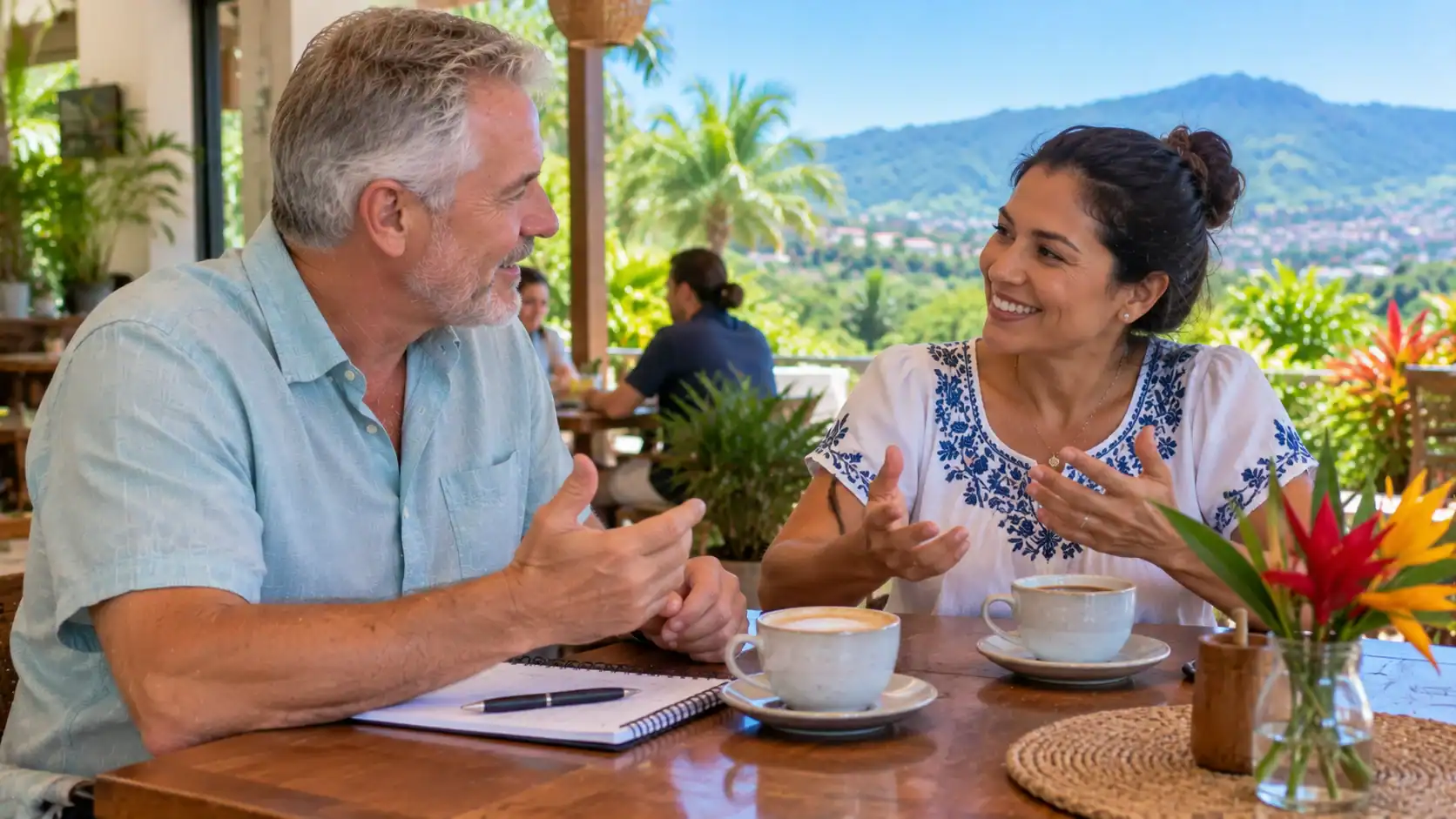
Get to know your neighbors
Introduce yourself, ask how residents share useful notices and learn your household’s waste-collection arrangements. Confirm collection details with the municipality. When someone recommends a service, check the provider’s availability, scope and price yourself.
Respect privacy and avoid treating one neighbor’s experience as a rule for the whole country. Building trust takes ordinary courtesy: agreeing on arrangements clearly, following through and addressing small problems before they grow.
Organize money, services and household records
Keep a simple list of recurring bills, due dates and the person responsible for each payment. Separate regular living costs from deposits, moving expenses and occasional repairs. Review your budget after you have actual local bills.
Our currency guide explains how to compare rates without relying on a fixed exchange-rate estimate. If you employ someone at home, use the household hiring checklist to plan the employment obligations too.
Build a week you enjoy

Set aside time for activities beyond errands. Look for a dance class, a public library or another activity that genuinely interests you. Confirm schedules and access directly. Meeting other newcomers can help, while participation in local activities gives you a wider connection to the community.
Make room for both social time and privacy. You do not need to reproduce your old routine exactly or accept every invitation to settle in successfully.
If your household needs social support, our social-assistance guide identifies official IMAS and CONAPAM resources and questions to ask about an assessment.
A practical first-month checklist
- Test the routes you will use most often.
- Confirm utilities, connectivity and household payment responsibilities.
- Identify grocery options and keep actual spending records.
- Save important contacts and your address offline.
- Practise useful Spanish and plan language help for important appointments.
- Try one regular local activity and review what fits your needs.
Reviewed September 7, 2026. This is practical planning guidance; linked topic guides provide their own official sources. Individual healthcare, employment and immigration arrangements need separate checks. Images are contextual illustrations, not photographs of identified residents or locations.
Thinking of moving to Costa Rica?
Get a free residency assessment. Tell Johanna, our immigration expert, about your situation, and she will tell you which residency fits you and what you need.
WhatsApp Johanna: +506 8373 2085Free assessment
Or email info@crie.cr