
Dance classes in Costa Rica can be a way to enjoy music, build a regular hobby and meet people. Choose a class by style, teaching approach and location rather than assuming one dance is the right choice for every newcomer.
Options include social partner dancing, folkloric performance and studio disciplines. Check the current Ministry of Culture’s activity listings alongside local schools and municipal programmes. Source review: September 7, 2026.
Discover swing criollo
Swing criollo is a distinctive Costa Rican dance tradition. The Ministry of Culture describes its relationship to cumbia rhythms and movements from U.S. swing, and records its national intangible-heritage recognition in 2012.
The ministry announced a UNESCO nomination in March 2025. A nomination should not be confused with inscription on UNESCO’s list. If you want to learn this style, ask whether the school teaches swing criollo specifically and whether it offers a beginner group.
Start with rhythm, balance and a comfortable connection with your partner. A teacher should explain movements progressively; there is no need to attempt difficult turns or jumps before you are ready.
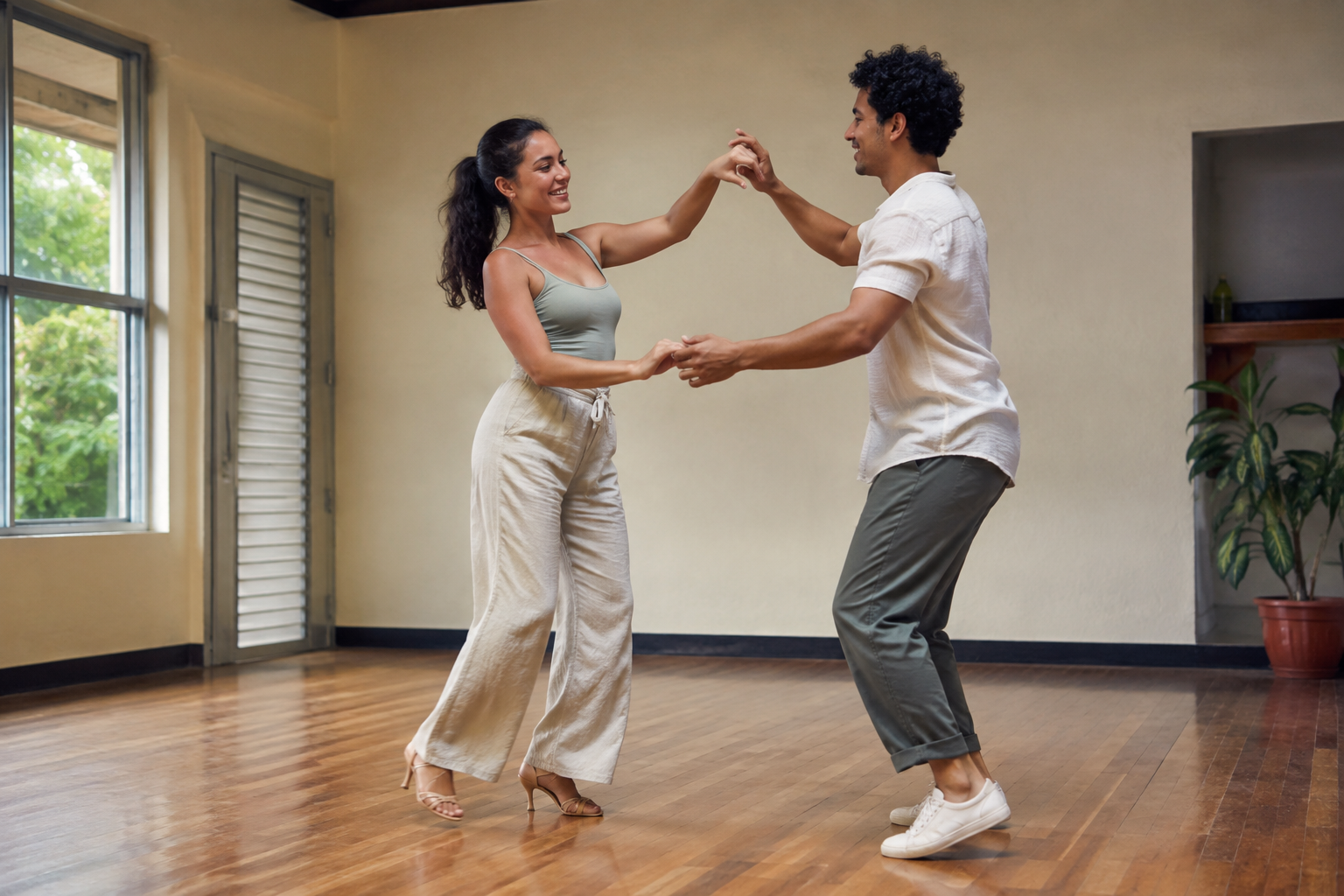
Salsa, bachata, merengue and other social styles
Ask the school what each course covers. Some programmes combine rhythms; others focus on a single style. A class labelled “Latin dance” may not match what you have in mind, so request a sample lesson description.
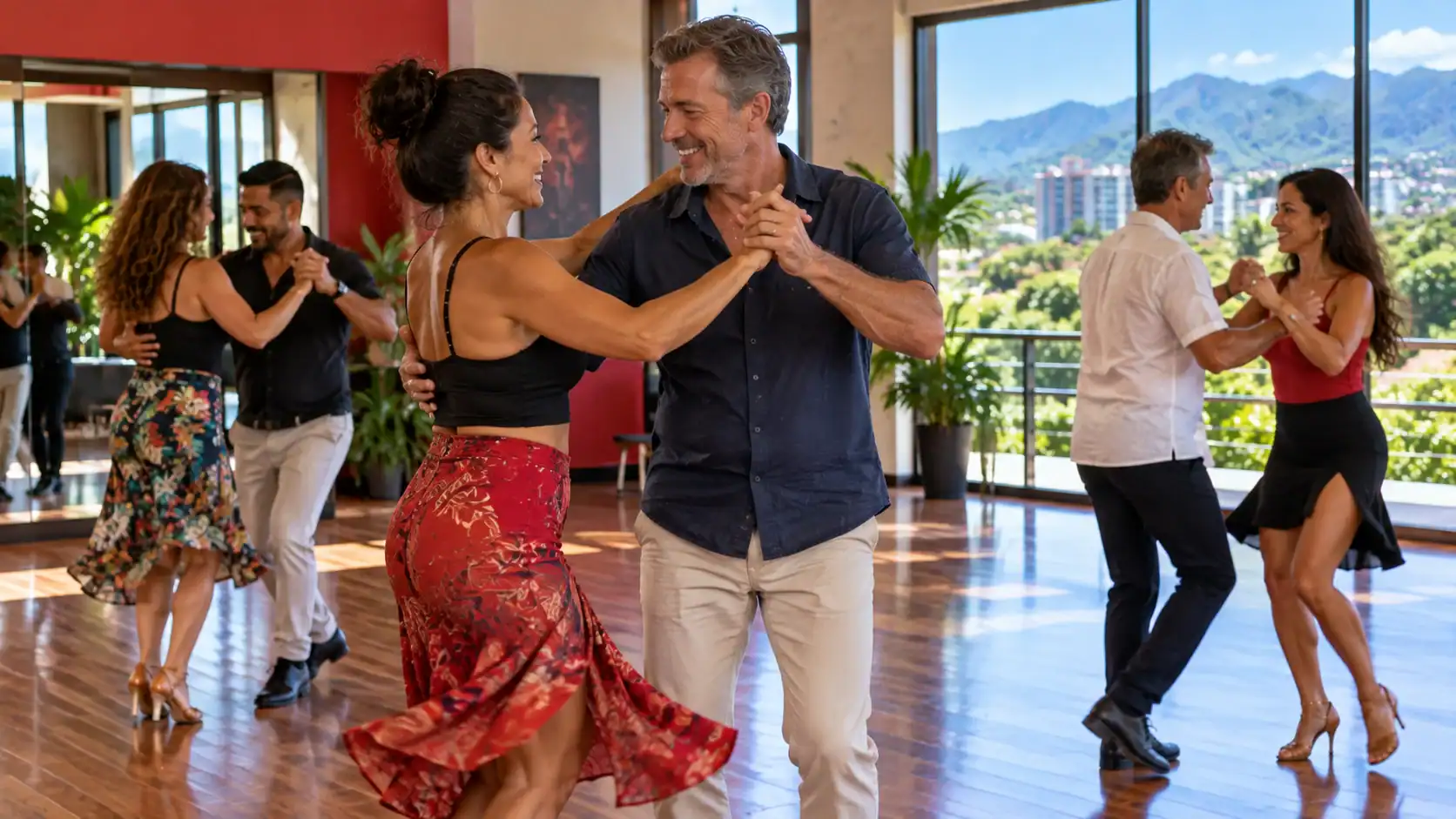
Find out whether you need to bring a partner, whether partners rotate and how the teacher handles different experience levels. Explain any boundaries around physical contact. You can decline a dance or a movement without having to justify it.
Folkloric dance and performance groups
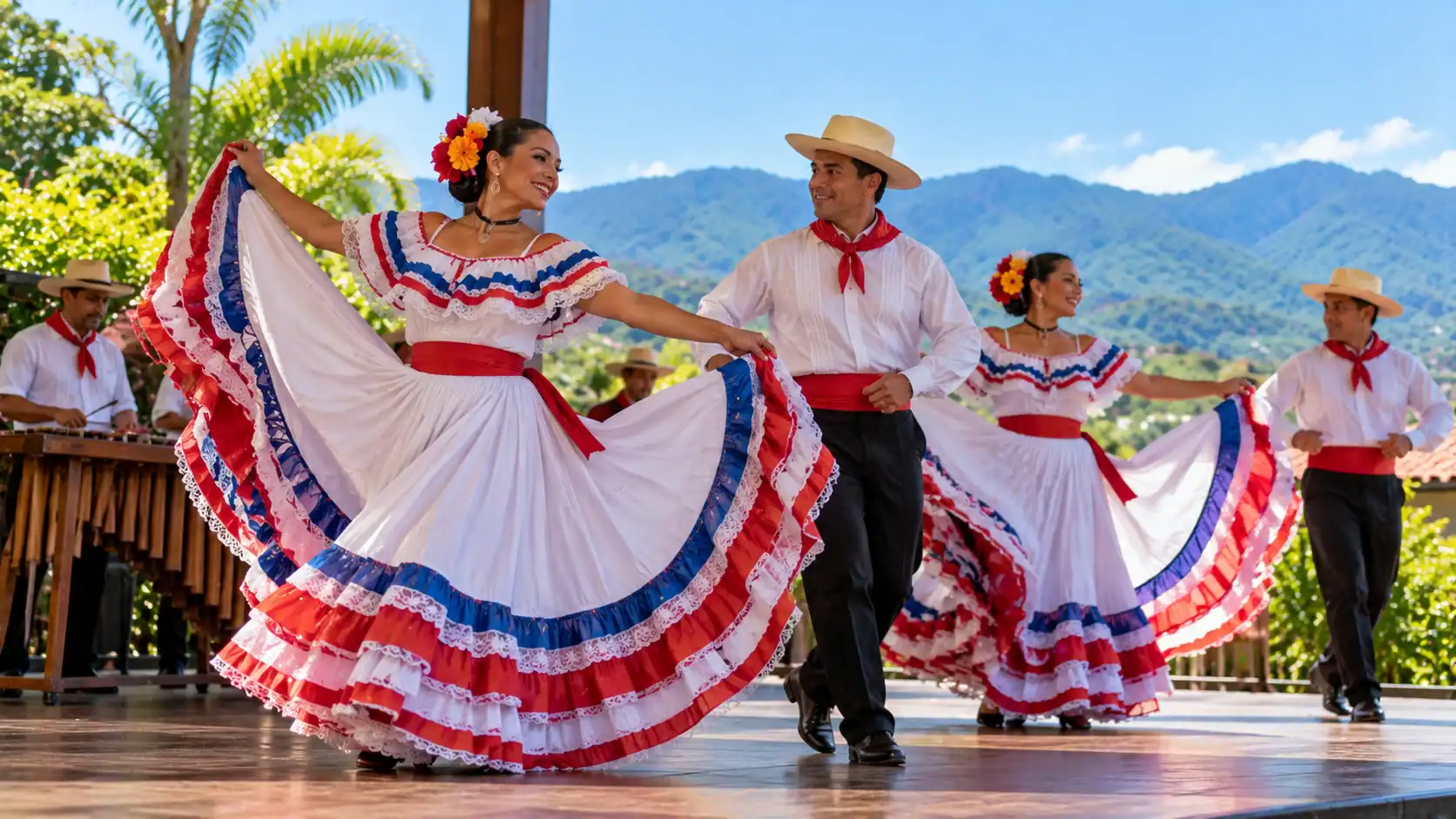
If you are interested in Costa Rican cultural performance, ask about folkloric dance programmes, including Guanacaste traditions. A performance group may involve rehearsals, choreography and costume costs beyond the weekly lesson.
Social dancing, folkloric performance and ballet or contemporary technique offer different experiences. Choose based on your interests rather than treating one as more authentic or valuable than another.
Where to look for classes
The Taller Nacional de Danza publishes training opportunities through official cultural channels. Its January–February 2026 summer programme is an example of the range offered, not a current enrolment notice. Check new dates before making plans.
For regional options, contact a local cultural centre, municipality or school. Ask for the instructor’s background, the venue address, current price and class size. A nearby class you can attend consistently may be easier to maintain than a distant one.
Questions before enrolling
- Is this a beginner course or an ongoing group?
- Which language is used, and can instructions be adapted if needed?
- What shoes and clothing suit the floor and style?
- Are trial classes, missed-class options or refunds available?
- Are performances or social events optional?
- Can the teacher accommodate relevant movement limitations?
Wear comfortable clothing, bring water and let the instructor know when something feels uncomfortable. Learning takes practice; progress does not require comparing yourself with the most experienced person in the room.
Our cultural etiquette guide has more ideas for making connections. For immigration planning, contact CRIE.
Images are illustrations of dance activities, not photographs of named schools or instructors.