
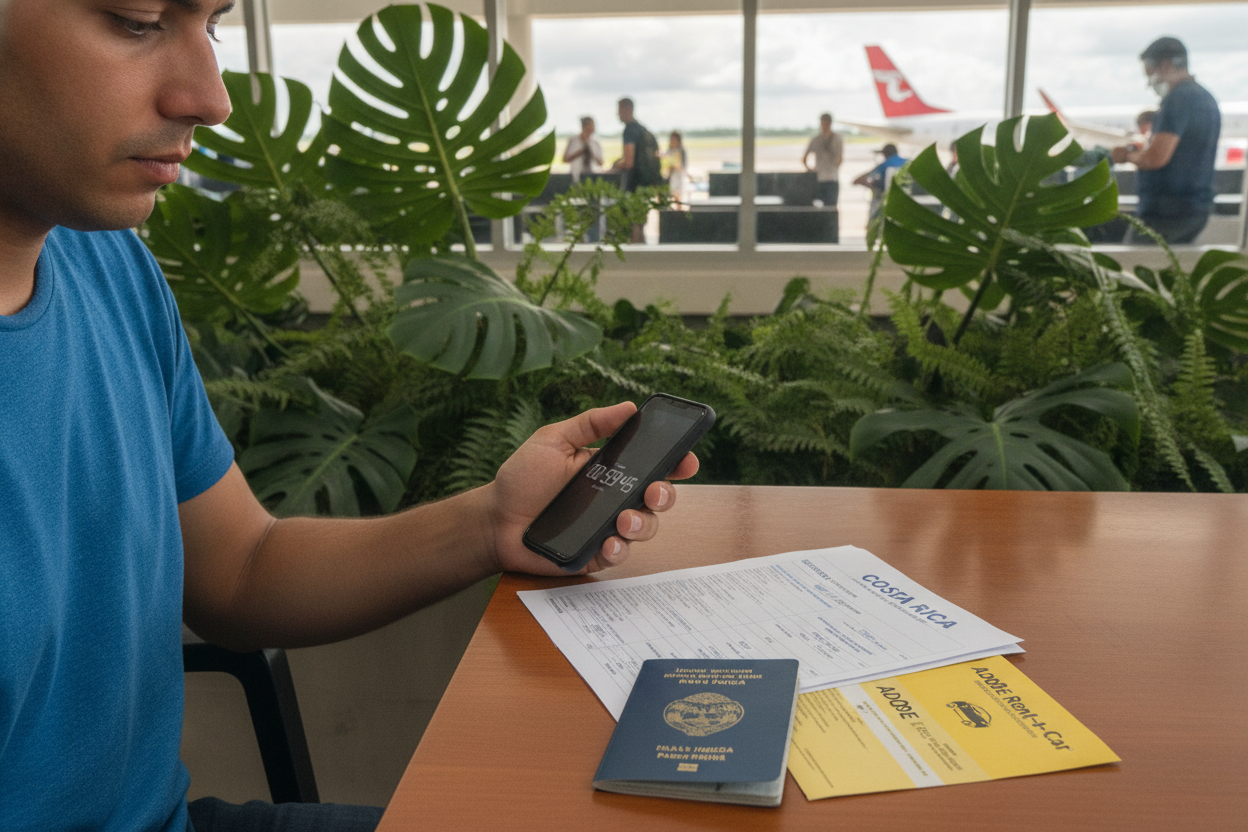
Traveling to Costa Rica is an exciting adventure, but it’s essential to be prepared for the customs and immigration process. When you land at either San Jose International Airport or Guanacaste Airport, you will need to present specific documents to ensure a smooth entry.
Your passport is the most crucial document you will show to an immigration officer upon arrival. Understanding what is required can help you navigate the process with ease. Many travelers often wonder about the necessary documentation for customs, and we aim to clarify these requirements.
Knowing the difference between immigration and customs is vital for a stress-free experience. With the right preparation, your journey to this beautiful country can begin on the right foot.
Understanding Costa Rica Customs and Immigration
To ensure a smooth entry into Costa Rica, familiarity with customs and immigration processes is key. Upon landing, you will first navigate through immigration before proceeding to customs. This two-step process is designed to manage both people and their belongings efficiently.
In Costa Rica, immigration focuses on individuals, while customs deals with luggage and personal items. After deplaning at the airport, follow the signs to the immigration hall. Here, an immigration officer will review your travel documents and grant your entry status.
Once you clear immigration, head to the baggage claim area for customs screening. It’s important to keep your travel documents accessible to streamline this process. Both San Jose International Airport and Guanacaste Airport adhere to standardized procedures for all international arrivals.
Preparing Your Documents for a Smooth Entry
Before stepping into the vibrant culture of Costa Rica, having the right documents ready is crucial. Your passport must be valid for the entire duration of your visit. Immigration officers will scan it to verify your identity upon arrival.
Additionally, you must provide proof of your first night’s accommodation. This could be a hotel reservation or the specific address of your Airbnb stay. Having these details organized helps you answer questions quickly at the immigration desk.
Immigration officers may inquire about the purpose of your visit to ensure your activities align with your tourist status. Always keep a digital or printed copy of your accommodation details handy to avoid confusion during the entry process.
what-documents-will-i-need-to-show-customs-when-i-arrive-in-costa-rica
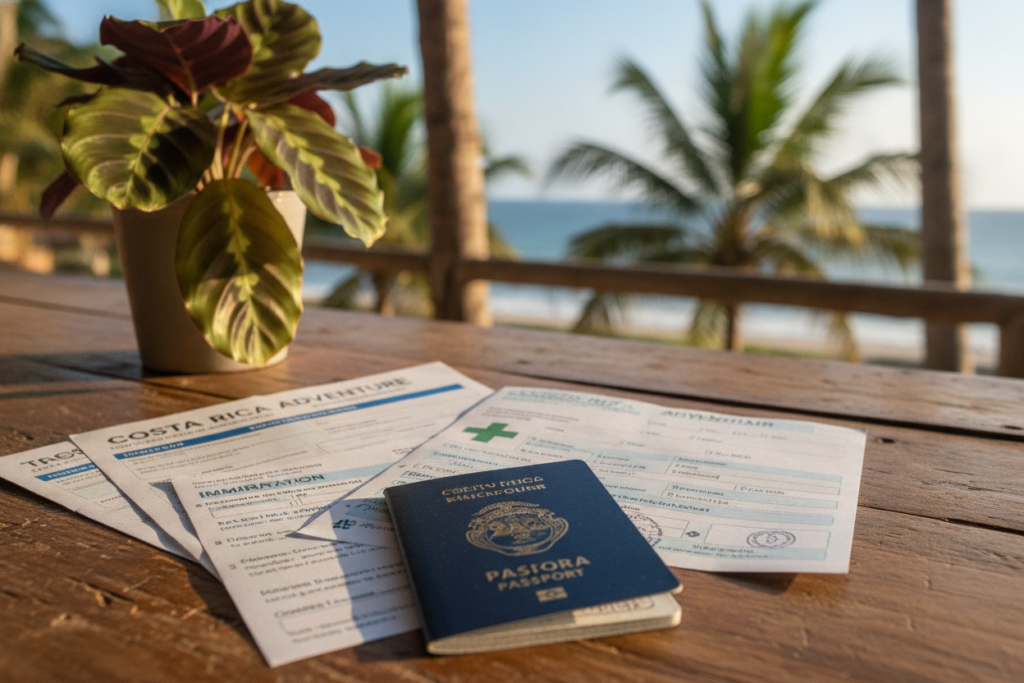
Understanding the required documentation is vital for a hassle-free entry into Costa Rica. You must present proof of exit within 180 days if you belong to Group 1. A return flight ticket is the best proof of your intent to leave the country.
Here’s a quick overview of the essential documents:
- To answer the question about what documents are needed, you must have a confirmed return flight ticket out of the country.
- Most visitors receive a tourist visa for up to 180 days, but you must show proof of your departure within that timeframe.
- If you do not have a return ticket, the immigration officer may limit the number of days you are allowed to stay.
- Having your return flight information saved on your phone or printed is essential for proving your intent to exit within 180 days.
- The tourist visa duration is ultimately at the discretion of the officer, so having clear proof of your travel plans is vital.
Step-by-Step Guide Through the Immigration Process
Navigating through the immigration process in Costa Rica can be straightforward if you know what to expect. Upon exiting the plane, we should immediately follow the “Migración” signs. This will lead us to the immigration hall where officers process arrivals efficiently.
At the immigration desk, the officer will ask a few simple questions about our trip and the duration of our stay. It’s important to ensure that the officer provides a stamp in our passport. This stamp indicates our legal status and the duration of our permitted stay.
If we plan to rent a car, having this stamp is crucial, as it verifies how many days we are legally allowed to drive. Typically, the entire immigration process takes only a few minutes per person, though we should be prepared for varying lines depending on the number of flights arriving.
Navigating the Customs Screening Procedure
Understanding the customs screening process is essential for a seamless arrival experience. After clearing immigration, we will collect our luggage and proceed to the customs area. Here, all items must be scanned through an X-ray machine.
The customs screening uses a random system. We may receive a green light to exit or a red light indicating a manual inspection. If we get stopped, we will need to bring our luggage to the side for a thorough examination.
It’s advisable to avoid exchanging money at the airport bank counters. They often offer poor rates compared to local banks. Once we pass through the final customs exit, we are officially in the country and ready to begin our adventure.
Tips for Timing and Airport Navigation
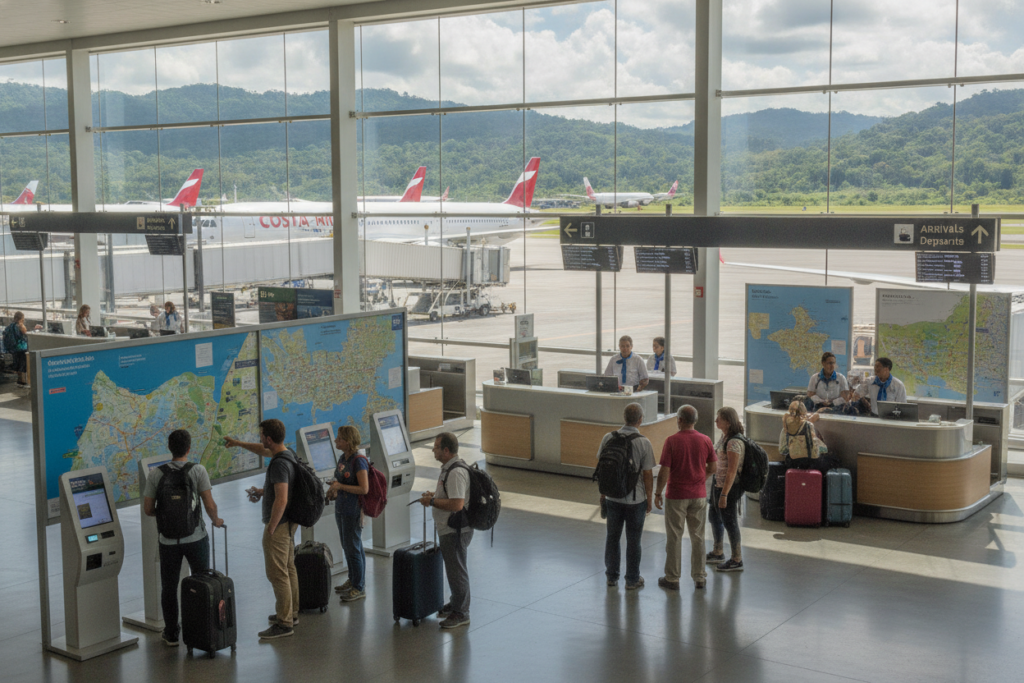
Arriving in a new country can be exhilarating, but timing your arrival can make a significant difference. Understanding the best times to arrive at the airport can help us avoid long lines and ensure a smoother entry process.
Optimal Arrival Times to Avoid Crowds
To save time, we should schedule our flights to arrive before 10 AM or after 6 PM. This strategy helps us avoid the busiest mid-day clusters, typically between 11 AM and 2 PM.
San Jose International Airport is generally busier than Guanacaste Airport, especially during the high season from December to April. If we are traveling with friends, it’s essential to remember that immigration officers usually ask each adult to approach the desk separately.
Utilizing Airport Facilities Effectively
The airport facilities include air-conditioned bathrooms in the immigration area, providing a more comfortable wait during peak hours. Additionally, planning our arrival for a Tuesday or Wednesday can significantly reduce the time we spend waiting in lines.
Addressing Common Immigration Hiccups
As we prepare for our journey, understanding common immigration challenges can help us avoid unnecessary delays. Immigration officers are increasingly strict about checking that your passport is valid for the entire duration of your planned stay. If your passport expires before your departure date, entry may be denied.
Moreover, it is essential to have proof of onward travel. This could be a bus ticket to Panama or Nicaragua if you do not have a flight. Without this proof, you may be denied entry, so ensure you have a return ticket or a bus ticket out of the country.
We have seen many travelers face delays in immigration lines because they failed to provide the necessary proof of their exit plans. Always double-check your passport expiration date months before your trip to avoid any issues with the immigration visa requirements.
If you are missing documentation, you might be forced to purchase a ticket on your phone while waiting in the immigration lines.
Residency Considerations and Expert Insights
Exploring residency options in Costa Rica can be a rewarding journey, especially with the right guidance. Many travelers who initially visit as tourists often consider transitioning to a more permanent status.
For over 20 years, CRIE has provided practical support to individuals and families navigating the complexities of Costa Rica residency and immigration. Our expert, Johanna Alvarez, is dedicated to helping you understand your options.
While our guide focuses on tourist arrivals, we recognize that many visitors explore long-term residency. CRIE offers personalized guidance for those wishing to shift from a tourist visa to a permanent residency.
Every residency case is unique, depending on nationality, family situation, and immigration history. This is why expert advice is invaluable. If you have questions about your specific situation, reach out to Johanna for clarity on the next steps.
Connect with CRIE for Personalized Guidance
Navigating the customs and immigration requirements for Costa Rica is much easier when you have the right information at your fingertips. We hope this guide has clarified the essential documents needed for your arrival and the overall immigration process.
If you require personalized guidance regarding your residency journey, please reach out to our team for professional assistance. For specific pricing and to discuss your next steps, you can speak directly with Johanna Alvarez, our CRIE immigration expert.
Contact us today via WhatsApp at +506 8706 3888, email info@crie.cr, or visit our website at crie.cr to learn more.
FAQ
What documents do we need to enter Costa Rica?
We need a valid passport, proof of onward travel, and sometimes a tourist visa, depending on our nationality.
How long can we stay in Costa Rica as tourists?
Typically, we can stay for up to 90 days without a visa, but it’s essential to check our specific country’s regulations.
What should we do if our passport is about to expire?
We should ensure our passport is valid for at least six months beyond our planned departure date from Costa Rica.
Is there a fee for entering Costa Rica?
Generally, there is no entry fee for tourists, but we may need to pay a departure tax when leaving the country.
How do we handle customs if we have items to declare?
We should be honest about our items and declare anything that exceeds the allowed limits to avoid fines.
What happens if we don’t have proof of onward travel?
Without proof of onward travel, we may be denied entry, so it’s crucial to have a return flight ticket ready.
Can we use a digital version of our documents?
It’s best to have printed copies of our documents, as customs officials typically prefer physical copies.
How can we expedite the customs process?
Arriving during off-peak hours and having all our documents ready can help us move through customs more quickly.
Article by Glenn Tellier (Founder of CRIE and Grupo Gap)
Don't wait, contact us right now!
Call or WhatsApp Costa Rica +506 8373 2085 or +506 8706 3888
Call USA/Canada +1 305-906-6784