
The sun sets in Costa Rica between about 5:10 p.m. and 6:00 p.m. all year. The earliest sunsets come in mid-November, around 5:11 p.m., and the latest in mid-July, around 6:01 p.m. Sunrise stays between about 5:15 a.m. and 6:00 a.m. Because Costa Rica is close to the equator, there are no long summer evenings like those farther north, and the country does not change its clocks.
Sunrise and sunset times in Costa Rica by month
These are the official 2026 times for San José from the Instituto Meteorológico Nacional (IMN), in local time. Beaches and towns elsewhere in the country are usually within about ten minutes of them, and a nearby ridge or the sea horizon can make the real moment a little earlier or later.
| Month | Sunrise, 1st | Sunset, 1st | Sunrise, 15th | Sunset, 15th |
|---|---|---|---|---|
| January | 5:52 a.m. | 5:27 p.m. | 5:57 a.m. | 5:35 p.m. |
| February | 5:58 a.m. | 5:42 p.m. | 5:55 a.m. | 5:45 p.m. |
| March | 5:50 a.m. | 5:47 p.m. | 5:43 a.m. | 5:47 p.m. |
| April | 5:33 a.m. | 5:46 p.m. | 5:26 a.m. | 5:46 p.m. |
| May | 5:19 a.m. | 5:47 p.m. | 5:16 a.m. | 5:49 p.m. |
| June | 5:15 a.m. | 5:53 p.m. | 5:16 a.m. | 5:57 p.m. |
| July | 5:20 a.m. | 6:00 p.m. | 5:23 a.m. | 6:01 p.m. |
| August | 5:26 a.m. | 5:58 p.m. | 5:28 a.m. | 5:54 p.m. |
| September | 5:27 a.m. | 5:45 p.m. | 5:26 a.m. | 5:36 p.m. |
| October | 5:25 a.m. | 5:27 p.m. | 5:24 a.m. | 5:19 p.m. |
| November | 5:26 a.m. | 5:13 p.m. | 5:30 a.m. | 5:11 p.m. |
| December | 5:37 a.m. | 5:13 p.m. | 5:44 a.m. | 5:19 p.m. |
For any other day, the IMN publishes the full daily table, and its home page shows today’s sunrise and sunset for San José.
How to find the sunset time for your trip
The Instituto Meteorológico Nacional publishes sunrise and sunset information. Check the year, reference location and whether times are local. A national reference table is useful background, but your beach, mountain lodge or town can have a different horizon and slightly different timing.
Sunset and darkness are different
Sunset marks the sun disappearing below the reference horizon; twilight continues afterward. Clouds, forest cover and mountain slopes can make a route feel dark before an open viewpoint does. Do not treat the end of twilight as a safe deadline for finishing an unfamiliar hike.
Twilight is short this close to the equator, so darkness follows sunset quickly. Plan to be off a trail or back on a main road by the published sunset time.
Why the seasons feel different from northern countries
Costa Rica is relatively close to the equator. Daylight changes through the year, but you should not expect the extremely long summer evenings or very short winter days of higher latitudes. A sunset outing still needs to be planned for the actual day.
The sun can also disappear behind a nearby ridge before the published astronomical sunset. For photography, arrive early enough to find a safe viewpoint and see how the local horizon affects the scene.

Does Costa Rica change its clocks?
Costa Rica uses UTC−6 and does not currently make seasonal daylight-saving clock changes. The time difference with another country can nevertheless change when that country changes its clocks. Check both locations when arranging international calls or transport connections.
For current clock information, see Costa Rica’s time zone. Avoid assuming that all of Canada, the United States or Europe follows the same local clock rules.
Plan outdoor activities around local conditions
- Check the sunset time for your destination and date.
- Follow trail opening hours and your guide’s turnaround advice.
- Allow extra time for a slow return, changing weather and unfamiliar roads.
- Carry a working light, while planning to finish an unlit route before visibility becomes poor.
- Arrange your ride home before heading to a remote viewpoint or beach.
A fixed instruction to finish every activity at 5:30 p.m. is not suitable everywhere or in every month. Use the route, weather and available daylight to choose an earlier, realistic return time.
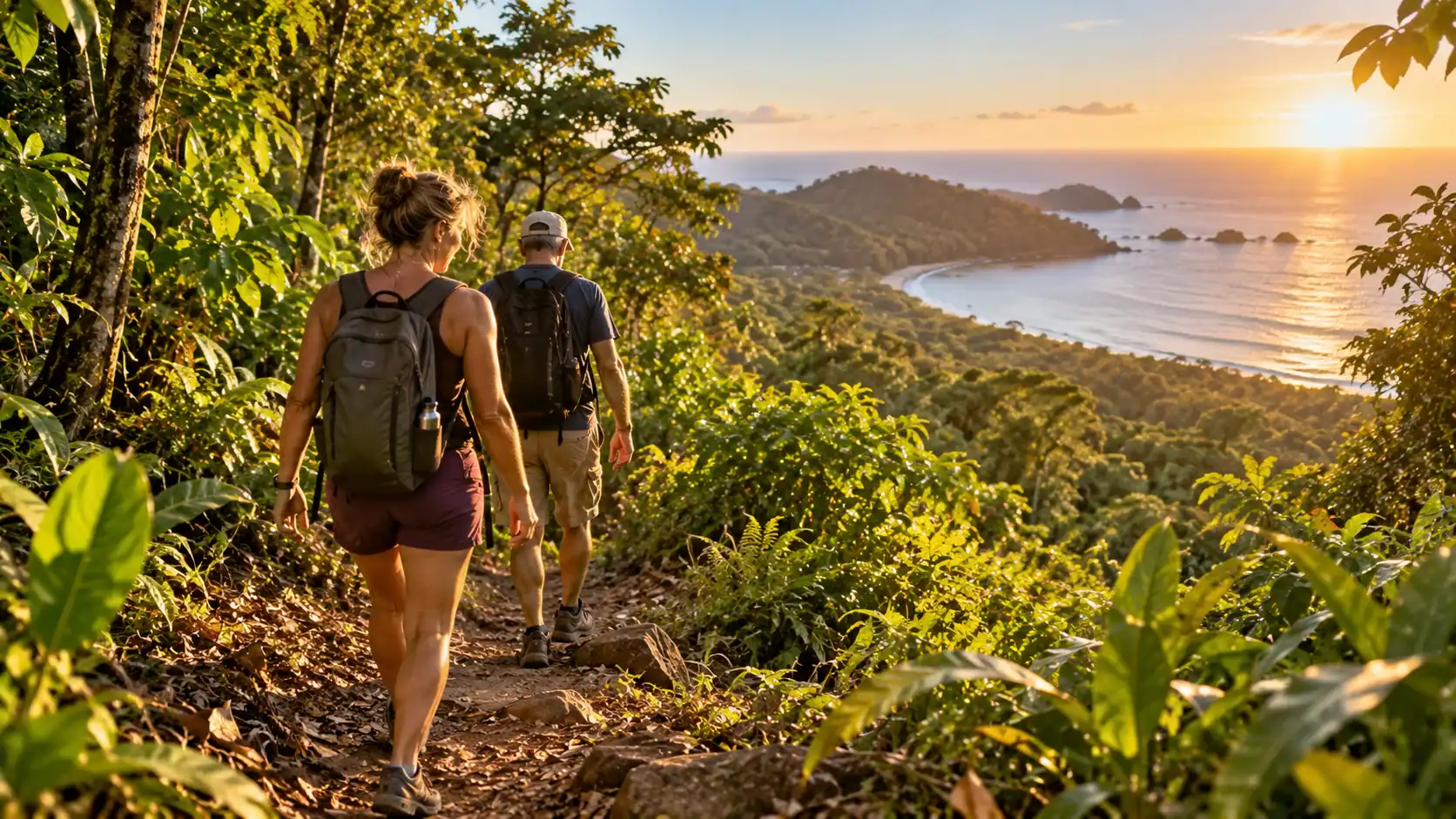
Getting home after a sunset outing
Choose a place with a clear return route and a dependable transport plan. An attractive viewpoint is not a reason to take an isolated shortcut after dark. Our night-walking guide covers route and transport considerations.

Reviewed September 6, 2026. The official-table examples above apply to their stated 2026 dates; check current information before your outing.