
Before packing for Costa Rica, distinguish prohibited items from goods that require authorization, inspection or a declaration. A sealed package or a personal-use label does not automatically make an item admissible. Check the product, country of origin, quantity and travel method with the responsible authority.
Customs clearance concerns your belongings and declarations; it is separate from immigration admission. Airline baggage approval also does not establish permission to import an item.
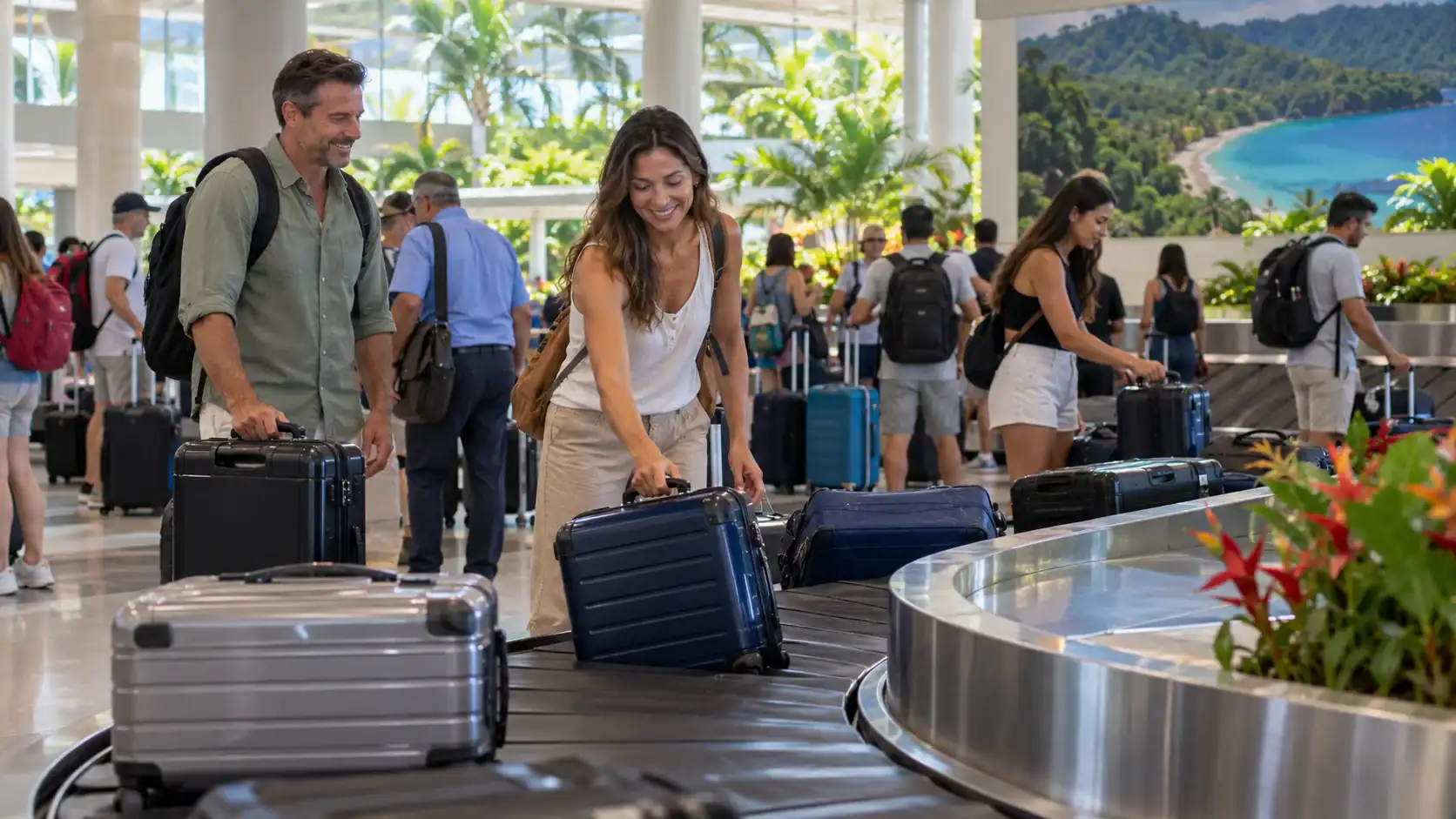
Pork products: a specific passenger-luggage prohibition
SENASA’s published notice says pork products and by-products from any country are prohibited in passengers’ hand luggage and checked baggage, in any presentation. Do not assume cured, canned, vacuum-packed or commercially packaged pork is an exception.
This is a passenger-baggage rule. It should not be confused with the procedures for authorized commercial imports. Check SENASA’s current notices before travel.
Other foods and animal products
For other animal-origin products, ask SENASA’s Animal Quarantine Directorate about the specific item. Identify its ingredients, origin, processing and packaging. Do not apply a rule about one food to every food, and do not rely on a previous traveler’s experience as permission.
Plants, seeds and plant-based souvenirs
The State Phytosanitary Service (SFE) advises checking requirements before bringing plant materials or ordering them online. Examples include seeds, fruit, plants, cuttings, growing substrates, some wood and plant-fiber souvenirs.
SFE explains that requirements vary by product presentation and origin, including personal-use items. Materials arriving without required prior procedures can be retained or destroyed. Consult SFE before packing rather than assuming an inspection on arrival will solve missing paperwork.
Medication: confirm the rules for your actual medicine
Prepare a medication list with the active ingredient, strength, dose and quantity. Keep original labels and medical documentation available, and ask the Ministry of Health about authorization before traveling with controlled medication.
The ministry’s published traveler guidance for internationally controlled substances describes personal-use quantities covering one month and supporting records, including identification, prescription and a recent medical report. That document is dated 2013 and addresses controlled substances; it is not a universal allowance for every medicine. Confirm the current procedure for your treatment with the ministry before departure.
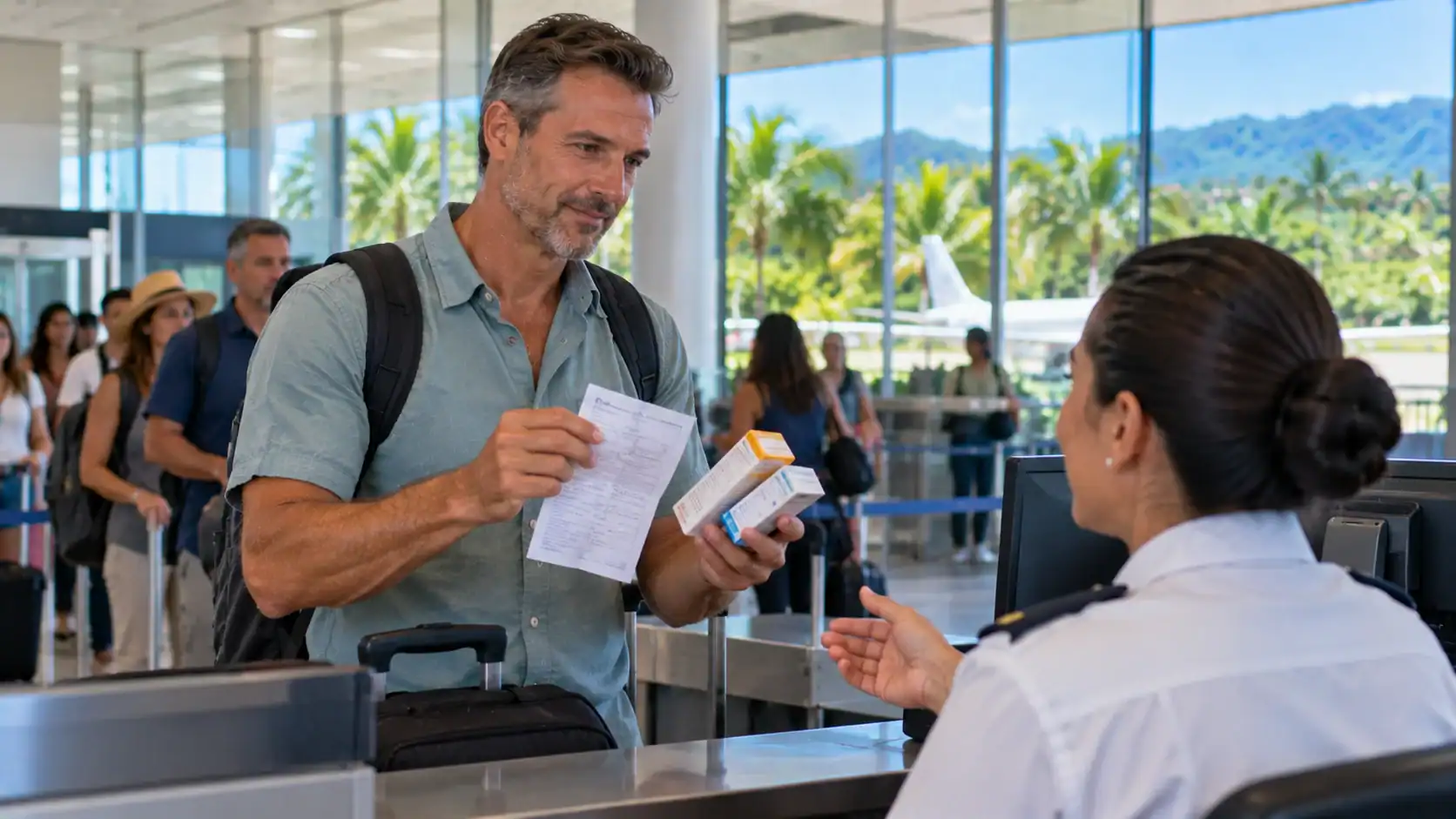
Cash and securities: declaration is not a ban
Hacienda’s customs procedures manual describes a declaration for cash or securities totaling US$10,000 or more, or the equivalent in another currency. Carrying that amount should not be described simply as a prohibited import.
Tell the customs officer and obtain the required declaration instructions. Keep supporting records available and ask Hacienda about the current process before traveling. The linked manual is the February 2021 publication, not a newly issued 2026 form.
Weapons and ammunition require a separate check
The Ministry of Public Security’s Armament Directorate lists import and clearance procedures for weapons, ammunition and accessories, including noncommercial applications. A foreign ownership permit or airline acceptance does not replace Costa Rican authorization. Obtain an answer for the exact item before attempting to travel with it.
Pets are not ordinary baggage
Check SENASA’s animal-health requirements and your airline’s transport conditions before booking. Specify the animal species, country of departure and whether the animal travels with you or separately. Airline paperwork and government health requirements serve different purposes.
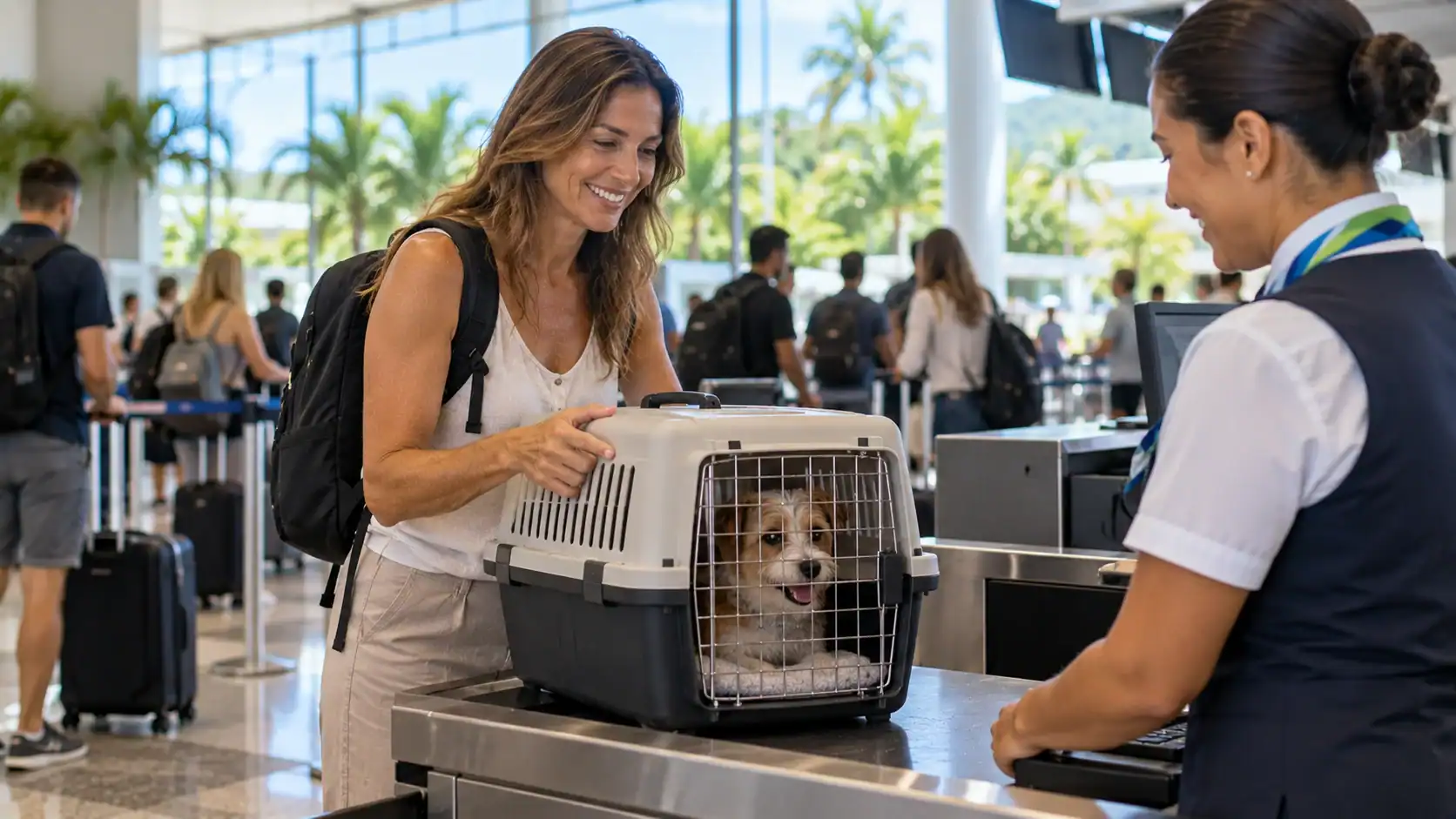
Our pet-travel guide helps organize the preparation. Use SENASA’s requirements for the final document checklist rather than relying on an illustration or a generic packing list.
Commercial goods, purchases and household shipments
Do not assume every item in a suitcase qualifies as personal baggage or enters tax-free. Keep invoices, quantities and intended use clear, and ask customs or a qualified customs broker about goods for sale, professional equipment or a large shipment.
For a move, review our household-goods shipping guide and customs duties guide. Permission to import, taxes and transport charges are separate questions.
Before packing: five useful checks
- List regulated foods, plants, medicines, animal products and other sensitive items.
- Identify the exact product, origin, quantity and travel method.
- Contact the responsible authority before departure and complete any required prior procedures.
- Keep invoices, medical records and permits accessible where relevant.
- Make required declarations and ask an officer when uncertain; do not conceal items.
Official sources checked September 7, 2026. Older documents are identified by date above. This guide highlights common issues rather than reproducing every import restriction. Images are illustrations, not official forms or evidence of permission.