
Yes, you can bring your dog or cat to Costa Rica, and SENASA’s rules set no quarantine period for pets that meet them. SENASA, Costa Rica’s animal health service, asks for an official health certificate from your country’s veterinary authority, a vet exam within two weeks before departure, current vaccines and parasite treatment within 15 days before travel. Pets are inspected when they arrive; a pet that does not comply is refused entry and sent back.
SENASA’s requirements for dogs and cats
These come from SENASA’s official requirement sheet for importing dogs and cats (DCA-PG-02-RS-01-IN-006, version 11, in force since 19 July 2024) and its December 2025 notice.
- Official health certificate: issued or endorsed by the official veterinary authority of the country of origin, numbered, with every page signed and stamped. Electronic certificates are accepted if the authority has an online system to verify them. It must be in Spanish or English, or come with an official Spanish translation.
- Vet exam within two weeks before departure: the animal must be healthy, with no tumors, no fresh or healing wounds and no external parasites.
- Parasite treatment within 15 days before export: internal and external, with the date, brand, lot number and active ingredient written on the certificate.
- Vaccines: dogs against distemper, hepatitis, parvovirus and leptospirosis; cats against rhinotracheitis, calicivirus and panleukopenia.
- Rabies: required for dogs and cats over three months and valid on the day of arrival. Puppies and kittens under three months must not be vaccinated against rabies; their age-appropriate vaccination plan is certified instead.
- No notary and no consulate stamp: the certificate does not need to be notarized or stamped by a Costa Rican consulate. Bring the original and a copy.
For departures from the United States, USDA APHIS’s Costa Rica page requires a USDA-accredited veterinarian’s certificate followed by APHIS endorsement. Its linked bilingual certificate contains the detailed conditions. Begin arranging the process early enough for examination, corrections and endorsement.
Is there a waiting period after the rabies vaccine?
SENASA sets no waiting period. It requires the rabies vaccine to be valid on the day your pet enters Costa Rica, with the vaccination date, brand, manufacturer, lot number and period of validity recorded on the certificate. Your airline, or a country you connect through, may have its own rules, so check those too.
Does my pet need a microchip?
Not for Costa Rica. SENASA’s certificate records a microchip or transponder number if the animal has one. A chip is still worth having: the United States requires one for any dog entering or returning there (see below), and a matching number on the certificate makes your pet easy to identify.
In the cabin, as checked baggage or as cargo
If your pet travels in the cabin or as checked baggage and arrives with you, you only present the health certificate at the border inspection post. If it travels as declared cargo or arrives without you, you must hire a customs agency in Costa Rica to obtain a prior import permit (the Formulario de Requisitos Sanitarios) before the pet arrives. SENASA resolves that request within 24 working hours of receiving the original document.
If your pet takes prescription medicine, carry the prescription with it. Ask the airline how your animal will be classified on every flight segment; flying on the same aircraft does not always mean it is recorded as accompanied baggage.
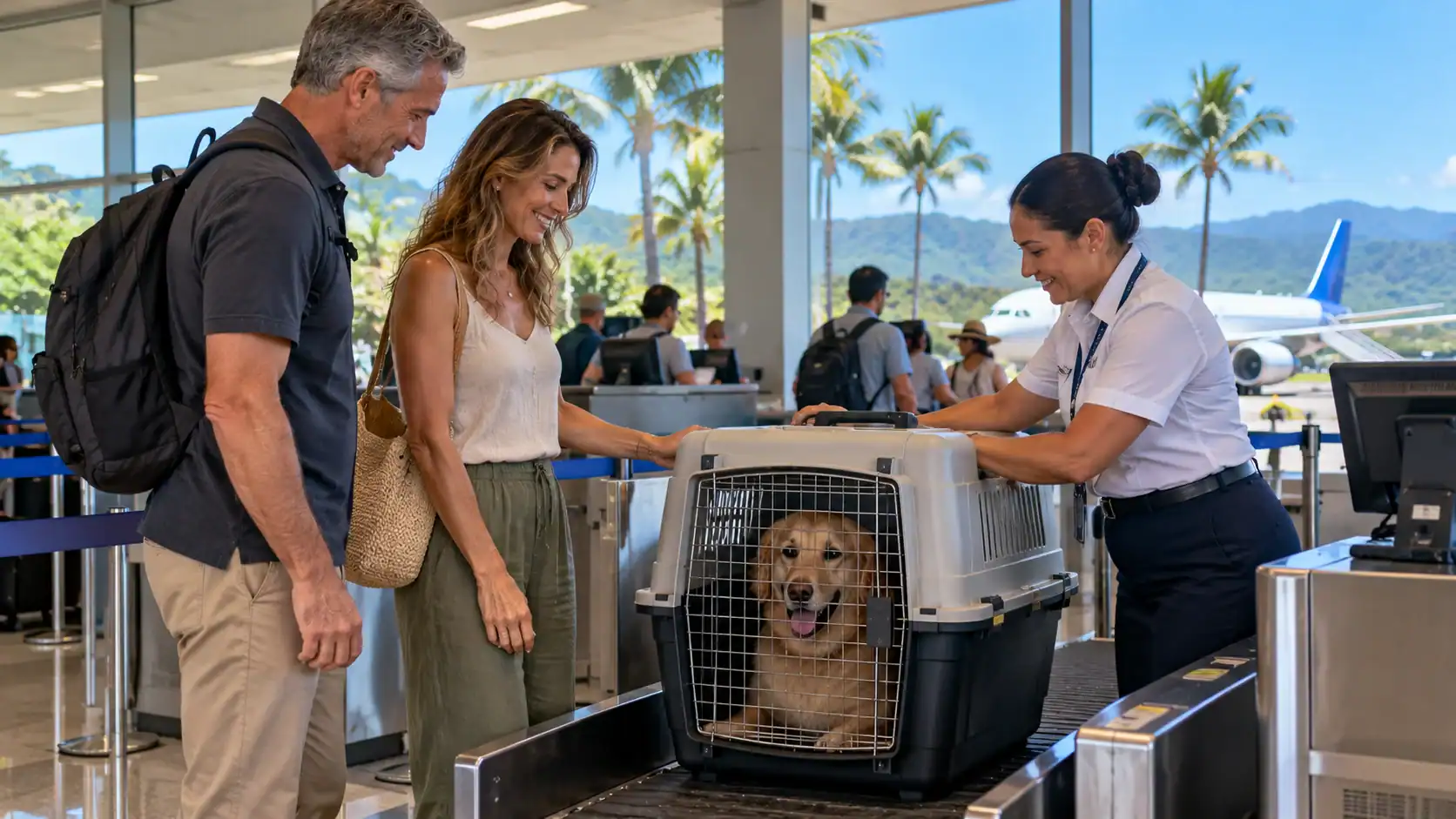
Is there quarantine for pets in Costa Rica?
No quarantine period appears in SENASA’s requirements. Pets are inspected at the port of entry when they arrive. A pet with tumors, fresh or healing wounds or external parasites, or without the required paperwork, is refused entry and returned to its country of origin.
Coming from Europe, the United Kingdom or EFTA countries
If your pet comes from the European Union, the United Kingdom, Switzerland, Iceland, Norway or Liechtenstein and will return home, SENASA asks you to bring, with the health certificate, a valid rabies antibody titer test with a result of at least 0.5 IU/ml.
Arrival and airline arrangements
SENASA warns that noncompliance can result in refusal of entry and return to the country of origin. Keep the endorsed documentation accessible and follow the arrival instructions for the selected entry point.
Airlines set separate rules for carriers, accepted species and breeds, cabin or cargo transport, temperature restrictions and connections. Ask the operating carrier about every flight segment, suitable carrier dimensions, booking availability and current charges. A hard-sided kennel is not a universal requirement for all in-cabin arrangements.
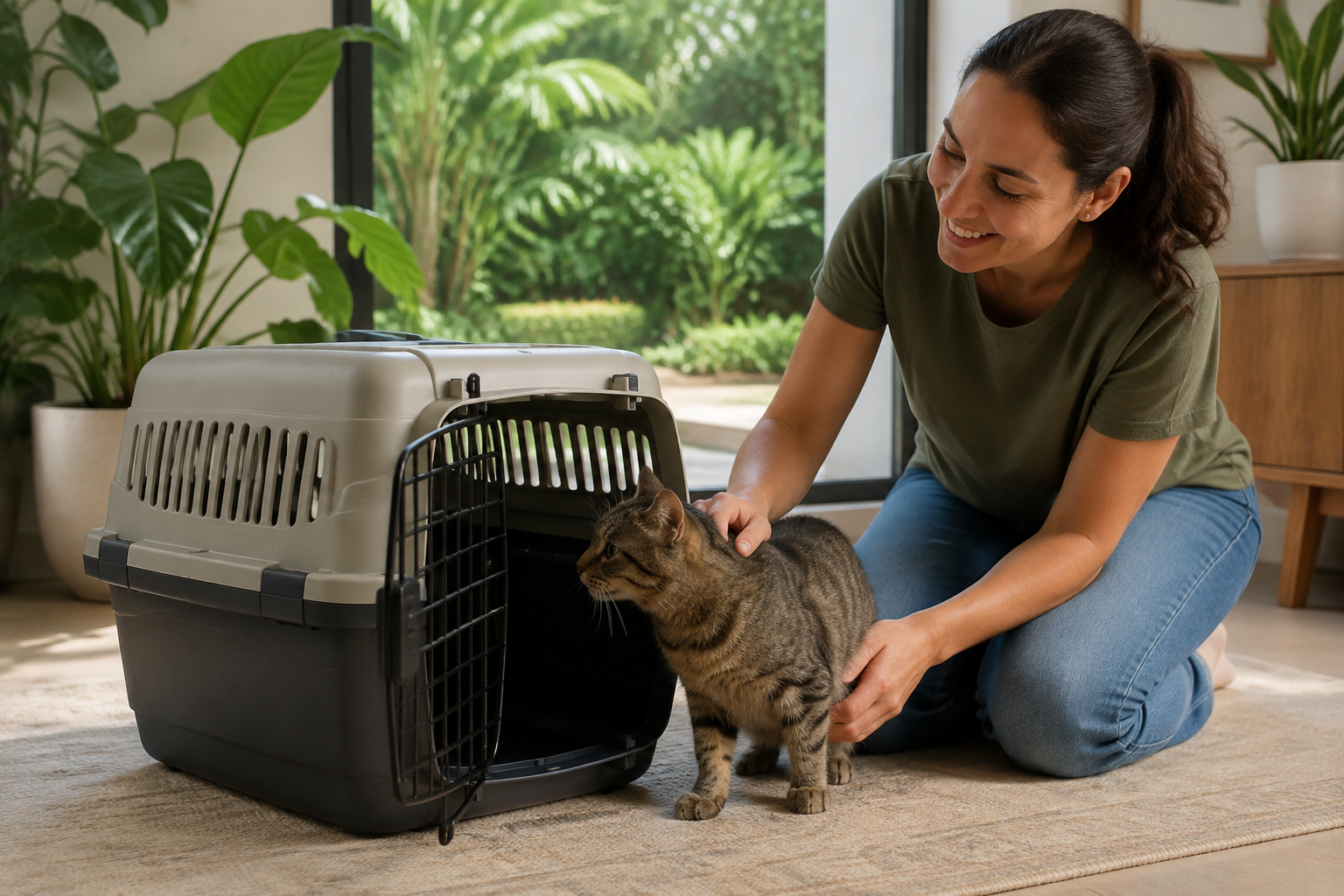
Allow the animal time to become comfortable with its carrier and discuss fitness to travel with the veterinarian. Obtain written confirmation of the pet booking and the documents the airline expects.
Returning with a dog to the United States
CDC’s dog-entry rules depend on the dog’s travel history and vaccination circumstances. Dogs must meet the applicable age, microchip, health and documentation requirements. The low-risk-country pathway considers the preceding six months, not just the country of the final flight.
The CDC form does not replace other agencies’ requirements. APHIS requires screwworm certification for dogs arriving from affected countries: an inspection within five days before shipment and certification by an official government veterinarian that the dog meets the stated conditions. Check the current affected-country information and arrange the Costa Rican certification with SENASA. Also check the destination state’s rules.
Settling in with your pet
The paperwork gets your pet into the country; daily life here is a separate set of decisions. Before you sign a lease, ask whether pets are allowed and whether there are breed or size limits. Many condos, gated communities and rentals have their own rules, and a house that looks ideal online may have no fencing, a busy road outside or no shade.
Heat, humidity and ticks are the adjustments most owners notice first. Ask a local veterinarian soon after arrival about tick and parasite prevention suited to where you live, and plan walks for the cooler parts of the day.
Veterinary clinics, emergency care and specialist services are easier to find in the Central Valley and larger towns than in remote beach or mountain areas. If your pet is older, takes medication or needs a special diet, check what is available near a place before you commit to living there, and bring copies of medical records, prescriptions and vaccination history.
On the journey itself, carry the original health certificate and records in your hand luggage, not in a checked bag.
A planning checklist
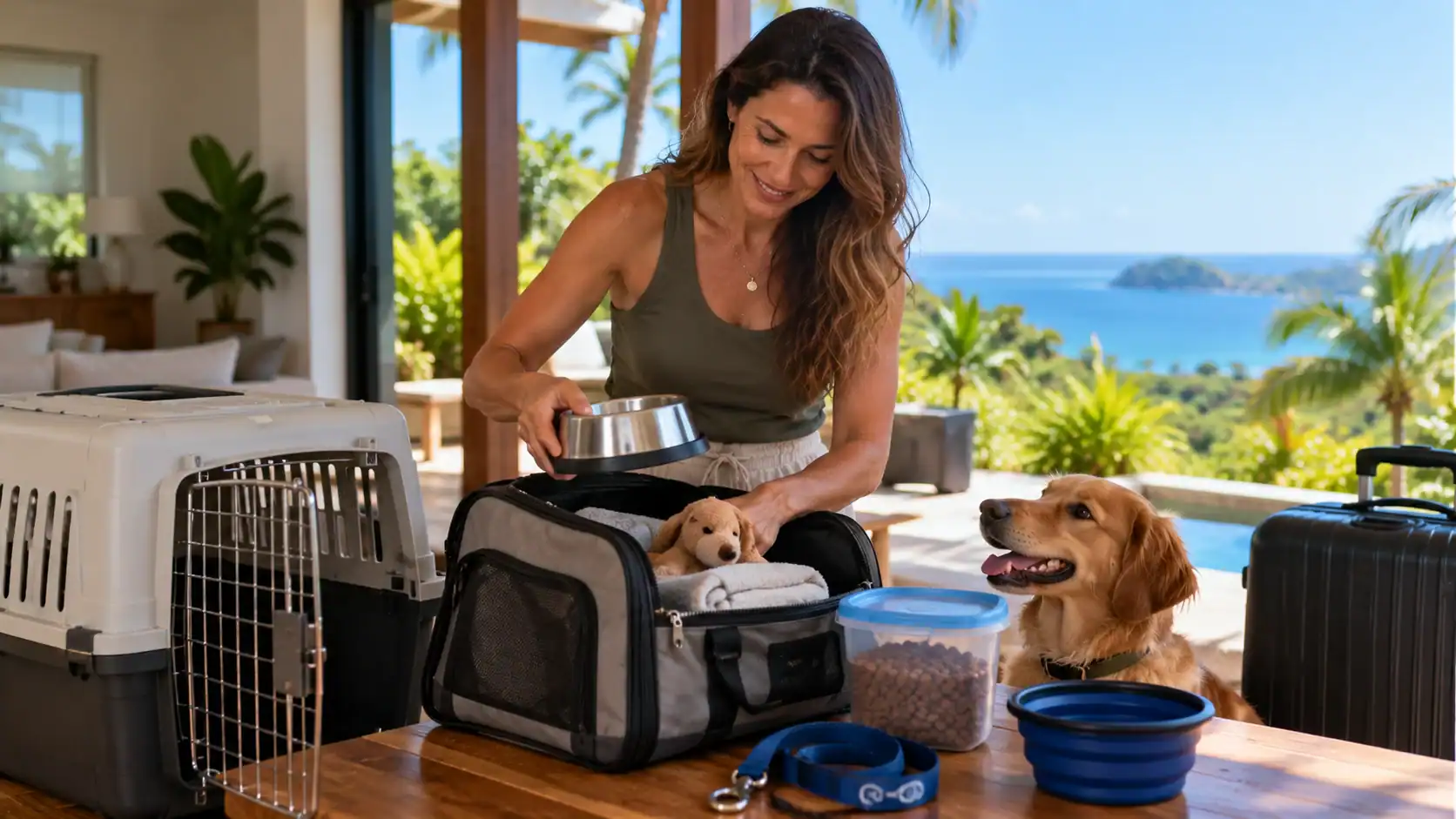
- Confirm the animal’s species, age, route and accompanied or cargo classification.
- Check the current official certificate and any import permit before booking.
- If your pet has a microchip, make sure the number on the certificate matches; dogs need one to enter the United States later.
- Schedule examination, vaccinations, treatment and endorsement with the veterinarian.
- Confirm carrier rules, connections, fees and arrival procedures.
- Check that your rental or community allows pets before you sign, and research veterinary care near where you will live.
- Prepare separately for the return journey; its requirements may differ.
Frequently asked questions
Can I bring my dog to Costa Rica?
Yes. Dogs and cats can enter with an official health certificate, a vet exam within two weeks of departure, current vaccines including rabies for animals over three months, and parasite treatment within 15 days before travel.
Do pets have to be quarantined in Costa Rica?
SENASA’s requirements set no quarantine period. Your pet is inspected on arrival and admitted if it is healthy and the paperwork is complete.
How long before the flight should the vet exam be?
Within two weeks before departure. The parasite treatment must be within 15 days before export.
Does the health certificate need to be notarized?
No. SENASA says it needs no notary and no Costa Rican consulate stamp; it must be issued or endorsed by your country’s official veterinary authority.
Moving to Costa Rica with your pets?
Most people reading this page are planning more than a trip: they’re planning a move. While you sort out your pet’s paperwork, it’s the perfect time to plan your own residency too. CRIE has helped people move to Costa Rica since 2008, whether as a Pensionado on a US$1,000 monthly pension, a Rentista, an Investor or a Digital Nomad.
Contact CRIE to talk about the best residency option for you.
This guide focuses on dogs and cats. Other species need separate checks; APHIS’s current Costa Rica page, for example, says pet-bird imports are not allowed.
Sources: SENASA requirement sheet DCA-PG-02-RS-01-IN-006 (version 11) and its December 2025 notice, USDA APHIS and CDC. Requirements can change, so check them shortly before you travel.
If you are considering adoption or want to help an animal locally, read our animal-welfare and stray-dog guide for reporting and responsible-care questions.