
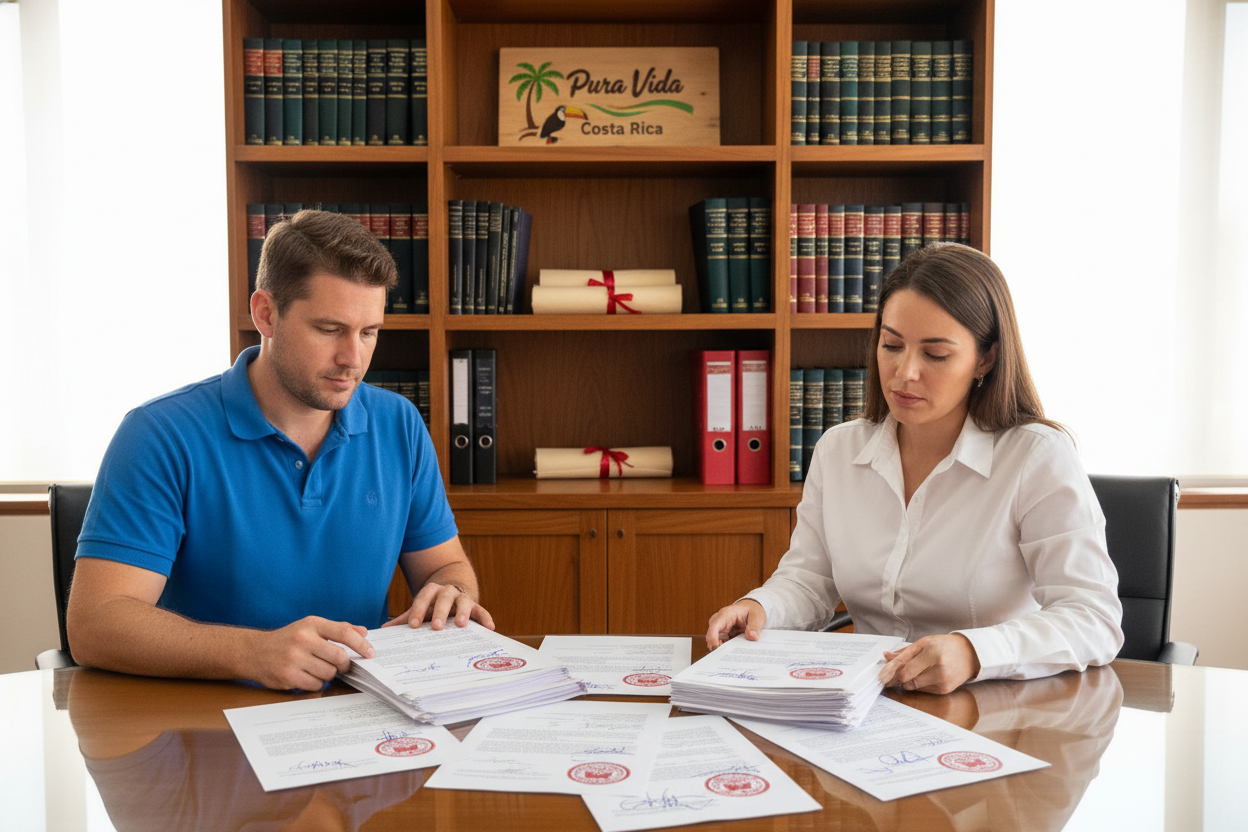
Preparing your legal paperwork for a move abroad starts long before you arrive. The foundation of a smooth transition is having every document correctly authenticated and ready. We guide you through this essential process from your home country, ensuring you avoid costly delays.
For documents intended for use in the United States, the U.S. Embassy in San José provides notarial services. They charge a fee of $50 per notary seal and require a personal appointment. Securing this appointment is a critical step in the overall journey.
We recommend reviewing the specific permanent residency document checklist for vital information. Our team simplifies these requirements, acting as your partner to organize paperwork that meets strict local standards. This careful preparation lets you focus on building your new life.
Understanding Costa Rica Residency & Notarization Requirements
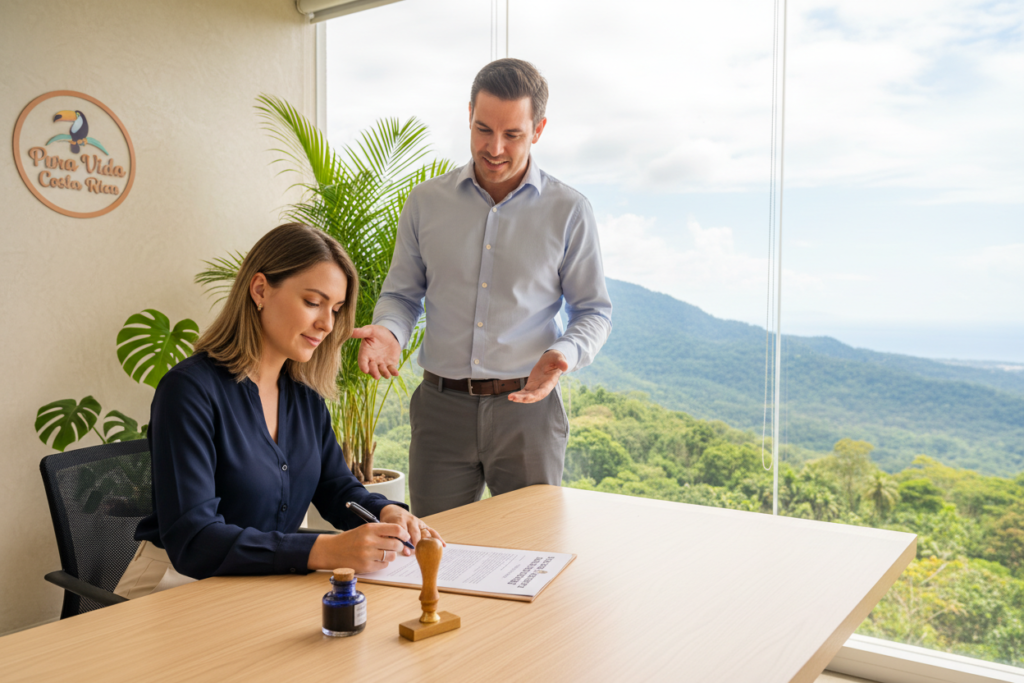
Establishing legal residency in Costa Rica requires navigating a specific set of authentication procedures for your documents. Understanding these notarization requirements is the first critical step toward a successful application.
An Overview of CRIE Services for Residency (Residencia CR)
CRIE (crie.cr) specializes exclusively in residency and immigration services for foreign nationals. When you choose our firm, you gain access to a team dedicated to your specific immigration goals.
We provide transparent guidance to structure your application correctly. Our focus is solely on established residency paths that lead to permanent legal status.
The Role of Notarization in Immigration Processes
A qualified notary public plays a vital role. They authenticate the documents required for your official residency registration with the immigration office.
Our experienced attorney team works alongside professional notaries to manage your file. This ensures every legal transaction meets the strict requirements before submission.
We emphasize that temporary programs do not count toward residency. By focusing on proper notarization and established paths, we help you avoid common pitfalls.
Eligibility and Financial Thresholds for Residency Applicants

Your path to residency begins with meeting specific financial criteria. Each category has clear monetary thresholds that must be proven with official documents.
Pensionado (Pensionado): Minimum US$1,000/Month Pension
To qualify as a Pensionado, you must provide proof of a lifetime monthly pension of at least US$1,000. This proof often requires an affidavit drafted by our attorneys in San José.
A notary public then verifies this document for your residency registration. This step confirms your income meets the strict requirements.
Rentista (Rentista) and Inversionista (Inversionista): Qualification Guidelines
The Rentista category requires demonstrating a stable monthly income of US$2,500 for two years. For the Inversionista path, a minimum investment of US$150,000 is mandatory.
This property must be registered in your personal name—a critical legal transaction. Our notaries ensure every document meets public faith standards for immigration purposes.
We provide access to clear guidelines and prepare your notarization package. For detailed guidance on pension-based residency, explore our resource on residency from pension in Costa Rica.
Step-by-Step Guide to Preparing Your Documents
Beginning your document preparation from your home country is a strategic move that saves time and stress. We guide you through a clear sequence to organize everything correctly before you travel. This proactive approach prevents the most common delays in the residency process.
Document Checklist: Apostilles, Translations, and More
Your essential paperwork, like birth certificates and marriage records, needs two key validations for legal use in Costa Rica. First, each document must have an apostille from the U.S. state or federal authority where it was issued. Second, a certified Spanish translation is required.
We provide a detailed checklist for these items. Gathering apostilles and translations early is crucial. It forms the core of your application package.
Pre-Arrival Organization and Essential Preparations
Have your identification ready for any notary public appointment. You will need a valid passport and a government-issued photo ID for proof. This verification grants you access to professional notarial services.
Our attorney team reviews each page of your documentation. We ensure every requirement is met for residency registration purposes. This meticulous preparation turns a complex pile of papers into a complete, submission-ready file.
We manage this information gathering with you. Our goal is a smooth transition, where your documents are perfectly organized from the start.
Notarization Process for Costa Rica Documents: notarization-costa-rica
Understanding the role of a Declaración Jurada is key to completing your document notarization. This formal sworn statement is a common requirement for many legal transactions.
The process ensures every signature is authenticated for official use. We guide you through each step to avoid confusion.
Scheduling Appointments and Identity Verification
You must schedule an appointment for notarial services. The U.S. Embassy in San José requires this personal appearance to verify your identity.
They charge a fee of $50 per notary seal for documents used in the United States. Bring valid government-issued photo identification to your meeting. Our team helps prepare you for this critical verification step.
Understanding Notary Seals, Affidavits, and Declaraciones Juradas
A notary public applies an official seal to your document. This seal confirms the authenticity of your signature and the date.
An affidavit is a written statement confirmed by oath. A Declaración Jurada serves a similar purpose as a sworn declaration under Costa Rican law. For local apostille services, visit the Ministry of Foreign Affairs on avenue 7-9, street 11-13 in San José.
We assist in preparing these documents accurately. For more details, review our frequently asked questions.
Timelines, Mistakes to Avoid, and Common Pitfalls
A successful residency submission hinges on understanding realistic processing times and avoiding documentation mistakes. This final phase is where meticulous preparation meets government review. We help you set clear expectations and steer clear of errors that cause costly setbacks.
Realistic Timelines for Residency Documentation
We provide realistic timelines for your application, but we do not offer guarantees. Government processing depends on various legal and administrative factors outside anyone’s control. Planning for several months from submission to approval is a prudent approach.
Our team manages your documentation with this in mind. We structure the process to minimize avoidable delays from the start.
Critical Errors and How to Prevent Costly Delays
Avoiding common mistakes in your paperwork is essential. Even a small error in a signature or personal detail can cause significant delays. A professional notary public ensures your affidavit is signed correctly.
Providing false information in an affidavit is a criminal offense. Accuracy in every statement is non-negotiable. We help review your documents to ensure each notary seal is placed correctly.
This prevents the need for extra appointments or re-submissions. Our attorney team works with you to navigate this transaction precisely. Accurate proof and honest declarations are your best defense against pitfalls.
Additional Legal and Notarial Services for Costa Rica Residents
Beyond the core residency application, many expatriates require ongoing legal and notarial support for various life events. We provide these essential services to help you manage your affairs with confidence.
In-Person vs. Digital Notarial Options
You may need a notary public for different reasons. Dr. Christopher Pirie, an attorney in San José, has practiced as a notary public for over twenty years.
He provides nationwide legal services. Whether you require an in-person meeting or a digital solution, we ensure proper authentication for your documents.
Our team assists with drafting affidavits and verifying signatures. This covers a wide range of legal transactions.
Consular Inscription (Inscripción consular) and Other Legal Procedures
Consular inscription is a required registration step with the U.S. Embassy for residency applicants. We guide you through this vital procedure.
Our notaries also help with other important legal services. For instance, setting up a power of attorney is a common need.
We manage the entire process, from document preparation to final registration. This provides the proof and authentication you need for official purposes.
Final Steps and How to Get Started
Taking the final step toward your new life in Costa Rica begins with a simple, decisive action. Contact our team via WhatsApp at +506 8706 3888 or email info@crie.cr. We provide the expert guidance needed to start your residency application process.
We help you organize every required document and schedule necessary appointments. Our attorney team and professional notaries work together to manage your file. They verify your identity and handle critical legal transactions for registration purposes.
You can access our website for detailed information about the entire process. We guide you through each page of your application to ensure proper proof and identification. Our focus is on secure, efficient notarial services.
Begin your preparation with us today. We ensure your application receives accurate and professional support from start to finish.
FAQ
What documents typically require notarization for use in Costa Rica?
For legal and immigration processes, many documents need a notary public’s seal. This includes affidavits, power of attorney forms, property deeds, and financial statements. If your documents originate from the United States or another country, they usually also need an apostille after notarization for international validity.
How do I verify a notary’s identity and appointment in Costa Rica?
Always ask for official photo identification and their notarial registration number. A legitimate notary public in Costa Rica must be a licensed attorney. You can confirm their status through the local Colegio de Abogados (Bar Association). We recommend scheduling appointments directly through their office to ensure security and proper preparation.
What is the difference between an apostille and notarization?
Notarization is the first step where a notary public verifies your identity and witnesses your signature on a document. An apostille is a separate, higher-level authentication issued by your home government—like the Secretary of State in the U.S.—that certifies the notary’s seal and signature. For Costa Rica, both steps are often required for foreign documents.
Can I use a digital or remote online notarization for Costa Rican procedures?
Currently, most core legal and immigration transactions in Costa Rica require in-person notarization before a local notary public or at a Costa Rican consulate. While some preparatory affidavits might be done remotely, the final documents for submission to authorities typically need wet ink signatures and physical notary seals for full legal force.
What common mistakes delay the notarization and authentication process?
The most frequent errors involve incomplete documentation, missing signatures, or using expired identification. Another major pitfall is not getting the correct type of notarial act, like a certified copy versus a jurat. We help clients avoid these costly delays by meticulously reviewing all paperwork and requirements before the notary appointment.
What are "declaraciones juradas" and when are they needed?
A “declaración jurada” is a sworn affidavit or statement made under oath before a notary. They are commonly required for residency applications, such as swearing to the source and consistency of your pension or investment income. The notary public administers the oath and attaches their seal, making the document legally binding for government review.
Article by Glenn Tellier (Founder of CRIE and Grupo Gap)
Don't wait, contact us right now!
Call or WhatsApp Costa Rica +506 8373 2085 or +506 8706 3888
Call USA/Canada +1 305-906-6784