Moving to a new country can be both exciting and overwhelming. For over 20 years, we at CRIE have guided individuals and families through the complexities of obtaining residency in Costa Rica. Understanding the process of notarization in Costa Rica is essential for anyone planning this transition.
Our team provides clear information to help you organize your paperwork. This ensures that every document meets the strict standards required by local authorities. We focus on practical services designed to simplify your immigration journey.
Each case is unique, depending on factors like nationality, family situation, and immigration history. Therefore, we offer personalized guidance tailored to your specific needs. With our support, you can navigate the path to residency with confidence.
Understanding Notarization in Costa Rica
Transitioning to a new culture can bring a mix of emotions. One essential aspect of moving to Costa Rica is understanding the role of a notary public. In this country, a notary public must be a licensed attorney, ensuring they are qualified to perform legal acts.
Notarization serves as the primary method for verifying the authenticity of signatures on legal documents. This process is crucial for your residency application. Proper notarization provides the necessary authentication that the Costa Rican government requires for foreign-issued paperwork.
Since the 1961 Hague Convention became effective in Costa Rica in 2011, document authentication has become more standardized. This change simplifies the process for residents, making it easier to validate international documents.
Steps to Prepare Your Documents

Starting a new chapter in a different country demands thorough preparation and the right documentation. To ensure a smooth transition to Costa Rica, you must gather all essential documents before your appointment.
Begin by collecting vital records such as birth certificates and marriage licenses. Each document needs to be authenticated with an apostille from the relevant U.S. state or federal authority. This step is crucial, as it validates your documents for use in Costa Rica.
Additionally, bring a valid government-issued photo ID, like a passport or Costa Rican Cédula, to verify your identity. We recommend organizing your paperwork into a complete, submission-ready file. This approach helps avoid common pitfalls that lead to delays.
Finally, ensure that your identification details match exactly across all documents. This is one of the most important steps in your residency application process. For more information on the apostille process, visit this link.
Navigating U.S. Embassy Notary Services
To ensure a smooth relocation, it’s crucial to grasp the available notarial services. The U.S. Embassy in San José offers essential notary services for those needing to authenticate documents for use in the United States.
When scheduling your appointment, keep in mind that you must book a formal notary appointment. Each appointment allows for a maximum of three documents. This limitation is important to plan your visits effectively.
The embassy charges a fee of $50 USD per notary seal. This fee can be paid in dollars, colones, or by credit card during your visit. If you cannot attend your scheduled appointment, please remember to cancel at least 48 hours in advance to avoid complications.
These notarial services primarily cater to documents intended for use within the United States. However, there are exceptions for specific residency-related registrations.
How Notarization Fits Into Residency Document Preparation
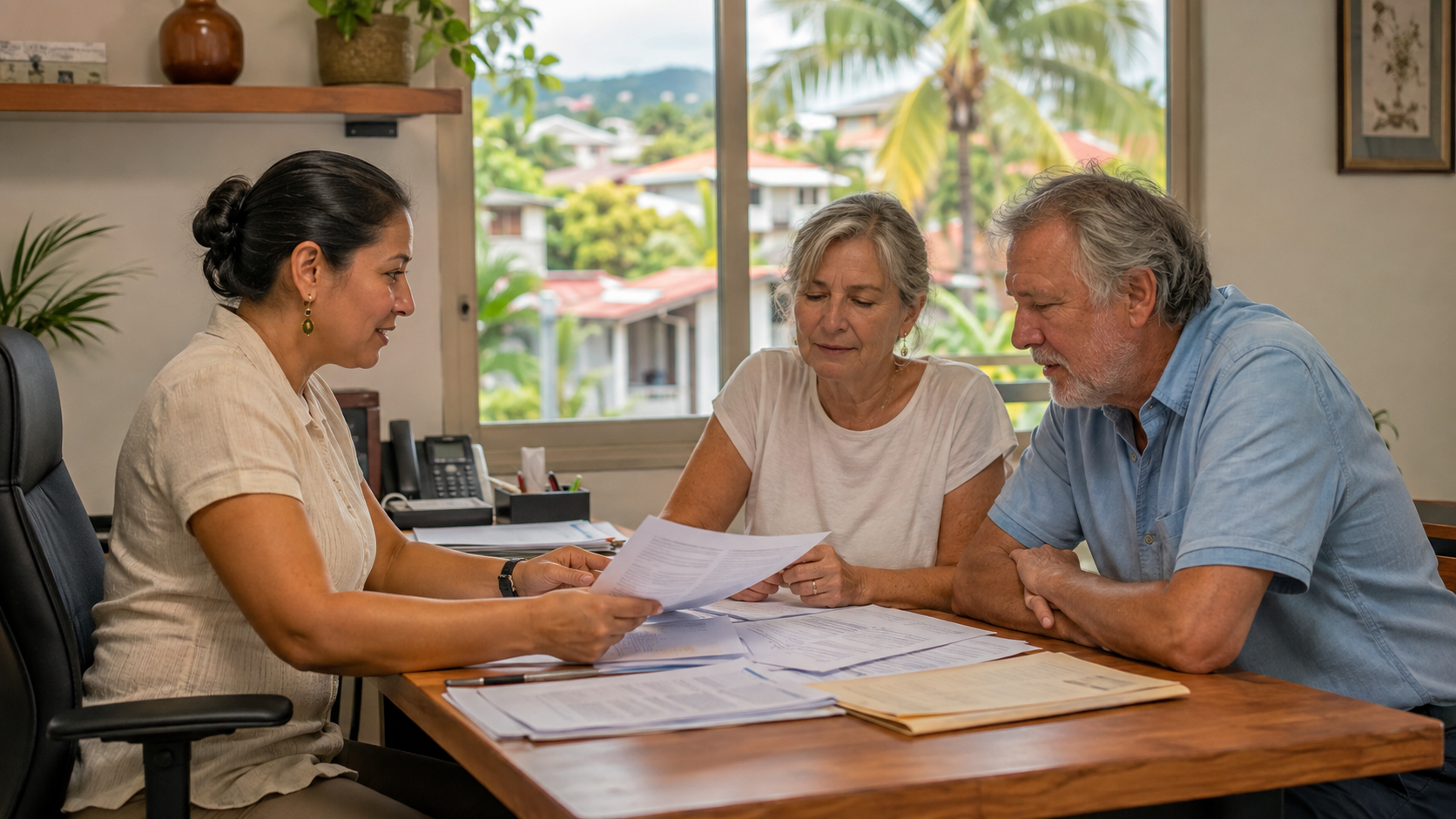
Understanding the financial prerequisites is crucial for establishing residency in Costa Rica. Each residency category has specific requirements that must be met for successful application.
For instance, the Pensionado residency requires proof of a lifetime monthly pension of at least US$1,000. Meanwhile, the Rentista category necessitates demonstrating a stable monthly income of US$2,500 for two years.
Those interested in the Inversionista path must make a minimum investment of US$150,000, which should be registered in your personal name for legal purposes. Proper authentication of these financial documents is a mandatory requirement for your official registration with the Costa Rican immigration office.
We help you manage these complex transactions to ensure that every piece of evidence meets the strict standards set by the government.
Essential Tips to Avoid Common Mistakes
Avoiding common mistakes can significantly ease your transition to Costa Rica. When preparing your documents for notarization, it’s vital to pay attention to details. Small errors can lead to big delays.
One frequent error is signing your documents before arriving at your appointment. This action can invalidate the notary process. Ensure your signature matches the name on your valid government-issued photo ID. This step helps prevent unnecessary complications.
Remember, consular staff cannot explain the contents of your paperwork. Therefore, you must understand every document you present. Providing false information in an affidavit is a serious offense, so accuracy is crucial.
We advise double-checking all details on your forms. This ensures that your proof of identity and personal information align perfectly.
Leveraging CRIE’s Expertise in Residency and Document Preparation
Navigating the intricacies of immigration requires knowledgeable assistance. For over 20 years, we have been dedicated to helping individuals and families achieve residency in Costa Rica. Our reliable guidance is rooted in years of experience and a deep understanding of the local requirements.
Our team consists of seasoned professionals who excel in document preparation. We ensure that every aspect of your residency application meets the necessary legal standards. This attention to detail can save you time and reduce stress during your transition.
For personalized support regarding pricing and next steps, you can connect with Johanna Alvarez, our dedicated immigration expert. We also provide access to a network of professionals, including Dr. Christopher Pirie, an experienced attorney and notary in San José.
For more information about our services and how we can assist you with power of attorney and other legal needs, visit our website.
Taking the Next Step: Connect with CRIE
Embarking on a new adventure in a different country requires careful planning and informed decisions. To begin your residency journey, contact our team via WhatsApp at +506 8373 2085 or send an email to info@crie.cr for guidance.
You can also visit our website at crie.cr to learn more about how we assist with the complex process of document notarization and residency registration. Our dedicated team is ready to help you organize your property records, power of attorney forms, and other essential documents for your move to Costa Rica.
We provide the professional services needed to verify your identity and ensure that every legal transaction is handled with the utmost security. Remember that every case depends on your unique situation, so reach out to us today to discuss your specific residency goals and requirements.