We’re here to guide you through obtaining residency in this beautiful country. The official platform, CRIE, manages these applications. This guide provides a clear, step-by-step path.

Many find the paperwork overwhelming. It involves strict timelines and complex documentation from your home country. Having a trusted representative can simplify this significantly.

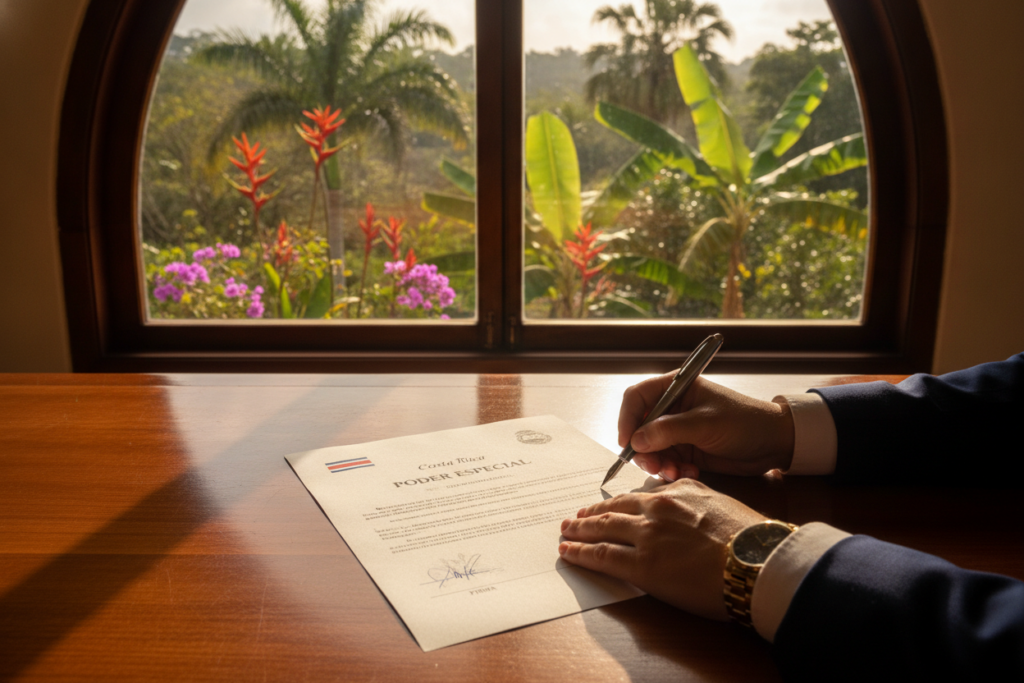
A power of attorney is a key tool for this. It allows a professional to handle technical requirements on your behalf. This is especially useful if you cannot be present for the entire procedure.

We believe in setting realistic expectations from the start. This legal instrument facilitates the submission but does not guarantee approval. Starting document preparation early is crucial due to six-month validity rules.

Our approach combines expert knowledge with plain-English explanations. We help you decide between a DIY route or seeking professional assistance. Let’s begin with understanding who qualifies and what you’ll need.

Introduction to Costa Rica Residency and Immigration Basics

A professional office setting illustrating the CRIE platform process for Costa Rica residency and immigration. In the foreground, a diverse group of four Caucasian staff members in business casual attire (polo shirts and button-downs) collaborates around a table filled with documents and a laptop, showcasing a friendly and engaged atmosphere. In the middle ground, a large digital screen displays a flowchart of the CRIE platform process with clear and colorful steps. The background features large windows with a tropical view of Costa Rica's lush landscapes, bringing in soft, natural light that creates a warm, inviting mood. The setting reflects the theme of professionalism and clarity, with subtle branding elements that include the text "Pura Vida Costa Rica" integrated into the design.

The journey to establishing legal status begins with navigating the centralized digital platform. All submissions for residency must go through this official system.

Overview of the CRIE (crie.cr) Process

CRIE (crie.cr) is the required online gateway. You create an account and upload digital files there. This streamlined approach replaced older methods.

The underlying requirements, however, remain strict. Documents often need proper apostilles and certified translations. Authorities have become meticulous about accepting complete dossiers.

The Role of Power of Attorney in Immigration

This legal instrument authorizes a representative to act for you. It does not hand over your decision-making power. Instead, it lets a professional handle technical filings and official communications.

Such representation is invaluable if you are gathering papers from your home country. It also helps if you are already in Costa Rica but need expert navigation. We always recommend verifying current details at migracion.go.cr for the latest information.

Who Qualifies for Costa Rica Residency (¿Quién Califica?)

A professional and informative illustration depicting Costa Rica residency qualification categories. In the foreground, a diverse group of Caucasian professionals dressed in business casual attire (polo shirts and button-downs) are engaged in a conversation, pointing to a large, colorful infographic displaying different residency categories. In the middle, the infographic has clear sections labeled as "Pensionado," "Rentista," "Investor," and "Other" qualifications, with visually distinct icons and graphs. The background features a serene Costa Rican landscape with palm trees and a bright blue sky, symbolizing the beauty of Costa Rica. Soft, warm lighting fills the scene, creating an inviting atmosphere. The brand name "Pura Vida Costa Rica" is subtly integrated into the design, enhancing the focus on residency qualifications.

The nation offers several distinct pathways to legal residency, each with clear financial benchmarks. Your choice depends on your primary source of funds.

Pensionado (Pensionado): US$1,000+ per Month Requirement

This status is for retirees with a guaranteed lifetime pension. You must prove permanent income of at least $1,000 every month from sources like Social Security.

Authorities require documentation showing this income is stable and ongoing.

Rentista (Rentista): Sustaining Income for 2 Years

The Rentista category suits those with substantial passive income. You need to demonstrate $2,500 per month from investments or rentals.

Critically, you must prove this income level is sustainable for a minimum two-year period. Annual updates are typically required.

Investor (Inversionista): Minimum Investment and Property Ownership

This path requires a minimum $150,000 investment in Costa Rican assets. This can be in a local business or real estate.

A key rule often surprises applicants: if using property, the title must be in your personal name. Ownership through a company or corporation does not qualify for this residency category. The investment must be properly registered and appraised.

Citizens from any country may apply, but authorities scrutinize all financial proof closely.

Essential Documentation and Pre-Arrival Preparation (Documentos Requeridos)

Before any online form is submitted, the real work happens in gathering and certifying your essential personal records. We strongly advise starting this process while still in your home country. Procurement timelines vary wildly between states and can derail your entire timeline.

Apostilles, Translations, and Certification Processes

For citizens of the United States and Canada, an apostille is the required certification. This single stamp validates documents under international law. Every paper must also undergo professional translation into Spanish by a certified translator. General translation services without proper credentials won’t cut it.

Gathering Documents from Home Before Arrival

A critical rule involves where you obtain documents. Your birth certificate, for example, must come from the state of your birth registration. The six-month validity clock starts on the apostille date, not your application date. Coordinating this for all your certificates is essential for a successful submission.

Navigating Timelines and Deadlines for Your Application

The clock starts ticking on your documents the moment they are certified, creating a strategic challenge. Success depends on aligning your preparation with official review periods.

Standard Processing Times and When to Start

Standard processing for a complete residency application typically takes six months to one year. This time frame assumes your submission has no errors or missing items.

The six-month validity period for apostilled papers adds pressure. You must plan backward from your intended filing date. This ensures every document is still valid when you finally submit.

We recommend starting the entire document gathering process at least nine to twelve months before your planned move. This creates a crucial buffer for unexpected delays. Some papers take much longer to obtain than others.

Authorities have become stricter post-COVID. Incomplete submissions now often face denial instead of requests for correction. The best way to avoid a timeline disaster is meticulous planning from the outset.

Common Mistakes to Avoid in the Immigration Process

The difference between approval and denial frequently lies in sidestepping predictable pitfalls. Authorities now deny submissions with any deficiency rather than requesting corrections. This makes avoiding errors more critical than ever.

Overlooking Document Validity and Expiration Dates

The six-month validity window is a major trap. People gather papers over many months. Their earliest documents expire before the last ones are ready.

This forces a costly restart of the entire process. Another common issue involves a person’s legal name. Inconsistencies between a birth certificate and current identification derail many applications.

All your paperwork must show perfect name consistency. Any changes require documented legal proof.

Misunderstanding Application Steps and Procedures

Some try to submit an incomplete application just to get a file number. This strategy now leads to outright denial. The system requires a complete dossier from the start.

Technical errors during digital submission are also frequent. For example, uploading files in the wrong format or size causes administrative rejection. Always verify the official platform’s current requirements for your account.

Cross-check all information across your documents. Inconsistent details trigger scrutiny and can result in a failed registration attempt.

Costa Rica Immigration Power of Attorney: A Step-by-Step Guide

The key to a smooth residency process often lies in effectively authorizing a representative to act on your behalf. We will walk you through how this legal instrument works in practical terms.

This step-by-step approach provides a clear framework for managing your application from a distance.

How Power of Attorney Streamlines the Process

Granting this authority lets a professional handle technical tasks. They can appear at government offices, submit paperwork, and communicate directly with officials.

This is invaluable if you are not in the country. It turns a complex bureaucratic journey into a managed procedure. Your guide coordinates every step based on current local law.

Ensuring All Documents Are Accurately Prepared

A major benefit is the meticulous review of your paperwork. Your representative creates a plan to gather all required records.

They ensure each document is properly notarized, apostilled, and translated. The timing is coordinated so your entire package is valid upon submission. This careful preparation is what often makes the difference.

We must be clear that this representation does not guarantee approval. It provides expert management of a detailed process.

Understanding Additional Residency Options and Limitations

Clarifying the difference between temporary authorizations and true legal residency prevents costly misunderstandings down the road. Not every legal status provides a path toward permanent establishment in this beautiful nation.

Digital Nomad Status and Why It Doesn’t Qualify

The Digital Nomad permit is a temporary authorization for remote workers. It is not a residency category under Costa Rican law.

Time spent under this status does not count toward citizenship eligibility. If your goal is permanence, the closest residency option is typically the Rentista category. This requires proving sustained income.

When to Consider Citizenship vs. Residency Steps

Citizenship requires maintaining legal residency for several years. For most foreign citizens, this period is seven years.

You must first complete the full residency application and obtain your DIMEX card. Business owners should note that an investment for residency must be in your personal name, not held through a Costa Rican corporation.

Choosing the right path from the start is crucial. For expert guidance on navigating these decisions, consult a Costa Rica immigration consultant.

Leveraging Expert Guidance and Essential Resources

Successfully submitting your dossier depends on knowing where to find accurate, up-to-date information and who can help you use it. We focus on the two pillars of a successful submission: official resources and professional support.

Working with CRIE and Consulting migracion.go.cr

Your official application is filed through the CRIE platform. For the very latest rules, you must consult the migracion.go.cr website regularly. Relying on forum advice or outdated information often leads to preparing invalid documents.

Visiting a government office in San José without fluent Spanish is challenging. Miscommunication at this stage can cause significant delays. Professional guidance navigates these complexities correctly from the start.

The cost of a mistake—re-doing paperwork, paying fees again, losing months—typically far exceeds expert fees. This article provides a foundation, but every case is unique.

For personalized assistance with your Costa Rica residency application, contact us directly: WhatsApp +506 8706 3888 | info@crie.cr.

Final Thoughts: Your Next Steps to Successful Costa Rica Residency

Moving forward requires translating the information you’ve learned into a concrete, personalized action plan. Your successful journey begins with an honest assessment of which residency category fits your financial situation.

The application process demands patience and meticulous attention to detail. Authorizing professional representation helps manage this complexity, but it isn’t magic—it ensures technical requirements are met while you control the strategy.

Regulations evolve, so always verify official sources. To clarify your specific pathway, a personalized residency assessment is a prudent first step.

We are here to help navigate this important transition. For direct guidance, contact us via WhatsApp at +506 8706 3888 or email info@crie.cr.

FAQ

Who can help me prepare and submit my residency application?

We can guide you through the entire process. For official submission, you must work with a licensed local attorney or an accredited agency like CRIE (crie.cr). They are authorized to present documents to the immigration department (migracion.go.cr) on your behalf, ensuring everything meets current regulations.

What is the most common mistake people make with their documents?

Overlooking expiration dates is a major hurdle. Your birth certificate apostille, marriage certificate, and police records typically have a strict validity period, often just six months from issuance. Submitting expired paperwork will cause significant delays, requiring you to restart that part of the process.

Can I use a Power of Attorney if I’m not in the country?

Absolutely. This is one of its primary advantages. A properly executed and apostilled special power allows your designated representative in Costa Rica to handle critical steps—from opening a local bank account to registering a corporation or signing property deeds—without you needing to be physically present, saving considerable time and travel costs.

How long does the residency process usually take?

A> You should plan for a timeline of several months to over a year from initial document gathering to final approval. Government processing times can vary. Starting your document authentication (apostilles and translations) well before you plan to move is the best way to avoid unnecessary waiting later in the process.

Does owning real estate automatically qualify me for residency?

A> Not automatically. Property ownership is required for the *Inversionista* (Investor) category, but you must meet the minimum investment threshold, which is currently over 0,000. Simply owning a home of lesser value does not qualify. Other categories, like *Pensionado*, are based on verifiable income, not assets.

What’s the difference between digital nomad status and formal residency?

A> Digital nomad status is a temporary permit, usually valid for one year and renewable for an additional period. It does not count toward permanent residency or citizenship and has different tax implications. Formal residency (like *Pensionado* or *Rentista*) is a long-term immigration status with a path to permanent residency and different obligations.

Why is an apostille necessary for my U.S. documents?

A> An apostille is an international certification that verifies the authenticity of a document’s signature, seal, or stamp. Costa Rican authorities require it for foreign-issued documents like birth certificates, marriage certificates, and FBI background checks to ensure they are legally valid for use within the country’s legal and immigration systems.


Article by Glenn Tellier (Founder of CRIE and Grupo Gap)

Don't wait, contact us right now!
Call or WhatsApp Costa Rica +506 8373 2085 or +506 8706 3888
Call USA/Canada +1 305-906-6784

See If You Qualify For Residency Today!