
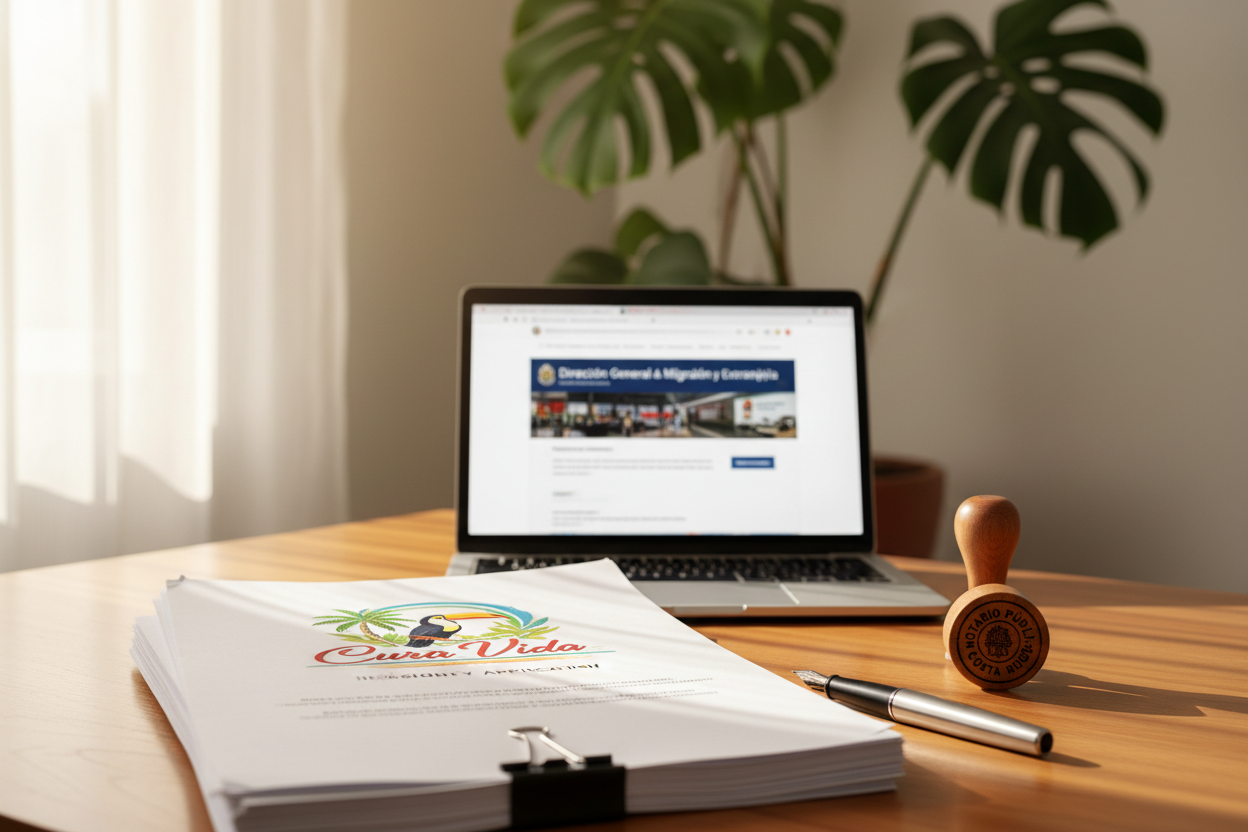
Navigating the path to legal status in a new country begins with one critical step: your paperwork. We understand that the sheer volume of forms and certifications can feel daunting. That’s why we focus exclusively on guiding you through this essential phase.
The foundation of a successful application is proper document preparation. For applicants from the United States, this is often simpler than you might think. As a member of the Hague Convention, this nation accepts apostilled documents. This eliminates lengthy consular legalization and streamlines your entire preparation.
We provide clear, step-by-step guidance on what you need. Our approach is candid—we build trust through transparency and realistic timelines. Starting this process from your home country is the most effective way to avoid delays and move forward with confidence.
An Overview of the CRIE Residency Process (Residencia en Costa Rica)
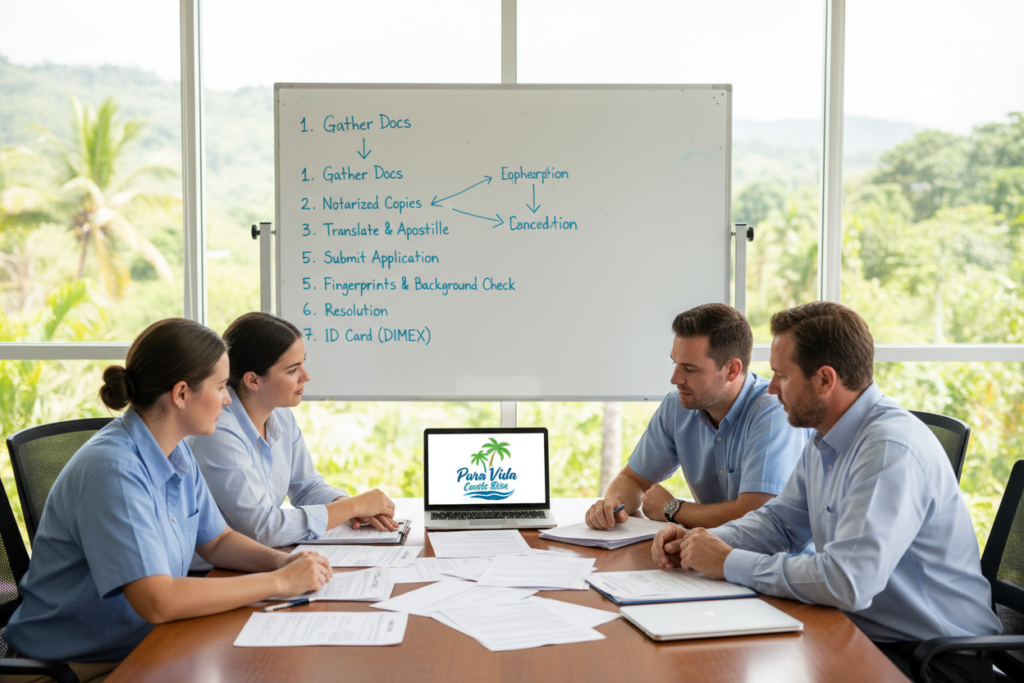
The official route to becoming a legal resident, known locally as “Residencia en Costa Rica,” is a structured procedure. We at CRIE handle this process and related immigration matters exclusively. Our focus is guiding you through the official pathway to establish permanent or temporary residence.
It’s crucial to understand what this process is not. A Digital Nomad visa is not a formal residency category. It does not count toward permanent status or future citizenship. If your goal is long-term settlement, you must pursue one of the formal options we manage.
The application follows a clear sequence. First, you gather and authenticate your documents in your home country. After arrival, you complete in-country registration steps. These include fingerprinting and the final submission to authorities.
Working with us means you have expert guidance for each phase. We ensure your submission meets all requirements set by the national immigration authority. Our support covers everything from initial preparation to final approval.
Timelines for approval vary depending on the type of residency you seek. Proper preparation is the key to avoiding delays. Having your documents fully ready before you travel makes a significant difference.
If citizenship is your ultimate aim, you must first complete the residency process. You must then maintain that legal status for the required number of years. Only after that period can you apply for naturalization.
Understanding Costa Rica Immigration Notarized Copies Requirements
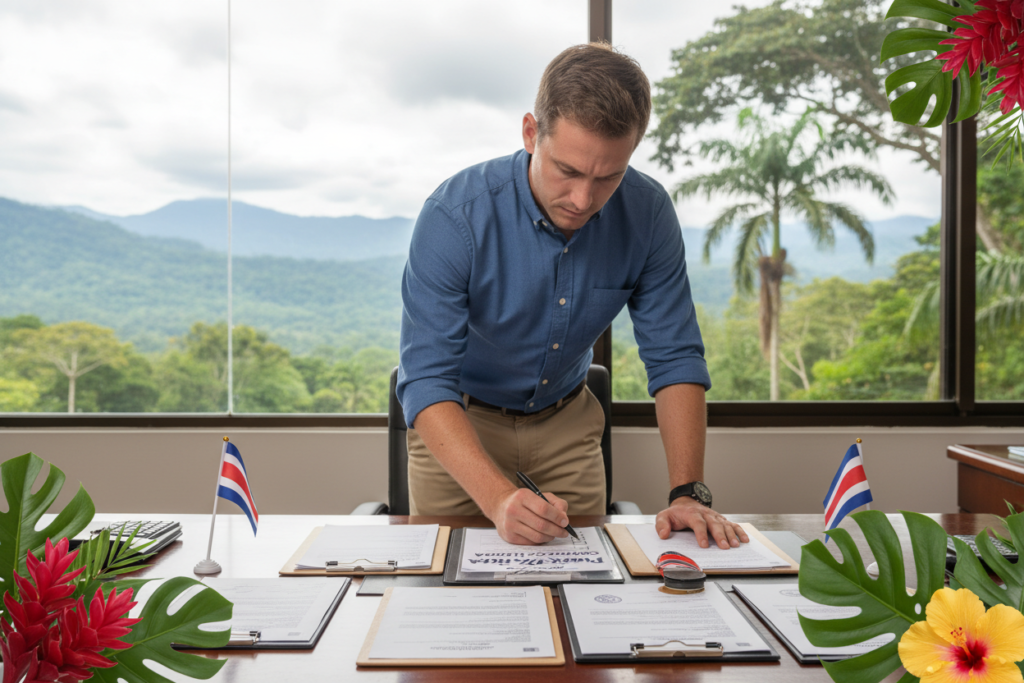
Many applicants stumble at the very start by misunderstanding what constitutes a valid copy. A simple photocopy lacks any legal standing for official processes.
A certified copy is issued by the original authority, like a state registrar’s office. A notarized copy is certified by a notary public who verifies the signature.
An apostilled document carries international authentication under the Hague Convention. For residency, most foundational papers need both an apostille and a professional Spanish translation.
In this context, notarized copies often refer to “Declaraciones Juradas.” These are sworn statements you sign before a notary public.
We emphasize the seriousness of this step. Providing false information in a sworn declaration is a criminal offense under local law.
Accuracy in all your paperwork is therefore non-negotiable. These rules exist to protect everyone involved.
Proper authentication ensures your documents are genuine and legally recognized. For U.S. public records, obtain a certified copy from the state registrar before getting an apostille.
Private documents require original notarization. When in doubt, verify the latest standards directly at the official migracion.go.cr website.
Who Qualifies for Costa Rican Residency
Your journey to becoming a resident starts with understanding which category aligns with your financial profile. The government offers three primary pathways, each with specific income or investment thresholds.
Pensionado (Pensionado) – Minimum US$1,000/month
This status is designed for retirees. You must prove a guaranteed lifetime pension of at least US$1,000 per month. Official verification from your pension provider is required.
Rentista (Rentista) & Investor (Inversionista) Criteria
The Rentista category suits those with independent income. You need bank certification of US$2,500 monthly for two years.
For the Investor (Inversionista) route, a minimum US$150,000 investment in local real estate is key. The property must be in your personal name, not a corporation.
Proof of the property’s value and current tax payments are essential. Many ask about the Digital Nomad program. It is not a residency status. For remote workers, Rentista is often the closest match.
All categories demand proper documentation from your home country. Your choice should match your long-term goals and honest financial proof.
Essential Document Preparation: Apostilles, Translations, and Notarizations
Getting your documents in perfect order requires following a precise three-step sequence. We guide you through obtaining, translating, and authenticating each piece of paperwork. This foundational work is critical for a smooth application.
Apostille and Translation Essentials
Your core paperwork includes a birth certificate and marriage certificate, if applicable. You also need a federal criminal background check. These must be recent certified copies from the issuing authority.
The standard workflow is obtain, translate, then apostille. Certified Spanish translation by a professional is mandatory. Only these official translations are accepted for legal filings.
The apostille is the final authentication step. This single stamp confirms your U.S. document’s validity under international law. It replaces complex consular legalization.
Notarization Compliance and Guidelines
For private documents like affidavits, U.S. notarization rules apply. A commissioned notary must witness your signature. Their seal and wording must be clear and complete.
Plan your timeline realistically. State-level apostilles often take 5-15 business days. Federal background check authentication can require five weeks or more.
Begin this entire process from home at least two months before your planned move. Having everything authenticated beforehand prevents costly delays.
Step-by-Step Guidance Before Arrival
The most critical phase of your journey occurs while you are still in the United States, gathering and authenticating your paperwork. Completing this checklist before you travel is the single best way to prevent lengthy delays.
Gathering Required Documents at Home
You’ll need a valid passport with at least six months of validity. Your birth certificate and a federal criminal record check are also essential. If you’re applying with a spouse, include your marriage certificate.
Each of these documents must be a certified copy. They then require an apostille and a professional Spanish translation. The FBI background check often takes the longest—plan for several weeks to obtain and authenticate it.
Preparing for the Fingerprint and Photo Appointments
After arrival, your first step is having your passport certified by a local notary public. You must also obtain passport-size photos for your file.
The next key step is your fingerprint registration appointment with authorities. You’ll also complete consular registration and sign a special power of attorney. This document allows your legal representative to manage your residency application.
Having every document ready from home ensures these in-country steps proceed smoothly and quickly.
Detailed Timelines and Expectations for the Immigration Process
A clear understanding of the timeline involved can transform a stressful application into a manageable journey. We believe in setting realistic expectations from the start.
Planning Your Document Submission Schedule
Your preparation should begin at least two months before your planned move. This allows time to obtain certified vital records and your federal background check.
State-level apostilles often process within 5 to 15 business days. Federal document authentication typically requires five weeks or more. We cannot guarantee these dates, as backlogs occur.
Once in Costa Rica, plan for a 2 to 4-week stay to complete local appointments. The final approval period after submission varies by category. Your overall experience typically spans several months.
If citizenship is a long-term goal, formal residency is the mandatory first step. You must maintain that status for the required number of years. A Digital Nomad visa does not count toward this requirement.
Common Pitfalls and Mistakes to Avoid During Application
We’ve seen countless applications slowed down by the same handful of avoidable errors. Learning from these common missteps is your best strategy for a smooth process. Most problems arise from simple oversights in notarization and translation.
Errors in Document Notarization
Improper notarization is a frequent cause of apostille rejection. The notary’s commission must be current and from the correct state. Their seal and signature need to be perfectly legible.
Using a notary with an expired credential will result in immediate rejection. You must then restart the entire authentication process. This single error can add weeks to your timeline.
Delays from Incomplete or Incorrect Translations
Authorities only accept translations performed by officially certified professionals. Hiring a non-certified translator is a costly mistake. Their work will not be recognized for legal filings.
Every element on your original paperwork must be translated. This includes official stamps, seals, and marginal notes. Partial or summarized translations lead to delays.
Timing is another critical area. A background check is only valid if issued within the last six months. Applying while on the wrong legal status also creates complications.
For instance, a Digital Nomad permit does not count toward formal resident status. Carefully checking every detail in your information prevents these issues. Proper preparation is how you use Costa Rica’s system to your advantage.
Navigating Documentation and Notary Public Services in Costa Rica
The function of a Notario Público represents a cornerstone of legal transactions in this jurisdiction. Their role is fundamentally different from a notary public in the United States.
Here, these professionals are highly trained legal authorities imbued with “public faith.” Their certification gives documents immediate legal weight with government bodies.
The Role of a Notario Público
A Notario Público must remain completely impartial. They authenticate signatures and ensure documents reflect all parties’ true intentions.
During your residency process, you will work with one for critical steps. This includes certifying your passport copy and executing your power of attorney.
You will also sign sworn affidavits, known as Declaraciones Juradas, in their presence. Their involvement is mandatory for these legal acts.
Their services extend far beyond residency. They handle real estate transfers, corporate formations, and civil marriages.
For an Investor application, a notary prepares the purchase agreement and provides proof of your investment. They register the transaction in the Public Registry, creating the official record.
Remember, an attorney provides legal advice and representation. A Notario Público executes and authenticates official documents. These are separate, vital functions.
Final Steps and Next Actions for a Smooth Immigration Journey
The culmination of your efforts brings you to this pivotal moment—taking the final steps toward your new life. Achieving residency requires careful preparation, but with the right approach, the process is entirely manageable.
Your most important action is starting document authentication while still in your home country. Obtain certified records, secure your background check, and complete translations before you depart.
We specialize exclusively in this residency path. We do not handle Digital Nomad applications, as that status does not lead to permanent settlement.
Before you begin, always verify the latest details at the official migracion.go.cr website. Regulations can update, and confirming current requirements is essential.
We guide you through each phase with professional expertise. Contact us via WhatsApp at +506 8706 3888 or email info@crie.cr to discuss your next step. Start your journey with realistic expectations and thorough preparation.
FAQ
What are the main types of residency available to foreigners?
The primary pathways are Pensionado, Rentista, and Inversionista. The Pensionado status requires proof of a guaranteed lifetime pension of at least US
FAQ
What are the main types of residency available to foreigners?
The primary pathways are Pensionado, Rentista, and Inversionista. The Pensionado status requires proof of a guaranteed lifetime pension of at least US$1,000 per month. The Rentista option demands a stable income of US$2,500 per month for two years, verified by a bank. The Inversionista category requires a minimum investment of US$150,000 in property or other approved assets.
Why are notarized copies so critical for my application?
Notarized copies are a non-negotiable requirement for the Dirección General de Migración y Extranjería. A local notary public, or *notario público*, certifies that the photocopy is a true and complete replica of your original document. This official step validates your paperwork within the country’s legal system and is essential for processing.
Can I use documents from my home country as-is?
No, you cannot use them directly. Documents like your birth certificate, marriage certificate, and background check must first receive an apostille (or legalization) in the country where they were issued. Following that, they require a certified translation into Spanish by a translator registered with the Costa Rican Colegio de Traductores.
What is the most common mistake people make with their paperwork?
A frequent and costly error is submitting documents without the proper apostille or with unofficial translations. This instantly halts your application. Another common pitfall is allowing critical documents, like police reports, to expire before submission, as they typically have a 6-month validity period from their issue date.
How long does the entire residency process typically take?
You should plan for a multi-stage process spanning 6 to 12 months. After submitting your complete, apostilled, translated, and notarized file, initial approval can take several months. Following that, you must complete fingerprinting and photo appointments locally before receiving your final *cédula de residencia*.
What exactly does a notario público do in this process?
A *notario público* here is a licensed attorney with significant authority. They don’t just witness signatures. They authenticate document copies, certify translations, and often handle the formal submission of your application packet to immigration. Their role is central to ensuring every piece of your file meets strict legal standards.
What are the first steps I should take before moving?
Begin gathering and authenticating your core documents—birth certificate, marriage certificate (if applicable), and a federal-level background check—in your home country. Get them apostilled and professionally translated into Spanish. Having this foundational paperwork ready before you arrive saves substantial time and stress later in the process.
,000 per month. The Rentista option demands a stable income of US,500 per month for two years, verified by a bank. The Inversionista category requires a minimum investment of US0,000 in property or other approved assets.
Why are notarized copies so critical for my application?
Notarized copies are a non-negotiable requirement for the Dirección General de Migración y Extranjería. A local notary public, or *notario público*, certifies that the photocopy is a true and complete replica of your original document. This official step validates your paperwork within the country’s legal system and is essential for processing.
Can I use documents from my home country as-is?
No, you cannot use them directly. Documents like your birth certificate, marriage certificate, and background check must first receive an apostille (or legalization) in the country where they were issued. Following that, they require a certified translation into Spanish by a translator registered with the Costa Rican Colegio de Traductores.
What is the most common mistake people make with their paperwork?
A frequent and costly error is submitting documents without the proper apostille or with unofficial translations. This instantly halts your application. Another common pitfall is allowing critical documents, like police reports, to expire before submission, as they typically have a 6-month validity period from their issue date.
How long does the entire residency process typically take?
You should plan for a multi-stage process spanning 6 to 12 months. After submitting your complete, apostilled, translated, and notarized file, initial approval can take several months. Following that, you must complete fingerprinting and photo appointments locally before receiving your final *cédula de residencia*.
What exactly does a notario público do in this process?
A *notario público* here is a licensed attorney with significant authority. They don’t just witness signatures. They authenticate document copies, certify translations, and often handle the formal submission of your application packet to immigration. Their role is central to ensuring every piece of your file meets strict legal standards.
What are the first steps I should take before moving?
Begin gathering and authenticating your core documents—birth certificate, marriage certificate (if applicable), and a federal-level background check—in your home country. Get them apostilled and professionally translated into Spanish. Having this foundational paperwork ready before you arrive saves substantial time and stress later in the process.
Article by Glenn Tellier (Founder of CRIE and Grupo Gap)
Don't wait, contact us right now!
Call or WhatsApp Costa Rica +506 8373 2085 or +506 8706 3888
Call USA/Canada +1 305-906-6784