Navigating the immigration process in Costa Rica can be challenging. Understanding when specific legal documents need to be notarized is crucial for your residency application. At CRIE, we have been assisting individuals and families with their immigration needs for over 20 years.
Every residency application is unique. It heavily depends on your nationality, family situation, and the specific documents required by the government of this country. Knowing the formal process for document authentication is essential for anyone planning to move to Costa Rica for long-term residency.
We emphasize that meeting each consular requirement with precision is vital. This ensures your application progresses smoothly, avoiding unnecessary delays. Before scheduling your first appointment, it’s important to review the documentation standards required for your specific immigration category.
For personalized guidance and pricing, feel free to contact CRIE. Our immigration expert, Johanna Alvarez, is ready to assist you.
Overview of Notarization in Costa Rican Immigration
Grasping the notarization requirements can significantly ease your immigration process. In Costa Rica, notarized documents serve as legal verification, making them essential for residency applications. This process ensures that your documents are recognized by the government.
When visiting a consular office, it’s crucial to present a valid passport or Costa Rican cédula as proof of identity. The U.S. Embassy in San José charges $50 USD per notary seal, a common requirement for many immigration documents.
Proper preparation of essential documents, such as your birth certificate and marriage certificate, is vital. The Costa Rican government mandates specific authentication procedures, which may involve the Ministry of Foreign Affairs for documents that are not apostilled.
Whether you are applying for permanent residency or a temporary category, the accuracy of your documents is key to a successful application. For personalized assistance, we recommend consulting CRIE to ensure your paperwork meets local standards.
Key Document Requirements for Residency
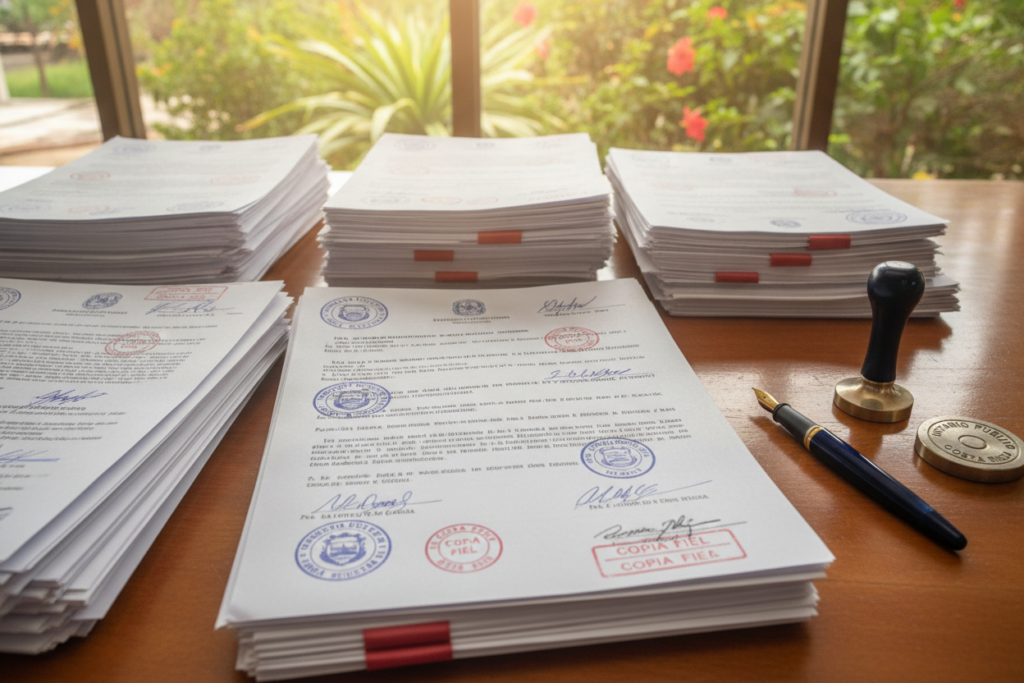
The path to residency becomes clearer when you know the key document requirements. Every residency application mandates specific documents to ensure compliance with Costa Rican regulations.
Firstly, a birth certificate and a clean criminal record certification are essential. These documents must be apostilled or legalized by the appropriate authorities. Additionally, you must provide a certified copy of every page of your passport. Often, the first page requires a formal translation into Spanish.
If your application includes a spouse, a marriage certificate must be submitted, properly authenticated for use in Costa Rica. In some cases, an affidavit can replace certain documents if you can justify the inability to present the original.
When it comes to proof of income, such as social security or pension statements, ensure these documents are current and clearly indicate the source of funds. The government requires that any documents not in Spanish be accompanied by a translation from an official translator.
At CRIE, we assist clients in organizing these essential documents. Proper document management is critical to avoiding delays during the long-term residency application process. For more detailed information, visit our website.
The Role of Notary Appointments in the Process
Understanding the notary appointment process is vital for a smooth residency application. Proper scheduling and preparation can significantly impact your experience at the consular office.
To begin, you must schedule your notary appointment in advance. The U.S. Embassy limits each session to a maximum of three documents. If you have a larger document, like a power of attorney, specific instructions must be followed to request a special appointment.
On the day of your appointment, remember to bring your unsigned documents along with a valid government-issued photo ID, such as your passport. If your document requires witnesses, make sure to arrange them beforehand, as consular staff cannot act as witnesses.
Preparation is key. Complete all information fields on your affidavit before arriving, but do not sign it until instructed by the consular officer. Following these procedures is crucial, as failing to do so can lead to significant processing delays.
CRIE offers guidance on how to prepare for these meetings, ensuring you understand the specific requirements for your residency application. Always check the current appointment availability on the official website before finalizing your travel plans.
Understanding costa-rica-immigration-notarized-copies Essentials
Mastering the essentials of notarized documents is crucial for a successful residency application. Understanding the legal nuances of notarized documents ensures your paperwork is accepted by the immigration department.
Since 2011, the 1961 Hague Convention has simplified the authentication process for many documents in Costa Rica. This change has reduced the need for consular intervention, making the process smoother for applicants.
When drafting a power of attorney, ensure it includes specific data fields. Consulting with a legal advisor before notarization is a best practice. Additionally, when preparing your affidavit for consular inscription, print neatly and indicate “N.A.” for any items that do not apply to you.
Maintaining accurate records of your income and application status can save you years of frustration. Always ensure your passport is valid for at least 180 days, as this is a standard requirement for residency processing in Costa Rica.
By following these best practices, you can streamline your document preparation and enhance your chances of a successful residency application. For more detailed information, visit our website.
Tips for a Smooth Notary Experience
Preparing for your notary appointment can make a significant difference in your residency journey. Arriving at the embassy with your documents fully prepared is essential. Ensure that everything is organized according to the specific requirements.
You can pay the $50 fee per seal using U.S. dollars, colones, or a credit card. This flexibility makes the payment process convenient for most applicants. However, remember that consular staff cannot explain the contents of your documents. Therefore, you must be of sound mind and fully understand what you are signing.
Proper preparation of your affidavit is crucial. Print neatly and leave the signature lines blank until instructed by the consular officer. If you have questions about the specific requirements for your residency application, CRIE can provide the necessary information to guide your preparation.
Many applicants find that having a clear checklist of documents helps them manage the process over the years of their residency journey. Access to reliable information is the best way to avoid errors that could lead to the rejection of your residency application.
By staying organized and following these tips, you can navigate the notary process in Costa Rica with confidence and efficiency.
Common Challenges with Notarized Documents
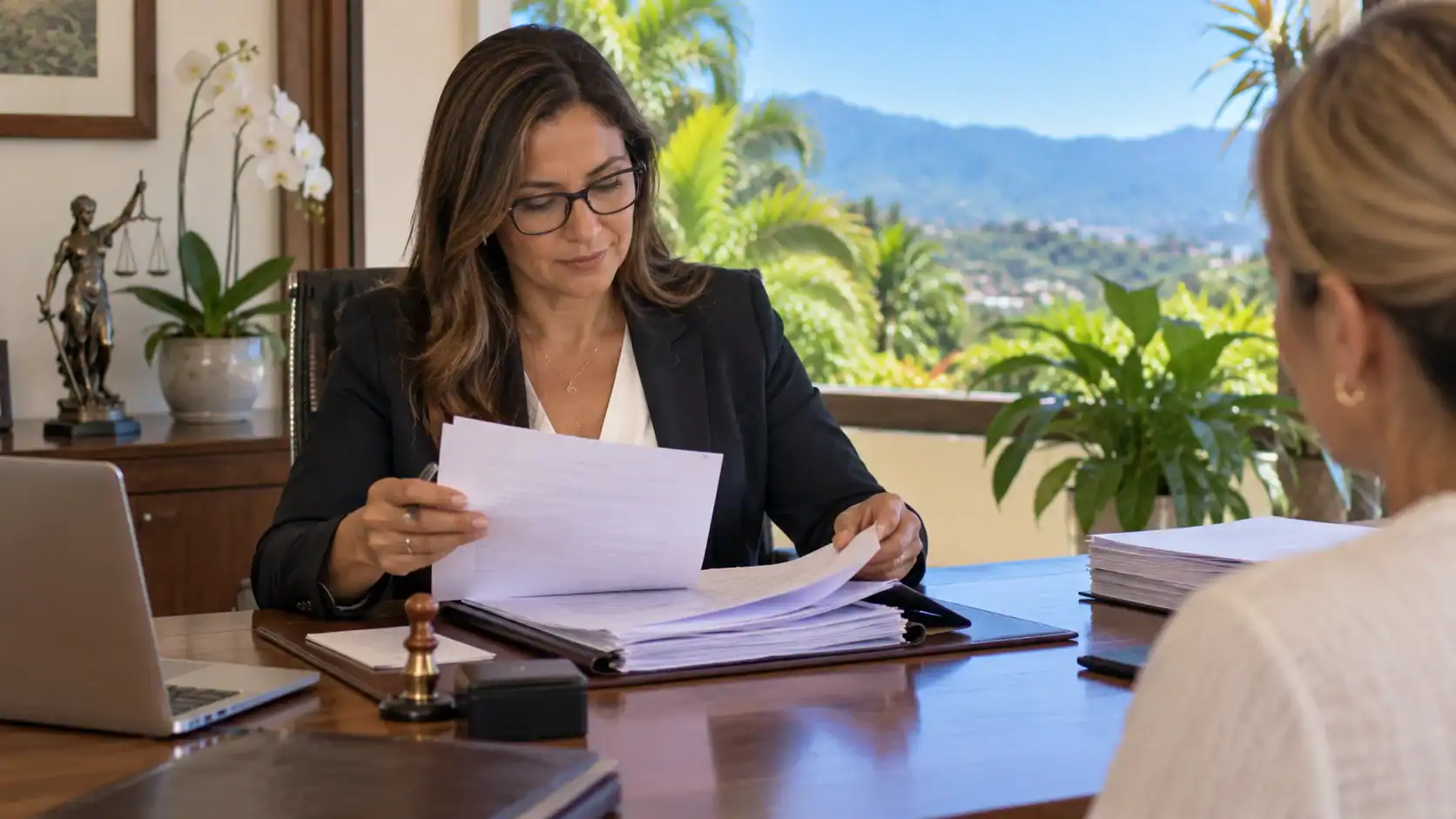
Facing challenges with notarized documents is a common experience for many applicants. Being aware of these hurdles can help streamline your residency application process.
One major issue is the failure to have documents properly apostilled. This oversight can lead to significant delays in your residency application. Additionally, incomplete affidavits or missing pages in your passport copy are frequent reasons for the government to request more information or even reject your application.
Another challenge involves proving income. Applicants often struggle to meet the specific standards set by Costa Rica, especially when documentation from their home country is insufficient. Misunderstanding the role of a public notary versus a consular officer can also lead to wasted time and multiple appointments.
At CRIE, we help you identify these potential challenges early in the process. By addressing these issues before submitting your application, you can avoid the frustration of processing delays that often plague the immigration system.
Your Next Steps to Residency Success
Successfully transitioning to life in a new country hinges on careful planning and knowledge of local regulations. Achieving residency is a significant milestone that requires you to meet all government requirements.
Whether you are preparing your affidavit or gathering essential documents for your application, having expert guidance can make the process much smoother. We at CRIE have over 20 years of experience helping individuals navigate the complexities of immigration.
For personalized guidance and pricing, please reach out to Johanna Alvarez at CRIE. You can contact our team via WhatsApp at +506 8373 2085 or send an email to info@crie.cr to start your journey today. Visit our website at crie.cr to learn more about how we can assist you with your transition to life in Costa Rica.