Moving to a new country is an exciting adventure, but securing your legal status can feel overwhelming. The rules for establishing residency in Costa Rica are detailed and require precise documentation.

Recent changes, like Law 9996 passed in 2021, aim to attract foreign investment and simplify processes. Yet, navigating the system alone can lead to delays and frustration.

We believe understanding Costa Rican residency is your first step toward a stable life abroad. Proper preparation from your home country is crucial for a smooth transition.

Our role is to guide you through each requirement. We help ensure your application meets all local standards, avoiding common pitfalls that stall approval. Start your informed journey with us at crie.cr.

Introduction to Costa Rica Residency and Immigration

A visually striking image illustrating "Costa Rica immigration law," featuring a diverse team of professionals in business casual attire (polo shirts and button-downs) engaged in a discussion around immigration documents and residency compliance. In the foreground, a table covered with immigration forms, maps of Costa Rica, and a laptop displaying the "Pura Vida Costa Rica" logo. In the middle ground, the team, composed of Caucasian and racially diverse staff, gestures and collaborates over a document, demonstrating teamwork and professionalism. The background showcases a serene office environment with large windows revealing lush Costa Rican landscapes, bright natural light flooding in, creating a warm and welcoming atmosphere. The overall mood is optimistic and informative, embodying the spirit of assisting individuals with residency processes in Costa Rica.

The journey to becoming a resident in Costa Rica begins with understanding its foundational immigration law. Ley 8764 serves as the General Migration Law, creating the structured framework for all procedures.

Relocating here is a major life decision. It demands a solid grasp of these migration laws to ensure a smooth and legal transition.

We believe in full transparency. That’s why we set realistic expectations about the time and effort required for a successful residency application.

The system is designed for order. Applicants must follow specific steps to maintain their legal status over the long term.

Our goal is to simplify your path. We provide clear, actionable advice to help you navigate bureaucratic requirements with confidence.

Whether you seek a peaceful retirement or a new business venture, understanding these legal rules forms the foundation of your success in Costa Rica.

Overview of Costa Rica’s Immigration Landscape

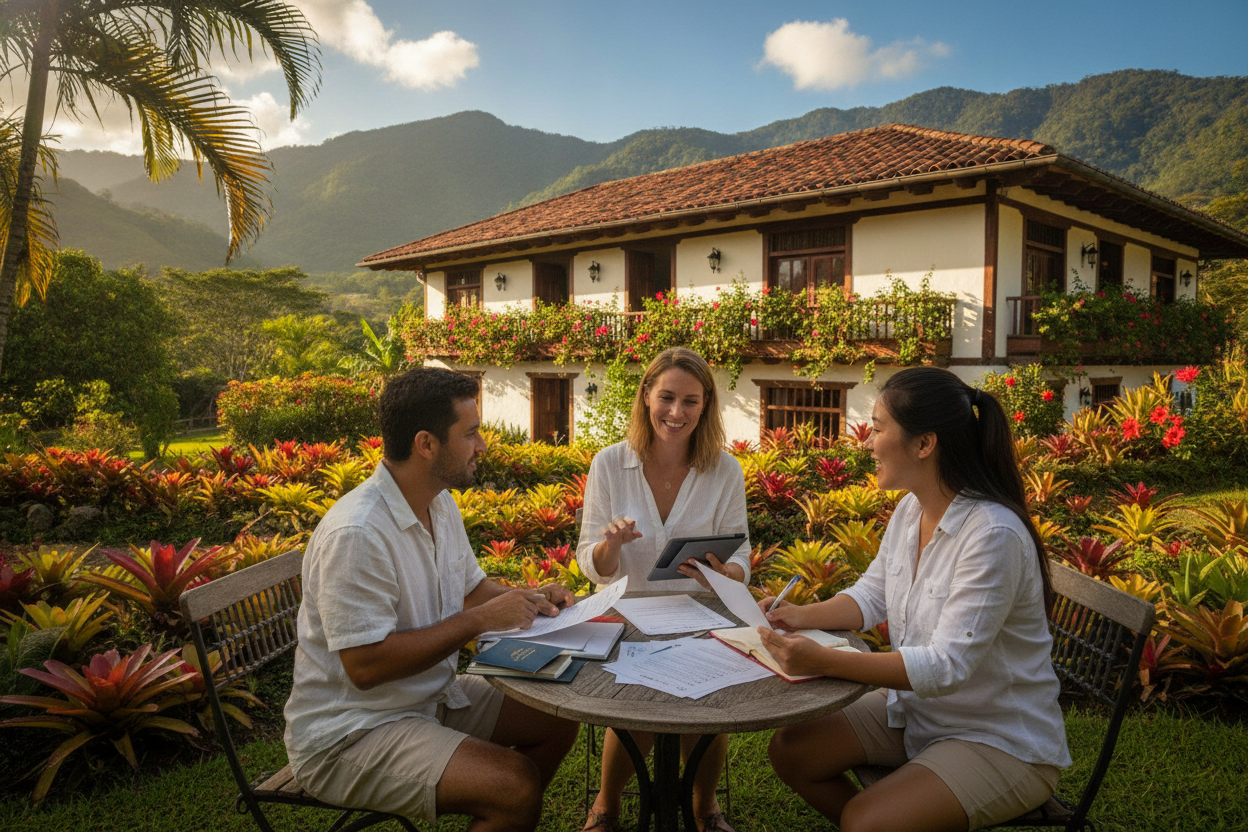
A vibrant and inviting landscape showcasing Costa Rica’s immigration scene. In the foreground, a diverse group of Caucasian individuals in business casual attire, such as polos and button-down shirts, engaging in discussions. The middle section features a modern immigration office with welcoming architecture, surrounded by lush tropical greenery. In the background, stunning mountains and a clear blue sky set a serene atmosphere. Soft, warm lighting creates a friendly and professional vibe, capturing the essence of Costa Rica's welcoming immigration landscape. The scene is branded with “Pura Vida Costa Rica” subtly integrated into the environment, reflecting the integration of nature and community in the immigration process. The overall mood is optimistic and inclusive, emphasizing a sense of belonging.

The Dirección General de Migración y Extranjería (DGME) stands as the cornerstone of Costa Rica’s immigration process. This primary authority manages all matters, ensuring every applicant meets national standards for legal entry and long-term stay.

We see this landscape constantly evolving. New regulations and administrative practices emerge regularly, making up-to-date knowledge essential for success.

A methodical approach is non-negotiable. It starts with correctly identifying your eligibility category under the national law. This first step shapes your entire application journey.

Our team at crie.cr actively monitors changes within Costa Rica. We ensure our clients receive accurate, timely information tailored to their specific needs.

Understanding this broader context is powerful. It allows you to prepare effectively for the requirements ahead, smoothing your transition to life in this beautiful country.

Who Qualifies for Costa Rican Residency?

Costa Rica offers several distinct pathways to residency, each with its own set of financial criteria. Your eligibility hinges on meeting the specific requirements of one category. These programs are designed for different financial profiles—retirees, those with stable income, and investors.

Pensionado (Pensionado) Criteria

The Pensionado program is for retirees. You must prove a lifetime pension of at least $1,000 per month. This income must be guaranteed to support your life here.

Rentista (Rentista) and Inversionista (Investor) Requirements

The Rentista category suits non-retirees. It requires proof of a $2,500 monthly income guaranteed for two years. The Inversionista (Investor) path demands a minimum $150,000 investment in local assets.

Each Rican residency category has strict financial thresholds. We advise confirming your pension meets the $1,000 minimum before applying. A professional immigration interview can clarify your best option.

Step-by-Step Guidance for Your Residency Application

Successfully obtaining residency hinges on a methodical approach from initial research to final submission. We break the entire procedure into clear, manageable phases.

Initial Research and Category Selection

Your first step is thorough research. You must select the residency category that aligns with your finances and long-term goals in Costa Rica.

This decision shapes every subsequent action. We help you analyze your options against the official requirements.

Application and Submission Process

Next, you gather documents to prove your eligibility. The official application process involves filing with the DGME.

We guide you through this submission to ensure forms are accurate. This diligence prevents delays or rejections from authorities.

Attention to detail is critical for a successful residency application. Minor paperwork errors can cause major timeline setbacks.

By following this structured process, you can manage everything from abroad. You will arrive fully prepared to start your new life.

Preparing Essential Documents Before Arrival

The foundation of a successful residency application is built long before you board your flight to Costa Rica. You must prepare all essential documents, such as your birth certificate and FBI criminal background check, well in advance.

Starting this process from your home country is crucial for a smooth transition. Every document must meet the exact format required by the immigration office.

This often means obtaining official certifications or apostilles before you leave. We advise creating a comprehensive checklist to ensure nothing is overlooked during preparation.

A common requirement is the FBI criminal background check. This standard document must be recent and properly authenticated.

Addressing any paperwork issues early avoids stress later. Proper preparation is the most effective way to ensure efficiency when you arrive in Costa Rica.

We recommend using a detailed document checklist to guide your efforts. This proactive approach saves time and prevents delays.

Understanding Apostilles and Translations Requirements

The legal recognition of your foreign documents hinges on two key processes: apostilles and certified translations. Both are mandatory for your paperwork to be valid here.

All documents from abroad must receive an apostille from the U.S. Department of State. This certification confirms their authenticity for use in Costa Rica.

After the apostille, you need a Spanish translation. It must be done by an official translator authorized within the country.

We often see applications delayed because of incorrect apostilles or translators. Using an unauthorized professional will not satisfy the immigration office.

The translation must be completely accurate. Any error can lead to requests for re-submission, causing significant frustration.

Handling these steps before you arrive saves valuable time. It prevents the need to re-process your essential paperwork locally.

Financial Thresholds and Income Requirements

Meeting the financial benchmarks is a non-negotiable pillar of your residency application in Costa Rica. The authorities require clear proof that you can support yourself without local employment.

Pensionado: Minimum $1,000/month

This category is designed for retirees. You must prove a stable pension income of at least $1,000 per month.

The funds must be guaranteed for life to cover your living expenses. This pension least amount is strictly enforced.

Rentista: Minimum $2,500/month for 2 Years

The Rentista program suits those with independent means. It demands proof of $2,500 per month guaranteed for two full years.

This ensures your financial independence during the initial residency period. The income must come from sources like investments or savings.

Maintaining this level is mandatory for your status. We help document your income sources clearly for the authorities.

Your financial proof must be consistent and easily verifiable throughout the entire process in Costa Rica.

Inversionista Guidelines for Property Investment

For investors seeking residency through capital, the Inversionista category provides a direct route tied to substantial property investment. The program requires a minimum financial commitment of at least 150,000 USD into Costa Rican real estate. This investment serves as your primary qualification for this specific residency pathway.

A critical rule is that the property must be held in your personal name. Using a corporation or other legal entity does not satisfy the requirement. We emphasize this point to prevent future complications with your application.

Your investment must be properly registered at the Registro Nacional. This official recording is non-negotiable for proving your eligibility as an investor. You must also maintain this property investment throughout your residency period to stay compliant.

Buying real estate here is a significant commitment. We ensure your investment meets all legal criteria to support your application effectively. Proper guidance turns this substantial financial step into a stable foundation for your life in Costa Rica.

Navigating Common Mistakes in the Application Process

A surprising number of residency applications face delays or denials not from major issues, but from small oversights. We see this pattern often. The DGME can reject submissions simply for missing documents or minor formatting errors.

Documentation and Compliance Pitfalls

Many applicants fail to achieve compliance because they ignore specific document rules. Each paper must meet the DGME’s exact formatting standards. This is a critical part of the entire process.

An application can stall before review due to these technicalities. We help you format everything correctly from the start.

Critical Timing Oversights

A common mistake is waiting too long to begin the application process. Documents like police certificates have expiration dates. Starting early accounts for unexpected bureaucratic delays.

Proper timing is essential for a smooth experience in Costa Rica. We advise planning your submission well in advance to avoid last-minute stress.

By working with experts, you navigate these complexities with precision. Our roadmap ensures every step is completed in the correct order for success.

Timelines and Milestones in the Residency Process

One key to a stress-free transition is knowing the milestones and timeframes involved. The entire residency process in Costa Rica typically spans three to twelve months.

This variation depends on your specific category and the current workload of immigration authorities. Patience and precise planning are essential during this time.

A major milestone is receiving your DIMEX card. This official identification is issued after final approval, solidifying your legal status.

We provide realistic time estimates at every step. Our updates help you plan your life and finances with greater confidence.

Understanding this timeline manages expectations. It also ensures you remain in full legal standing while your application is processed.

Our goal is to navigate this process efficiently. We aim to reach final approval so you can fully enjoy your new life in Costa Rica.

Maintaining Residency: Minimum Stay and Renewal Essentials

Your legal status in Costa Rica depends on ongoing adherence to minimum stay and renewal protocols. Once approved, your focus shifts to maintaining compliance to keep your residency active here.

Establishing Physical Presence Requirements

A core rule is the physical presence mandate. Temporary residents must spend at least six months per year within the country. This can be continuous or spread across the calendar year.

Meeting this requirement is non-negotiable for keeping your status valid. We help you track your stay to ensure you fulfill this obligation.

Renewal Process and Ongoing Compliance

The renewal process is your periodic check-in with authorities. It demonstrates you still meet the initial conditions for your residency. This includes verifying stable income or maintained investment.

You must also enroll in the CCSS, the national social security system. Keeping your DIMEX card current is another key task for all residents.

We assist in managing these renewals. Our guidance ensures you remain in full compliance with all legal obligations, avoiding issues with immigration.

By staying organized and proactive, you can ensure your status remains secure for years to come in Costa Rica.

Digital Nomad vs. Traditional Residency Options

The Digital Nomad visa offers a convenient entry point, but it’s essential to understand its limitations compared to traditional residency. This temporary permit is designed for remote professionals who want to live and work here for a limited time.

It is crucial to note this visa is not a form of residency. It does not count toward your path to citizenship in Costa Rica. Your legal status remains that of a temporary visitor with work permission.

The program requires proof of a stable income of at least $3,000 per month. For a long-term solution, we suggest exploring the Rentista or Inversionista programs. These provide a true, permanent residency pathway.

While the Digital Nomad visa allows you to work remotely for a foreign company, it does not grant the same rights as a legal resident. We help you compare these options clearly.

This allows you to make an informed decision about what is right for your job and future. For those earning enough, the visa is a great start—but it is distinct from the residency process.

Pathway from Temporary Residency to Permanent Residency and Citizenship

Your journey toward full integration in Costa Rica involves a clear, multi-year progression from temporary to permanent residency and, ultimately, citizenship. This pathway is defined by specific timeframes that must be met with consistent legal status.

We guide you through each phase, ensuring you understand the requirements from the start. The first major upgrade is moving from a temporary to a permanent resident.

Transitioning Steps from Temporary to Permanent Status

The key step is maintaining your temporary residency for three consecutive years. After this period, you become eligible to apply for permanent residency in Costa Rica.

This new status offers greater stability and removes many work restrictions. It is a significant milestone in securing your long-term future here.

Once you achieve permanent residency, you are on the final path toward citizenship. This typically requires seven years of legal presence in the country.

The requirement is reduced to five years for Ibero-American nationals. This long-term process demands careful planning over many years.

We ensure your status is maintained correctly throughout all required years. For specific family-based cases, such as for the children of Costa Rican citizens, different rules may apply.

Our support covers every step, from your first application to final naturalization. Achieving citizenship is a rewarding, long-term goal we help you navigate.

Practical Tips for a Successful Residency Journey

Beyond the official paperwork, a successful move hinges on adapting to local daily life. We recommend opening a local bank account early in your residency process. This simple step makes managing expenses and receiving income much easier.

Taking time to learn basic Spanish is another powerful investment. It greatly improves your quality of life and helps you connect with your new community. This effort shows respect and eases everyday tasks in Costa Rica.

Building a network of local contacts provides invaluable cultural insights. These connections can help you navigate challenges and feel more at home. Always keep your important documents in a secure place at your residence.

You will need them for various administrative steps throughout your residency. Staying patient and maintaining a positive attitude is key. This mindset helps you overcome hurdles in the process and fully enjoy life in Costa Rica.

residency-compliance-costa-rica: Understanding the Rules in Detail

Ley 8764 outlines not just how to become a resident, but also the continuous obligations you must meet to stay one. Your approved status comes with specific duties under this law. We provide clear explanations of these regulations so you understand your rights and responsibilities.

Compliance is the active process of protecting your legal standing. It means fulfilling all requirements to ensure you can continue living here long-term. This goes beyond just filing paperwork on time.

We translate the formal language of immigration law into plain terms. This helps you meet your obligations without confusion. Staying informed and proactive is the best way to keep your residency in good standing. It allows you to avoid potential legal issues and enjoy a stable future in the country.

Utilizing Official Resources and Expert Guidance

Avoiding common pitfalls starts with consulting the definitive online portal for all residency procedures. We always recommend using the official government site, migracion.go.cr. It provides the latest rules for your application process in Costa Rica.

Expert guidance is essential when navigating this complex system. This is especially true for understanding your rights to work and secure a job locally. The regulations can be detailed and change without much public notice.

Our team at crie.cr works alongside you as a trusted partner. We ensure you have access to accurate information and professional support throughout your residency journey. This helps you make informed decisions for your life in Costa Rica.

Relying on verified sources prevents mistakes in your application or renewal. Whether starting out or maintaining your status, we provide the expert support you need. This approach is key to a successful residency experience in the country.

Final Steps to Secure Your Costa Rica Residency Journey

Reaching the final approval for your residency is a moment of significant achievement and relief. This rewarding process provides long-term stability as you build a new life for your family.

We are committed to guiding you to this point. Our team ensures every detail is handled with care to secure your official approval.

If you have questions or need assistance, please contact us. Reach out via WhatsApp at +506 8706 3888 or email info@crie.cr.

Your family deserves the peace of mind that comes with legal status. Thank you for trusting us with your residency journey in Costa Rica. We look forward to helping your family achieve its dreams here.

FAQ

What are the main types of temporary residency available in Costa Rica?

The primary categories are Pensionado, Rentista, and Inversionista. The Pensionado visa is for retirees with a guaranteed lifetime pension of at least

FAQ

What are the main types of temporary residency available in Costa Rica?

The primary categories are Pensionado, Rentista, and Inversionista. The Pensionado visa is for retirees with a guaranteed lifetime pension of at least $1,000 per month. The Rentista option requires proof of a stable $2,500 monthly income for two years. The Inversionista residency is based on a minimum investment of $150,000 in Costa Rican real estate or business.

How long does the initial residency application process typically take?

The entire process, from document preparation to final approval, generally takes between 6 to 12 months. This timeline includes gathering and authenticating your paperwork, submitting your formal application to the Dirección General de Migración y Extranjería, and waiting for their decision. We always advise clients to plan for potential delays.

What are the most common mistakes people make during their application?

Two frequent errors involve documentation and timing. First, applicants often submit documents without the proper apostille or official Spanish translation. Second, people underestimate the processing time and let their tourist visa expire while waiting, which can complicate their status. Starting early and verifying every requirement is key.

What are the financial requirements for the Rentista residency category?

To qualify as a Rentista, you must demonstrate a guaranteed, stable income of at least $2,500 per month for a minimum of two years. This is typically proven with a letter from a bank or financial institution. The funds can come from investments, annuities, or other sources, but they must be verifiable and committed for the full 24-month period.

Once I have temporary residency, how do I maintain it and eventually renew it?

You must spend at least one day per year in Costa Rica to keep your temporary residency file active. For renewal, which happens every one to three years depending on your category, you’ll need to prove you’ve met the minimum stay requirement and that your original financial conditions (like pension or income) are still valid. Compliance is essential for a smooth renewal.

Can the property I buy for an Inversionista visa be used for other purposes?

Yes, absolutely. The $150,000 minimum investment must be in Costa Rican real estate, but you are free to use that property as your personal home, rent it out for income, or develop it. The immigration law focuses on the value of the investment and its registration with the correct national registry, not on dictating how you use the asset.

What is the pathway from temporary to permanent residency?

After maintaining your temporary residency status for three consecutive years, you become eligible to apply for permanent residency. The process involves submitting a new application, proving you have complied with all prior conditions, and passing a local Spanish and civics test. This status offers greater long-term stability without the need for periodic renewals.

How does the Digital Nomad visa differ from traditional residency options?

The Digital Nomad visa is a shorter-term, one-year permit aimed at remote workers with foreign-source income. It doesn’t lead directly to permanent residency or citizenship. Traditional options like Pensionado or Inversionista are designed for long-term settlement, require a more rigorous application, and form the foundation for a permanent life in Costa Rica.

,000 per month. The Rentista option requires proof of a stable ,500 monthly income for two years. The Inversionista residency is based on a minimum investment of 0,000 in Costa Rican real estate or business.

How long does the initial residency application process typically take?

The entire process, from document preparation to final approval, generally takes between 6 to 12 months. This timeline includes gathering and authenticating your paperwork, submitting your formal application to the Dirección General de Migración y Extranjería, and waiting for their decision. We always advise clients to plan for potential delays.

What are the most common mistakes people make during their application?

Two frequent errors involve documentation and timing. First, applicants often submit documents without the proper apostille or official Spanish translation. Second, people underestimate the processing time and let their tourist visa expire while waiting, which can complicate their status. Starting early and verifying every requirement is key.

What are the financial requirements for the Rentista residency category?

To qualify as a Rentista, you must demonstrate a guaranteed, stable income of at least ,500 per month for a minimum of two years. This is typically proven with a letter from a bank or financial institution. The funds can come from investments, annuities, or other sources, but they must be verifiable and committed for the full 24-month period.

Once I have temporary residency, how do I maintain it and eventually renew it?

You must spend at least one day per year in Costa Rica to keep your temporary residency file active. For renewal, which happens every one to three years depending on your category, you’ll need to prove you’ve met the minimum stay requirement and that your original financial conditions (like pension or income) are still valid. Compliance is essential for a smooth renewal.

Can the property I buy for an Inversionista visa be used for other purposes?

Yes, absolutely. The 0,000 minimum investment must be in Costa Rican real estate, but you are free to use that property as your personal home, rent it out for income, or develop it. The immigration law focuses on the value of the investment and its registration with the correct national registry, not on dictating how you use the asset.

What is the pathway from temporary to permanent residency?

After maintaining your temporary residency status for three consecutive years, you become eligible to apply for permanent residency. The process involves submitting a new application, proving you have complied with all prior conditions, and passing a local Spanish and civics test. This status offers greater long-term stability without the need for periodic renewals.

How does the Digital Nomad visa differ from traditional residency options?

The Digital Nomad visa is a shorter-term, one-year permit aimed at remote workers with foreign-source income. It doesn’t lead directly to permanent residency or citizenship. Traditional options like Pensionado or Inversionista are designed for long-term settlement, require a more rigorous application, and form the foundation for a permanent life in Costa Rica.


Article by Glenn Tellier (Founder of CRIE and Grupo Gap)

Don't wait, contact us right now!
Call or WhatsApp Costa Rica +506 8373 2085 or +506 8706 3888
Call USA/Canada +1 305-906-6784

See If You Qualify For Residency Today!