
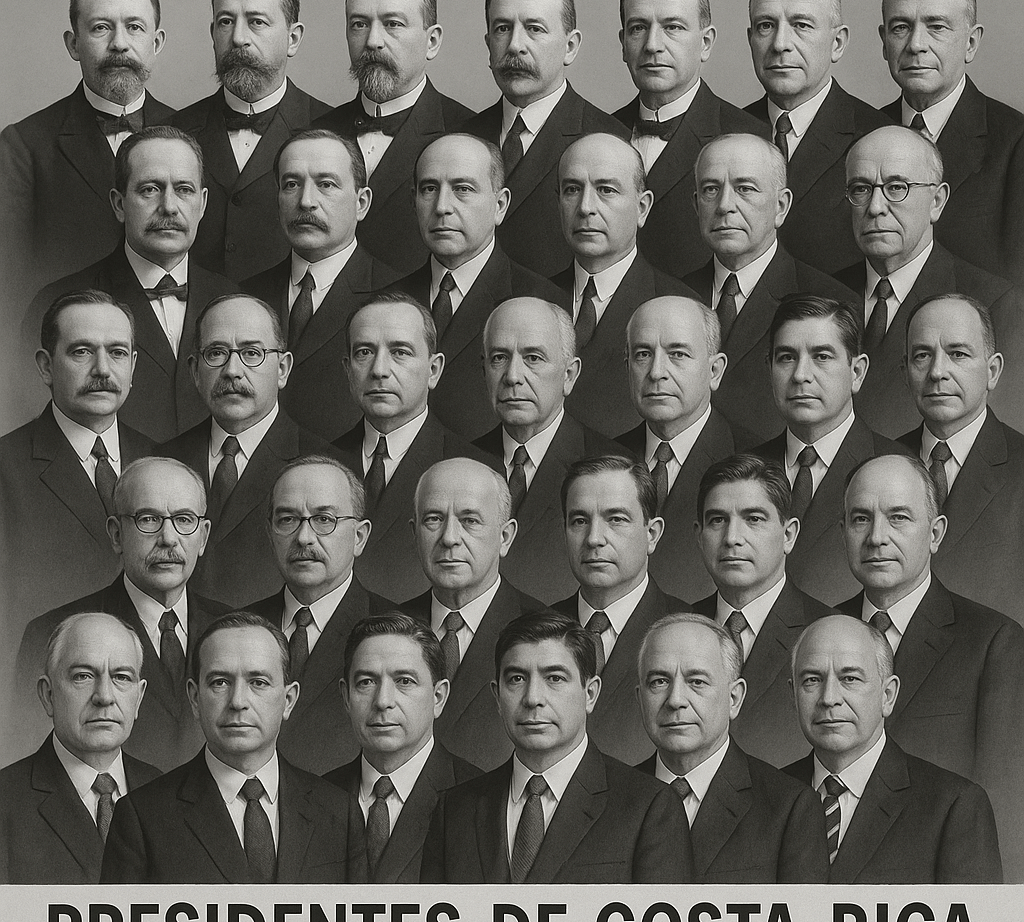
What if the legacy of Costa Rica’s past presidents holds the key to understanding the nation’s current political landscape? Their leadership shows us the complex dynamics that shaped Costa Rica’s democracy and social progress. The history of these presidents tells us about their stories and the changing political ideas that shaped the nation.
As we explore this historical journey, the notable former presidents of Costa Rica show us the challenges and successes of leadership. Their contributions and policies have a lasting effect on society. They reflect the decisions that leaders make and how they impact society.
Join us as we look at the important roles Costa Rica’s ex-presidents played. They helped shape democratic values, navigate civil conflicts, and build a national identity. This discussion is key to understanding today’s issues in the country.
The Role of the President in the Costa Rican Government
The President of Costa Rica is both the head of state and government. They play a key role in the country’s government. They make laws, pick cabinet members, and handle foreign relations.
This job is vital for setting national policies and leading the government’s plans.
Every four years, a new president is elected, bringing new ideas to leadership. Candidates must meet high standards set by the Constitution. This ensures the president’s role is important for democracy in Costa Rica.
The President works with two vice presidents and a 57-member legislative assembly. This team makes decisions together, ensuring stability. It also helps the president focus on what’s best for the people.
Costa Rica values political stability, making the president a key figure in the community.
Costa Rica’s Political System Overview
Costa Rica’s political system is a strong democracy with a mix of many political parties. It has an executive, legislative, and judicial branch. This balance ensures democracy and accountability. The government has a Legislative Assembly with 57 deputies, elected for four years, from seven provinces.
Political parties in Costa Rica have greatly influenced its government. A key event was the 1948 civil war, which led to about 2,000 civilian deaths. This crisis led to a new constitution in 1949, ending the army and giving women the right to vote.
This change brought social stability and allowed for better education and healthcare. It showed a strong focus on the well-being of citizens.
The Supreme Court, with twenty-two judges, is key to upholding the law and protecting rights. Judges serve eight-year terms, ensuring the legal system’s independence. Costa Rica’s political system keeps improving, with a focus on engaging citizens and ensuring accountability. This shows the country’s dedication to democracy.
Historical Leaders of Costa Rica: An Introduction
The leaders of Costa Rica have shaped the country’s politics. From 1821 to 1824, power changed often, with groups like Imperialists and Republicans in charge. Agustín de Iturbide was Emperor from May 19, 1822, to March 19, 1823, leading to Costa Rica’s first civil war.
From 1823 to 1839, Costa Rica was part of the Federal Republic of Central America. Leaders came from different backgrounds, showing a mix of leadership styles. The period from 1824 to 1847 saw the Liberal Party in power, known as the “Liberal State.”
The liberal leaders kept their power from 1847 to 1948, except for a brief conservative rule. The 1948 revolution was a key event, causing over 2,000 deaths and making it the 20th century’s bloodiest conflict in Costa Rica.
Out of fifty-three past presidents, only three were military leaders. José Figueres Ferrer played a big role in the 1950s and 1970s, helping democracy grow. Oscar Arias Sánchez, elected in 1986, worked for peace, showing how leadership has changed over time.
Looking at Costa Rica’s past leaders shows us its governance and challenges. Their influence is still key to the country’s politics today.
For more on Costa Rica’s politics and leaders, visit this link.
Gaining Independence: The Early Years of Costa Rica’s Leadership
Costa Rica gained its freedom from Spain on September 15, 1821. This marked the start of a challenging time as the nation moved from colonial rule to self-governance. Early leaders faced the task of creating a stable political system in a new country.
In 1823, Costa Rica joined the United Provinces of Central America. This move aimed to unite the region. It was a step towards creating a strong, unified nation.
Leaders like Juan Mora Fernández were crucial in shaping the country’s future. He worked hard to create a stable government. His efforts helped start talks on how to govern the new nation.
By 1838, Costa Rica decided to leave the Federal Republic of Central America. This move made the country’s identity clear. It set the stage for future leaders to build on.
The early years of independence had a lasting effect on Costa Rica. Decisions made then still influence politics today. For example, the decision to abolish the military in 1949 shaped its unique government structure.
Foundational Presidents: 1825-1850
From 1825 to 1850, Costa Rica saw big changes in its early government. The foundational presidents set the stage for stability and growth. They worked on building structures that would last through tough times.
One key figure was Juan Mora Fernández, president from 1849 to 1859. He focused on education, roads, and farming. His work on improving transport boosted trade and communication.
Others like José María Castro Madriz and Manuel Montealegre also played big roles. They helped shape the country’s laws and institutions. Their work on laws made the country more stable and set a strong foundation for today.
These leaders faced many challenges, like economic troubles and regional instability. They made policies to help the economy and support different groups. Their work was crucial in shaping Costa Rica’s future.
Past Presidents of Costa Rica: Key Figures and Their Impact
Costa Rica’s history is filled with leaders who changed the nation. They made big decisions and achieved a lot. From the start, they worked on making a democratic republic. They faced many challenges but kept pushing for progress and peace.
Influential Policies of Early Presidents
Presidents like Juan Mora Fernández and Braulio Carrillo Colina made big changes. They focused on education, building infrastructure, and helping the poor. Mora Fernández boosted education, setting the stage for more growth in schools.
Carrillo worked on land reform. He wanted to give more land to the people and improve farming.
Major Achievements and Challenges Faced
Costa Rican presidents have made big strides in development, despite hurdles. José María Castro Madriz helped create a strong government early on. Later, Óscar Arias Sánchez won the Nobel Peace Prize for his work in peace talks in Central America.
But, not all times were easy. Leaders like Francisco Morazán faced hard times. Their strength helped Costa Rica get through tough periods.

Constitutional Developments and Their Effects on Leadership
The history of Costa Rica’s constitution shows significant reforms that changed the country’s leadership. The 1949 constitution was a key moment. It took away the military and changed how the president works. This move made democracy stronger and put the people’s needs first.
Since 2009, Costa Rica has made many changes to its constitution. These changes show what the people want. Some big changes include:
- Law N° 9305 on August 24, 2015, brought big changes.
- Law N° 5699 on June 5, 1975, which updated the laws.
- Law N° 4123, passed on May 31, 1968, changed how treaties are approved.
- Amendments to Article 9 by Law N° 8364 on July 1, 2003, which changed the government structure.
- Creation of a Supreme Electoral Tribunal through Law N° 5704 on June 5, 1975, to watch over elections.
- Expansion of the Supreme Court’s power on constitutional matters via Law N° 7128 on August 18, 1989.
- Change to Article 11 by Law N° 8003 on June 8, 2000, to make public officials more accountable.
- Rules on nationality and children were introduced by Law N° 7514 on June 6, 1995.
- Changes for naturalization for some people via Law N° 7879 on May 27, 1999.
Constitutions have a big impact on leadership. Each change shows how society’s needs and priorities shift. It shows how leaders have adjusted to stay effective in their roles. This shows a link between legal changes and the strength of the president in Costa Rica.
Notable Former Presidents of Costa Rica in the 20th Century
In the 20th century, Costa Rica saw big changes in leadership. Leaders like José Figueres Ferrer and Óscar Arias Sánchez made big impacts. They worked through tough times and big social changes.
Reformers and Their Legacies
José Figueres Ferrer was a key leader in Costa Rica. He was president many times and pushed for big reforms. He worked for social justice, land reforms, and education.
His work helped shape the country. Óscar Arias Sánchez, who came later, won the Nobel Prize for Peace in 1987. He worked to end regional conflicts and helped the economy recover.
Changing Political Parties and Ideologies
Later, leaders like Rodrigo Carazo Odio and Luis Alberto Monge Álvarez changed things. Carazo started in 1978 and worked on social programs. Monge took over in 1982 and also tackled economic issues.
These changes showed how politics in Costa Rica were evolving. The Social Christian Unity Party became more powerful. This showed the country’s political diversity.
Leaders like José María Figueres Olsen and Miguel Ángel Rodríguez Echeverría kept changing things. Figueres Olsen focused on the economy and high-tech growth. These leaders helped shape Costa Rica’s politics today.
Their work sparked talks on governance and representation. For more on Costa Rica’s history and leaders, check out here.
Socialism and Civil Conflict: The Era of Jose Figueres Ferrer
José Figueres Ferrer was a key figure in Costa Rican history. He greatly influenced the nation with his socialist ideas and leadership during a time of civil unrest. He led the government in 1948-49 and again from 1953 to 1958, and then from 1970 to 1974. During his first term, he faced a civil war in 1948, which caused over 2,000 deaths. This conflict showed the deep impact of his political actions.
Figueres pushed for socialism in Costa Rica to bring social security and economic stability. In his first term, he made 834 reforms, leading to big social changes and industrial growth. His party, the Partido Liberación Nacional (PLN), became the most successful in Costa Rican politics, showing his lasting effect.
The civil war lasted 44 days and ended with Figueres winning. He then decided to get rid of the army, choosing a civilian police force instead. This move changed Costa Rica’s security and showed its commitment to peace. Figueres worked closely with the United States, especially during border disputes with Nicaragua. This helped shape Costa Rica’s modern identity.
Since 1949: The Modern Era of Costa Rican Leadership
After the 1949 constitution, Costa Rica started its journey towards democratic leadership. This journey has seen key moments shaped by its presidents. They have guided the country’s policies and society.
In 2006, Oscar Arias won the election by a small margin, beating Ottón Solís Fallas. This showed the country’s vibrant politics. Later, in 2007, Costa Rica voted on the CAFTA-DR free trade agreement. Citizens supported it, showing the government’s stance on trade.
February 2010 was big when Laura Chinchilla became Costa Rica’s first female president. She won with 47 percent of the vote. Her time in office focused on women’s rights and fairness.
Then, in April 2014, Luis Guillermo Solís won, ending the rule of the PLN and PUSC parties. His victory was a big change.
There were big protests in April 2016, with 40,000 people demanding better education and health services. This showed the power of public pressure on politics. In January 2018, a court ruling made same-sex marriage legal, sparking a lot of debate.
The 2020 pandemic hit hard, shrinking Costa Rica’s economy by 5 percent and raising unemployment to over 24 percent. To fight this, the government got a $1.75 billion loan from the IMF. This showed how leaders are tackling tough times while keeping democracy strong.
By 2022, Rodrigo Chaves Robles won the election with 53 percent of the vote. But over 43 percent of voters stayed home, showing less interest in politics.
Since 1949, Costa Rica’s leadership has been shaped by many factors. Each president has made a mark on the country’s democracy. Their actions have deeply influenced Costa Rica’s path.
Current Leadership: Transitioning from Luis Guillermo Solis to Carlos Alvarado Quesada
The leadership change in Costa Rica from Luis Guillermo Solis to Carlos Alvarado Quesada brought big challenges and wins. Solis, the first PAC president, won with 30.95% of the vote in 2014. But his support dropped due to debt and budget increases, reaching US$15.9 billion in 2017.
Carlos Alvarado Quesada won with 61% of the vote, showing a big change in politics. His government faces tough economic and social issues, like 30% living in poverty. Two big corruption cases hit the PAC, showing the need for strong leadership.
Alvarado Quesada focused on making Costa Rica carbon-neutral, getting attention from California. The next years will show how well his policies work on the economy, justice, and the environment.
The change from Solis to Alvarado Quesada is key to understanding Costa Rica’s political and economic changes. For more on living in Costa Rica, check out this resource.
Lessons Learned from Costa Rica’s Presidential History
Looking into Costa Rica’s past presidents teaches us a lot about leadership and governance. It shows how public opinion and active citizenship shape leaders. This look into the past helps us understand Costa Rica better and gives us insights into its political growth.
Corruption and Governance Challenges
Costa Rica has faced many governance issues, especially with corruption. Even with its stable politics, leaders have sometimes been caught in scandals, causing public unrest. The election of Rodrigo Chaves with 53% of the vote against José María Figueres shows people want change and better leadership.
Now, Costa Rica is dealing with high unemployment near 14% and a public debt of about 70% of its GDP. This makes finding a way to be financially stable a big challenge for leaders. The past president, Carlos Alvarado, had very low approval ratings, showing people are unhappy with the government.
- Current unemployment hovers near 14%, reflecting the pressing economic issues facing the country.
- With public debt at approximately 70% of GDP, fiscal sustainability remains a significant concern for Costa Rican leadership.
- The outgoing president, Carlos Alvarado, has recorded one of the lowest approval ratings, highlighting growing public dissatisfaction.
Societal Influence on Political Leadership
Looking at how society affects leadership in Costa Rica is important. Many people, including those unhappy with traditional parties, are changing their views. With a low election turnout and only a quarter of citizens trusting democracy, there’s a gap between the government and its people. This shows how important it is for leaders to listen and engage with citizens.

Costa Rica’s government is facing big challenges, like a divided Legislative Assembly with only ten seats for Chávez’s party. The country is dealing with the effects of the coronavirus pandemic on tourism and other key areas. Chávez wants to make the government smaller and more accountable, which is what many people want.
These lessons from Costa Rica show how hard it is to balance governance challenges with what people expect from their leaders. Leaders need to be flexible and stick to democratic values. This reflects the changing political scene and the needs of all Costa Ricans. For more on this, check out this link.
The Evolution of Presidential Terms in Costa Rica
The evolution of presidential terms in Costa Rica marks key changes in its political scene. These changes have changed how the government works, especially with rules on re-election and term lengths. At first, presidents could serve for different lengths and could even stay in power for a long time.
Over time, big changes have been made to term limits. These changes have changed how leaders work and how accountable they are. Now, a president can’t serve more than one term in a row. This change aims for better governance.
People’s views on presidential terms have changed, too. They want leaders to be open and responsible. This has made people more involved in voting. They look for leaders who truly care about their needs, thanks to past reforms.
The changes in presidential terms show Costa Rica’s effort to improve democracy and deal with political challenges. By updating its government rules, Costa Rica wants to build a strong political system that meets its people’s dreams.
Conclusion
The journey through Costa Rica’s presidential history shows a rich tapestry of challenges and triumphs. It highlights the crucial roles of presidents in shaping the country. They’ve made big strides in democracy, education, human rights, and protecting the environment.
Recent elections in 2022 brought a new president, Rodrigo Chaves Robles, after Carlos Alvarado Quesada. These events show how leaders must tackle modern challenges while keeping democracy and progress alive. The elections saw many parties vying for spots in the Legislative Assembly, showing a lively and active political scene.
The future of Costa Rican leadership looks set for more change. By learning from the past, future leaders can create a better model. This model should focus on economic growth, fairness, and protecting the environment. Working together with other Central American countries is key to solving big issues and ensuring a bright future. Understanding Costa Rican presidential history can guide tomorrow’s leaders and citizens. For more about this amazing country, check out this detailed resource.
FAQ
Who is the most famous president of Costa Rica?
What are the duties of the President of Costa Rica?
How long can you be president in Costa Rica?
Who were some important rulers in Costa Rica?
What is the main source of income in Costa Rica?
Why is Costa Rica so stable?
What is the poverty rate in Costa Rica?
Is Costa Rica a happy country?
Is Costa Rica a liberal country?
Who was the youngest president of Costa Rica?
How has the presidency evolved in Costa Rica since 1949?
Source Links
- https://costarica.org/facts/president/
- https://en.wikipedia.org/wiki/President_of_Costa_Rica
- https://www.bbc.com/news/world-latin-america-19414834
- http://www.costarica-embassy.org/index.php?q=node/19
- https://en.wikipedia.org/wiki/Politics_of_Costa_Rica
- https://2009-2017.state.gov/outofdate/bgn/costarica/88435.htm
- https://www.britannica.com/place/Costa-Rica/Transition-to-democracy
- https://costarica.org/facts/government/
- https://en.wikipedia.org/wiki/List_of_heads_of_state_of_Costa_Rica
- https://elespiritudel48.org/costa-rica-the-revolution-of-1948-a-cause-and-effect-analysis/
- https://en.wikipedia.org/wiki/Costa_Rica
- https://www.britannica.com/place/Costa-Rica/Independence
- https://crie.cr/history-of-costa-rica/
- https://costarica.org/events/holidays/independence/
- https://fraser.stlouisfed.org/title/economic-report-president-45/2015-492446/fulltext
- https://repositories.lib.utexas.edu/bitstreams/3bd61149-590a-428a-9b65-22f42470565d/download
- https://en.wikipedia.org/wiki/List_of_presidents_of_Costa_Rica
- https://simple.wikipedia.org/wiki/List_of_presidents_of_Costa_Rica
- https://conamaj.poder-judicial.go.cr/images/pdf/026.pdf
- https://iberoamericana.se/articles/10.16993/iberoamericana.508
- https://www.britannica.com/place/Costa-Rica/Costa-Rica-from-1974-to-2000
- https://www.cia.gov/the-world-factbook/countries/costa-rica/
- https://www.britannica.com/biography/Jose-Figueres-Ferrer
- https://en.wikipedia.org/wiki/José_Figueres_Ferrer
- https://www.britannica.com/place/Costa-Rica/Costa-Rica-in-the-21st-century
- https://www.icnl.org/resources/civic-freedom-monitor/costa-rica
- https://en.wikipedia.org/wiki/Luis_Guillermo_Solís
- https://www.thedialogue.org/analysis/what-can-costa-ricans-expect-of-carlos-alvarado/
- https://www.bc.edu/bc-web/schools/carroll-school/news/2023/decarbonized-democracy.html
- https://carnegieendowment.org/2022/05/04/costa-rica-s-new-populist-president-could-be-lesson-in-democracy-or-worrying-trend-pub-87037
- https://www.sjsu.edu/faculty/watkins/costarica.htm
- https://cr.usembassy.gov/readout-of-president-joe-bidens-meeting-with-president-rodrigo-chaves-robles-of-costa-rica/
- https://www.constituteproject.org/constitution/Costa_Rica_2011
- https://www.worldbank.org/en/country/costarica/overview
- https://en.wikipedia.org/wiki/2022_Costa_Rican_general_election
- http://www.sice.oas.org/Trade/sica/PDF/TegProtODECA91_e.pdf
Article by Glenn Tellier (Founder of CRIE and Grupo Gap)
Don't wait, contact us right now!
Call or WhatsApp Costa Rica +506 8373 2085 or +506 8706 3888
Call USA/Canada +1 305-906-6784