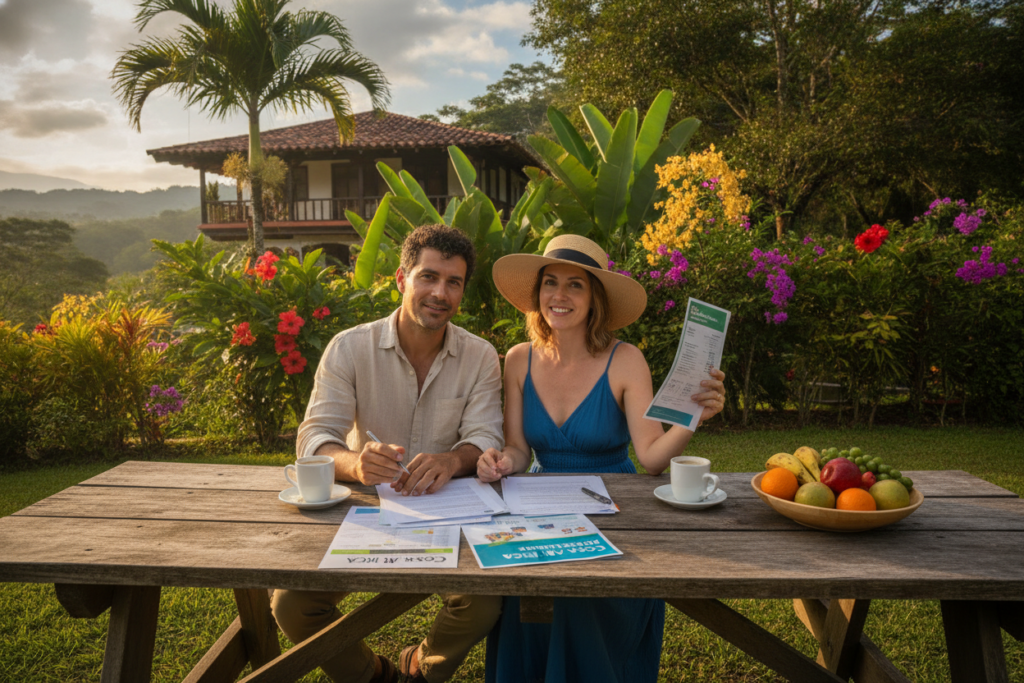
Pursuing formal residency status in Costa Rica is a significant step for many expats. An incomplete application can create unnecessary stress and administrative delays. We understand the challenges you face within this complex immigration system.
At CRIE, we serve as your dedicated resource. Our team provides candid expertise to help manage expectations for the entire residency process. We focus solely on guiding you through the formal requirements set by local authorities.
Starting your journey with professional guidance prevents common pitfalls. Our goal is to simplify the system, giving you the clarity needed to move forward. By understanding the nuances early, you can build a strong application and avoid rejection.
Understanding Costa Rica Residency Requirements (Residencia)

Eligibility for legal residence in Costa Rica is defined by distinct economic categories, each with its own set of requirements. We guide applicants through these formal rules to build a strong foundation for their application.
Who Qualifies? (¿Quién califica?)
All residency applicants must meet two universal conditions. You must be at least 18 years old and provide a clean criminal background check from your home country.
The core of the process revolves around three main economic pathways: Pensionado, Rentista, and Inversionista. Understanding which one fits your situation is the first critical step.
Economic Categories: Pensionado, Rentista, and Inversionista (Investor)
The Pensionado category is for retirees with a stable, permanent pension of at least $1,000 per month. The Rentista path requires proof of a guaranteed $2,500 monthly income for two years.
For the Inversionista (Investor) status, a minimum investment of $150,000 in the country is mandatory. It’s vital to know the Digital Nomad permit is not a residency status and doesn’t count toward citizenship.
Getting these financial requirements right from the start prevents delays. Proper preparation for your formal immigration interview relies on this clarity.
Step-by-Step Guidance for Document Preparation Before Arrival

Ahead of your move, organizing and authenticating your paperwork is a non-negotiable first step. We build your application foundation long before you submit anything to local authorities.
This proactive approach prevents the most common administrative roadblocks. It turns a complex process into a manageable series of clear actions.
Obtaining Apostilles and Professional Translations
Key documents like birth certificates and police records require an apostille. This official stamp authenticates their origin in your home country.
Once apostilled, each document must be translated into Spanish. Only translations by a certified official translator within the country are accepted by immigration.
Essential Documents Checklist
Your core checklist includes three mandatory items. You need a valid passport, an apostilled birth certificate, and recent police records.
We advise starting the collection of your birth certificate and other vital records early. Procuring them from your home country avoids costly delays later.
Proper management of these documents is the bedrock of your entire residency journey. It ensures every piece of paperwork is submission-ready.
Effective Timeline Planning and Management
We advise clients to view the residency journey as a project with strict milestones and expiration dates. The entire immigration process typically spans 6 to 12 months for final approval. A precise schedule is your best defense against delays.
Scheduling Critical Appointments
Your timeline must account for mandatory meetings with immigration authorities. Securing these slots early is crucial, as rescheduling can set you back weeks. A missed immigration appointment creates a significant bottleneck in your process.
Setting Realistic Deadlines for Document Procurement
Key documents like police checks are often valid for only three to six months. You should budget 2-3 months to gather and apostille records from agencies in your home country.
We recommend creating a backward timeline from your planned arrival. Allow an additional 1-2 months for certified Spanish translations. This proactive approach ensures every piece of your residency application is current and submission-ready.
Avoiding Incomplete-Application-Costa-Rica Challenges
A single missed appointment can unravel months of careful preparation for your legal status. We focus on preventing these avoidable setbacks that create significant administrative delays.
Consequences of Missed Appointments
Failing to attend a mandatory meeting halts your entire case. Immigration authorities will not process your file further until this step is completed.
This pause triggers a chain of delays. You must secure a new interview slot, which can add weeks or even months to your total timeline.
Strategies for Timely Rescheduling
Authorities generally view prompt rescheduling as a sign of commitment. A single missed meeting does not typically doom your residency application if addressed quickly.
However, a delayed application can affect your legal standing while you wait. Making timely rescheduling your absolute top priority is essential.
We provide candid guidance to navigate these situations. For direct assistance with rescheduling, you can contact our team via WhatsApp at +506 8706 3888.
Navigating Financial and Investment Requirements
Your path to legal residency hinges on demonstrating stable income or a qualifying investment. We break down the precise financial criteria for each economic category. This clarity helps you gather the correct proof from the start.
Pensionado Income Threshold
The Pensionado category requires a permanent pension of at least $1,000 per month. This income must be verifiable and consistent. Providing clear documentation of this pension is non-negotiable.
Rentista and Inversionista Criteria
Rentista applicants need proof of a guaranteed $2,500 monthly income for two years. This often involves bank statements or legal agreements.
For the Inversionista, or Investor, path, a minimum investment of $150,000 is required. This investment must be in real estate or other assets held in your personal name. The property title cannot be under a corporate entity.
Accurate financial proof is essential for your residency application. Errors in income verification can lead to rejections or extended delays. We emphasize that all documentation must be current and precise to ensure your residency status is processed smoothly.
Preparing Your Application from the United States
Strategic document collection from your home country sets the stage for a smooth immigration process to Costa Rica. We guide clients to begin this residency preparation six to twelve months before their intended move. This proactive approach gives you maximum control over document quality and avoids stressful delays.
Collecting and Organizing Documents at Home
Starting early is non-negotiable. Applicants from the United States often face longer waits. FBI background checks can take 8-12 weeks to process before they can be apostilled.
We recommend creating a dedicated folder for all required paperwork. This includes your passport, birth certificate, and police records. Organizing these items systematically prevents last-minute scrambles.
Verifying Requirements on migracion.go.cr
Immigration rules for Costa Rica can update without notice. You should always verify the latest submission requirements on the official website, migracion.go.cr.
This step ensures your residency application meets all current standards. Relying on outdated information is a common pitfall we help you avoid.
Your thorough preparation builds a coherent evidence package for officials. It tells a clear story of your qualifications and intent to live in the country.
Common Mistakes to Avoid in Residency Applications
A significant number of residency applications encounter preventable setbacks due to common oversights. We guide clients to recognize these pitfalls early. This awareness is your first defense against unnecessary complications.
Incomplete or Expired Documentation
Paperwork errors are the primary cause for rejection. Approximately 80% of residency applications in Costa Rica fail due to simple mistakes in documentation.
Many applicants submit copies when officials demand original, apostilled documents. Another frequent error involves expired paperwork. Police background checks, for instance, are typically valid for only three to six months.
Neglecting Critical Timelines
Underestimating processing times is a major source of delays. Each step—from obtaining an FBI check to securing a certified translation—has its own timeline.
Failing to track these expiration dates can invalidate your entire application package. This creates a domino effect of administrative delays. We see many applicants struggle because they did not plan backward from their submission date.
Addressing these common issues from the start saves considerable time and stress. A proactive approach to your residency application ensures every component is current and complete.
Managing Rescheduling and Follow-Up Procedures
Effective management of a rescheduling situation requires a clear, two-part strategy: immediate action and professional communication. This phase is about minimizing administrative delays and steering your application back on course efficiently.
Steps to Successfully Reschedule an Appointment
Immediate action within 24 to 48 hours is critical. This prompt response signals your commitment and helps prevent extensive delays in your residency process.
You must then formally request a new slot through official channels. This often involves submitting a written explanation in Spanish to the immigration authorities.
When to Contact Professional Assistance
Having a local representative manage this communication is crucial. They ensure the request is filed correctly and meets all formal requirements, avoiding further issues.
We act as your experienced guide, handling direct dialogue with officials. This ensures your case is prioritized correctly during the residency process. For immediate guidance on your specific situation, you can reach our team via WhatsApp at +506 8706 3888. We provide direct support for the formal rescheduling process in Costa Rica.
The Role of Legal and Cultural Preparation in Your Residency Journey
A successful transition to life in Costa Rica involves more than just paperwork. It requires a dual focus on legal compliance and cultural adaptation. This preparation ensures your residency journey is both successful and rewarding.
Understanding Immigration Laws in Costa Rica
The immigration law in this country is detailed and often complex for new arrivals. Understanding its role is essential for legal compliance. Familiarizing yourself with the framework helps you avoid common pitfalls.
For instance, ensuring all documents are properly apostilled and translated is mandatory. A key benefit of legal status is access to the national healthcare system. It allocates 9.3% of GDP to ensure quality services for residents.
Adapting to the Pura Vida Lifestyle
Embracing the Costa Rican “Pura Vida” lifestyle is a key part of cultural preparation. This philosophy emphasizes relaxation, community, and enjoying life’s simple pleasures. It helps you integrate smoothly after moving to the country.
Engaging with local customs and social norms fosters a sense of belonging. This cultural readiness complements your legal standing perfectly.
Together, this dual focus creates a smoother transition. It turns your residency approval into the foundation for a truly fulfilling life.
Leveraging Expert Assistance and CRIE Services
The complexity of securing legal status in a new country often makes professional expertise not just helpful, but essential. An experienced guide can navigate the nuanced immigration process that official guidelines alone cannot fully clarify.
Benefits of Working with Immigration Experts
Professional advisors understand the specific requirements of the system. They identify potential issues in your residency application before they become major problems.
This proactive approach is a key reason over 90% of our clients credit our expertise for their successful outcome. It transforms uncertainty into a clear, managed path forward.
How CRIE Supports Your Application Process
With over 20 years of experience, we have helped thousands achieve their residency goals in Costa Rica. We offer personalized service tailored to each unique situation.
Our team manages every detail of your case to minimize errors and delays. This precise management turns a complex application into a streamlined and efficient process.
For expert support to ensure your submission is accurate and complete, contact our team. Reach us via WhatsApp at +506 8706 3888 or email info@crie.cr.
Final Thoughts for a Successful Costa Rica Residency Journey
A successful residency application transforms your dream of living in Costa Rica into a stable, legal reality. Concluding this process hinges on realistic expectations and organized follow-through. We help you manage each step with candid guidance.
Remember, this is a formal legal procedure with specific requirements. Our service at CRIE focuses exclusively on residency matters within the country. We provide the expertise needed to navigate the system correctly.
If your long-term plan includes citizenship, note that it requires completing the residency steps first. We are here to support that entire journey from start to finish.
For direct assistance, contact us via WhatsApp at +506 8706 3888 or email info@crie.cr. Always verify the latest official requirements at migracion.go.cr to keep your application on track. This ensures your Costa Rican dream becomes a smooth and successful reality.
FAQ
What are the most common reasons a residency application gets returned as incomplete?
The most frequent issues we see are expired documents, missing apostilles or official translations, and insufficient proof of income or investment. Even one missing signature or a birth certificate without the proper seal can halt the entire process. Meticulous preparation against the official checklist is non-negotiable.
How long does it typically take to gather all required documents before applying?
A>Realistically, plan for 3 to 6 months if starting from scratch. Procuring official records like birth certificates and marriage licenses with apostilles from your home country takes time. Background checks and bank letters also have specific validity periods. Rushing this phase is a primary cause for an incomplete file later.
Can I apply for residency from outside Costa Rica, or must I be in the country?
A>You can and should begin the entire document collection and preparation process from your home country. However, the formal application submission and biometric appointments must be done in person at the Immigration Department (Dirección General de Migración y Extranjería) in Costa Rica. Proper planning bridges this gap.
What happens if I miss my scheduled appointment with immigration authorities?
A>Missing an appointment causes significant delays. Your file may be shelved, and you’ll need to navigate a rescheduling process, which can take weeks or months due to high demand. It underscores why we advise clients to build a flexible timeline and confirm all dates well in advance.
What’s the difference between the Pensionado, Rentista, and Inversionista categories?
A>The Pensionado category requires a guaranteed lifetime pension of at least
FAQ
What are the most common reasons a residency application gets returned as incomplete?
The most frequent issues we see are expired documents, missing apostilles or official translations, and insufficient proof of income or investment. Even one missing signature or a birth certificate without the proper seal can halt the entire process. Meticulous preparation against the official checklist is non-negotiable.
How long does it typically take to gather all required documents before applying?
A>Realistically, plan for 3 to 6 months if starting from scratch. Procuring official records like birth certificates and marriage licenses with apostilles from your home country takes time. Background checks and bank letters also have specific validity periods. Rushing this phase is a primary cause for an incomplete file later.
Can I apply for residency from outside Costa Rica, or must I be in the country?
A>You can and should begin the entire document collection and preparation process from your home country. However, the formal application submission and biometric appointments must be done in person at the Immigration Department (Dirección General de Migración y Extranjería) in Costa Rica. Proper planning bridges this gap.
What happens if I miss my scheduled appointment with immigration authorities?
A>Missing an appointment causes significant delays. Your file may be shelved, and you’ll need to navigate a rescheduling process, which can take weeks or months due to high demand. It underscores why we advise clients to build a flexible timeline and confirm all dates well in advance.
What’s the difference between the Pensionado, Rentista, and Inversionista categories?
A>The Pensionado category requires a guaranteed lifetime pension of at least $1,000 USD per month. The Rentista category requires proof of a $2,500 USD monthly income for two years, guaranteed by a bank. The Inversionista category requires a minimum $150,000 USD investment in Costa Rican real estate, securities, or projects. Each has distinct documentation needs.
Why is working with a local expert like CRIE recommended for the residency process?
A>Navigating Costa Rica’s immigration system involves precise legal, financial, and bureaucratic steps. We provide current knowledge of law changes, manage document verification, liaise directly with authorities, and help you avoid costly errors. Our role is to translate complex requirements into a clear, actionable plan for your successful application.
,000 USD per month. The Rentista category requires proof of a ,500 USD monthly income for two years, guaranteed by a bank. The Inversionista category requires a minimum 0,000 USD investment in Costa Rican real estate, securities, or projects. Each has distinct documentation needs.
Why is working with a local expert like CRIE recommended for the residency process?
A>Navigating Costa Rica’s immigration system involves precise legal, financial, and bureaucratic steps. We provide current knowledge of law changes, manage document verification, liaise directly with authorities, and help you avoid costly errors. Our role is to translate complex requirements into a clear, actionable plan for your successful application.
Article by Glenn Tellier (Founder of CRIE and Grupo Gap)
Don't wait, contact us right now!
Call or WhatsApp Costa Rica +506 8373 2085 or +506 8706 3888
Call USA/Canada +1 305-906-6784