
Navigating the residency process in Costa Rica can feel overwhelming. At CRIE, we have over 20 years of experience helping individuals and families successfully manage their residency applications. Our expertise ensures that you have the support you need to avoid common pitfalls.
This guide aims to help you address any document issues early on, ensuring your application remains on track. Every detail matters; even a small error can lead to significant delays. We understand how important it is for you to live in this beautiful country.
With our clear and practical information, you can approach your residency application with confidence. Our goal is to make your journey as smooth as possible, allowing you to focus on what truly matters—starting your new life in Costa Rica.
Understanding Document Errors in Costa Rica Residency
Understanding the intricacies of residency applications in Costa Rica is crucial. Many applicants face challenges due to simple paperwork errors.
It is essential to recognize common pitfalls in the application process. The immigration system in Costa Rica is strict about the accuracy of all submitted documents. When errors go unaddressed, the impact on your residency application can be severe, leading to frustrating delays.
The Costa Rican government maintains high standards, allocating 9.3% of its GDP to ensure quality healthcare services for residents. Therefore, it is vital to identify and correct any issues in your documentation early on. This proactive approach can help you maintain your legal status and enjoy a smooth residency process.
For more assistance, explore our residency support services in Costa Rica.
The Importance of Accurate Documentation for Residency Applications
Accurate documentation is essential for a smooth residency application in Costa Rica. Your legal identity in the country is defined by the DIMEX card, which serves as the primary proof of your legal resident status.
Maintaining accurate documents is non-negotiable. Immigration authorities require perfect alignment across all your personal records and identification papers. A discrepancy in your name across different documents can create major issues, potentially preventing you from opening a bank account or signing contracts.
We stress that the application process is not just about submitting forms. It’s about proving your identity consistently to the government. By ensuring your name is reflected correctly on your residency card, you protect your right to live and work in the country.
For more details on how to address name discrepancies, visit our name mismatch documents in Costa Rica page.
Key Legal Documentation and Prerequisites
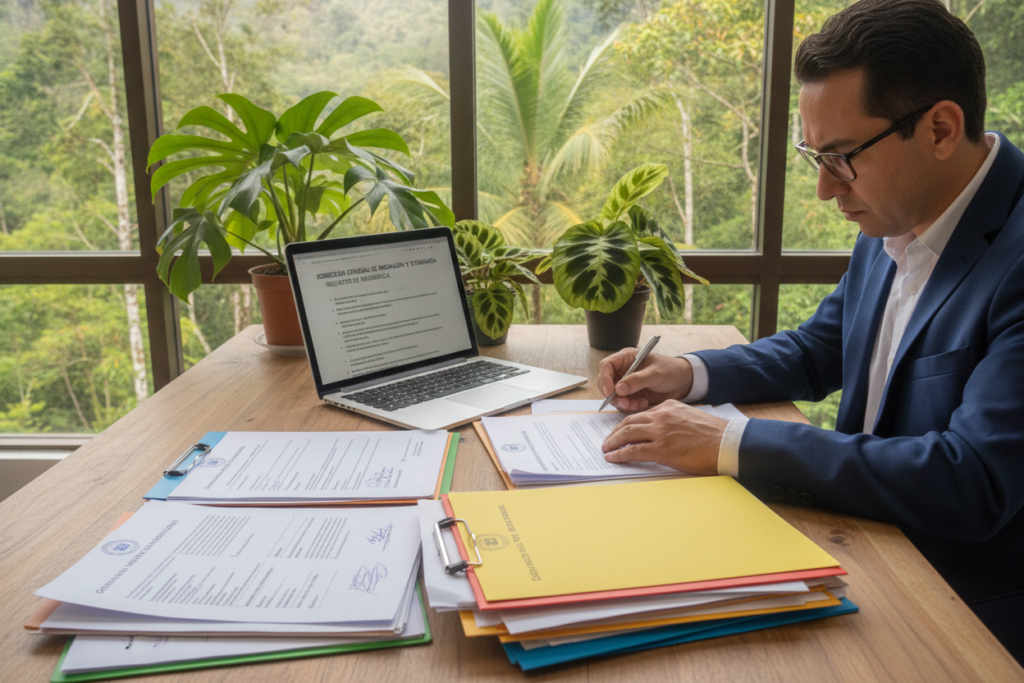
Securing residency in Costa Rica hinges on understanding the necessary legal documents. Each applicant must prepare specific certificates and undergo background checks to meet local requirements.
Essential Certificates and Background Checks
Every applicant must provide an authenticated birth certificate and police clearance records. These documents must align with the legal standards set by Costa Rican authorities.
Additionally, investors must provide proof of a $150,000 investment in real estate or stocks to fulfill the legal prerequisites for this residency category. For Rentista residency, DGME requires documentation issued by a competent authority showing that the applicant will receive stable and permanent income of at least US$2,500 per month for at least two years.
Translation and Apostille Requirements
All foreign documents, including your birth certificates, must be accompanied by an official translation and an apostille to be recognized by authorities. We advise that you verify every document detail, as even a minor error in your income proof or property records can cause significant setbacks.
For more information on the birth certificate requirements, visit our birth certificate page.
Step-by-Step Guide to fix-document-errors-costa-rica
Addressing document discrepancies is a vital step in ensuring a successful residency application. Our approach begins with a thorough audit of all submitted paperwork and application forms.
We assist you in identifying specific document errors, such as missing signatures or incorrect dates. These issues are common reasons for rejection by immigration officials.
By creating a detailed checklist, you can confirm that every piece of your application is complete and meets the strict standards required. Correcting these minor errors early can significantly improve your overall approval timeline.
Our team is here to guide you through the process of organizing your documents. This preparation ensures that everything is ready for submission to the relevant authorities.
Navigating Costa Rica’s Immigration Laws and Requirements
Successfully navigating the immigration process in Costa Rica requires a clear grasp of the laws and requirements. Staying informed about frequent updates is essential, as changes can directly impact your residency application.
We help you understand the filing and legal procedures mandated by the government. This ensures that your application remains compliant at all times.
Recent changes in immigration law have introduced new requirements, such as mandatory health insurance. Addressing these updates is crucial for maintaining your legal status.
Our team continuously monitors regulatory changes to provide you with the most current guidance tailored to your specific residency category. By following the correct process, you can navigate the system with confidence and avoid common pitfalls that lead to application rejections.
Practical Tips for Document Preparation and Submission
A well-organized approach to document preparation can streamline your residency application process. By taking the time to create an effective checklist, you can ensure that all necessary documents are accounted for before submission.
We recommend gathering your documents well in advance. This preparation allows time for obtaining apostilles and translations, which can be time-consuming. Keeping your documents in a logical order is also essential. This organization helps immigration officials review your application more efficiently during your appointment.
Our approach focuses on proactive preparation. This significantly reduces the risk of missing deadlines that could extend your overall processing timeline. By paying attention to these small details, you can ensure that your application is complete and ready for a successful review.
How to Avoid Common Documentation Mistakes in Residency Applications
Avoiding common pitfalls in residency applications is key to a successful outcome. Many applicants face delays due to inadequate documentation, such as missing apostilles or signature errors on official forms.
Misunderstandings with financial proofs are also frequent issues. For instance, failing to maintain the required income levels can complicate your application. We help clients resolve these misunderstandings effectively.
We ensure that your paperwork aligns perfectly with the requirements. This proactive approach prevents common mistakes that lead to unnecessary requests for more information.
By verifying your income proof and other financial documents, we help you avoid complications during the review process. Our team provides the necessary oversight to ensure that your residency applications are free from errors that typically cause long delays.
Understanding the Role of Translations and Apostilles in Document Validation
The validation of documents through translations and apostilles is a crucial step in the residency process. Costa Rican authorities require that all foreign documents be professionally translated. Self-translations or documents that do not meet local standards will not be accepted.
An apostille is also mandatory for validating your foreign documents. It confirms the authenticity of the seal or signature on your certificate. Without a proper apostille, your documents may face rejection, leading to significant delays.
We ensure that your translation is completed by a sworn professional. This step is vital for getting your documents accepted by the government. We guide you through the sequence of these steps to ensure that your documents are validated in the correct order for official use.
The Impact of CRIE’s 20 Years of Expertise on Error Resolution

Having worked in the immigration field for over 20 years, we know how to resolve document issues effectively. Our extensive experience allows us to provide tailored guidance for each applicant’s unique situation.
With thousands of successful cases under our belt, we ensure that your application is handled with precision. We recognize that every case is different, and our approach helps us anticipate potential problems before they arise.
By leveraging our long-standing expertise, we streamline the process, reducing the stress often associated with moving to a new country. Our dedicated team is here to support you in resolving document issues, helping you achieve your goal of living in Costa Rica.
Managing Timelines and Costs During the Correction Process
Timing and budgeting are critical components in the residency correction process. Understanding the official processing time is essential. Currently, the update for a residency card takes about 22 business days under immigration law.
We also help you budget for legal and processing fees. For example, the administrative fee at Correos de Costa Rica applies for certain procedures. Knowing these costs and deadlines is vital for maintaining your legal status without unexpected financial burdens.
We provide clear estimates for your application timeline. This ensures you are prepared for the waiting period required by government authorities. By planning your budget and schedule effectively, you can navigate the correction process with confidence and avoid unnecessary delays.
Final Thoughts on Fixing Document Errors for a Smooth Residency Journey
Embarking on your residency journey in Costa Rica can present various challenges. Fixing document errors is a critical step in securing your residency. We provide the expert guidance you need to navigate this process smoothly.
Each case is unique, depending on nationality, family situation, and immigration history. This is why we offer personalized support for your application. Our team is dedicated to helping you avoid delays and meet all requirements.
For pricing and next steps, speak directly with Johanna Alvarez, our CRIE immigration expert. You can reach us via WhatsApp at +506 8373 2085, by email at info@crie.cr, or visit our website at crie.cr for more information. We are committed to helping you navigate the complexities of the Costa Rican system, ensuring you can enjoy your new life with peace of mind.

FAQ
What are common document errors in residency applications?
Common errors include misspelled names, incorrect dates, and missing signatures. These mistakes can delay the processing of our applications.
How can we ensure our documents meet Costa Rican requirements?
We must carefully review the specific requirements for each document, including birth certificates and proof of income, to avoid any issues.
What is the importance of translations and apostilles?
Translations ensure that our documents are understood by Costa Rican authorities, while apostilles verify their authenticity, both of which are crucial for a successful application.
How can we create an effective document checklist?
We can list all required documents, check them off as we gather them, and ensure that we have the correct versions, including translations and apostilles.
What should we do if we find errors in our documents?
We should promptly identify the errors, gather the correct information, and follow the necessary steps to amend the documents before resubmitting our application.
How long does it typically take to fix document errors?
The time can vary depending on the type of error and the specific documents involved, but we should plan for potential delays in processing.
What are the costs associated with correcting document errors?
Costs can include fees for translations, apostilles, and any legal assistance we may require to ensure our documents are correct.
How can we avoid delays in our residency application?
We can avoid delays by ensuring all documents are accurate, complete, and submitted on time, along with any required translations and apostilles.
Rentista financial requirement checked against DGME: Regularización Migratoria → Residencia Temporal → Rentista y sus Dependientes on 6 September 2026.