
Costa Rica’s freshwater fish deserve attention alongside its birds, frogs and mammals. Rivers and wetlands support very different fish communities, so identifying a fish starts with both its appearance and the place where it was observed. This introductory guide highlights three documented species and explains how to use the research responsibly.
Why location and scientific names matter
The 2021 identification key by University of Costa Rica researchers covers continental and island-water fish families. It distinguishes strictly freshwater groups from others that tolerate salinity or enter fresh water from coastal environments. Its scope should not be confused with a count of fish living exclusively in fresh water.
Use the scientific name when comparing sources. Common names can vary, and older publications may use different classifications. A photograph is a useful starting point, but identification can require features that are not visible in a casual image.
Gaspar: Atractosteus tropicus
The tropical gar, locally called gaspar or pejelagarto, is identified in the UCR researchers’ key as the country’s representative of the gar family, Lepisosteidae. The study places it in northern and northern Caribbean Costa Rica. Its elongated body and distinctive armored scales separate it from the deeper-bodied cichlids shown below.

Guapote: Parachromis dovii
Parachromis dovii is a cichlid recorded in the 2017 scientific catalogue of fishes at Tirimbina Biological Reserve, in the Sarapiquí basin. The researchers illustrate differences between juvenile and adult specimens and describe the large mouth and enlarged teeth. Appearance can change with age; one aquarium photograph does not capture every form you may encounter.

Tuba: Tomocichla tuba
Tomocichla tuba is another cichlid documented in the Tirimbina catalogue. Its scientific photograph is useful for comparison with the guapote, but identifying an unfamiliar fish requires checking the study’s descriptions and key rather than matching color alone. The catalogue documents that reserve’s fauna; it is not a promise that every species will be visible on a visit.

Conservation depends on the whole waterway
Protecting freshwater fish involves more than protecting an individual animal. UCR’s freshwater-biodiversity reporting identifies pollution and changes to river flow among pressures on aquatic ecosystems. This is background reporting from 2009, not a current population assessment of the three species above.
Keep litter, chemicals and aquarium contents out of waterways. Do not release pet fish or move animals between rivers. Observe without disturbing the bank or habitat, and check the site’s rules before any activity involving capture or handling.
How to make a useful observation
- Record the date and exact river or wetland, using a location description you can verify.
- Photograph from a safe, permitted viewpoint without capturing the fish for this purpose.
- Note visible markings, body shape and approximate size, but keep uncertain identifications provisional.
- Compare a scientific key or ask an experienced specialist rather than assigning a species from color alone.
- Do not assume a river is safe to enter because fish are visible.
For further reading, CIMAR’s freshwater-fish bibliography lists research across Costa Rican river systems. Check each study’s date, geographic scope and methods before applying its conclusions elsewhere.
Sources and image licenses checked September 7, 2026. This is a rebuilt introductory guide, not a complete species checklist or fishing-permission guide. Photographs are hosted by Wikimedia Commons and credited individually.
Marine fish: a different Costa Rican ecosystem
Costa Rica’s fish diversity extends beyond rivers. Coastal reefs and offshore waters support communities that should not be grouped into a freshwater checklist. UCR research at Isla del Coco documents pelagic groups including sharks, billfish and tunas. The yellowfin tuna is Thunnus albacares; the study’s observations concern its particular survey, not a current nationwide abundance estimate.
SINAC’s 2018 Isla del Coco overview also describes hammerhead and white-tip sharks, yellowfin tuna, parrotfishes, rays and jacks around the island. Several of these names describe groups rather than one species. Use a scientific identification resource before assigning a species to a photograph.
The three photographs above show freshwater fish only; they do not illustrate tuna or sharks. Whether observing in a river, estuary or ocean, record the habitat and avoid treating similar colours as proof of identity. For a fishing trip, use our fishing planning guide and confirm species restrictions separately.
“Shark Island” and Isla del Coco
If a travel listing says “Shark Island,” request the destination’s official name and itinerary. Costa Rica’s Isla del Coco National Park is a protected oceanic island administered by SINAC’s Área de Conservación Marina Coco. Shark-focused marketing should not be mistaken for the name of a separate national park or a promise of sightings.
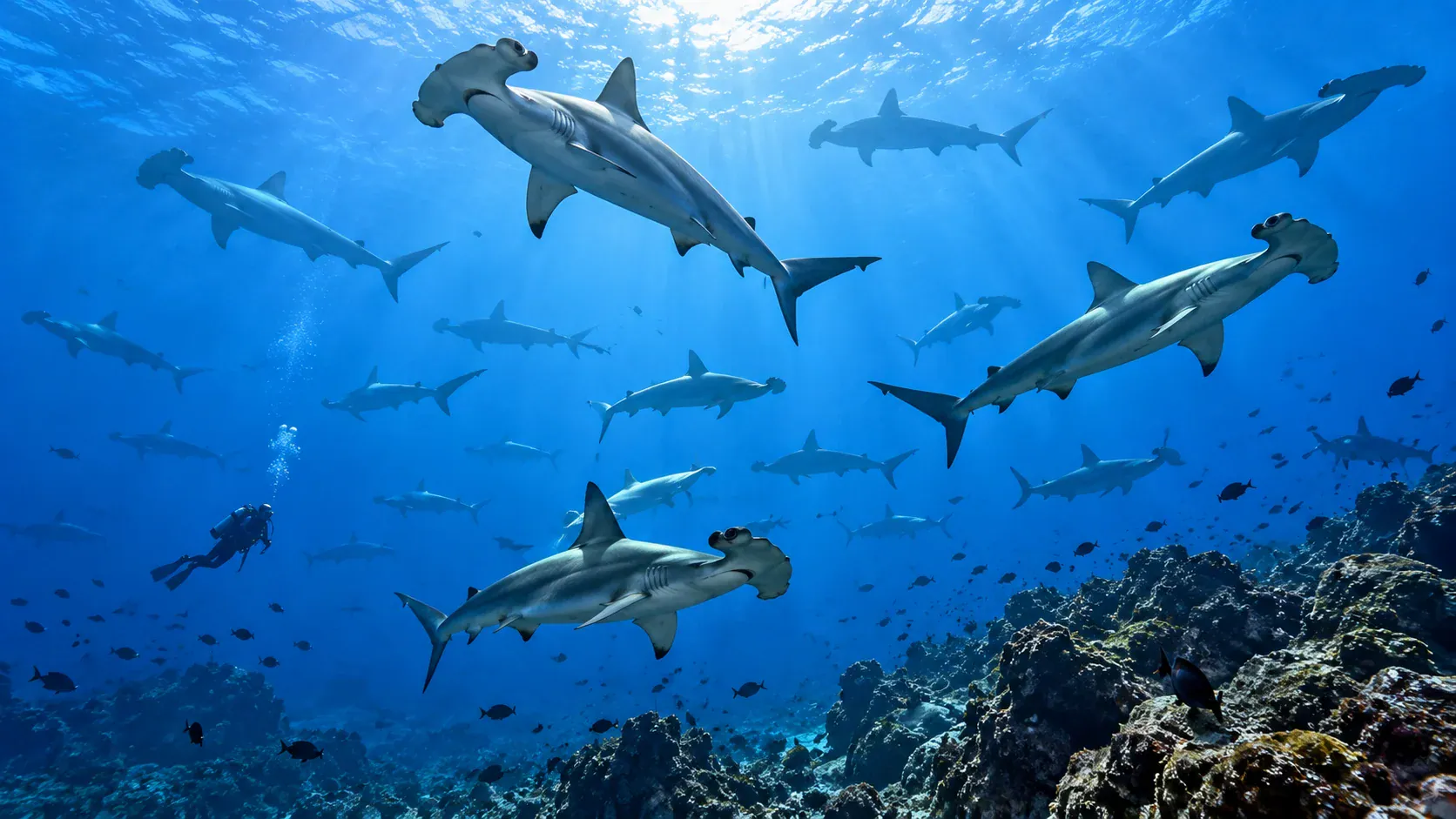
Before arranging a visit, use the park authority’s information to check entry arrangements and authorized activities. Ask the operator about the vessel, dive experience required, weather contingencies and emergency planning. Observe wildlife without feeding or pursuing it. A marine-life article does not grant permission to fish inside a protected area; see the protected-shark guidance.
Marine and island sources reviewed September 8, 2026. Historical ecological descriptions are identified by date; this guide is introductory, not an exhaustive species inventory.
Thinking of moving to Costa Rica?
Get a free residency assessment. Tell Johanna, our immigration expert, about your situation, and she will tell you which residency fits you and what you need.
WhatsApp Johanna: +506 8373 2085Free assessment
Or email info@crie.cr