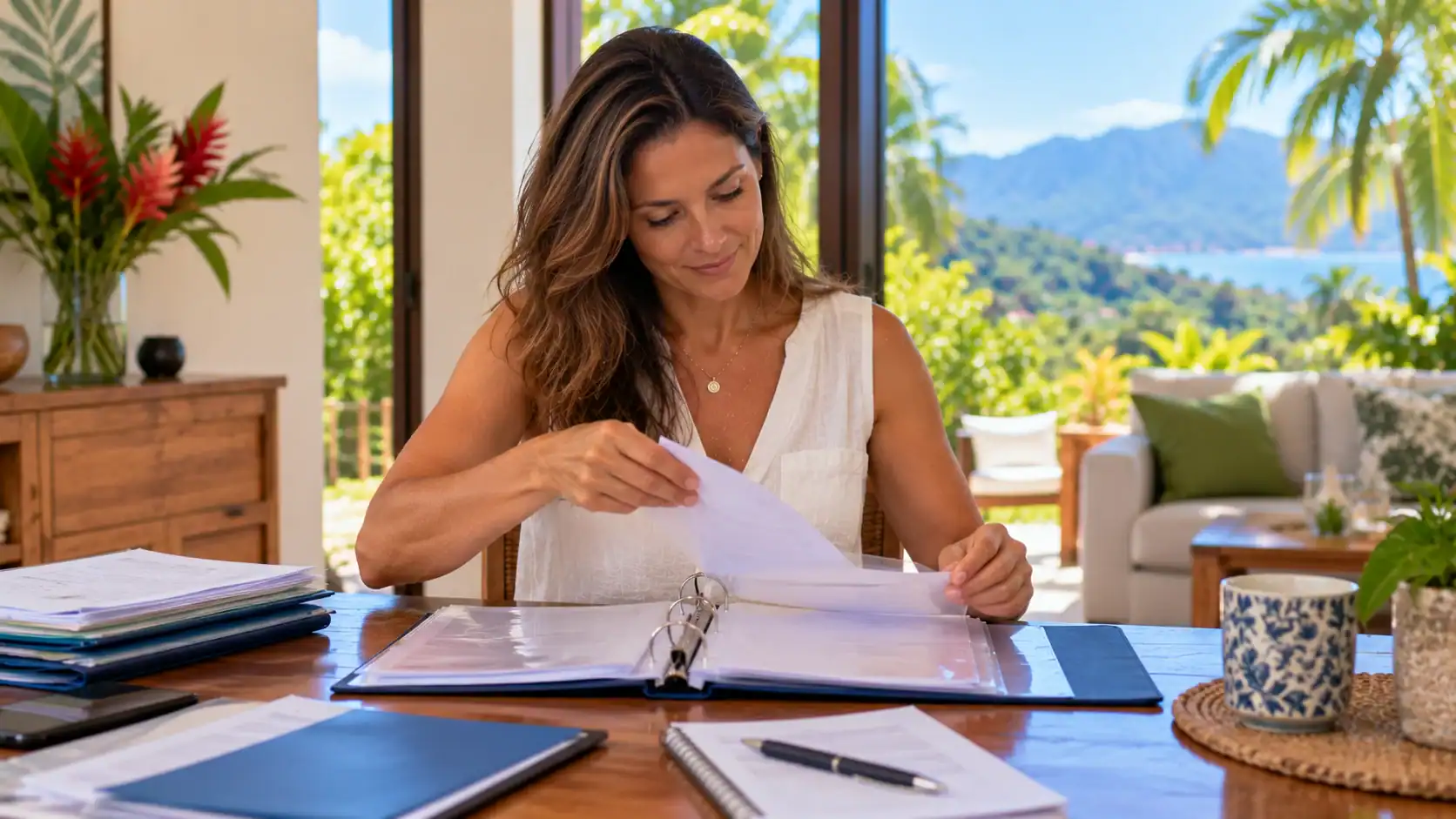
Many are drawn to make a new home in a place known for its stunning nature and stable society. This destination offers a high quality of life and excellent healthcare. These factors explain why thousands of expats and retirees arrive each year.
The journey to living here legally starts long before you land. Your personal documentation forms the bedrock of your application. A certified copy of your birth record is not just a formality—it’s a foundational requirement.
This vital document must meet specific authentication standards. It often needs an apostille and a professional Spanish translation. Getting this right from the start is what separates a smooth process from months of frustrating delays.
We at CRIE (crie.cr) serve as your expert guide through this immigration process. Our role is to provide clear, realistic guidance—not promises. We help you understand the exact requirements before you begin.
This comprehensive guide will walk you through the essential steps. We cover who qualifies, what papers you need, and how to prepare them correctly. We’ll also highlight common mistakes that can derail an application.
Patience and meticulous attention to detail are your best allies. With proper preparation and a clear understanding of the rules, your path forward becomes much more manageable.
Understanding Costa Rica Residency Birth Certificate Requirements

At the core of every successful application lies a properly authenticated birth record.
Why Your Birth Certificate Matters
This document is your primary proof of identity. Local officials use it to confirm who you are and where you were born. It also establishes your eligibility for specific residency categories based on nationality transmission.
Authenticity Checks: Apostilles and Translations
For nations in the Hague Convention, an apostille stamp is mandatory. This international certification validates the document’s authenticity. Without it, even notarized copies will be rejected.
You must then have the paper translated by an officially registered translator in Costa Rica. Government authorities require this step for legal proceedings. Inconsistencies in names across your records can cause significant delays.
Always verify current rules on the official migration website, migracion.go.cr. Starting early avoids rushed processing and common errors.
Step-by-Step Guidance for Starting Your CRIE Residency Process

To initiate your application, you must first determine which of the three primary categories aligns with your personal circumstances. At CRIE, we focus solely on this immigration system, providing expert guidance for every step.
Who Qualifies for Residency
The main pathways are Pensionado (Pensionado) for retirees, Rentista (Rentista) for those with stable passive income, and Inversionista (Inversionista) for investors. Your choice dictates the documents you’ll need.
Preparing Key Documents Before Arrival
Successful preparation starts at home. Gather your passport, birth record with apostille, and criminal background checks. These papers are essential before arriving in Costa Rica.
Timelines and Appointment Scheduling Insights
The residency process requires patience. Pensionado cases often take 8-12 months, Rentista takes 6-10 months, and Inversionista takes 4-8 months.
Schedule appointments via the DGME website. Current backlogs mean booking 3-4 weeks ahead. Remember, the Digital Nomad visa is not a path to permanent status.
After arrival, you’ll complete biometrics and other formalities. We guide you through each phase with realistic expectations.
Essential Documentation for a Successful Application
Your journey to legal status begins with gathering the correct paperwork from your home country. We cannot overstate the importance of this foundational step. A complete and properly prepared dossier is your strongest asset.
Collecting Your Original Documents
Every application requires a core set of original papers. You need a valid passport with at least six months of validity. After arrival, a local notary must certify it.
Your birth certificate must be an apostilled, certified copy. It also requires a professional translation by an official translator here. A federal criminal background check with an apostille is mandatory and valid for only six months.
If applicable, your marriage certificate needs the same authentication and translation treatment. These essential documents form the non-negotiable base of your case.
Verifying and Organizing Your Paperwork
Before submission, conduct a thorough verification. Ensure all names match exactly across every document. Check that apostilles are attached and translations bear the official seal.
Once in the country, you’ll need passport photos, fingerprint appointment confirmation, and consular registration. A special power of attorney is needed if you use legal representation.
Common errors—like expired background checks or name inconsistencies—cause major delays. We advise starting this documentation process at least two to three months before your move.
Residency Categories and Income Thresholds (Pensionado, Rentista, Inversionista)
Choosing the right financial pathway is your first major decision when seeking long-term status. This nation offers three primary categories, each designed for different life stages.
Your choice dictates the specific proof you must provide. We’ll detail each one below.
Pensionado: US$1,000+ Monthly Pension
The Pensionado program is designed for retirees. You must prove a permanent monthly income of at least US$1,000.
This must come from a guaranteed source like Social Security or a company pension. Investment dividends typically do not qualify.
Rentista: Securing US$2,500/month for Two Years
The Rentista category suits those with stable passive income. You need proof of US$2,500 monthly for two years.
Alternatively, a US$60,000 bank deposit here allows monthly withdrawals. Authorities require concrete evidence this income will last.
Inversionista: Meeting the US$150,000 Minimum Investment
The Inversionista path requires a minimum US$150,000 investment. This can be in real estate, a business, or approved projects.
If using real estate, the property title must be in your personal name. Thorough documentation of the fund’s source is mandatory.
Navigating Common Pitfalls and Mistakes to Avoid
Preventable mistakes with official documents are the primary cause of lengthy processing delays. Even with perfect preparation, the process is complex. Most serious setbacks stem from a handful of errors.
Document Errors and Apostille Issues
A critical error is submitting an expired criminal record check. Costa Rican authorities strictly enforce its six-month validity. If it expires during processing, your application stalls.
Apostille problems also derail cases. This includes getting certification from the wrong state authority. Missing this stamp on secondary papers like marriage certificates forces costly re-submissions.
Using an unofficial translator creates immediate rejection. You must hire an official translator registered here. Their seal and number are non-negotiable requirements.
Name inconsistencies across your documentation trigger extra verification. Middle name variations or maiden name differences cause headaches. Resolving them may require sworn affidavits.
Misinterpretation of Income Source Requirements
For Pensionado status, investment income typically doesn’t qualify. Authorities require a guaranteed, permanent pension. This is a common point of confusion.
Rentista applicants must prove stable monthly income for two years. Simply having a high bank balance is insufficient. You need documentation showing the source will continue.
For the Inversionista path, property must be in your personal name. Corporate ownership does not meet the requirements. Thorough verification of your investment’s source is also mandatory.
Each of these errors can cost months. Careful preparation and understanding the rules for residency for spouses and other categories is your best defense.
Exploring Additional Residency Options (and Why Digital Nomad Doesn’t Count)
Family connections can open doors to legal status in this Central American nation. This country offers distinct pathways beyond financial criteria.
Family-Based and Other Pathways
Marriage to a Costa Rican citizen provides a route with typically faster processing. You must prove the marriage is genuine with shared life documentation.
Being the parent of a child born here is another recognized path. It requires showing parental relationship and ongoing support.
First-degree relatives of citizens can also apply through family sponsorship. All these family-based options still demand apostilled birth records and clean criminal checks.
It’s crucial to understand the Digital Nomad visa is a separate temporary permit. This popular program does not count toward permanent residency or citizenship.
If your long-term goal is to stay, you must transition to an actual residency category. We guide clients through this important immigration planning step.
Real-World Process: From Document Collection to Biometric Appointments
Understanding the actual timeline and bureaucratic steps transforms the residency process from a mystery into a manageable plan. We’ll walk you through each phase, from your first document request to receiving your official ID card.
Setting Up Your Application Steps
The pre-arrival phase begins in your home country. You must obtain a certified birth record, get the apostille, and secure a criminal background check. This foundational work typically requires 2-3 months.
Once you arrive with a valid passport and entry stamp, you schedule your DGME appointment. Current realities mean appointments in San José are often booked 3-4 weeks in advance.
At your immigration office appointment, you’ll pay the fee, submit all original documents and copies, and provide biometric data. You’ll then receive your expediente number for tracking.
After submission, the review phase begins. This takes 3-12 months, depending on your category. During this waiting period, you have provisional status but must enroll in the CAJA healthcare system.
You cannot leave the country without an exit permit, or your application may be canceled. Upon approval, you’ll schedule a final appointment for your DIMEX card. This entire immigration process requires patience and precise planning. For guidance, contact us at WhatsApp +506 8706 3888 or info@crie.cr. Always verify details at migracion.go.cr, especially for family-based applications.
Final Thoughts on Your Costa Rica Residency Journey
As we conclude this guide, remember that transforming the dream of living abroad into a legal reality hinges on meticulous preparation and patience. The process is document-intensive, but proper planning turns it into a clear sequence of steps.
Your foundational identity paper must have the correct apostille and official translation. Choosing the right financial category—Pensionado, Rentista, or Inversionista—is equally critical.
Understand that a Digital Nomad visa does not lead to permanent status. If citizenship is a long-term goal, it requires maintaining legal residency for seven years first.
At CRIE, we focus exclusively on this country’s immigration system. For expert guidance, contact us at WhatsApp +506 8706 3888 or info@crie.cr.
Always verify the latest requirements at the official migration website, migracion.go.cr, as you plan your transition.
FAQ
Can I use a regular copy of my birth certificate for my application?
No, you cannot. The immigration system requires an original or a certified copy issued by the vital records office in your home country. This document must be recent, typically issued within the last six months to a year, to be considered valid by the authorities.
What is an apostille, and do I always need one?
An apostille is an international certification that verifies the authenticity of a public document, like your birth record. If your country is part of the Hague Apostille Convention, this stamp is mandatory. If not, your document will need consular legalization at the nearest Costa Rican embassy or consulate before arriving.
Does my birth certificate need to be translated into Spanish?
Yes, absolutely. Every document not originally in Spanish must be translated by an official translator who is certified and recognized by the Colegio de Traductores e Intérpretes de Costa Rica. The certified translation must be attached to the apostilled original.
How long does the entire residency process typically take?
Patience is key. From submitting your complete dossier to receiving your temporary *cédula* (ID card), the process generally takes 3 to 6 months. The final approval for permanent status can take up to two years from your initial application date, depending on government processing times.
What’s the most common mistake people make with their documents?
The biggest pitfall is submitting outdated or non-apostilled documents. Using an old copy of your birth certificate or forgetting the apostille or consular seal will cause an immediate rejection. We always advise getting fresh, certified copies specifically for this immigration process.
I’m applying as a Rentista. What exactly is the proof for the ,500 monthly income?
For the Rentista category, you must provide a notarized letter from a licensed bank. This letter must guarantee a monthly deposit of at least US,500 into a Costa Rican account for a minimum of two years. It’s not just a statement of assets; it’s a formal guarantee of stable monthly income.
Does the Digital Nomad Visa count as a pathway to permanent residency?
No, it does not. The Digital Nomad Visa is a separate, temporary permit designed for remote workers. It does not count toward the time required for permanent residency and cannot be converted into a Pensionado, Rentista, or Inversionista status. It’s a different track entirely within the immigration system.
What happens after I submit all my paperwork?
A> After submission, your application enters the review phase with Migración. Once preliminarily approved, you’ll be summoned for a biometrics appointment to provide fingerprints and a photo. Following that, you’ll receive your temporary foreigner ID card, which allows you to live in the country legally while your permanent file is finalized.
Article by Glenn Tellier (Founder of CRIE and Grupo Gap)
Don't wait, contact us right now!
Call or WhatsApp Costa Rica +506 8373 2085 or +506 8706 3888
Call USA/Canada +1 305-906-6784