
Plan fishing in Costa Rica around the coast, target species, method and current conditions. A single national “best month” cannot describe an offshore marlin charter, a Caribbean outing and a freshwater fly-fishing session equally well. Choose the actual experience before choosing a boat or travel date.
Costa Rica fishing seasons: location comes first
The Costa Rican Tourism Board describes fishing opportunities in Guanacaste, the Central and South Pacific and the northern Caribbean. It describes Guanacaste marlin fishing as a year-round activity. That means opportunities exist across the calendar; it does not mean every day, port or species offers equal prospects.
Ask a prospective captain what has been happening recently in the exact area you will fish. Discuss wind, sea conditions, the length of the offshore run and an alternative plan. A seasonal chart is useful background, but a catch cannot be guaranteed and safety can require cancelling a departure.
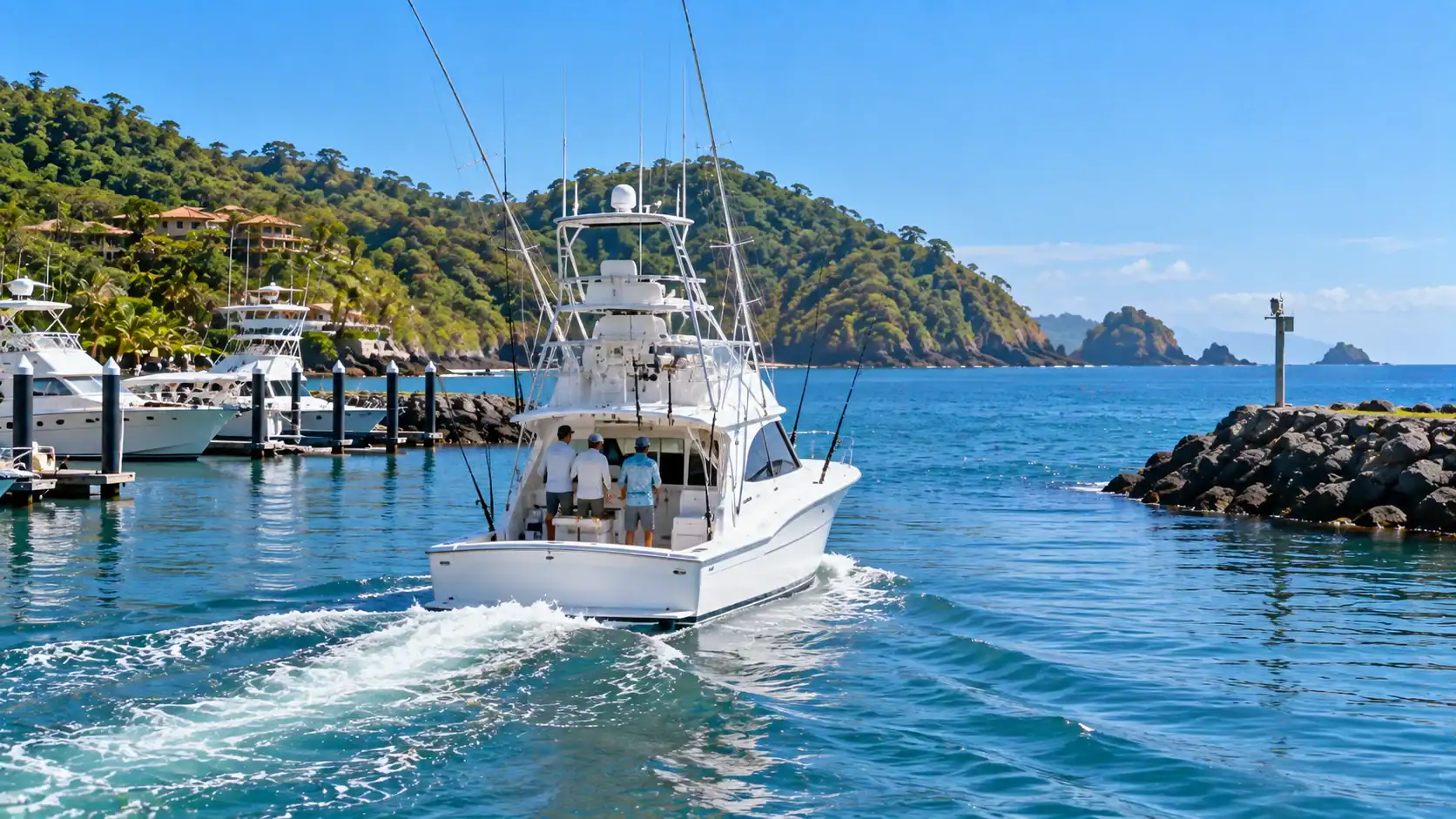
Keep weather and fishing calendars separate. The regional weather guide helps explain travel planning, but rain totals alone do not predict a day’s catch. Check the operator’s written cancellation and rescheduling terms before booking accommodation around a single fishing day.
Marlin fishing: compare the complete offshore trip
The Tourism Board lists places including Coco, Ocotal, Tamarindo, Sámara and Carrillo in its Guanacaste fishing overview, and identifies Quepos and Herradura in the Central Pacific. These are starting points for comparing departures, not claims that every operator there provides the same marlin trip.
Ask how much of the booked day is travel rather than fishing, whether the quoted boat is private or shared, how many anglers can fish comfortably and what happens if the expected offshore conditions change. Explain whether you are interested in a particular species or simply an introductory day on the water.
Discuss release and handling practices before departure. Do not request a fish be handled solely to imitate a dramatic photograph. The captain should explain which current rules apply to the intended species, location and activity. A tourism listing or a paid booking does not replace those rules.
Fly fishing: decide which water and which method
The Tourism Board’s seasonal activities guide includes fly fishing in Trout Valley among its green-season ideas. This is a specific type of experience, not evidence that any Costa Rican stream can be entered and fished. Its fishing overview also distinguishes inland fishing from coastal trips.
When choosing a guide, ask explicitly whether the outing involves fly casting rather than trolling or another technique. Describe your casting experience, confirm whether equipment is supplied and find out whether the session is from a bank, boat or permitted wading area. Ask about footwear, space for casting and how changing water conditions affect the plan.
For beginners, a supervised session with suitable equipment may be more useful than an ambitious species target. Experienced anglers should confirm access permissions and the actual method available. Do not move fish between waterways or release aquarium fish. Our freshwater-fish guide is a species introduction, not a fishing licence.
Check permits, equipment and the booking details
INCOPESCA’s current procedures page directs sport, underwater and shore-fishing card applications to its institutional website. Its services page separately addresses vessel licensing. Ask which authorisation you personally need and which the operator holds; do not assume the price includes your card.
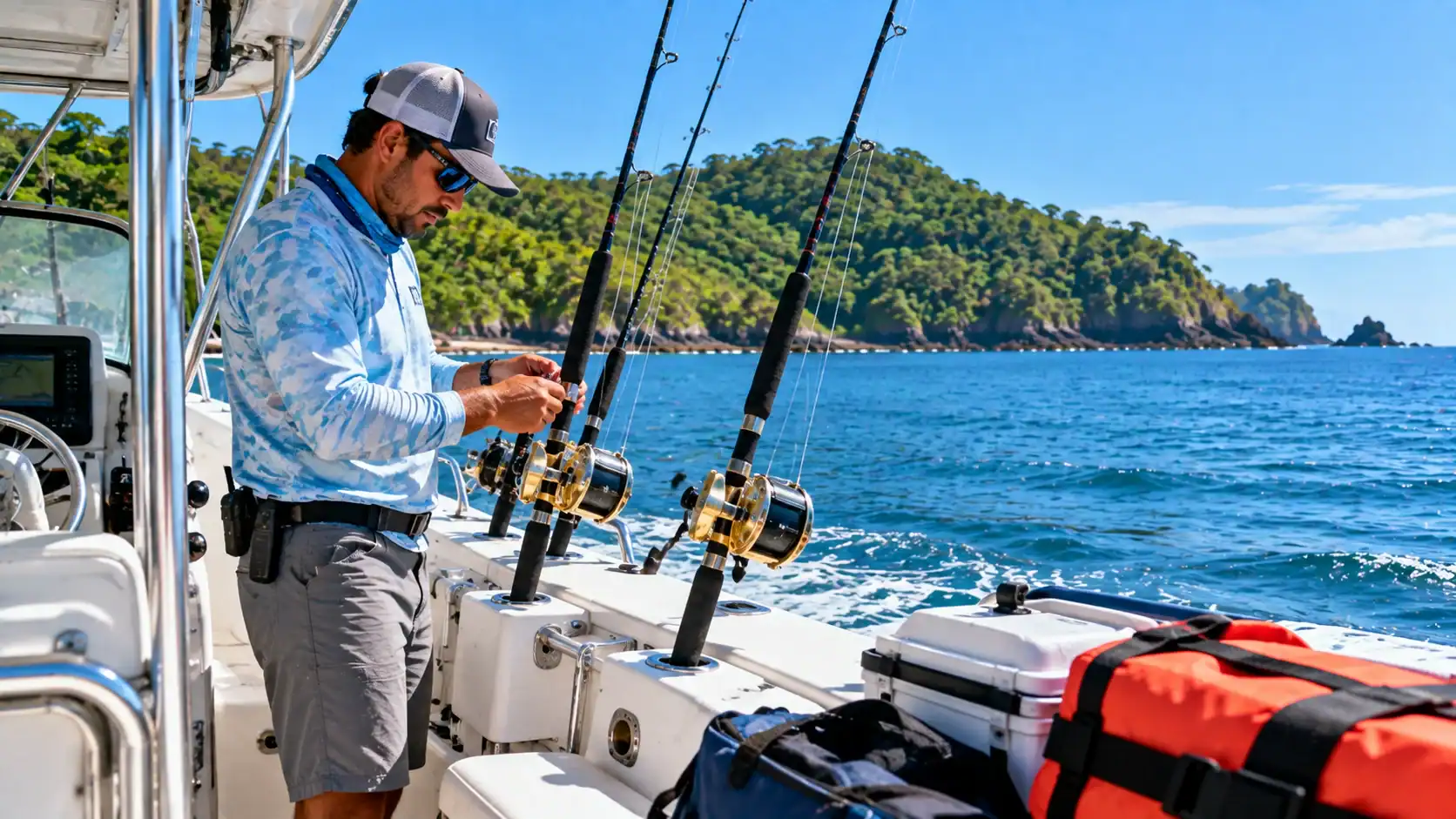
- Confirm the exact departure point, return time and included tackle.
- Ask about suitable life jackets, communications and the emergency plan.
- Get written details of taxes, transport, food, drinks and any extra costs.
- Check access and species restrictions for the intended location.
- Use the current INCOPESCA process rather than sending identity documents to an unverified payment contact.
Primary tourism and INCOPESCA sources checked September 8, 2026. This guide avoids fixed catch promises, stale permit prices and a single nationwide peak-season claim. Images are illustrations.
Shark fishing in Costa Rica: protected species and current rules
Do not treat a general recreational fishing licence as permission to target every shark. Restrictions depend on species and location, and a charter advertisement is not a substitute for the applicable regulation.
Decree 43900-MAG-MINAE, with its November 2025 amendment, prohibits capture, retention on board, transfer, landing, storage, transit and commercialization of hammerhead sharks (family Sphyrnidae) and their products within its stated Costa Rican jurisdiction. This is a species-family prohibition, not merely a ban on removing fins.
Before booking, ask the operator which species and areas are involved and check the current INCOPESCA regulations. Protected areas can impose additional restrictions. Do not book a trip promising protected hammerhead catches or assume catch-and-release automatically overrides a capture prohibition. For an accidental encounter, follow the applicable release rules and trained crew instructions; avoid handling a shark yourself.
For travellers primarily interested in seeing marine wildlife, consider a properly authorized observation or diving experience and confirm its conditions with the protected-area authority. Sightings are never guaranteed.
Shark-law source checked September 8, 2026; the cited consolidated decree includes the November 25, 2025 amendment.
Thinking of moving to Costa Rica?
Get a free residency assessment. Tell Johanna, our immigration expert, about your situation, and she will tell you which residency fits you and what you need.
WhatsApp Johanna: +506 8373 2085Free assessment
Or email info@crie.cr