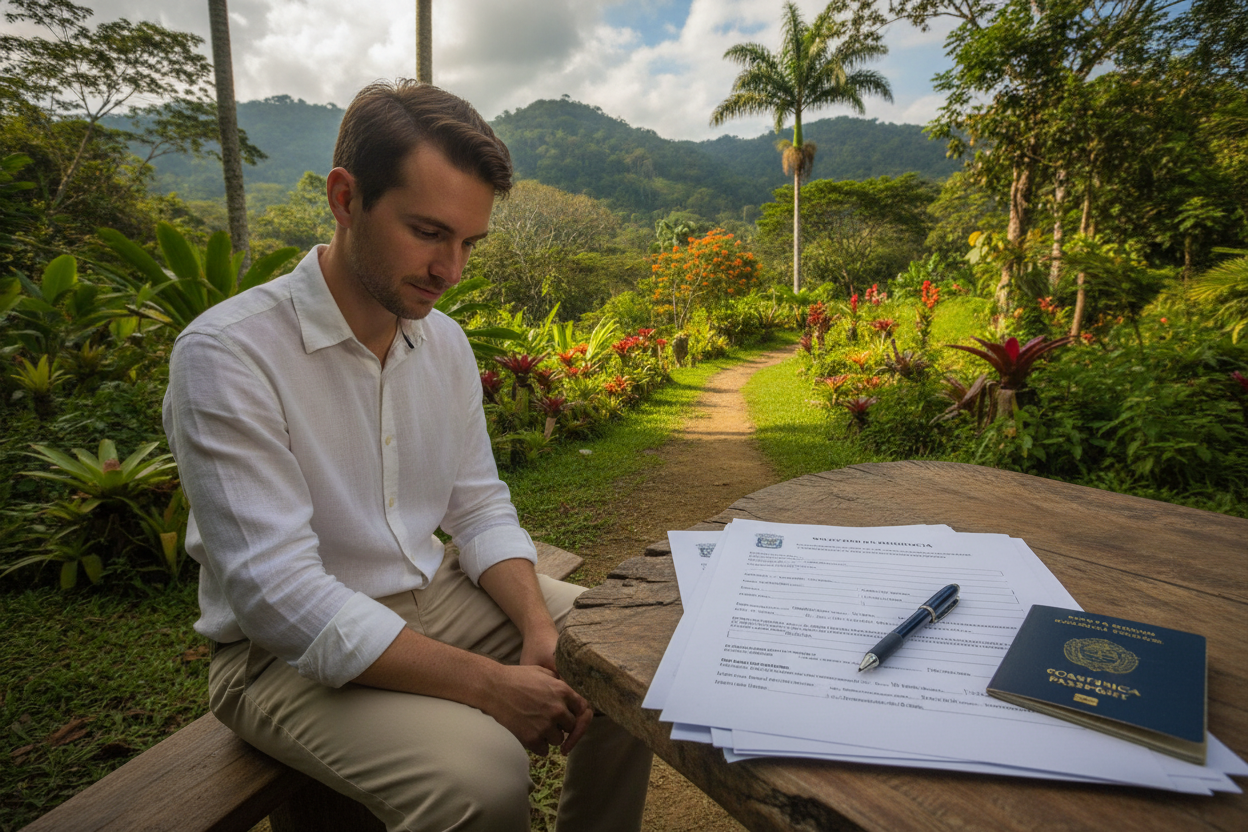
Are you considering a move to the vibrant and beautiful country of Costa Rica? You’re not alone. Many individuals are drawn to its stunning landscapes and welcoming culture. However, the journey to legal residency involves careful planning and preparation.
Navigating the application process can seem daunting. It’s essential to understand the specific documentation requirements that apply to your situation. Each residency application is unique, depending on factors like nationality and family circumstances.
Our guide aims to simplify this process for you. We provide a comprehensive overview of the necessary steps and documentation needed to ensure a smooth transition. Proper preparation is key to successfully obtaining your legal status in this enchanting country.
Understanding the legal framework is vital. This knowledge will help you maintain your residency status and enjoy all that Costa Rica has to offer. For more detailed information about essential documents, check out our resource on birth certificates for residency.
Overview of the Costa Rica Residency Process
The allure of Costa Rica attracts many individuals looking for a new home. For over 20 years, we at CRIE have guided families and individuals through the intricate immigration landscape of this beautiful country. Our extensive experience allows us to simplify the residency process for you.
Understanding the different residency categories is crucial. Each category, such as Pensionado, Rentista, and Inversionista, has specific financial requirements.
For instance, the Pensionado program requires a monthly pension of at least $1,000. The Rentista status demands proof of a stable monthly income of at least $2,500 for two years. Additionally, the Inversionista category involves a minimum investment of US$150,000 in tangible property or projects within Costa Rica.
Choosing the right category is essential for every applicant. It should align with your financial situation and long-term goals for living in this vibrant country.
Importance of Proper Document Preparation
Preparing your documents thoroughly is crucial when applying for residency in a new country. A complete document packet can significantly streamline your application process. It ensures that immigration authorities only review your file once all requirements are fully satisfied.
Many applicants face delays due to incomplete submissions. This often happens when documents are not provided in the correct format or language. Ensuring that every document is properly authenticated before you arrive can save you months of waiting and unnecessary stress.
Here are some common pitfalls to avoid:
- Missing apostilles or failing to translate documents into Spanish, which are mandatory requirements.
- Not organizing your paperwork early, which can lead to a chaotic experience.
- Submitting documents that lack the required certifications or signatures.
By taking the time to prepare your documents properly, you increase the likelihood of a smooth experience while seeking your new residency status in the country. For more guidance on this topic, check out our comprehensive checklist.
Understanding the document-checklist-costa-rica-residency Requirements
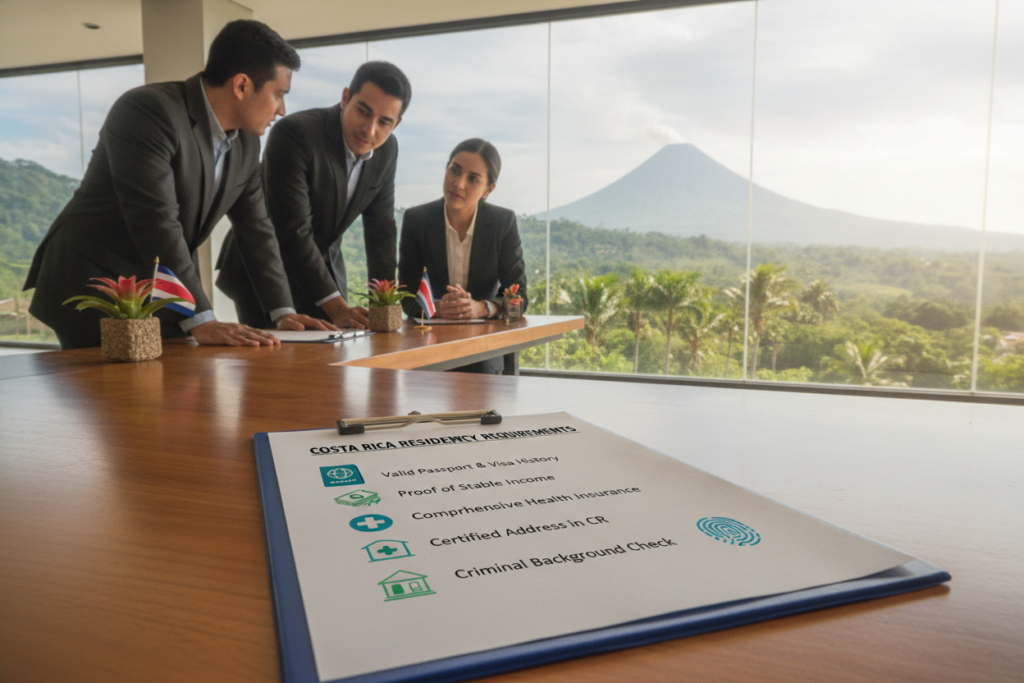
Navigating the intricacies of residency applications requires a clear understanding of the necessary documents. A $50 bank deposit is mandatory for your application at Banco de Costa Rica, specifically to account number 242480-0.
If you are already in the country and changing your migratory category, you must also submit a $200 payment to the same account. It’s essential to meet all residency requirements, including submitting a signed application authenticated by a local attorney.
The immigration authorities will require a filiation form to verify the personal information of every applicant. Remember, failure to provide the correct proof of bank deposit can halt the entire process. Ensure all financial requirements are documented clearly.
For more details on immigration office locations, check out our guide on Costa Rica immigration office locations.
Essential Documents for Your Residency Application
When applying for residency, understanding the essential documents is vital for every applicant. This section highlights the key paperwork needed to support your application.
Birth Certificates and Marriage Certificates
Every applicant must provide an official birth certificate. If you are including a spouse in your application, a marriage certificate is also required. These documents must be apostilled or legalized by the appropriate authorities in your place of origin.
Criminal Records and Fingerprinting Documentation
Criminal records are valid for six months and must be obtained from your country of birth or last residence. Additionally, fingerprinting must be done in person at the Police Record office in San José, located in front of “Centro Comercial del Sur.”
To satisfy residency application requirements, you must provide a certified copy of every page of your passport, including blank pages. If your spouse is included in the application, they must also submit their own birth certificate and criminal record.
How to Authenticate and Translate Your Documents
Understanding how to properly authenticate and translate your documents is essential for a successful residency application. Every foreign document must be authenticated through an apostille or legalization from your country of origin to be valid in Costa Rica.
If your documents are not in Spanish, you must hire an official translator approved by the Costa Rican courts. This ensures that all information is accurately conveyed in the required language.
Apostilles are generally the most efficient way to authenticate your documents. They do not require additional legalization by the Foreign Affairs Ministry, unlike standard notary legalizations.
Using an immigration lawyer can be beneficial in finding a court-approved translator who understands the specific needs of your application. Proper authentication of every certificate is critical to ensure your documents are accepted by the immigration office without delay.
General Guidelines for Residency and Immigration Requirements

People looking to settle in Costa Rica must familiarize themselves with the immigration requirements. All residency applications can be submitted either in Costa Rica or at a Costa Rican Consulate in your country of residence.
It is important to complete a consular registration at your country’s consulate in Costa Rica to comply with residency requirements. If your country does not have a consulate in Costa Rica, you are exempt from this requirement.
The immigration process is designed for all individuals seeking legal status, regardless of their chosen residency category. Remember, maintaining your legal status in the country begins the moment you file your application with the authorities.
Comparing Temporary and Permanent Residency Options
Exploring the differences between temporary and permanent residency options is essential for newcomers. Most foreigners begin their journey in Costa Rica with temporary residency. This status is often granted under specific conditions, such as being a pensioner or investor.
After maintaining your temporary residency status for at least three years, you become eligible to apply for permanent residency. This transition allows for more freedom, including the right to work without restrictions. However, it’s important to remember that you must still renew your status regularly.
The process from temporary to permanent status requires you to demonstrate compliance with all laws. While permanent residency is a long-term goal, following Costa Rican regulations is vital to keep your status intact.
Challenges in Document Collection and How to Overcome Them
The process of securing the right documents for residency can present various challenges. One of the biggest hurdles is the time it takes to collect all necessary documents from your home country. It often takes at least two months to receive properly authenticated documents.
Starting this process well before your move to Costa Rica is essential. If you face significant difficulties in obtaining a specific document, you may submit an affidavit explaining the reason for the impossibility. This can help clarify your situation to the authorities.
Working with an experienced professional can make a difference. They can guide you through these challenges and ensure your documents meet all Costa Rican legal standards. Planning for potential delays is crucial to avoid unnecessary stress during your transition.
Practical Tips for Organizing Your Application Files
For a smooth transition to your new life, effective document management is essential. Organizing your application files can greatly enhance your experience while applying for residency. Keeping everything in order will help you avoid unnecessary delays.
Start by maintaining a dedicated folder for all your important documents, including copies of your passport and any official translations. This will make it easier to access everything you need.
Using a checklist is a great way to track your progress. Ensure each document is apostilled and translated before your visit to the immigration office. Here are some additional tips:
- Make sure your passport copies are clear and legible; authorities require every page to be documented.
- Organizing your files will save you time and help you respond quickly to any requests from the authorities.
- A well-organized file is your best tool for ensuring that your application is processed efficiently.
CRIE’s Role in Simplifying the Residency Process
Achieving residency status in Costa Rica requires careful planning and expert guidance. At CRIE, we have over 20 years of experience assisting individuals and families with their immigration needs. Our goal is to make this complex process as smooth as possible.
Johanna Alvarez, our immigration expert, offers personalized guidance tailored to each applicant’s situation. She helps you understand the specific requirements for your residency application.
We focus on simplifying the process by ensuring that every applicant has the correct documents and comprehends the legal steps involved. Our team provides clear, factual information that aligns with your unique history.
With our deep knowledge of the Costa Rican system, we help you avoid common mistakes that could delay your path to legal residency.
Ready to Get Started? Contact CRIE for Personalized Guidance
As you consider your move to a captivating destination, we stand ready to support you every step of the way. Every residency case depends on your specific nationality, family situation, and immigration history, making personalized advice essential.
For pricing and next steps regarding your application, please reach out to our immigration expert, Johanna Alvarez. With over 20 years of experience, we are equipped to assist you with your unique needs.
You can contact us via WhatsApp at +506 8373 2085, by email at info@crie.cr, or by visiting our website at crie.cr. Let us help you secure your future in this beautiful country!