Yes, rainbow eucalyptus grows in Costa Rica. It is an introduced tree, not a native Costa Rican species. Local botanical literature and forestry research document it in cultivation. That is different from proving that every individual tree was planted or that it can never reproduce without human help.
What is rainbow eucalyptus?
Eucalyptus deglupta is also called Mindanao gum. Its native range includes the Philippines, Indonesia and New Guinea. It is a large, fast-growing tree associated with humid tropical forest conditions. Kew’s species record distinguishes its native distribution from introductions.
The tree can become much too large for an ordinary residential garden. Growth depends on the site, so avoid treating a single maximum height or elevation as a guarantee for your property.
Why does the bark have different colors?
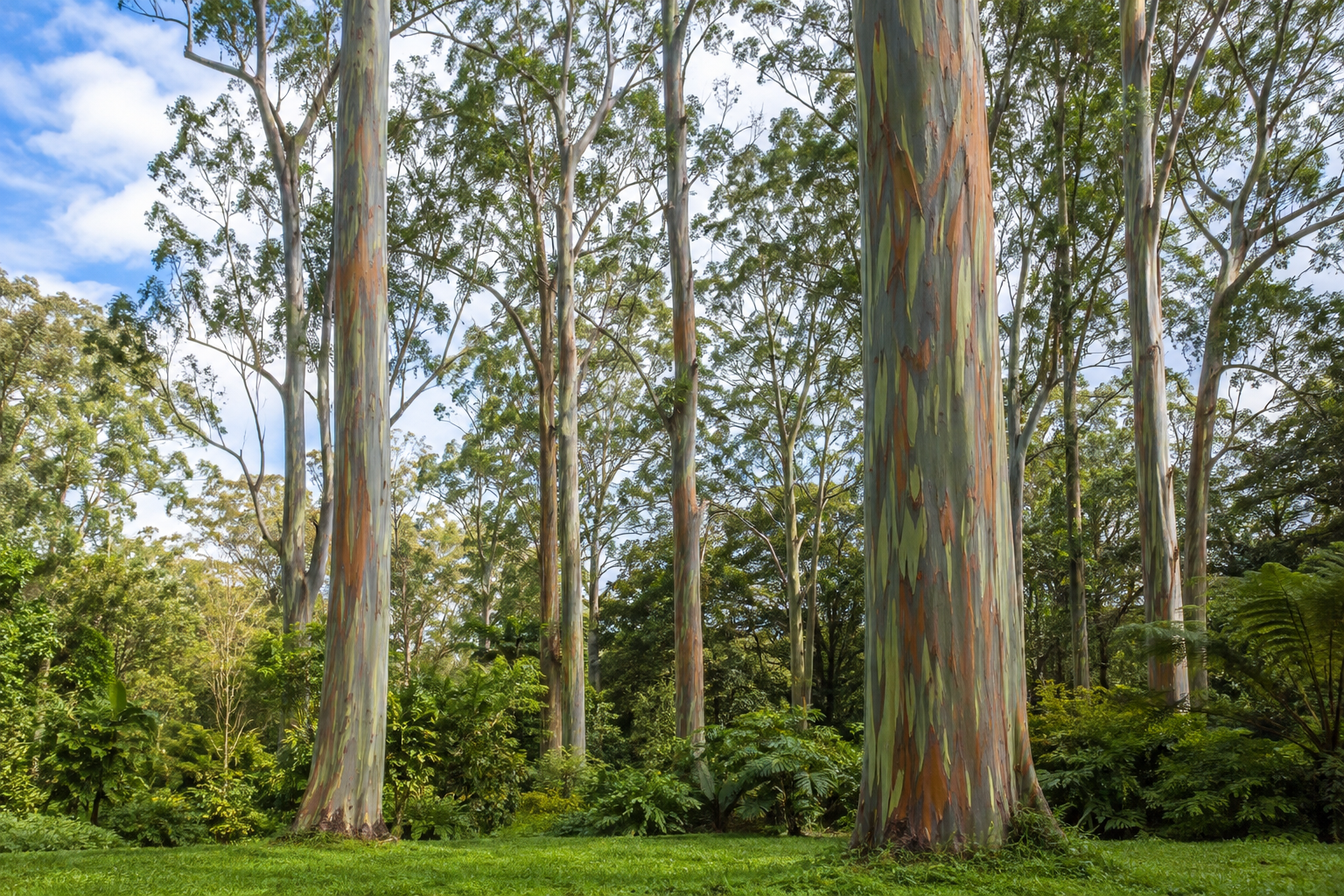
The outer bark peels in patches, exposing surfaces at different stages of development. The resulting trunk can show pale green, reddish, orange, gray and purple-brown streaks. The color is natural; it is not paint. Missouri Botanical Garden describes the peeling, multicolored bark.
There is no need to assign every color an exact age or promise a fixed blue-to-purple-to-orange schedule. Individual trees, lighting and photographic processing can produce very different appearances. Expect a living tree with irregular patches, rather than the neon stripes sometimes shown in heavily edited pictures.
Evidence that it grows in Costa Rica
A 2020 botanical account in the UNED Research Journal includes Eucalyptus deglupta among eucalyptus species cultivated as ornamentals in Costa Rica and describes its green, reddish and gray bark. Read the botanical account, including its eucalyptus section.
CATIE also records forestry research in a rainbow-eucalyptus plantation in Turrialba. These are better grounds for answering “does it grow here?” than an unverified travel photograph. CATIE: Eucalyptus deglupta research in Turrialba.
Where should you look for one?
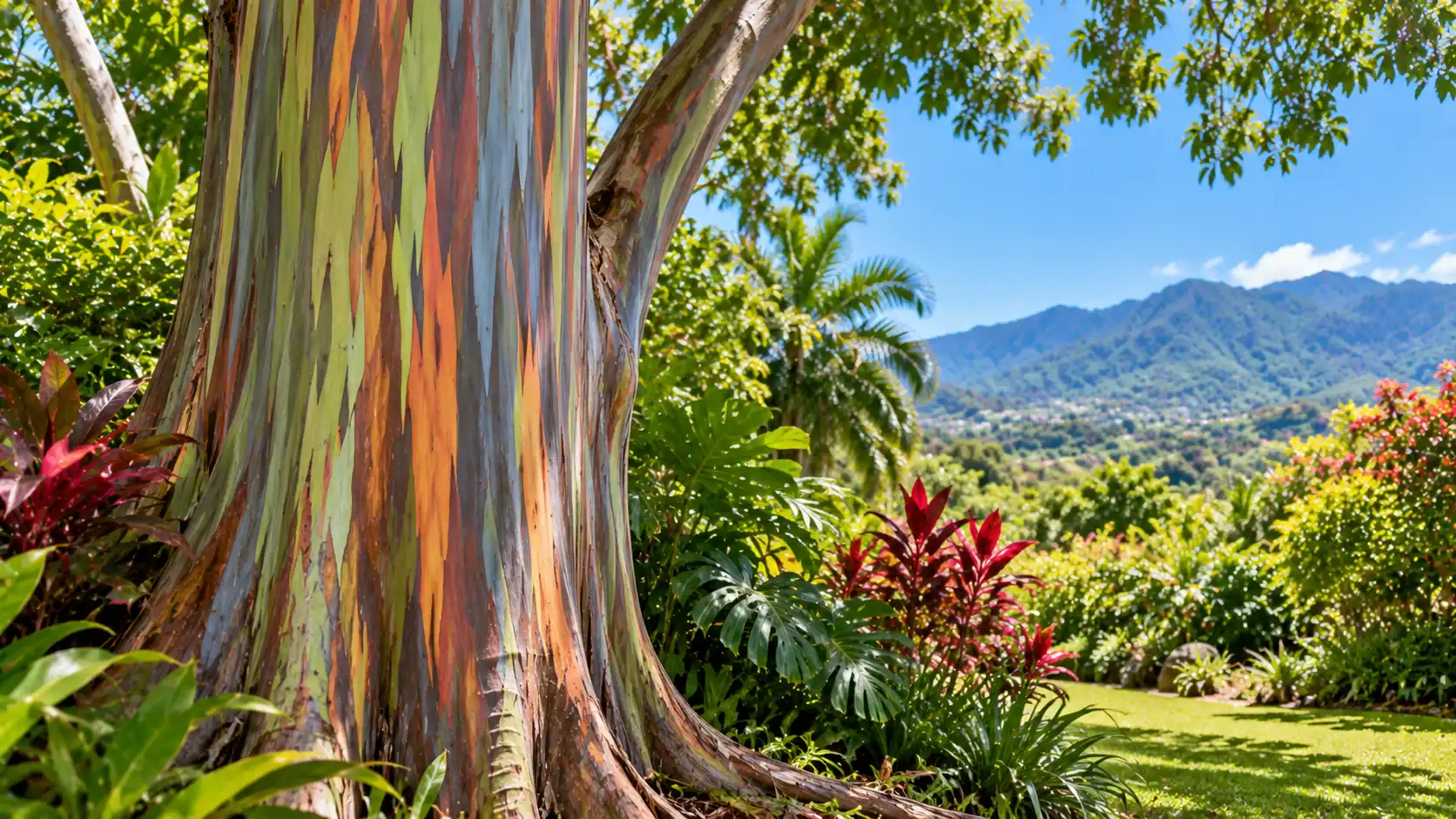
Start with botanical collections, established gardens and properties that can confirm the species before you visit. Ask about current access and whether the tree is actually E. deglupta; Costa Rica has several cultivated eucalyptus species.
Arenal Observatory Lodge’s own property history describes eucalyptus and Honduran pine plantings beginning in 1973. However, that account does not identify every eucalyptus by species, so it should not be used alone to label an entire grove “rainbow eucalyptus.” Arenal Observatory Lodge: farm history.
Introduced does not mean incapable of spreading
The earlier article’s claim that the tree cannot escape cultivation was too certain. The UNED account discusses eucalyptus seedlings observed in Costa Rica and recommends monitoring planted areas. Those observations concern eucalyptus more broadly and do not establish a national invasion rating for E. deglupta.
Equally, a risk rating produced for another country should not automatically be presented as Costa Rica’s assessment. Local conditions, the particular species and management all matter.
Should you plant rainbow eucalyptus?
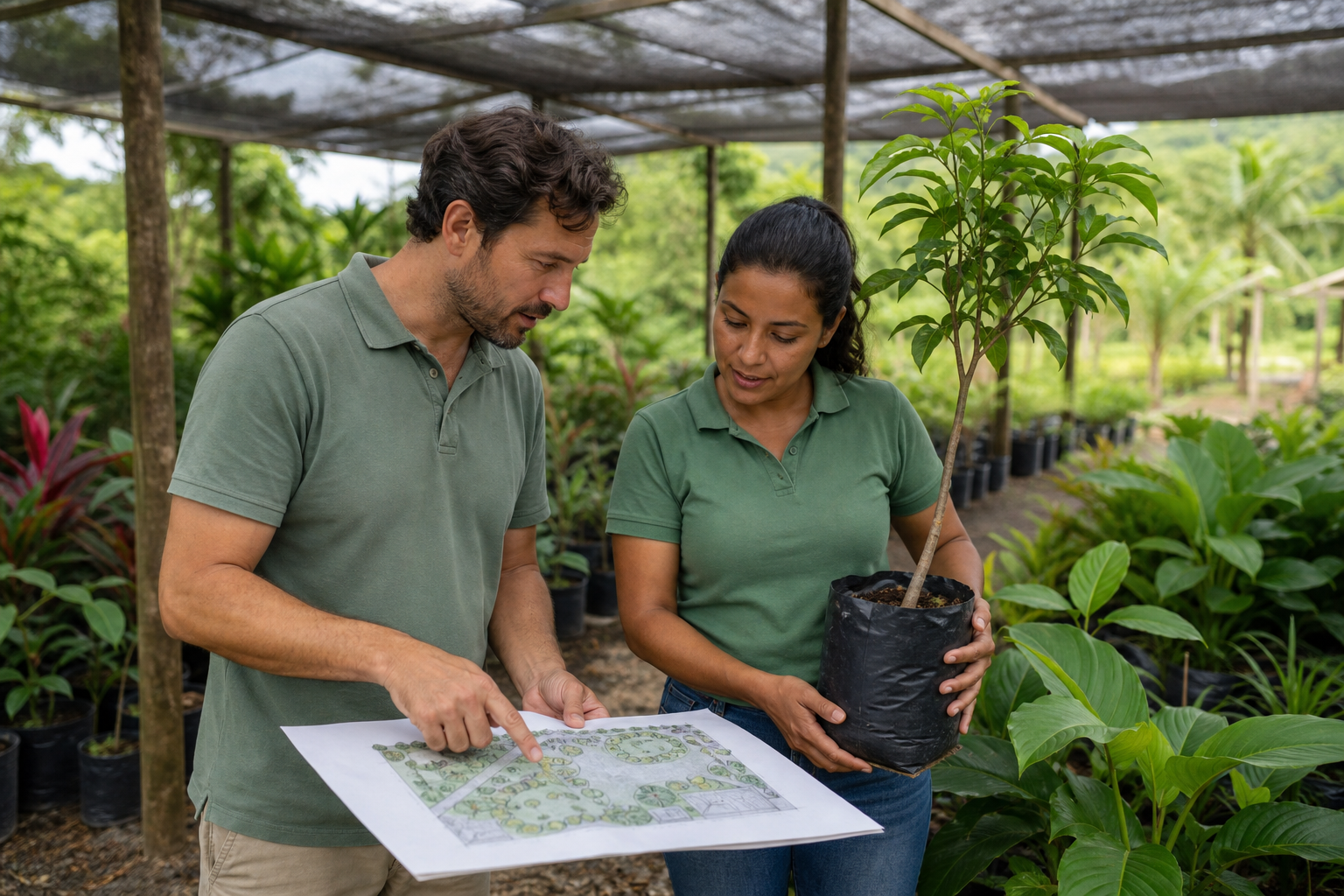
Have a qualified nursery professional or forester assess the available space, mature size, soil, rainfall, nearby structures and purpose of the planting. For a small garden, a more suitably sized tree is often the practical choice.
Large plantations also raise questions beyond appearance. FAO’s expert consultation describes how water use, nutrient removal and biodiversity effects depend on species, site and management. A eucalyptus plantation should not be treated as equivalent to restoring a diverse native forest. FAO: environmental effects and site selection.
For home planting, compare alternatives with a local nursery and consult our Costa Rica gardening guide. You can enjoy a mature tree in an appropriate setting without committing a small yard to one.
Sources and botanical distinctions reviewed September 6, 2026.