
Costa Rica’s national flower is the guaria morada (Guarianthe skinneri), a pink-purple orchid declared the national flower on 15 June 1939. Other flowers you will see across the country include the yellow corteza amarilla and pink roble sabana trees, heliconias, bougainvillea (veranera), plumeria, poró and the edible flor de itabo. Costa Rica also has around 1,684 orchid species, according to the Lankester catalogue of December 2023.
Costa Rica’s iconic flowers include native forest plants, familiar garden favorites and a national symbol. Some are important to wildlife; others are part of everyday cooking or coffee farming. This guide separates those stories and names the plants you are most likely to ask about.
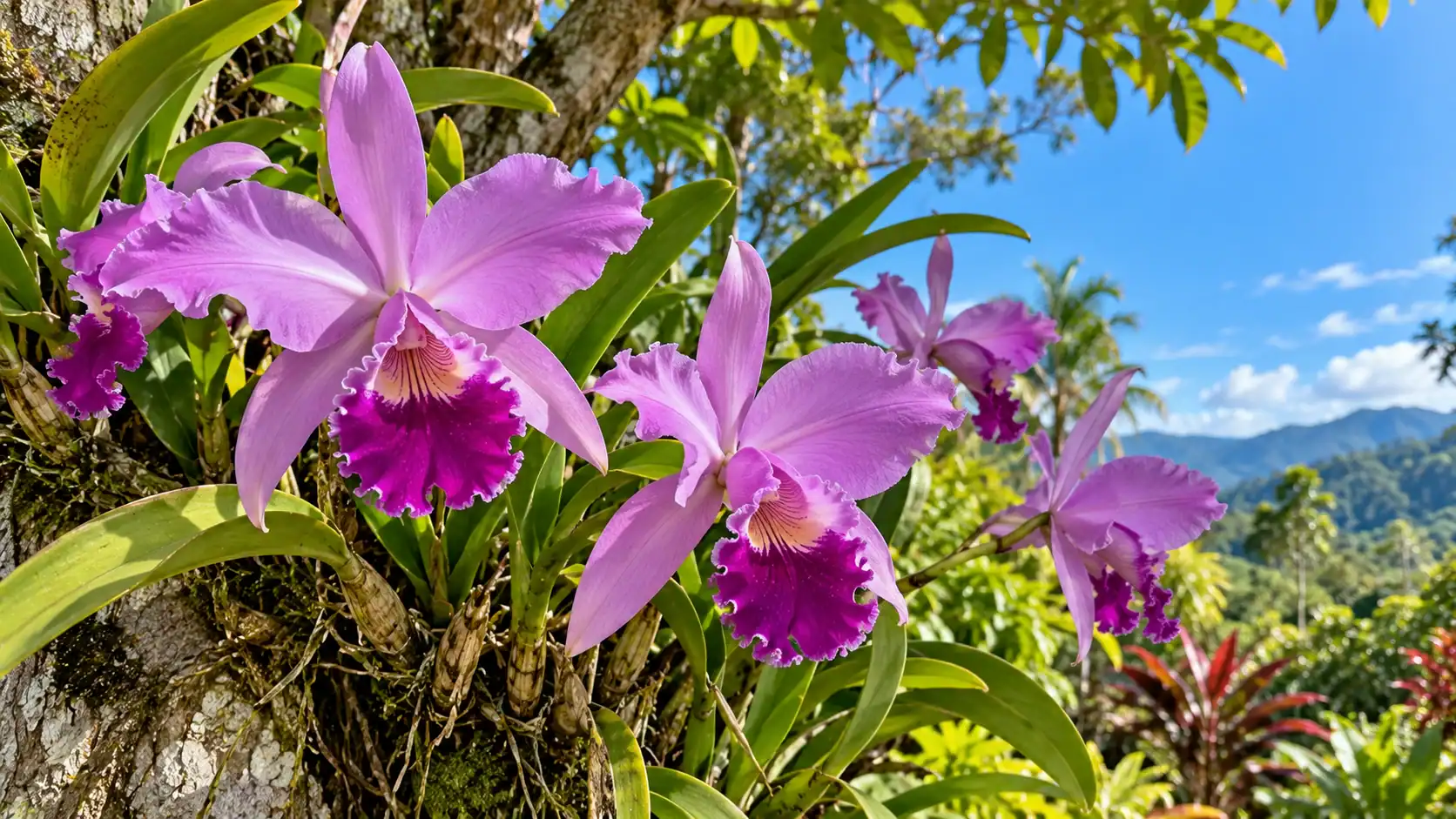
Guaria morada: Costa Rica’s national flower
The guaria morada, Guarianthe skinneri, was declared Costa Rica’s national flower on June 15, 1939. A selection process preceded that official designation; it is inaccurate to describe it as a competition that replaced a government declaration. UNED documents the selection and declaration.
This orchid has pink-purple flowers, often with a deeper-colored lip. It is an epiphyte: it can grow supported on a tree rather than rooting in ordinary garden soil. Guarias are closely associated with Costa Rican homes and gardens, and the UCR celebrates their flowering in March. Buy nursery-propagated plants rather than collecting orchids from the forest. UCR: guaria morada flowering and cultural significance.
Costa Rica’s extraordinary orchid diversity
The December 2023 Lankester Catalogue of Costa Rican Orchidaceae recorded 1,684 species in 201 genera, along with subspecies, natural hybrids and forms. That is a dated catalogue count, not a claim that botanical discovery has stopped. Orchids vary enormously in size and appearance; many are much smaller than the showy guaria.
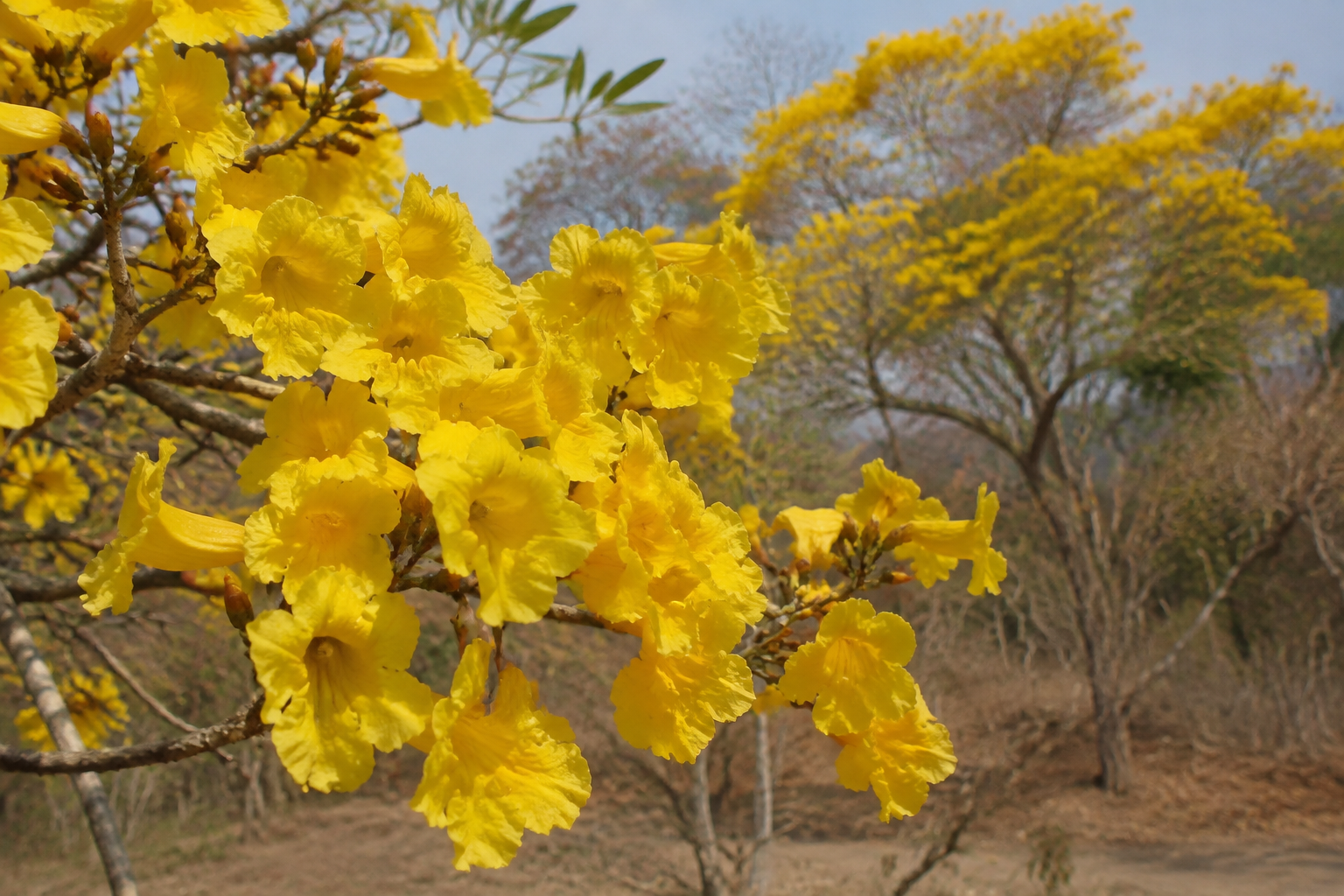
Corteza amarilla: yellow flowers in the dry forest
Handroanthus ochraceus, also found in older sources as Tabebuia ochracea, is known for spectacular yellow trumpet flowers. Its brief flowering displays can cover largely leafless branches during the dry season.
The Área de Conservación Guanacaste describes synchronized flowering associated with local weather, including observations of blooms nine to ten days after a cool spell and displays lasting several days. These observations are not a guaranteed ten-day timer for every tree throughout Costa Rica. Timing depends on the population and conditions. ACG: corteza amarilla biology and flowering.
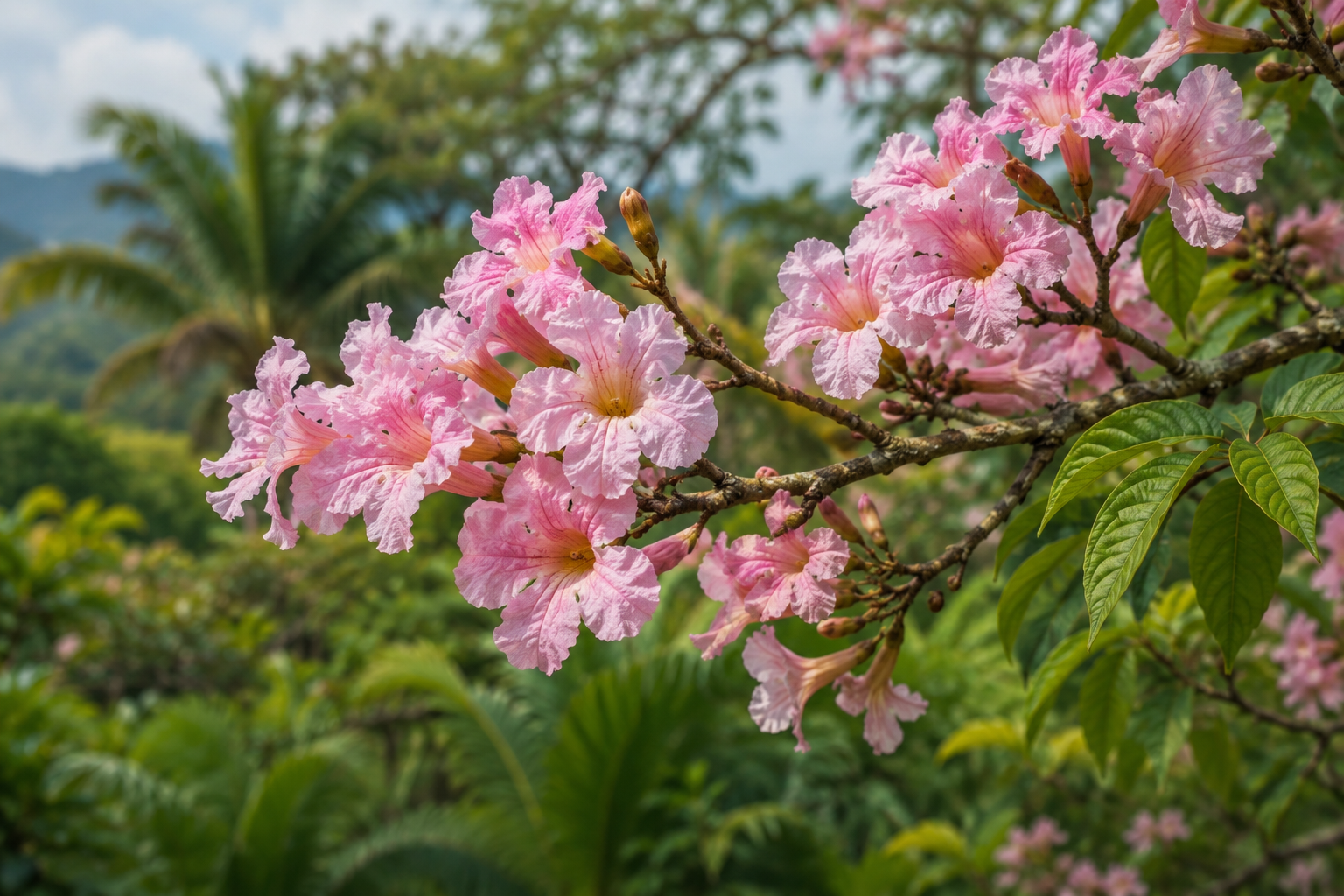
Roble sabana: pink trumpet flowers
Tabebuia rosea, the roble sabana, produces abundant pink flowers and is another striking tree to notice in parks, gardens and the countryside. Its trumpet-shaped blooms distinguish it from small, flat-petalled blossoms such as those of cherry trees. The ACG dry-forest arboretum profile describes its pink floral display.
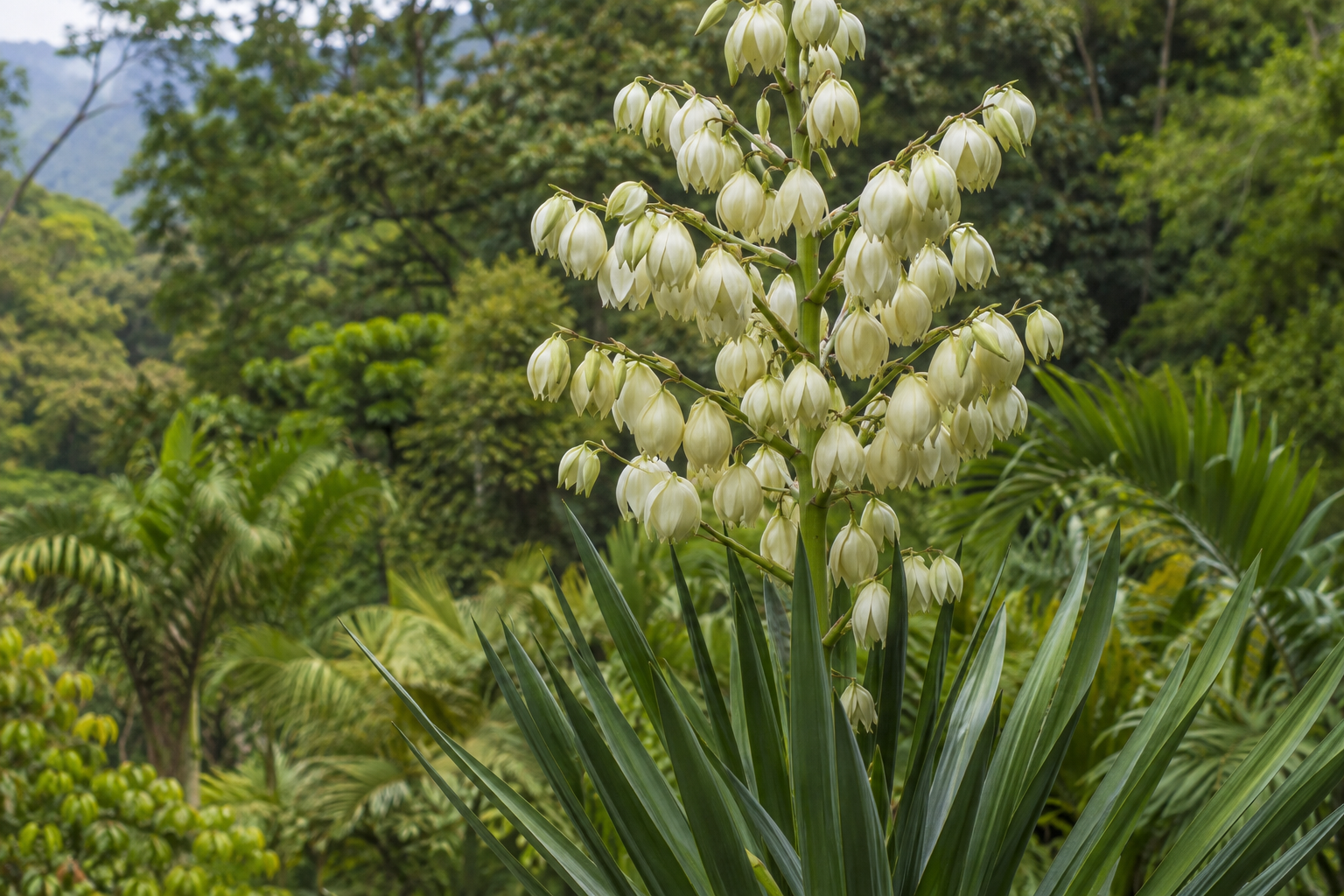
Flor de itabo: a traditional ingredient
Itabo produces clusters of creamy white flowers above long, sword-shaped leaves. Its botanical name is Yucca gigantea; Yucca guatemalensis is a synonym still widely encountered in local writing. Kew: Yucca gigantea.
UCR documents the flowers in Costa Rican cooking, including preparations with egg and sweet cajeta with milk and cinnamon. This is a cultural tradition, not a suggestion to eat an unidentified garden plant. Obtain edible flowers from a knowledgeable food supplier and follow an established preparation method. UCR: flor de itabo in traditional food.
Poró: flowers and coffee shade
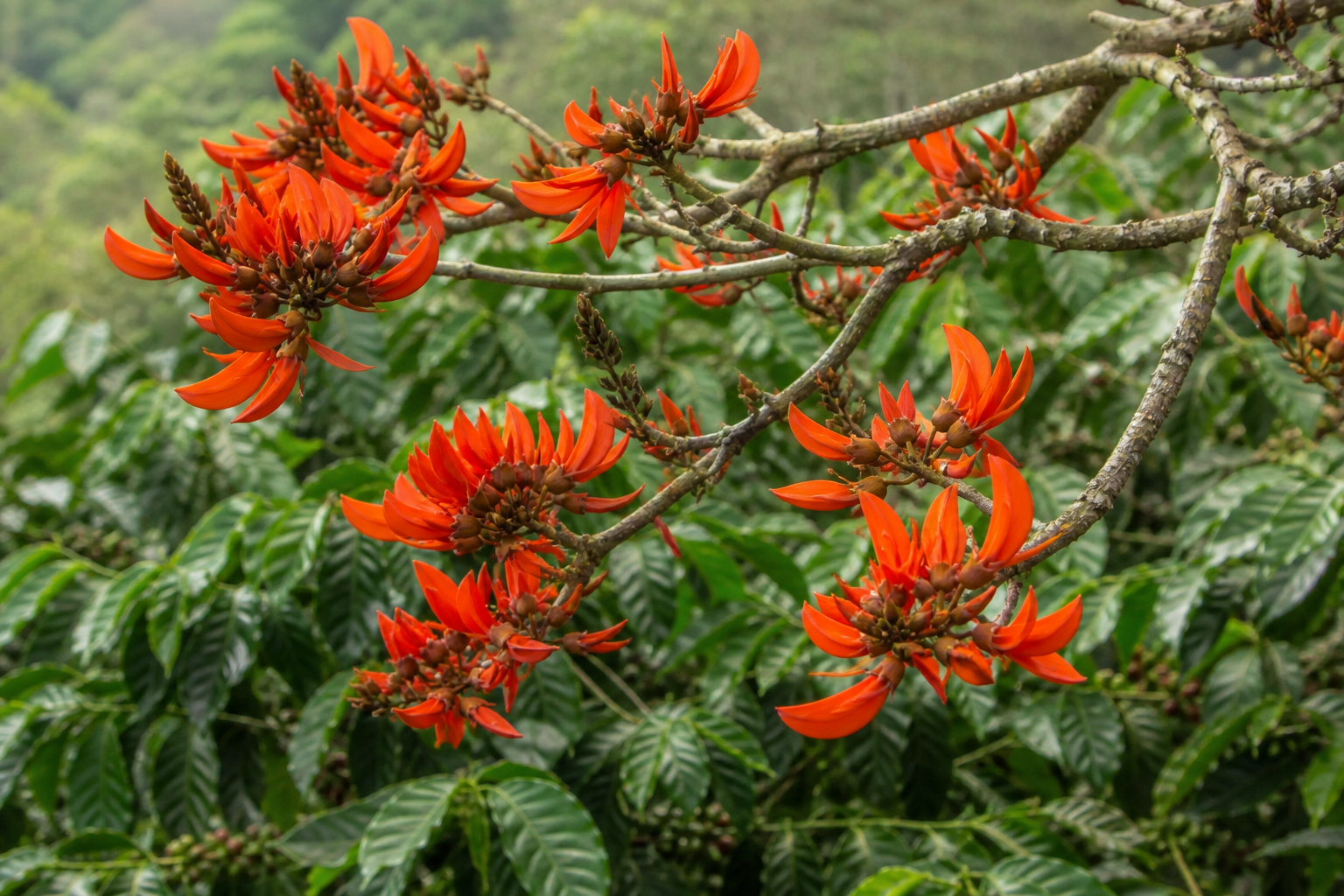
Poró is a common name applied to several Erythrina species. Their conspicuous orange-red flowers are part of the landscape, but the trees also have agricultural roles. Erythrina poeppigiana, for example, is used to shade coffee. A common name alone does not establish that every poró has the same origin or growth habit. CATIE: poró in Costa Rican coffee history.
Heliconias: colorful bracts shelter the flowers
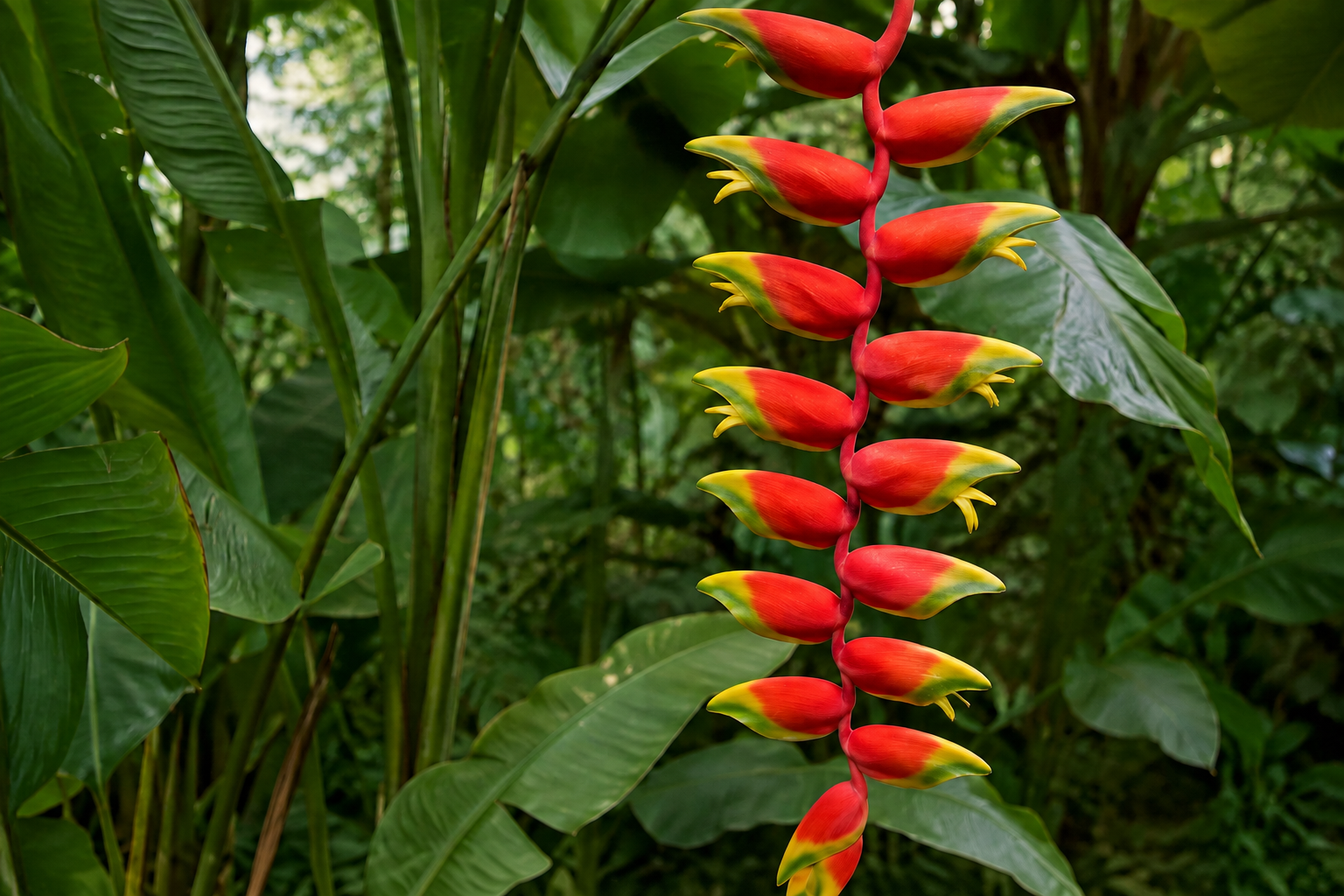
Heliconias, often called platanillas, include upright and hanging forms. Their bright red, orange, yellow or green structures are bracts—modified leaves surrounding the smaller true flowers. They are real flowering plants; it is the colorful structure that is often mistaken for the flower itself.
Different heliconia species have different shapes and pollinators. Hummingbirds are especially important, and some upright bracts hold water used by small organisms. University of Wisconsin: heliconia structure and pollination.
Veranera: bougainvillea in gardens
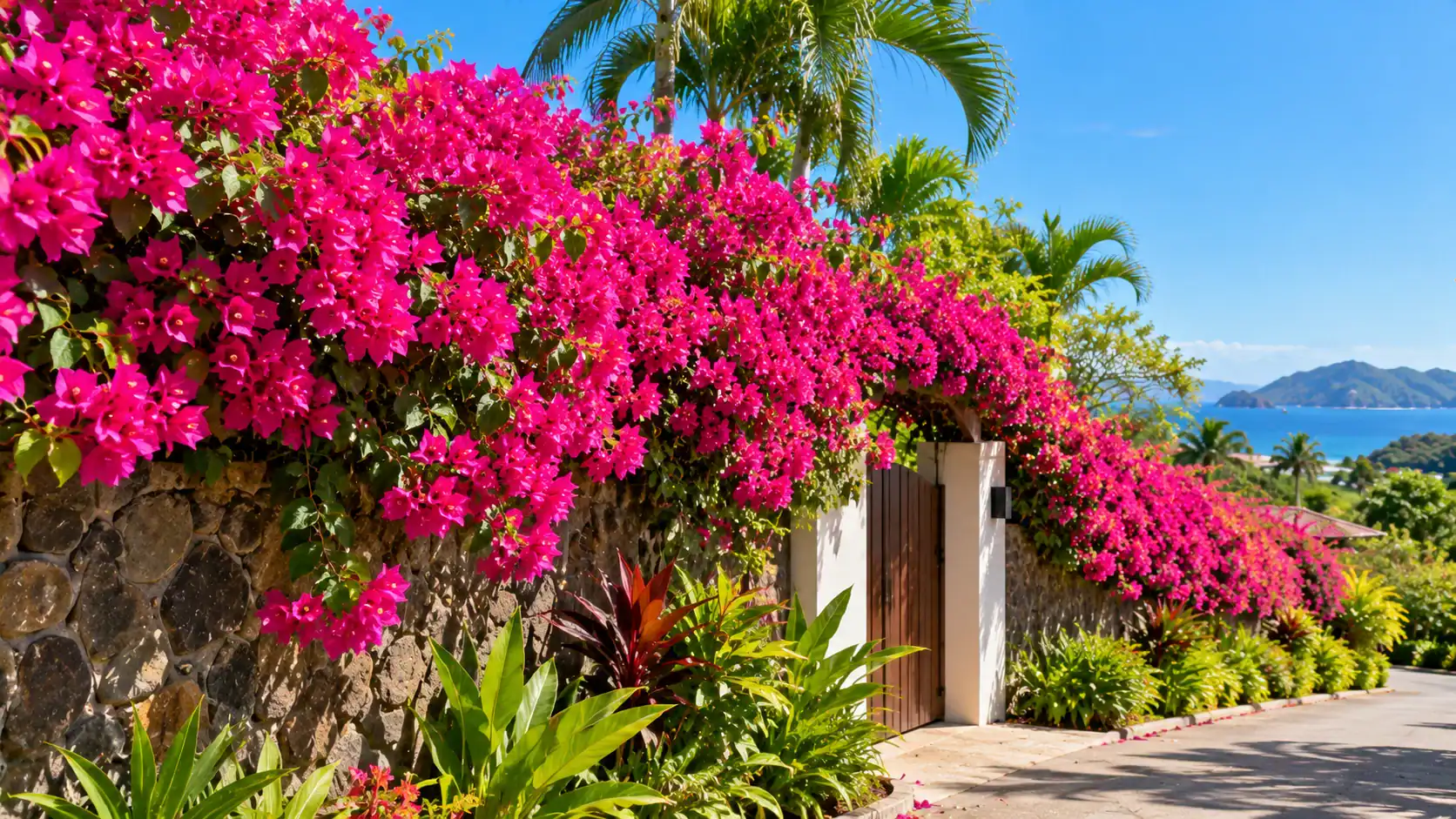
Bougainvillea, or veranera, is a South American garden favorite widely grown in warm countries. The papery magenta, pink or other colored bracts surround small true flowers. Its familiarity in Costa Rica does not make it a Costa Rican native. Royal Horticultural Society: bougainvillea origins and bracts.
Plumeria: a native plant with a worldwide garden presence
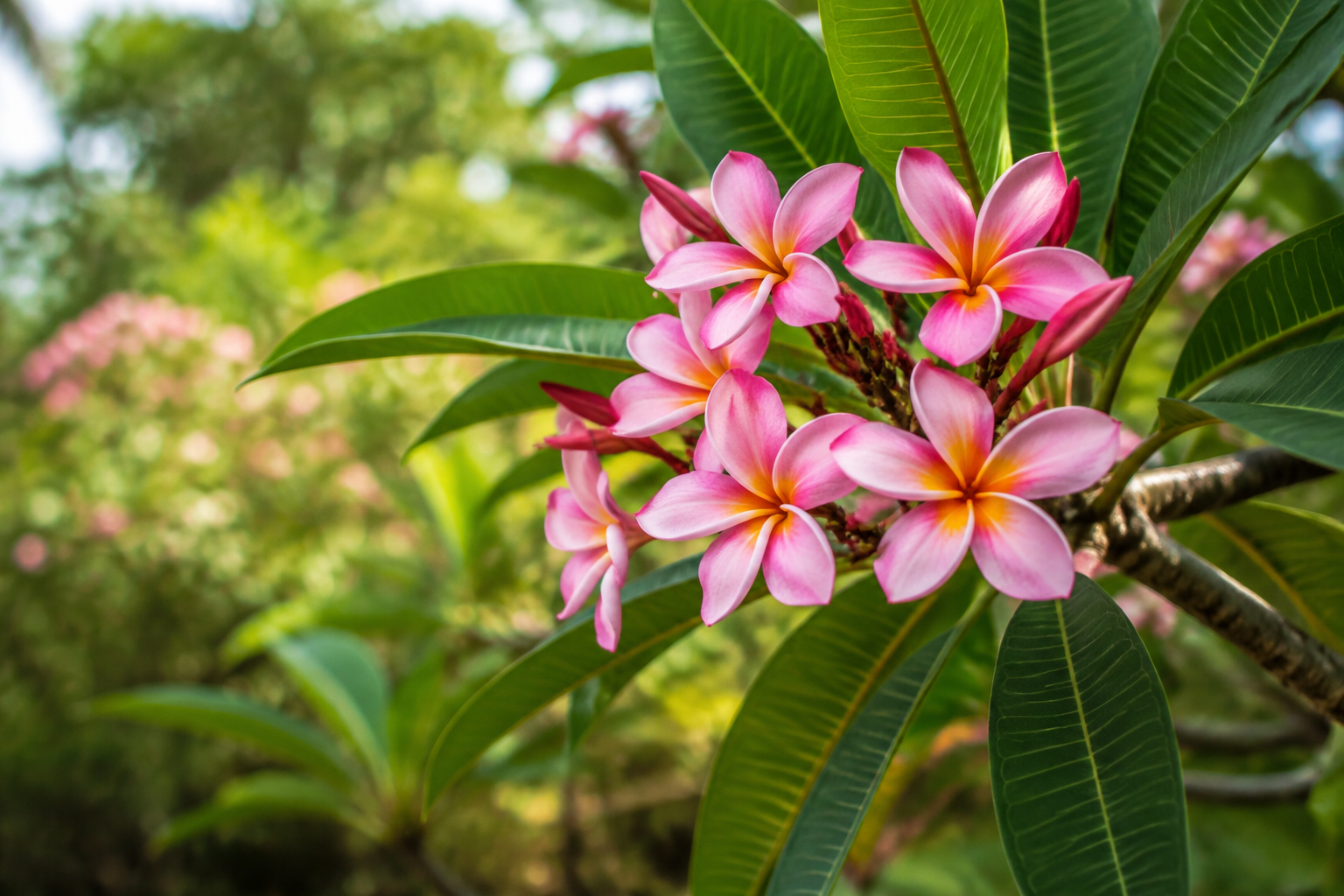
Plumeria should not be grouped indiscriminately with introduced ornamentals. Kew lists Plumeria rubra as native from Mexico to Venezuela, explicitly including Costa Rica. Its five-petalled flowers and cultivated color varieties are now familiar in tropical gardens far beyond that range. Kew: Plumeria rubra distribution.
Choosing flowers for a Costa Rican garden
Ask a local nursery which species suit your elevation, rainfall, sunlight and available space. Costa Rica has many local climates, so one flowering calendar cannot describe the entire country. Dry-season tree displays are spectacular, but the rainy months are not flower-free.
Use cultivated stock, leave wild orchids in place and choose plants by their mature size. For more practical planning, see our gardening guide.
Botanical and historical references reviewed September 6, 2026.
FAQ
What is the national flower of Costa Rica?
The guaria morada (Guarianthe skinneri), a pink-purple orchid, declared the national flower on 15 June 1939.
How many orchid species does Costa Rica have?
The Lankester Catalogue of December 2023 recorded 1,684 orchid species in 201 genera. New species are still being described.
What are the yellow flowering trees in Costa Rica?
Usually the corteza amarilla (Handroanthus ochraceus), which covers its almost leafless branches in yellow for a few days in the dry season.
Is bougainvillea native to Costa Rica?
No. Bougainvillea, called veranera, comes from South America, although it is grown in gardens all over Costa Rica. Plumeria, by contrast, is native.
Can you eat flor de itabo?
Itabo flowers are a traditional ingredient in Costa Rican cooking, for example with eggs. Buy them from a food supplier rather than picking an unidentified plant.