
Many individuals dream of starting a venture in this beautiful country. Costa Rica offers unique opportunities for those seeking a fresh start in a tropical paradise. However, achieving success requires careful planning and understanding of the local legal landscape.
At CRIE, we have been assisting families and individuals with residency and immigration for over 20 years. Our experience provides a solid foundation for those moving to this vibrant nation. Whether you are a resident or a tourist, the possibility of establishing a business here is a reality that many expats explore annually.
In this guide, we aim to present an educational overview of how business ownership functions in Costa Rica. We will help you navigate the regulatory environment, ensuring you have the factual information needed for your journey. Remember, every situation is unique, and personalized guidance is often the best approach.
For personalized guidance and pricing, feel free to contact us at CRIE. We’re here to help you every step of the way.
Exploring Costa Rica’s Business Landscape
Costa Rica presents a compelling landscape for those looking to launch their own enterprises. The country offers a wide range of business opportunities, thanks to its stable democracy and educated workforce. This environment fosters growth for both local and foreign investors.
When starting a business in Costa Rica, it is crucial to understand the unique advantages the local market provides. The Ministry of Economy, Industry, and Commerce (MEIC) oversees the business landscape, ensuring that regulations are in place to protect property rights and maintain a fair market.
Many expats find Costa Rica’s business environment favorable. However, navigating the administrative procedures can be challenging. Patience and a clear strategy are essential for success. As a regional hub, Costa Rica attracts those who seek to balance their professional aspirations with a high quality of life.
Local market insights indicate that while the environment is welcoming, foreign investors should be ready to adapt to the specific legal framework in place.
Understanding Legal Structures and Requirements
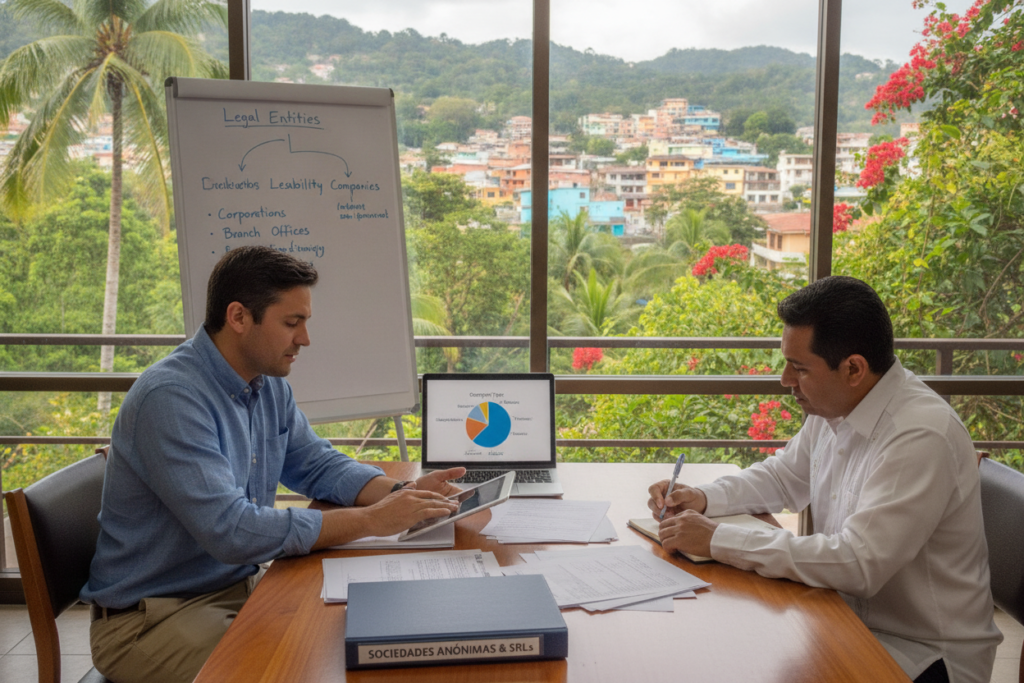
Launching a venture in this tropical paradise can be an exciting journey. To succeed, understanding the legal structures available is essential. Two popular options are the Sociedad Anónima (S.A.) and the Sociedad de Responsabilidad Limitada (S.R.L.).
The Sociedad Anónima requires at least two shareholders and a resident agent, typically an attorney. This structure is ideal for those seeking a traditional corporation model. In contrast, the S.R.L. offers a limited liability framework that simplifies management, making it a favored choice for many entrepreneurs.
When forming a costa rican corporation, it’s crucial to prepare specific documents for registration. Ensure your chosen name is unique and not already in use. The National Registry manages all business records, so compliance with legal requirements is key.
Working with a qualified attorney can help you navigate these complexities. They will ensure your business meets all obligations under Costa Rican law. For more detailed guidance on residency and business ownership, check out our page on residency for investors.
Navigating Residency and Business Ownership
The prospect of starting a venture in this vibrant country excites many entrepreneurs. Foreigners can indeed own and operate a business in Costa Rica, even without holding residency status. This is a surprising fact for many who wish to dive into the local market.
While you can own the company, hiring locals for labor is generally required. This allows you to focus on management and administrative tasks. Starting business operations as a tourist is also permitted, but it’s crucial to follow legal guidelines regarding your role in the company.
If you obtain permanent residency, your ability to participate in daily operations expands significantly. The government of Costa Rica emphasizes protecting local jobs, which is why work permits for foreigners are regulated. We recommend consulting with an expert to understand how your immigration status affects your business management.
Navigating the intersection of residency and business ownership can be challenging. However, by adhering to legal boundaries, you can successfully operate your company while contributing to the local economy and community.
Handling Taxes and Compliance in Costa Rica

Navigating the tax landscape in Costa Rica is crucial for aspiring business owners. Understanding your obligations will help you avoid penalties and maintain good standing with the authorities.
Registering your business with the Ministerio de Hacienda is a mandatory step. This process requires obtaining a corporate ID number, known as a cedula juridica. Once registered, you will need to hire a professional accountant to manage your monthly tax filings.
The government imposes a 13% Value Added Tax (VAT) on most goods and services. Additionally, corporate income tax is generally set at 30%. However, small businesses with lower annual income may qualify for reduced rates of 10% to 20%.
Businesses must also use an electronic invoicing system to record all sales, expenses, and tax payments throughout the fiscal year. Staying organized with your electronic invoices simplifies filing your annual tax returns and managing your business income.
Practical Steps for Starting Your Business
Establishing a business in the lush landscapes of Costa Rica presents unique opportunities. The first step is choosing the right business structure that aligns with your goals. Options like the Sociedad Anónima or Sociedad de Responsabilidad Limitada can offer various benefits depending on your needs.
Once you have selected your business structure, the next step is to open a business bank account. This can be done at private or state-owned institutions. However, as a foreigner, you may face limitations on online access until you obtain residency.
Additionally, obtaining a Patente Comercial is essential. This operator’s license confirms that you are authorized to run your business from a specific location. You will also need a Certificado de Uso de Suelo to ensure your property is zoned for commercial use.
Depending on your industry, additional licenses may be required, especially if you are starting a restaurant or salon. The time needed to complete these steps can vary, so patience is crucial while waiting for approvals.
We recommend working with a local expert to ensure that all your business structures and permits are correctly filed with the relevant authorities. By following these practical steps, you can build a solid foundation for your company and move closer to your goal of operating in Costa Rica.
Managing Day-to-Day Business Challenges
Operating a business in Costa Rica comes with its own set of daily challenges. Understanding local labor laws is essential for successful management. These laws ensure that employees receive significant benefits, which include vacation time, severance pay, and health insurance.
As a business owner, you are responsible for deducting contributions for the CCSS, the Costa Rican Social Security Fund, from your employees’ paychecks. It is crucial to pass these contributions on to the government. Compliance with these regulations is not optional. Failing to meet your obligations can lead to serious legal and financial consequences.
When hiring, it is important to prioritize local employees. Foreign workers must have specific residency and work permits. The government closely monitors these requirements to ensure fair treatment and mandatory benefits for all workers.
Balancing the needs of your shareholders with your obligations to employees is a key challenge. We recommend consulting with an attorney to draft employment contracts that align with current labor regulations. By prioritizing these obligations, you can foster a positive work environment and ensure the long-term success of your business operations.
Next Steps for Aspiring Business Owners in Costa Rica
Starting a venture in this captivating region opens doors to numerous possibilities. Careful planning is essential, from selecting a legal name to obtaining the right licenses. Whether your focus is on real estate or property management, understanding local laws is vital for success.
Many expats find that hiring a skilled attorney and a reliable accountant helps them navigate the complexities of the government and tax systems. If you have questions about your residency status and how it relates to your move, we at CRIE have been assisting families for over 20 years.
Every case is unique, depending on your nationality and immigration history, so personalized guidance is always recommended for your next steps. For pricing and information on residency services, please contact Johanna Alvarez at CRIE via WhatsApp at +506 8373 2085 or email info@crie.cr to learn more. You can also visit crie.cr to explore our resources and see how we can support your transition to life in this beautiful part of the world.

FAQ
Can we start a business in Costa Rica as residents?
Yes, residents can establish and operate a business in Costa Rica. There are various business structures available, including corporations and limited liability companies.
What are the key legal structures we can choose from?
The most common legal structures are Sociedad Anónima (S.A.) and Sociedad de Responsabilidad Limitada (S.R.L.). Each has its own benefits and requirements, depending on our business needs.
What documentation do we need to register a business?
We need to prepare essential documents such as identification, proof of residency, and a business plan. Additionally, we may require a local attorney to assist with the registration process.
How does our residency status affect business ownership?
Our residency status allows us to fully participate in business operations, including management and decision-making, which is crucial for our success in the local market.
What tax obligations do we have as business owners?
We must register with the Ministerio de Hacienda and comply with tax regulations, including the Value Added Tax (VAT). It’s essential to keep accurate records and file taxes on time.
How do we set up a bank account for our business?
To open a business bank account, we typically need our company registration documents, identification, and a tax identification number. Different banks may have specific requirements.
What are the labor laws we need to be aware of?
We should familiarize ourselves with Costa Rican labor laws, including employee rights, hiring practices, and obligations regarding benefits and working conditions.
What steps should we take to ensure compliance with local regulations?
We should regularly consult with legal and financial advisors to stay updated on regulations and ensure our business operations comply with local laws and standards.