
Costa Rica sits on a chain of volcanoes, and several of them are easy to visit. If you live in the Central Valley, four are close enough for a day trip, and three more make a great weekend away. So which volcano is the best in Costa Rica? It depends on what you want to see.
The short answer
- Best active crater: Poás, with its steaming turquoise lake.
- Best easy day trip from the Central Valley: Irazú, the highest, with a road almost to the crater.
- Best classic volcano view: Arenal, the perfect cone above La Fortuna.
- Best for hiking and mud pots: Rincón de la Vieja, near Liberia.
- Best blue water: Tenorio, home of the Río Celeste waterfall.
Park conditions were checked on 21 October 2026. Volcanic activity changes, so always check SINAC, Costa Rica’s national parks system, before you drive.
Volcanoes you can visit in a day from the Central Valley
Poás: the active crater
Poás, in Alajuela, rises to about 2,708 metres. From the viewpoint you look down into a huge crater with an acid lake, Laguna Caliente, that steams and changes colour. It is one of the most watched volcanoes in the country. The park closed in March 2025 during eruptions and reopened on 30 July 2025. After a small eruption on 27 August 2026, the park stayed open with tighter rules: fewer visitors per day, smaller groups at the crater viewpoint for up to 20 minutes, and helmets on the main trail. Tickets must be booked in advance.
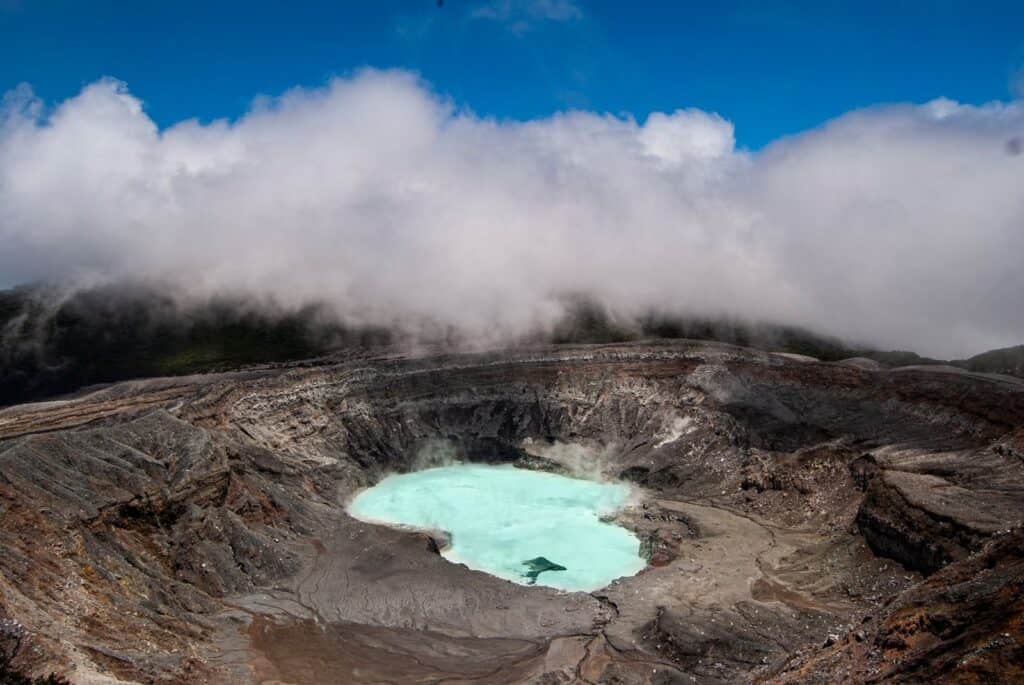
From Grecia, Alajuela or Heredia the drive takes around an hour. Go early: clouds usually cover the crater by late morning.
Irazú: the highest volcano
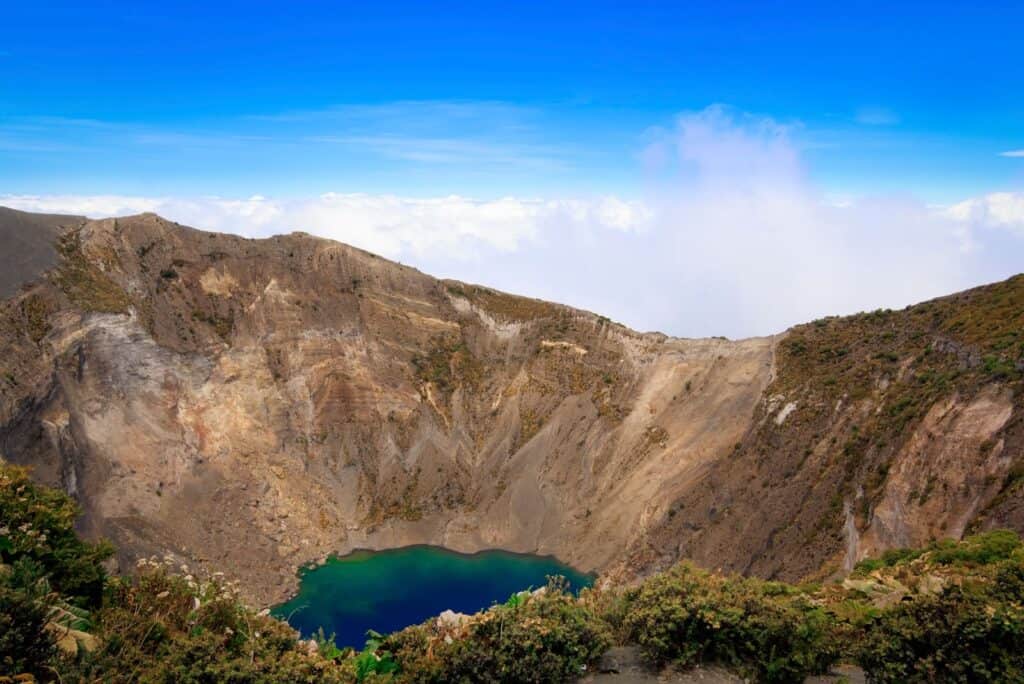
Irazú, in Cartago, is Costa Rica’s highest volcano at about 3,432 metres. You can drive almost to the rim of its main crater, which sometimes holds a green lake. On rare, very clear mornings you can see toward both the Pacific and the Caribbean. Irazú’s eruptions of 1963 to 1965 covered San José in ash, which is a good reminder that these mountains are alive. It is cold at the top, so bring a jacket.
Barva and Turrialba
Barva, above Heredia in Braulio Carrillo National Park, is a dormant volcano with a quiet crater lagoon reached on a cloud forest trail. It suits walkers who want nature without crowds. Turrialba, also in Cartago, has been one of the most active volcanoes of recent years. Its park reopened on 26 August 2026 after a short closure for heavy rain, and visits follow park staff instructions.
Volcanoes worth a weekend away
Arenal: the classic cone
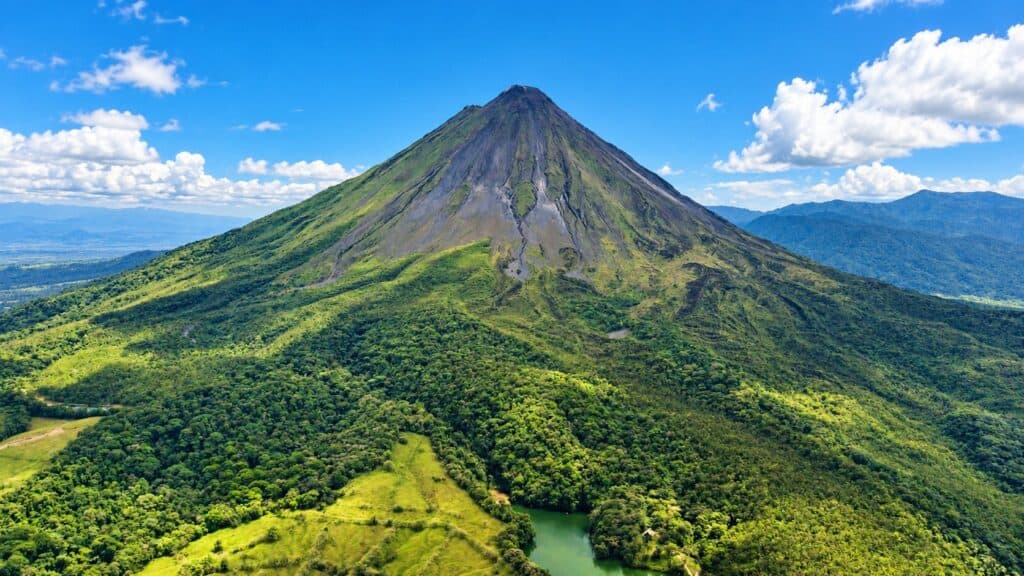
Arenal, in the San Carlos area of Alajuela, is the volcano most people picture: a near-perfect cone of about 1,670 metres. It erupted in 1968 and stayed active until 2010, so there is no lava to see today. What you get is the view, rainforest trails, the lake and the hot springs around La Fortuna, about three hours from San José.
Rincón de la Vieja and Tenorio
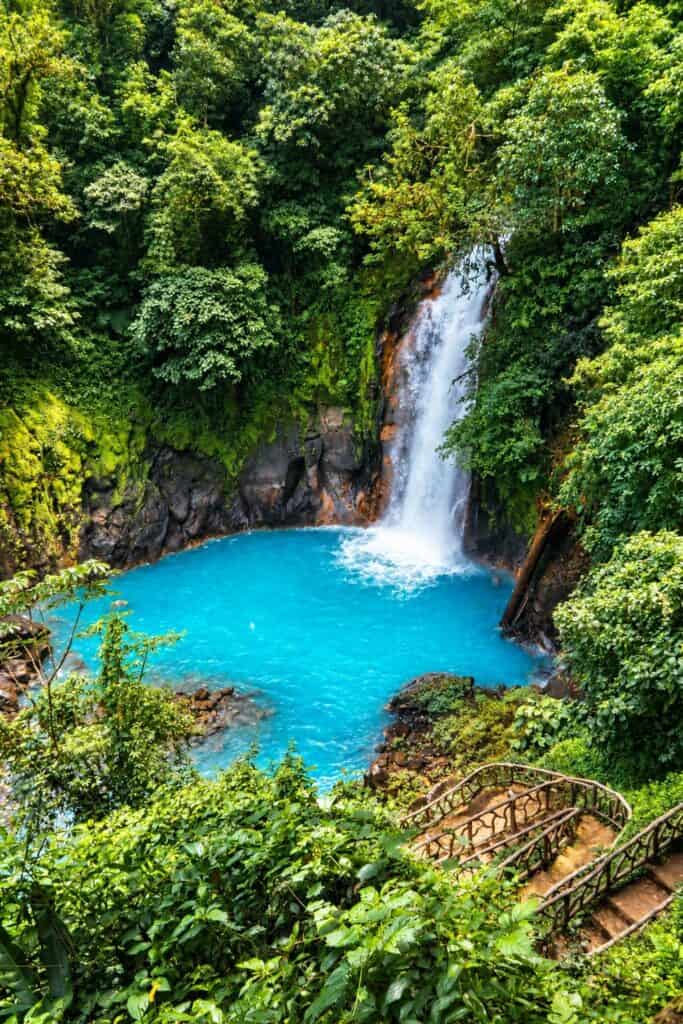
Rincón de la Vieja, near Liberia in Guanacaste, is the place to see bubbling mud pots and steam vents on the Las Pailas trails. The summit crater trail has been closed for years because of volcanic activity. Tenorio, a few hours north of the Central Valley, is famous for the Río Celeste, a river and waterfall of startling sky-blue water. Parts of its trails can close after heavy rain or landslides.
Which volcano is best for you?
- Short on time: Irazú or Poás. Both are half-day trips from most Central Valley towns.
- Want to see real activity: Poás, from the safety of the viewpoint, when the park is open.
- Travelling with family: Irazú, because the road takes you close to the crater with little walking.
- Want a relaxing weekend: Arenal, with its hot springs and views.
- Love hiking: Rincón de la Vieja or Barva.
Before you go
- Buy national park tickets online through SINAC before you leave; many parks no longer sell them at the gate.
- Start early. The craters are clearest in the first hours of the morning.
- Bring a warm layer and a rain jacket. Irazú and Poás are much colder than the valley below.
- Follow ranger instructions, stay on marked trails and respect closed areas. The gases near active craters are dangerous.
- Check the park’s status on the morning of your visit. Parks can close quickly if activity increases.
Living near a volcano in the Central Valley
Many people who move here live within sight of Poás, Barva or Irazú, and daily life goes on normally. Costa Rica’s volcanoes are watched closely by OVSICORI, the national volcanology observatory, and the national emergency commission (CNE) issues alerts and closes areas when needed. In recent years the most noticeable effect for residents has been ash on windy days, mainly from Turrialba and Poás. Our guide to emergency services and natural disasters explains the alerts and what to keep at home, and our page on earthquakes in Costa Rica covers the tremors that come with a volcanic country.
If you are still choosing where to settle, the cooler towns on the slopes of these volcanoes, such as Grecia, Atenas and Heredia, are some of the most popular with expats. See our guide to the best places to live in Costa Rica.
Frequently asked questions
Which volcano is the most active in Costa Rica?
In recent years Poás, Turrialba and Rincón de la Vieja have been the most active. OVSICORI publishes updates on all three.
Can you see lava in Costa Rica?
No. Arenal’s lava flows ended in 2010, and none of the volcanoes open to visitors today shows flowing lava.
Which volcano is closest to San José?
Irazú and Poás are both roughly an hour and a half by car from San José, depending on traffic. Barva, above Heredia, is a little closer.
Do I need a guide?
Not for the main viewpoints at Poás and Irazú. A local guide adds a lot on the longer trails at Rincón de la Vieja, Tenorio and Barva.
For more ideas on day trips and parks, read our guide to Costa Rica’s national parks.
Related: Costa Rica waterfalls: the best ones to visit
Thinking of moving to Costa Rica?
Get a free residency assessment. Tell Johanna, our immigration expert, about your situation, and she will tell you which residency fits you and what you need.
WhatsApp Johanna: +506 8373 2085Free assessment
Or email info@crie.cr