
Costa Rica has earthquakes often: the national seismic networks record thousands every year, but most are too small to feel. To check whether there was an earthquake in Costa Rica today, look at the live maps of the Red Sismológica Nacional (RSN) and OVSICORI. Risk depends on the earthquake, local ground conditions, the building and how well you prepare.
Was There an Earthquake in Costa Rica Today?
Two university networks track every earthquake in Costa Rica and publish them within minutes:
- Red Sismológica Nacional (RSN), run by the University of Costa Rica and the ICE.
- OVSICORI, the volcano and earthquake observatory of the National University.
Both show the location, depth and size of each recent earthquake. Follow official instructions from the CNE after a strong one.
How Often Does Costa Rica Have Earthquakes?
Very often. Thousands of earthquakes are recorded in and around Costa Rica each year, and only a small share are strong enough to be felt. A busy week of small tremors does not predict a large earthquake, and a quiet month does not rule one out. For the context behind the yearly records, see the UCR study of felt earthquakes in 2024.
Why earthquakes happen here
Costa Rica’s tectonic setting includes the subduction of the Cocos Plate and active faults within the country. Both plate-boundary earthquakes and shallow local earthquakes can cause serious damage. An offshore location or a large distance from the epicenter does not automatically make an earthquake harmless.
Magnitude describes an earthquake’s size; shaking at a particular location also depends on depth, distance and ground conditions. Buildings on different sites can experience different effects during the same event.
What the 1991 Limón earthquake teaches us
The Limón earthquake was associated with a reverse fault on the Caribbean side of the country. It should not be described as the same Cocos subduction event type as Nicoya. UCR geologists documented uplift along the Caribbean coast and a tsunami associated with the earthquake.
That history matters because preparation should account for local conditions, including coastal flooding and slope instability, rather than assuming that only one type of earthquake is dangerous. See UCR’s account of the Limón earthquake.
Choosing and maintaining a home
A building’s age alone does not prove whether it is safe. Ask a qualified engineer about its structural condition, original design, later additions and the requirements applicable to the property. Unreviewed alterations and deteriorated structural elements deserve attention.
The official Costa Rica seismic code website reports approval of the final CSCR 2025 text on November 24, 2025, with editing underway. Approval of a text should not be confused with confirmation of its legal effective date. Check the applicable published requirements with the responsible professional before construction or alterations.
What to do during shaking
RSN’s preparedness guidance includes drop, cover and hold on. If indoors, take cover under sturdy furniture where possible, keep away from glass and do not rush outside or onto stairs while the building is shaking. Plan suitable protective actions in advance for anyone with limited mobility.
If outside, keep clear of buildings and overhead wires. If driving, stop in a safe place away from bridges, wires and other hazards, and remain in the vehicle. In mountainous areas, be alert to falling rocks. Read the RSN earthquake preparedness guidance before an emergency.
Tsunami precautions near the coast
SINAMOT warns that a strong or unusually long coastal earthquake can be a natural tsunami warning. Protect yourself during the shaking, then move promptly toward higher ground using the local evacuation route. Do not wait for an official alert when natural warning signs are present.
A sudden sea-level change or a loud roar from the sea can also be a warning. Distant tsunamis can affect Costa Rica even when no earthquake is felt locally. Follow CNE and SINAMOT instructions; do not use a single elevation figure as a guarantee of safety everywhere. Consult SINAMOT’s tsunami prevention guidance and your community’s evacuation information.
Prepare before the next earthquake
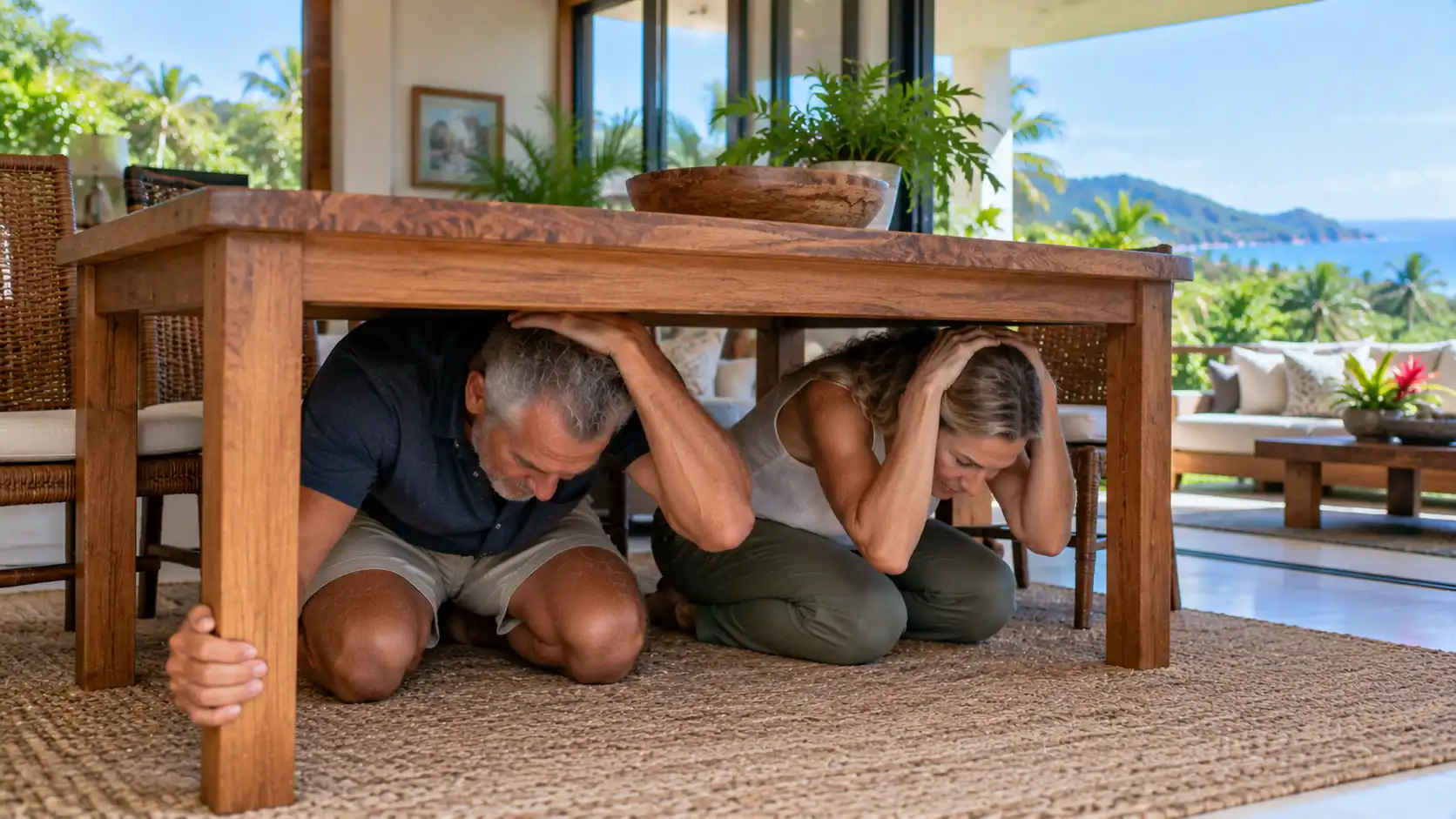
- Secure heavy furniture and objects that could fall.
- Discuss protective actions, exits and a meeting place with your household.
- Keep essential supplies and needed medicines accessible.
- Learn the emergency arrangements at your accommodation or workplace.
- After shaking, check for hazards and follow official instructions before returning to damaged areas.
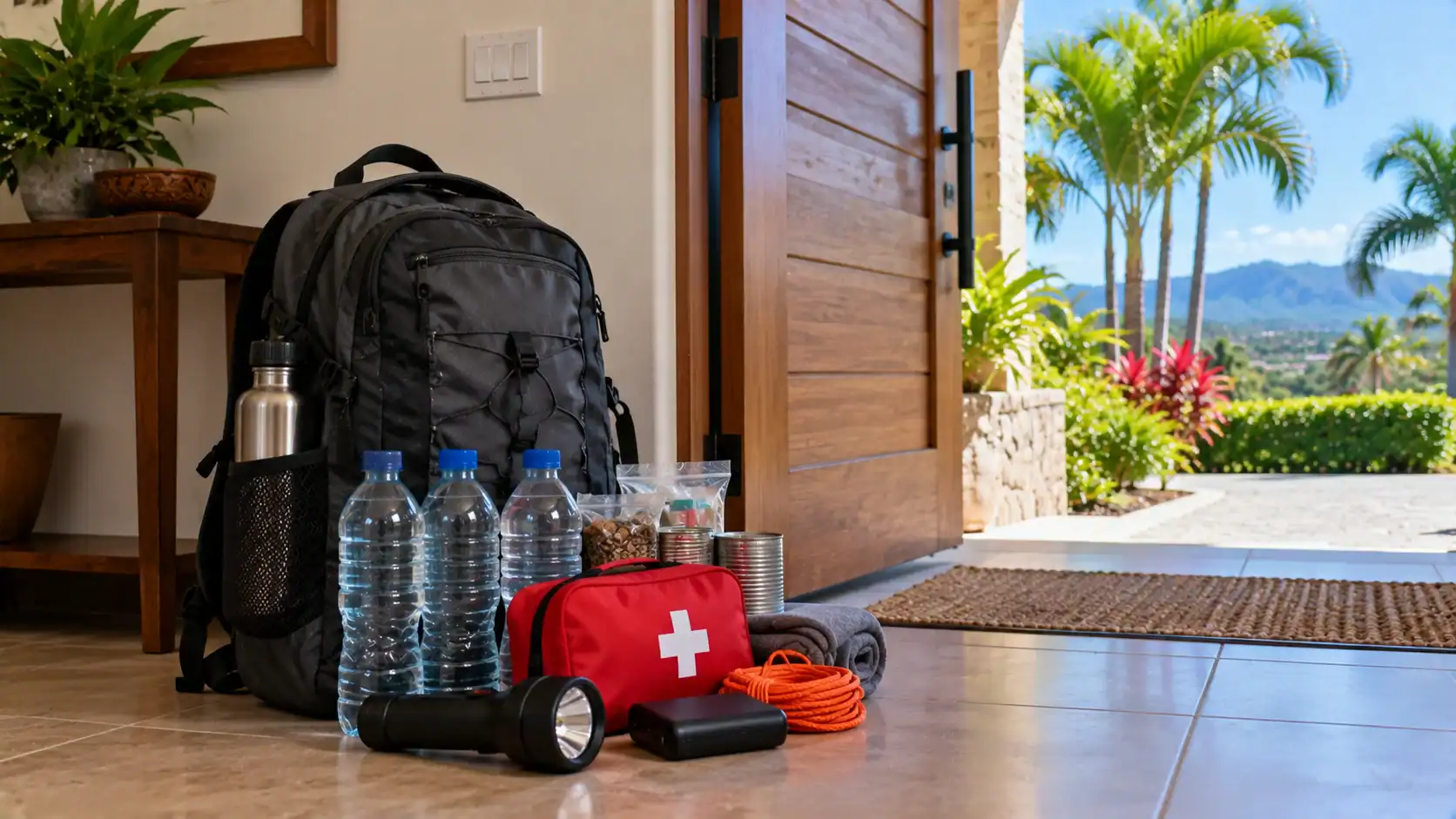
For an immediate emergency, call 9-1-1. Our Costa Rica emergency contacts guide explains other useful numbers.
Frequently Asked Questions
Are earthquakes common in Costa Rica?
Yes. Thousands are recorded every year, but most are too small to feel.
How can I check if there was an earthquake today?
Look at the live earthquake maps of the Red Sismológica Nacional (RSN) or OVSICORI.
What should I do during an earthquake?
Drop, cover and hold on. Stay away from glass and do not run outside or onto stairs while the building is shaking.
Can an earthquake cause a tsunami in Costa Rica?
Yes. If you are on the coast and feel a strong or unusually long earthquake, move to higher ground without waiting for an alert.