
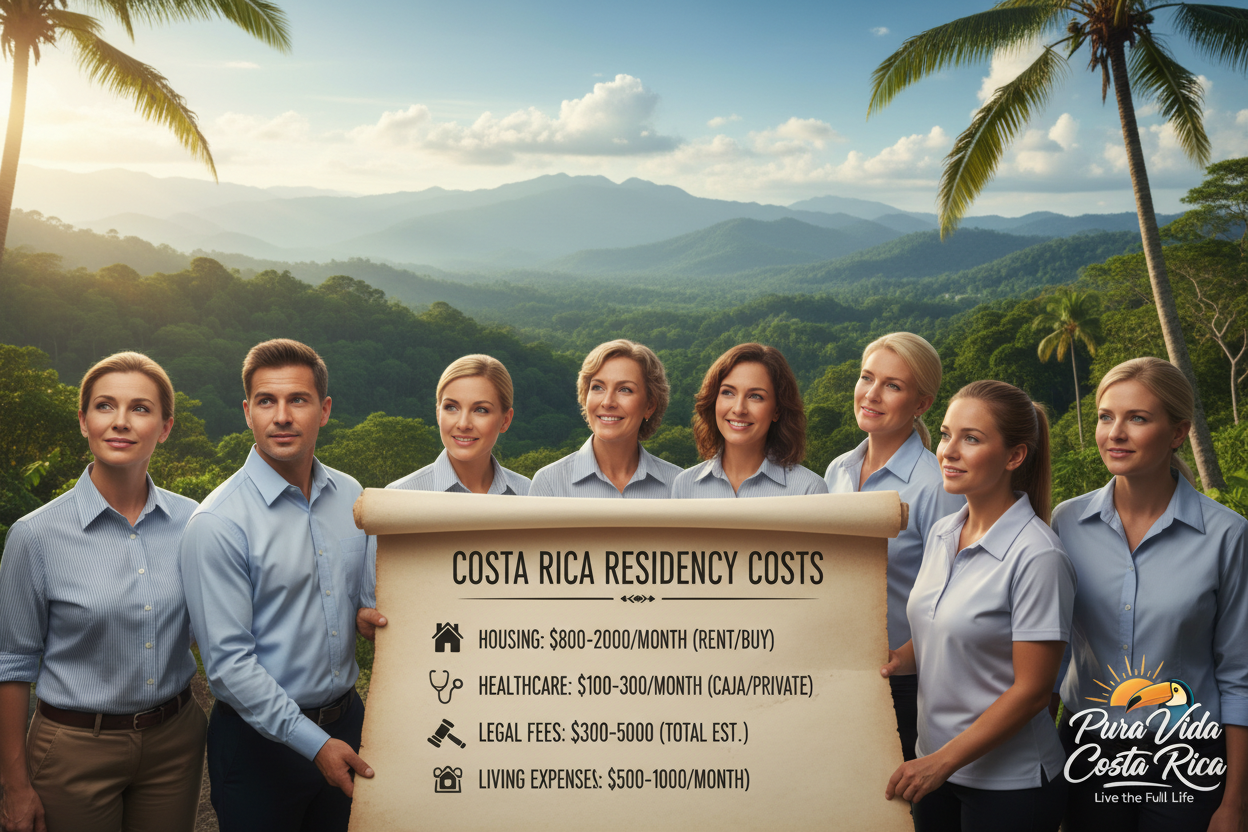
Many US citizens dream of moving to Costa Rica for retirement or a family adventure. This beautiful country offers a welcoming environment and a stable pace of life.
We created this guide to clarify the financial commitments involved. The cost of establishing legal residency goes beyond simple living expenses.
With a population of 5.1 million, the nation uses the Colón as its official currency. Financial planning must account for exchange rates and local economic factors.
Our team at CRIE acts as your knowledgeable partner through this complex process. We emphasize realism over hype, providing candid advice every step of the way.
Obtaining legal residency requires navigating specific investment or income thresholds. This introduction outlines the key considerations for your journey.
We believe in transparent partnerships with our clients. Together, we can build a solid foundation for your new chapter in Central America.
Understanding Costa Rica Residency Options
Understanding the legal pathways to residency is the first critical step for Americans considering a permanent move. While U.S. passport holders can visit for up to 180 days as tourists, establishing long-term status requires navigating specific immigration frameworks.
An Overview of Residency Pathways
The country offers four main residency categories for those seeking legal permanence. Each pathway has distinct financial and eligibility requirements set by the Dirección General de Migración y Extranjería.
We guide clients through these primary legal frameworks to establish a compliant life abroad. Choosing the correct route depends heavily on your personal financial profile.
Benefits of Living the Pura Vida Lifestyle
Many Americans are drawn to the pura vida lifestyle, which blends natural beauty with a slower pace. This cultural ethos enhances quality of life and is a key motivator for seeking residency.
Our expertise at CRIE ensures you have factual information to make an informed choice. We believe transparency helps avoid common pitfalls during your transition to a new country.
Exploring Residency Categories: Pensionado (Pensionado), Rentista (Rentista), and Inversionista (Inversionista)
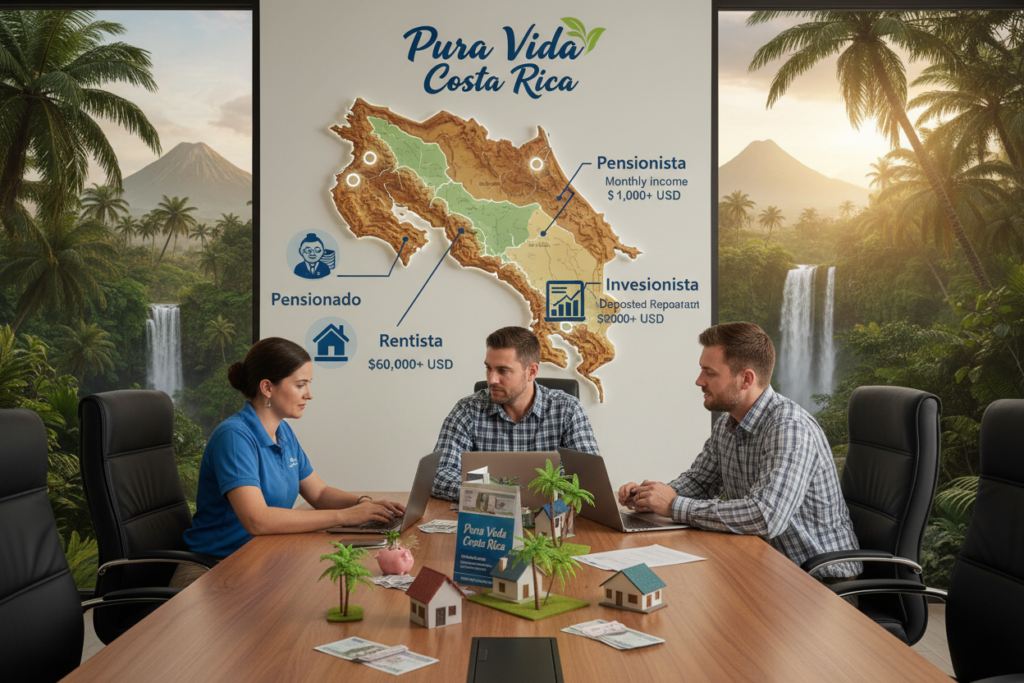
Choosing the right legal framework for your Costa Rican future depends entirely on your income sources or investment capacity. The nation offers three primary residency pathways, each with distinct financial qualifications.
Eligibility and Financial Thresholds
The Pensionado (Pensionado) category is designed for retirees. It requires proof of a lifetime pension income of at least $1,000 per month.
For individuals with stable passive income, the Rentista (Rentista) pathway applies. You must demonstrate $2,500 in monthly income for two years or provide a $60,000 bank deposit.
The Inversionista (Inversionista) route demands a minimum investment of $150,000. This capital must go into approved real estate or government-sanctioned projects within Costa Rica.
Key Differences and Long-Term Implications
Each residency category carries different rules for work authorization and travel. Your choice affects your timeline for applying for permanent status later.
We help clients distinguish between these options to ensure their financial documentation meets strict immigration standards. Proper preparation is crucial, which is why we recommend a thorough immigration interview to clarify all requirements.
Understanding these long-term implications from the start prevents complications. It ensures your selected pathway truly supports your life goals in this beautiful country.
Starting Your Application Process from Home
The foundation for a smooth transition to Costa Rica is laid long before you board the plane. Beginning with meticulous document preparation from your current home is the most effective way to prevent frustrating delays later.
We believe a proactive start is your greatest advantage. Tackling paperwork early allows you to resolve issues from a familiar environment.
Initial Research and Document Gathering
Your first actionable step is gathering core documents like birth certificates and FBI background checks. Remember, an FBI check is only valid for six months from its issue date.
Planning your timeline around this expiration is crucial. Proper preparation now saves significant time and stress upon arrival.
Setting Up for Success Before Arrival
Every official document must be authenticated with an apostille from the US Department of State or your Secretary of State. This step is non-negotiable for recognition by Costa Rican government authorities.
Our team advises creating a master checklist to track these critical steps and expiration dates. Starting your application process early also lets you fix potential name inconsistencies or locate missing records.
Resolving these obstacles from the United States is far simpler than trying to manage them abroad. This disciplined approach sets the stage for a successful submission.
Eligibility Criteria: Income and Investment Requirements
Meeting the specific financial criteria is the cornerstone of a successful residency application in Costa Rica. The government requires clear, verifiable evidence of your economic stability. This proof ensures you can support yourself without needing local employment.
Pensionado Income Requirements (US$1,000+/month)
For the Pensionado category, you must prove a lifelong and guaranteed pension. Official verification must show a minimum of $1,000 per month. This income must be sustainable for the duration of your stay in Costa Rica.
Rentista and Inversionista Financial Conditions
The Rentista pathway demands proof of stable passive income. You need to demonstrate $2,500 per month for two years. Alternatively, a $60,000 deposit in a local bank satisfies this requirement.
The Inversionista route requires a minimum investment of $150,000. This capital must be in your personal name, not a corporate entity. Approved investments include real estate or government-sanctioned projects within the country.
We verify that your financial sources meet the strict standards set by immigration authorities. Providing clear, sustainable proof of your stability is the most critical step for approval.
Preparing Required Documents: Apostilles, Translations, and More
Before you set foot in the country, two critical steps—apostilles and translations—must be completed flawlessly. This phase transforms your personal records into legally valid proof for immigration authorities. We guide clients through this meticulous process to prevent costly delays.
Which Documents Need Apostilles
An apostille authenticates your documents for international use. The U.S. Department of State must apostille essential papers like your birth and marriage certificates. Completing this before you leave home is mandatory.
Ensuring Accurate Spanish Translations
Once in Costa Rica, you must hire a government-authorized translator. They will convert your apostilled documents into Spanish for the immigration office. Using an unauthorized translator can invalidate your application and delay your legal status.
We recommend keeping originals, apostilled copies, and Spanish versions in separate, organized folders. Our team at CRIE ensures your paperwork meets the rigorous standards of local authorities. This preparation is the key to a smooth submission.
Navigating the Application Timeline and Avoiding Pitfalls
Setting realistic expectations for the application timeline is crucial to maintaining your peace of mind. This phase requires patience and a clear understanding of government processing variables.
Realistic Processing Time Expectations
The entire residency process typically spans three to twelve months. Your specific category and current DGME caseloads determine the exact duration.
We advise planning for the longer end of this range. Do not make major life changes based on the fastest possible timeline.
Appointments at the immigration office should be scheduled three to four weeks in advance. Our team helps you navigate these backlogs to secure your spot efficiently.
Common Mistakes to Avoid
A frequent error is submitting an expired FBI background check. This document is only valid for six months from its issue date.
Name inconsistencies between your documents can also cause significant delays. Such errors often send your file to the back of the queue.
We help you avoid these pitfalls through meticulous pre-submission reviews. Our guidance ensures your application moves forward as smoothly as possible.
Managing cost-of-residency-costa-rica: Fee Breakdown and Hidden Expenses
The true financial picture of establishing residency includes predictable charges and several hidden expenses that can surprise applicants. Beyond the main investment or income proof, you must budget for government fees, legal assistance, and document processing.
Official costs start with your DIMEX card, which ranges from $98 to $123. The immigration office also requires a refundable guarantee deposit of approximately $361.
Professional legal guidance typically adds $1,500 to $3,000 to your total costs. This investment provides crucial peace of mind by ensuring your application meets all complex requirements.
You should also plan for ancillary expenses. These include certified translations, courier services, and potentially multiple trips to San José for appointments.
Do not forget your initial CAJA healthcare contributions, which are mandatory for all legal residents. We provide a transparent fee breakdown so you encounter no surprises, aligning with the long-term benefits of Costa Rica residency. Proper planning for all these costs ensures a smooth financial transition.
Digital Nomad Visa Versus Long-Term Residency Options
A common point of confusion for newcomers is the distinction between temporary work permits and permanent legal status. Costa Rica’s Digital Nomad visa is a popular option for remote professionals. However, it is crucial to understand its limitations from the start.
Why Digital Nomad Does Not Count for Residency
This specific permit requires proof of a monthly income of $3,000 for individuals or $4,000 for families. It grants temporary work authorization but does not establish residency in Costa Rica.
We must clarify that time spent under this visa does not count toward the seven-year requirement for citizenship. It is a legal permit for remote work, not a pathway to permanent status.
Alternative Pathways for Permanent Status
For a committed long-term future, we suggest exploring established pathways like Rentista or Pensionado. These categories are designed for permanent residency and eventual citizenship.
Many clients use the Digital Nomad visa as a trial period to experience the country. Meanwhile, they prepare their formal residency application with our guidance at CRIE. We provide factual advice to ensure you do not confuse temporary work authorization with actual residency status.
Submission Process and Follow-Up Steps
The submission phase is where your meticulous preparation meets the formal requirements of the Dirección General de Migración y Extranjería. This official filing action starts the clock on the government’s review of your case.
Filing with the DGME
We assist you in presenting your formal application to the immigration authority in Costa Rica. Our role is to ensure every document meets their strict standards before submission.
Once filed, you receive official proof that your residency request is in process. We also verify your contact details are correctly registered with the office. This prevents any missed communications that could delay your case.
Our team actively monitors the status of your application. We provide regular updates throughout the waiting period to manage your expectations.
Following submission, we guide you through necessary follow-up steps. This proactive approach ensures your file moves forward without unnecessary delays in Costa Rica.
Maintaining Your Residency: Renewals and Transitioning to Permanent Status
Securing your initial residency status is just the beginning of your legal journey in Costa Rica. Ongoing compliance is essential to protect your investment and future in the country.
Renewing Your DIMEX Card
You must renew your DIMEX identification card every two years. This process is non-negotiable to keep your legal status active.
Staying enrolled in the CAJA healthcare system is also mandatory for all residents. We help you manage both renewals and payments to ensure you never fall out of compliance.
Steps Toward Permanent Residency
After three years of temporary status, you become eligible for permanent residency. This is a significant milestone in the immigration system.
Applying for citizenship requires seven years of continuous legal residency in Costa Rica. We guide you through each phase of this long-term process.
Our team ensures you understand every requirement for maintaining your status over the years. Proper planning secures your future in this beautiful nation.
Legal Considerations: U.S. Tax Implications and Compliance
Your move to Costa Rica does not absolve you from U.S. filing responsibilities, making dual compliance essential. The United States and this Central American nation do not have a bilateral tax treaty in place. This creates a unique financial landscape for American expatriates.
Managing Dual Taxation Issues
As a U.S. citizen, you must report your worldwide income to the IRS, even after establishing residency abroad. The local system here utilizes a territorial approach. You are generally only subject to local tax on income earned within its borders.
We strongly advise consulting a cross-border tax professional. They can help manage your obligations based on your income sources and avoid potential dual taxation issues. You may utilize the Foreign Earned Income Exclusion to reduce your U.S. liability while living abroad.
Our team emphasizes compliance with both U.S. and local laws. Proper planning protects your financial future in this new chapter.
Staying Organized: Document Checklists and Timeline Management
The difference between a smooth application process and a stressful one often comes down to how you track your documents and deadlines. A proactive system transforms complex paperwork into manageable steps.
Creating and Using a Master Checklist
We recommend creating a master checklist to track the status, apostille date, and expiration of every document in your file. This living document becomes your central command for navigating the requirements in Costa Rica.
Using a simple spreadsheet ensures you never submit an expired FBI background check to the immigration office. Monitoring each critical date is the best defense against timeline setbacks.
We help you build buffer time into every stage to account for potential delays at the U.S. Department of State or local agencies. Our team at CRIE provides the structure and guidance needed to keep your residency journey on track from the very first day.
Personalizing Your Costa Rican Experience: Lifestyle and Settlement Choices
Finding your perfect place to live in Costa Rica is a deeply personal decision. It shapes your daily routine, social connections, and overall happiness in your new home.
Choosing the Right Region for Your Lifestyle
Your ideal location in Costa Rica depends on your preferences for climate, culture, and amenities. Many expats select the Central Valley for its spring-like weather and proximity to modern services.
The capital city of San José offers excellent healthcare facilities and urban conveniences. If a beach lifestyle calls you, towns like Tamarindo provide vibrant expat communities and beautiful coastal real estate opportunities.
We encourage renting a property first to explore different areas. This approach lets you experience living in Costa Rica before committing to a real estate purchase.
Our team provides reliable local information to support your personal journey. We help you match your dreams with the right cities and communities across this beautiful country.
Your Path Forward: Taking the Next Steps with CRIE
Moving from consideration to action is the most significant step in your residency journey. This guide has outlined the core process to help you plan your move to Costa Rica with clarity.
We provide expert guidance through the Pensionado, Rentista, and Inversionista pathways. Our role is to offer experienced support and factual advice as you navigate the legal system.
Ready to begin? Start with a personalized residency assessment. Contact our team today via WhatsApp at +506 8706 3888 or email info@crie.cr to build your future in Costa Rica.
FAQ
What are the total Costa Rica residency costs, including hidden fees?
The total cost-of-residency-costa-rica involves government fees, legal assistance, document preparation, and mandatory health insurance. Government filing fees for the main applicant start around 0. Legal and documentation costs—including apostilles, translations, and notary services—typically add ,000 to ,000. You must also budget for mandatory health insurance through the public (CCSS) or a private system, which can range from to 0+ per month. We always provide a transparent, line-item breakdown so you can plan for all expenses upfront.
How long does the residency application process really take?
Processing times vary by category and application volume at the DGME (Dirección General de Migración y Extranjería). Currently, expect the process from submission to receiving your temporary residency card (DIMEX) to take between 6 to 12 months. The Rentista and Pensionado pathways often see quicker approvals. We manage timeline expectations by staying on top of your file and proactively following up with immigration authorities.
Can I work or run a business in Costa Rica with temporary residency?
This is a critical distinction. Most temporary residency categories, like Pensionado and Rentista, do not grant automatic work permits. You cannot engage in local employment or profit-generating activities that compete in the Costa Rican market. To work legally, you must secure a separate work permit, which requires a local sponsor. Many residents instead operate location-independent businesses with income sourced from outside the country.
What is the difference between the Digital Nomad Visa and long-term residency?
The Digital Nomad Visa is a one-year, renewable permit for remote workers with foreign-sourced income. It’s a great trial option but does not count toward permanent residency or citizenship. It also doesn’t require the same level of document apostilles. Long-term residency pathways—like Pensionado, Rentista, or Inversionista—are the official routes to eventually apply for permanent status and citizenship after several years of maintained temporary residency.
Do I need to translate every document for my residency application?
Yes, almost all foreign-issued documents require official translation into Spanish by a certified translator recognized in Costa Rica. This includes birth certificates, marriage certificates, police records, and bank statements. The translated documents must be notarized by a Costa Rican notary public. We coordinate this entire process to ensure your paperwork meets the strict legal formatting requirements.
What are the U.S. tax implications of becoming a resident in Costa Rica?
U.S. citizens and green card holders must continue filing U.S. tax returns reporting worldwide income, regardless of residency status elsewhere. Costa Rica taxes residents on their Costa Rican-sourced income. There is a tax treaty to prevent double taxation, but navigating it requires careful planning. You may owe taxes in both countries on certain types of income. We strongly advise consulting with a cross-border tax specialist to structure your finances compliantly.
How do I prove my income for the Pensionado or Rentista visa?
For the Pensionado visa, you must provide notarized documentation proving a lifetime pension of at least
FAQ
What are the total Costa Rica residency costs, including hidden fees?
The total cost-of-residency-costa-rica involves government fees, legal assistance, document preparation, and mandatory health insurance. Government filing fees for the main applicant start around $250. Legal and documentation costs—including apostilles, translations, and notary services—typically add $2,000 to $4,000. You must also budget for mandatory health insurance through the public (CCSS) or a private system, which can range from $50 to $200+ per month. We always provide a transparent, line-item breakdown so you can plan for all expenses upfront.
How long does the residency application process really take?
Processing times vary by category and application volume at the DGME (Dirección General de Migración y Extranjería). Currently, expect the process from submission to receiving your temporary residency card (DIMEX) to take between 6 to 12 months. The Rentista and Pensionado pathways often see quicker approvals. We manage timeline expectations by staying on top of your file and proactively following up with immigration authorities.
Can I work or run a business in Costa Rica with temporary residency?
This is a critical distinction. Most temporary residency categories, like Pensionado and Rentista, do not grant automatic work permits. You cannot engage in local employment or profit-generating activities that compete in the Costa Rican market. To work legally, you must secure a separate work permit, which requires a local sponsor. Many residents instead operate location-independent businesses with income sourced from outside the country.
What is the difference between the Digital Nomad Visa and long-term residency?
The Digital Nomad Visa is a one-year, renewable permit for remote workers with foreign-sourced income. It’s a great trial option but does not count toward permanent residency or citizenship. It also doesn’t require the same level of document apostilles. Long-term residency pathways—like Pensionado, Rentista, or Inversionista—are the official routes to eventually apply for permanent status and citizenship after several years of maintained temporary residency.
Do I need to translate every document for my residency application?
Yes, almost all foreign-issued documents require official translation into Spanish by a certified translator recognized in Costa Rica. This includes birth certificates, marriage certificates, police records, and bank statements. The translated documents must be notarized by a Costa Rican notary public. We coordinate this entire process to ensure your paperwork meets the strict legal formatting requirements.
What are the U.S. tax implications of becoming a resident in Costa Rica?
U.S. citizens and green card holders must continue filing U.S. tax returns reporting worldwide income, regardless of residency status elsewhere. Costa Rica taxes residents on their Costa Rican-sourced income. There is a tax treaty to prevent double taxation, but navigating it requires careful planning. You may owe taxes in both countries on certain types of income. We strongly advise consulting with a cross-border tax specialist to structure your finances compliantly.
How do I prove my income for the Pensionado or Rentista visa?
For the Pensionado visa, you must provide notarized documentation proving a lifetime pension of at least $1,000 per month. For the Rentista visa, you must demonstrate a guaranteed, stable income of at least $2,500 per month for two years, often proven through a bank letter and deposit agreements. These funds must be transferred into a Costa Rican bank account. We help you gather and format the correct proof of income from your financial sources.
When can I apply for permanent residency or citizenship?
You can apply for permanent residency after maintaining temporary residency status for three consecutive years. The application process itself can take an additional year. Citizenship eligibility requires seven years of legal residency (either temporary or permanent). Both processes require clean criminal records, proof of continued financial solvency, and integration into Costa Rican society. We guide clients through each step of this multi-year journey.
,000 per month. For the Rentista visa, you must demonstrate a guaranteed, stable income of at least ,500 per month for two years, often proven through a bank letter and deposit agreements. These funds must be transferred into a Costa Rican bank account. We help you gather and format the correct proof of income from your financial sources.
When can I apply for permanent residency or citizenship?
You can apply for permanent residency after maintaining temporary residency status for three consecutive years. The application process itself can take an additional year. Citizenship eligibility requires seven years of legal residency (either temporary or permanent). Both processes require clean criminal records, proof of continued financial solvency, and integration into Costa Rican society. We guide clients through each step of this multi-year journey.
Article by Glenn Tellier (Founder of CRIE and Grupo Gap)
Don't wait, contact us right now!
Call or WhatsApp Costa Rica +506 8373 2085 or +506 8706 3888
Call USA/Canada +1 305-906-6784