
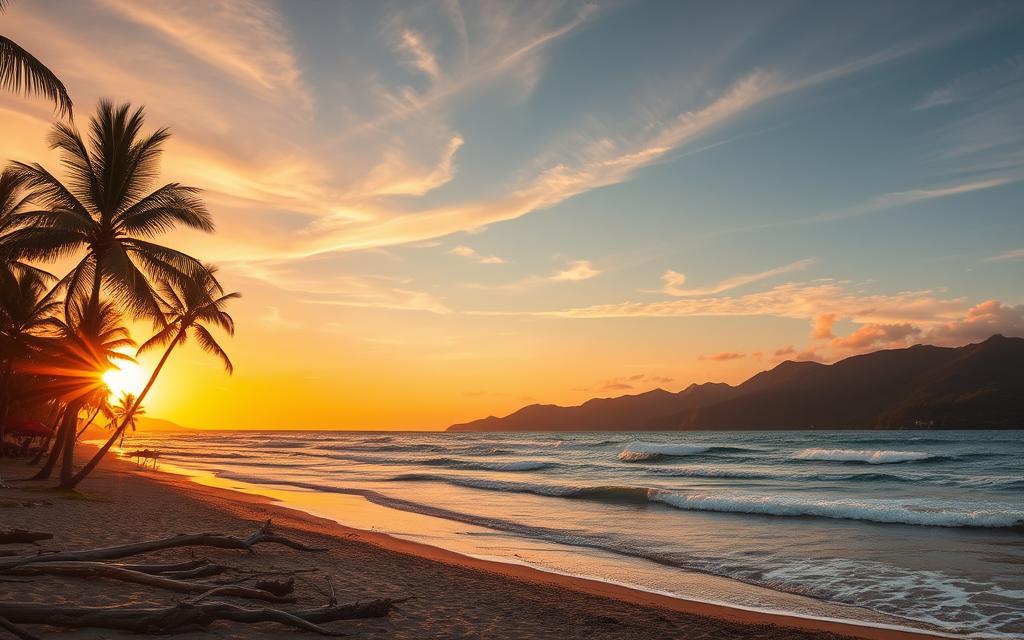
Costa Rica, located near the equator, experiences unique sunset patterns that differ from countries at higher latitudes. The country’s proximity to the equator results in relatively consistent day lengths throughout the year.
Understanding sunset times in Costa Rica is crucial for travelers planning evening activities and photographers seeking the perfect shot. The sunset duration in Costa Rica averages 24 minutes, significantly shorter than in northern USA or central Europe.
The time of sunset varies by region, with the Pacific coast offering spectacular ocean sunsets. This guide will explore the geographical factors influencing sunset times, regional variations, and seasonal patterns to help you plan your perfect Costa Rican sunset experience.
Understanding Sunset Times in Costa Rica
Costa Rica’s geographical location near the equator significantly influences its sunset times throughout the year. The country’s position just 10 degrees north of the equator creates a unique sunset experience with relatively consistent timing.
Costa Rica’s Unique Geographical Position
San José, the capital city, lies on the 10th degree of northern latitude, making it very close to the equator. The sun swings back and forth between the tropics over the course of the year, crossing San José’s latitude twice a year, on April 15th and August 27th.
- The country’s location between the tropics means the sun crosses directly overhead twice annually, creating interesting lighting phenomena around sunset times.
- Costa Rica doesn’t experience dramatic seasonal variations in daylight hours, with only about an hour difference between the longest and shortest days.
Duration of Sunsets in Costa Rica
Costa Rican sunsets last approximately 24 minutes on average, significantly shorter than the nearly hour-long sunsets experienced in northern regions of the United States or Europe. The sun’s position relative to Costa Rica shifts throughout the year, moving between the northern and southern tropics, which affects the direction from which the sun sets.
Understanding these geographical factors helps visitors appreciate why Costa Rica’s sunsets occur when they do and why they appear different from sunsets in other parts of the world.
When Does the Sun Set in Costa Rica? Key Factors
Several geographical and astronomical factors contribute to the timing of sunsets in Costa Rica. The country’s proximity to the equator and its unique position between the tropics play a crucial role in determining sunset times throughout the year.
Proximity to the Equator and Its Effects
Costa Rica’s proximity to the equator means that the sun sets at a more perpendicular angle to the horizon, resulting in faster sunsets compared to countries at higher latitudes. This geographical advantage creates distinct lighting conditions, particularly during the “golden hour” before sunset, which photographers appreciate. For more detailed information on sunset times, you can visit this page.

The Sun’s Path Between the Tropics
The sun’s path between the tropics directly affects when sunset occurs in different regions of Costa Rica throughout the year. The consistent day length in Costa Rica means that sunset times don’t vary dramatically by season, typically shifting by only about an hour between the longest and shortest days. During the dry season (December-April), the sun sets slightly earlier than during the green season (May-November).
Sunset Times Across Different Regions of Costa Rica
From the Pacific coast to the Caribbean, sunset times in Costa Rica differ based on geographical location. Cities across the country experience slightly different sunset times due to their position from east to west.
Pacific Coast Sunset Times
The Pacific coast of Costa Rica is known for having the latest sunset times, making it a popular destination for sunset viewing. Places like Manuel Antonio, Tamarindo, and the Nicoya Peninsula offer breathtaking views of the sun sinking into the ocean. On July 8th, the sunset time in Liberia is around 6:09 pm.
Central Valley Sunset Times
In the Central Valley, cities like San José experience sunset times that fall between those of the Pacific and Caribbean coasts. The sun sets around 6:02 pm in San José on July 8th. Elevated viewpoints around the city provide panoramic sunset vistas with mountains silhouetted against the colorful sky.
Caribbean Coast Sunset Times
The Caribbean coast sees the earliest sunset times, with the sun setting approximately 10-15 minutes earlier than in the Central Valley. Limón experiences sunset at around 5:58 pm on July 8th. The unique atmospheric conditions on the Caribbean coast sometimes create spectacular pink and purple hues during sunset.
Understanding these regional variations in sunset times can help travelers plan their Costa Rica vacation to catch the best sunset views. Local factors such as mountain ranges and cloud patterns can also affect the visibility and quality of sunsets across different regions.

- The Pacific coast offers the latest sunset times and spectacular ocean views.
- Central Valley cities experience sunset times between those of the Pacific and Caribbean coasts.
- The Caribbean coast sees the earliest sunset times with unique atmospheric conditions.
Monthly Sunset Patterns Throughout the Year
Understanding the monthly sunset patterns in Costa Rica is essential for planning activities and making the most of the daylight. The country’s unique geography and position near the equator result in distinct variations in sunset times throughout the year.
Dry Season Sunset Times
During Costa Rica’s dry season, from December to April, the sunset times are generally earlier. In San José, the sun sets between 5:12 pm and 5:48 pm, creating ideal conditions for evening outdoor activities. Visitors can enjoy exploring the country’s natural beauty during this time.

Green Season Sunset Times
In contrast, during the green season, from May to November, sunset times gradually shift later until July, then begin moving earlier again. July experiences the latest sunset times of the year, around 6:02 pm in San José. This period offers breathtaking views of the sky as the sun sets.
Earliest and Latest Sunset Times of the Year
The earliest sunset times occur in November, around 5:12 pm in the Central Valley, while the latest sunset times happen in July. Throughout the year, Costa Rica experiences relatively modest variations in day length, with the longest days in June providing about 12 hours and 44 minutes of daylight. Understanding these patterns helps visitors plan their trips according to their preference for earlier or later sunset times.
Conclusion: Making the Most of Costa Rican Sunsets
Costa Rica’s unique geography makes it an ideal destination for witnessing breathtaking sunsets throughout the year. The country’s consistent sunset times make it easy to plan evening activities. To make the most of these experiences, consider visiting beaches on the Pacific coast, where unobstructed ocean views create spectacular sunset vistas.
Practical tips for enjoying Costa Rican sunsets include arriving at viewing locations 30-45 minutes before the scheduled sunset time. Photography enthusiasts should prepare for the quick tropical sunset by having equipment ready in advance. Many restaurants and hotels offer special sunset viewing areas or happy hours, enhancing the experience with local food and drinks.
Whether you’re visiting for a week or living in Costa Rica long-term, taking time to appreciate the daily sunset ritual is an essential part of embracing the country’s “pura vida” lifestyle. With its consistent year-round climate, there’s no “bad” time to visit for sunset viewing.
Article by Glenn Tellier (Founder of CRIE and Grupo Gap)
Don't wait, contact us right now!
Call or WhatsApp Costa Rica +506 8373 2085 or +506 8706 3888
Call USA/Canada +1 305-906-6784