

Considering a move to Costa Rica requires honest evaluation. This isn’t a sales pitch but a realistic look at what relocation to this Central American nation truly involves.
Costa Rica is about the size of West Virginia with 5.1 million people. It has been an expat haven for over 30 years. The climate averages 70°F to 81°F year-round with dry and rainy seasons.
We provide residency and immigration services exclusively. Our role is guiding you through legal pathways to living in Costa Rica. We won’t paint an unrealistically rosy picture of life here.
This article offers clear guidance on what to expect. You’ll learn about lifestyle, costs, residency categories, and cultural adjustments. We emphasize starting your journey with proper document preparation.
Introduction to Costa Rican Living for Expats

What truly distinguishes Costa Rica from its regional neighbors is a decades-long focus on stability and human development. The country abolished its military in 1948, redirecting funds into education and healthcare. This choice created a peaceful society often called the “Switzerland of Central America.”
The famous “pura vida” philosophy is a genuine cultural pillar. It values relationships and well-being over material wealth. This mindset, combined with stunning biodiversity, shapes the daily lifestyle.
Expats are drawn by the warm climate and short flights from the US. Established communities and clear residency pathways make it a top destination. We are candid: it’s now the most expensive Central American country.
Many find the quality of life justifies the cost. Understanding the full picture means balancing these benefits with the daily realities and challenges of living in Costa Rica.
Exploring the Key Advantages of Life in Costa Rica
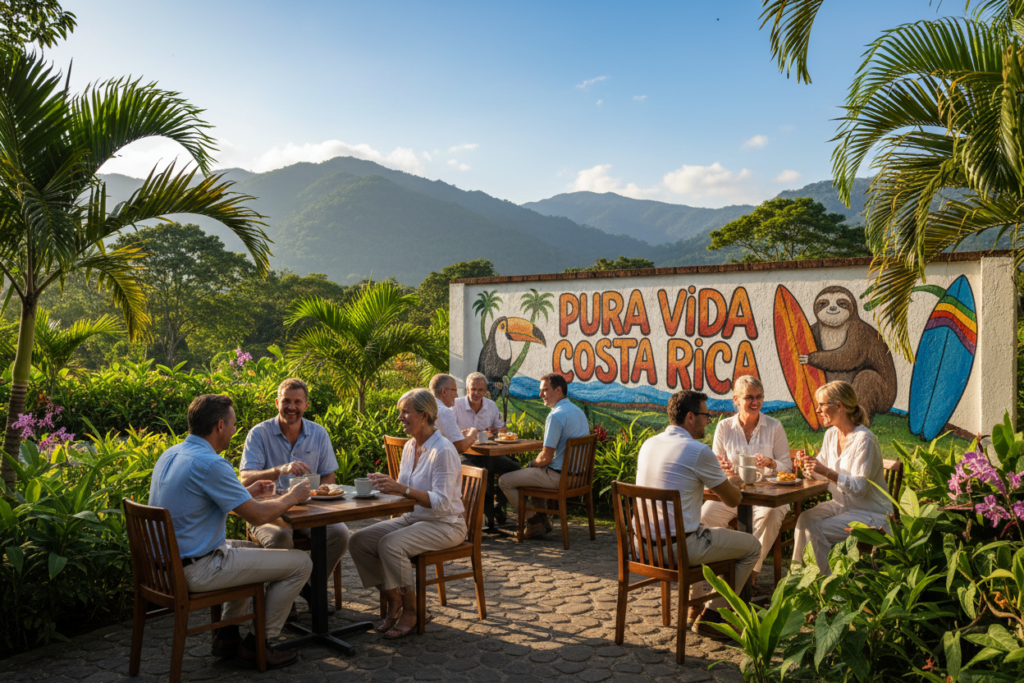
Life in Costa Rica offers tangible benefits that extend beyond postcard-perfect scenery. The climate is a genuine pro, with most areas enjoying temperatures between 70°F and 81°F year-round. You also live in a nation that has protected 27% of its land, a result of 50-year conservation policies.
Healthcare represents a major financial advantage. A doctor’s visit costs around $50, with public system premiums at 7-11% of income once you’re a resident. Another pro is property access—foreigners can buy in most areas with low 0.25% annual taxes.
The outdoor lifestyle becomes part of your routine. Surfing before work or a weekend hike is common. With hundreds of miles of coastline, beach access is a daily possibility in many coastal areas.
These pros are supported by stable communities and a peaceful culture. Established expat networks mean you’re not pioneering. For many, the advantages add up to a better quality of life, though it requires a lot of adaptation.
Understanding the Challenges of Living in Costa Rica
Beyond the idyllic scenery, daily life in Costa Rica involves navigating specific and persistent challenges. The high cost of living is a primary con, driven by steep import taxes. Cars, electronics, and imported foods carry significant price tags compared to North America.
Infrastructure frustrations are a regular part of life. Power outages occur during storms, and internet service can be unreliable in rural areas. Many roads are unpaved or potholed, often requiring a 4WD vehicle, especially in the rainy season.
Bureaucratic processes test your patience and time. Government offices have long waits, and rules can change without clear notice. Navigating these systems requires functional Spanish, as the language barrier is real for legal, medical, and administrative tasks.
Local work opportunities for foreigners are scarce due to protective labor laws. The country also faces natural risks like earthquakes and seasonal flooding. While Costa Ricans are welcoming, deep cultural integration requires sustained, long-term effort.
Residency Options with CRIE (Residencia) and Step-by-Step Guidance
Costa Rica provides clear legal pathways for foreign nationals seeking long-term residency. We specialize exclusively in guiding clients through these immigration processes. Understanding the specific categories is your first practical step.
Each program has distinct financial requirements. The right choice depends on your personal circumstances. We help you identify the most suitable pathway.
Pensionado (Pensionado): Meeting the $1,000+ Monthly Pension Requirement
This category is designed for retirees with a verifiable pension. You must prove stable income of at least $1,000 USD every month. The source can be Social Security, a government pension, or a private retirement fund.
Immigration requires official letters and bank statements. Documentation must show the income is permanent. We assist in gathering and presenting this proof correctly.
Rentista and Inversionista (Inversionista): Income and Investment Criteria
The Rentista pathway demands higher passive income. You need to prove $2,500 USD per month for two full years. This income must be guaranteed and not from active employment.
The Inversionista category requires a minimum $150,000 USD investment. This is often in real estate. Crucially, the property must be in your personal name, not a corporation.
We provide step-by-step guidance for these residency options. Our role is navigating the legal process with you. Final approval always rests with Costa Rican immigration authorities.
Preparing Essential Documents for Your Residency Journey
Navigating Costa Rica’s residency process begins long before you arrive, with gathering and authenticating key paperwork. The most reliable way to avoid months of delay is to start this critical phase from your current home. You have direct access to issuing authorities there, which simplifies resolving issues.
Apostilles, Translations, and Other Mandatory Paperwork
Core documents like birth certificates and police background checks require an apostille. This stamp authenticates them for international use. You must obtain it from the relevant state or federal office in the U.S.
Every document also needs an official Spanish translation. This must be done by a translator recognized by Costa Rica, known as a Traductor Oficial. Completing these steps before your move is non-negotiable.
Checklist for Documents Before Arrival
A general checklist includes a valid passport, apostilled birth certificate, and an apostilled police clearance. Remember, background checks are typically valid for only six months. Time their acquisition carefully.
Financial proof varies by your chosen residency category. Always verify the latest, specific requirements at the official migracion.go.cr website. We guide clients through this detailed checklist to ensure nothing is missed.
Common Pitfalls and Mistakes in the Residency Process
Navigating the residency process in Costa Rica is often where expats encounter their most significant hurdles. A costly error involves property ownership for the Inversionista category. Immigration law requires the $150,000 investment to be in your personal name, not a corporation.
Timing is another common issue. Background checks expire during processing, forcing a restart. Inadequate financial proof, like pension letters missing key details, can sink an application.
Translation shortcuts backfire. Using non-official translators leads to rejection and rework. Many also underestimate the timeline, which typically spans 6-12 months.
The “I’ll figure it out when I arrive” approach fails. You need apostilled documents ready before moving. Once submitted, you must monitor communications in Spanish and respond promptly.
Rules can change. Always verify current requirements at the official immigration website. This helps avoid the common disadvantages of Costa Rica residency process delays.
Digital Nomad vs. Residency: Choosing the Right Path
Costa Rica’s Digital Nomad visa offers a simplified entry for foreign workers, yet it comes with significant limitations. It is crucial to understand this is not a legal residency category. The status provides no pathway to permanent residency or citizenship.
Clarifying the Digital Nomad Status and Its Limitations
The Digital Nomad visa is a temporary permit for remote professionals. It allows stays up to two years while working for foreign employers. However, it does not grant the benefits of formal residency.
You cannot access the public healthcare system or count time toward citizenship. Your legal connection to the country expires when the visa ends. This makes it an extended workcation, not a foundation for long-term life.
Tax implications are different for this temporary status. While formal residents pay Costa Rican taxes only on local income, digital nomads may face complex reporting. We always recommend consulting a professional for personal tax advice.
For remote workers seeking genuine residency, the Rentista category is often the closest alternative. It requires proving $2,500 in monthly passive income. This provides actual residency status with a path to permanence.
Other options include Pensionado for retirees or Inversionista for investors. These programs offer true residency, not temporary authorization. We help clients evaluate which pathway aligns with their long-term goals.
Cultural and Lifestyle Adjustments for Expats in Costa Rica
Cultural integration in Costa Rica represents a fundamental shift in daily mindset and social interaction. It’s the difference between merely residing here and truly thriving. We emphasize that adjustment isn’t optional if you want a fulfilling life.
Learning Spanish and Integrating with Local Customs
Spanish proficiency is your most important tool. Healthcare, legal matters, and building relationships with locals require functional language skills. While English exists in tourist zones, it limits your access and depth of connection.
The “pura vida” lifestyle prioritizes people over schedules. Business meetings start with personal talk. A contractor may arrive late without a call. Embracing this slower pace is a genuine mindset change.
Costa Ricans are warm and welcoming. Yet, social integration has realistic limits. Even fluent speakers often remain “gringos” to many people. You’ll likely connect with English-speaking, educated locals.
Understanding local customs helps. Greetings involve light physical contact. Direct confrontation is avoided. A “maybe” often means no. Expat communities provide essential support networks. They offer shared resources and social activities. However, over-relying on this bubble can prevent genuine local integration.
Financial Considerations and Living Costs in Costa Rica
Understanding the true cost of living in Costa Rica means separating local lifestyle adaptations from imported comforts. Many retired couples live well on $2,000 a month by shopping at ferias and living simply. Those wanting North American amenities often spend $3,000 to $4,000 monthly.
Taxation, Banking, and Real Estate Insights
Housing costs vary widely. A three-bedroom home in the Central Valley starts near $119,000 to buy or $500 a month to rent. Beach condos cost more. Annual property taxes are a low 0.25% of the registered value.
Healthcare offers significant savings. Once a resident, public system premiums are 7-11% of your reported income. A private doctor visit costs about $50. Procedures can be 40-80% less than U.S. prices.
The tax structure benefits those with foreign income. Costa Rica taxes only locally-sourced earnings. Pensions and Social Security are not taxed here. However, a 13% value-added tax applies to most goods and services.
Banking requires patience. Opening an account involves lots of paperwork. Service can be slow, but certificate of deposit rates of 5-9% offer good savings potential. Import taxes make cars and electronics expensive.
Real estate purchases are straightforward for foreigners in most areas. The maritime zone has restrictions. For a detailed financial breakdown, see our guide on retiring in Costa Rica.
weighing-the-advantages-and-disadvantages-of-costa-rican-living-for-expats
Evaluating if Costa Rica suits you means looking beyond vacation memories to daily realities. The decision is deeply personal. It balances celebrated benefits against accepted frustrations.
For many, the quality of life here justifies the costs. The stable climate, natural beauty, and “pura vida” pace are powerful draws. These pros create a rewarding lifestyle for those who adapt.
Financial realities require honest budgeting. Healthcare and property taxes are affordable, but imported goods are not. Your location within the country also shapes your experience dramatically.
Cultural fit is crucial. Can you embrace a slower, relationship-focused pace? Success for expats hinges on realistic expectations and a willingness to integrate. For qualified retirees, the accessible Pensionado program is a significant advantage.
Ultimately, thriving in this country depends on your personal priorities. We encourage thorough research and self-assessment before making this life-changing move.
Building Expat Communities and Social Networks
Costa Rica’s long history as an expat destination has cultivated robust support networks across the country. These communities are well-established in various areas, from the Central Valley to coastal regions.
Connecting with Local Groups and Expat Circles
Expat communities provide immediate access to shared knowledge and English-language resources. They organize social activities and offer practical help with daily life challenges.
For families, these networks are essential. They coordinate youth sports and events that might not exist locally.
Many expats find friends quickly through local meetups and online groups. However, over-relying on this bubble can limit deeper cultural integration.
We advise balancing expat social circles with efforts to connect locally. Building relationships with English-speaking Costa Rican people enriches your experience in this beautiful country.
Initiating Your Residency Journey from Home
The most strategic step in your Costa Rica relocation begins not on a plane, but at your current kitchen table. Starting your document preparation from home is the best way to avoid frustrating delays later. You have direct access to issuing authorities for apostilles and background checks.
How to Contact CRIE (WhatsApp +506 8706 3888 | info@crie.cr)
Contacting us initiates a personalized consultation. We assess your eligibility across all residency options, including paths for retirees. Reach us via WhatsApp at +506 8706 3888 or email info@crie.cr. You can also visit www.crie.cr to review our exclusive immigration services.
Steps to Begin Your Research and Document Preparation
Begin by determining which residency category fits your situation. Then, gather required documents like birth certificates and police checks. The next steps are securing apostilles and official Spanish translations.
We guide you through this systematic process to ensure your application is complete. Remember, we provide guidance but cannot guarantee approval. Always verify the latest requirements at the official migracion.go.cr website.
Final Reflections on the Costa Rican Expat Experience
Final reflections on the Costa Rican expat experience center on balanced expectations. Many find life here rewarding despite genuine trade-offs. Success requires adapting to a different pace and system.
This country has been a premier destination for years. It offers a unique lifestyle with natural beauty and relative security. Yet, costs and bureaucracy are real considerations for living in Costa Rica.
Your decision is personal. Compare it to other countries if your priorities differ. For qualified retirees, the residency pathways are accessible with proper guidance.
We help you navigate this process. Contact CRIE for personalized services via WhatsApp at +506 8706 3888 or email info@crie.cr. Start your document preparation from home to save valuable time.
FAQ
What are the biggest pros and cons of moving to Costa Rica?
Is it expensive to live in Costa Rica as an expat?
What is the most common residency option for retirees?
FAQ
What are the biggest pros and cons of moving to Costa Rica?
The biggest advantages often include a peaceful lifestyle, beautiful natural settings, and a lower cost of living compared to many Western countries. The main challenges can be navigating residency paperwork, adapting to a different pace of life, and managing expectations around infrastructure and services in some areas.
Is it expensive to live in Costa Rica as an expat?
Living costs are generally lower than in the U.S. or Canada, but your budget depends heavily on lifestyle. Imported goods, certain utilities, and living in popular tourist or beach areas can be pricey. Many retirees and expats find they can live comfortably on a modest monthly income by shopping locally and adapting to the Costa Rican way of life.
What is the most common residency option for retirees?
The Pensionado program is very popular. It requires proof of a guaranteed lifetime pension of at least
FAQ
What are the biggest pros and cons of moving to Costa Rica?
The biggest advantages often include a peaceful lifestyle, beautiful natural settings, and a lower cost of living compared to many Western countries. The main challenges can be navigating residency paperwork, adapting to a different pace of life, and managing expectations around infrastructure and services in some areas.
Is it expensive to live in Costa Rica as an expat?
Living costs are generally lower than in the U.S. or Canada, but your budget depends heavily on lifestyle. Imported goods, certain utilities, and living in popular tourist or beach areas can be pricey. Many retirees and expats find they can live comfortably on a modest monthly income by shopping locally and adapting to the Costa Rican way of life.
What is the most common residency option for retirees?
The Pensionado program is very popular. It requires proof of a guaranteed lifetime pension of at least $1,000 per month. This residency category offers stability and is a clear path for many retirees seeking to call Costa Rica home.
Do I need to speak Spanish to live in Costa Rica?
A> While you can manage in tourist hubs and expat communities with English, learning Spanish is crucial for true integration, handling official matters, and building relationships with locals. It deeply enriches your daily life and experience in the country.
How does healthcare work for expats with residency?
Once you obtain legal residency, you can enroll in the public healthcare system, the Caja. It provides broad coverage at a low cost. Many expats also maintain private health insurance for faster access to specialists and certain facilities, using a two-tier system for comprehensive care.
What are the tax implications for foreign residents?
Costa Rica taxes residents on their worldwide income. However, it does not tax foreign-earned income for the first five years under some residency categories. You should consult with a local expert, like the team at CRIE, to understand your specific liabilities regarding property, bank accounts, and income.
Can I work remotely in Costa Rica on a tourist visa?
Legally, no. A tourist stamp does not permit you to work, even for a foreign employer. The Digital Nomad Visa is designed for this purpose, offering a legal status for remote workers. Overstaying a tourist visa to work can complicate future residency applications.
What’s the first step to start the residency process?
A> Begin by gathering your essential documents—like birth certificates and marriage licenses—and getting them apostilled and officially translated into Spanish. For clear, step-by-step guidance tailored to your situation, you can contact CRIE directly via WhatsApp at +506 8706 3888 or email at info@crie.cr.
,000 per month. This residency category offers stability and is a clear path for many retirees seeking to call Costa Rica home.
Do I need to speak Spanish to live in Costa Rica?
A> While you can manage in tourist hubs and expat communities with English, learning Spanish is crucial for true integration, handling official matters, and building relationships with locals. It deeply enriches your daily life and experience in the country.
How does healthcare work for expats with residency?
Once you obtain legal residency, you can enroll in the public healthcare system, the Caja. It provides broad coverage at a low cost. Many expats also maintain private health insurance for faster access to specialists and certain facilities, using a two-tier system for comprehensive care.
What are the tax implications for foreign residents?
Costa Rica taxes residents on their worldwide income. However, it does not tax foreign-earned income for the first five years under some residency categories. You should consult with a local expert, like the team at CRIE, to understand your specific liabilities regarding property, bank accounts, and income.
Can I work remotely in Costa Rica on a tourist visa?
Legally, no. A tourist stamp does not permit you to work, even for a foreign employer. The Digital Nomad Visa is designed for this purpose, offering a legal status for remote workers. Overstaying a tourist visa to work can complicate future residency applications.
What’s the first step to start the residency process?
A> Begin by gathering your essential documents—like birth certificates and marriage licenses—and getting them apostilled and officially translated into Spanish. For clear, step-by-step guidance tailored to your situation, you can contact CRIE directly via WhatsApp at +506 8706 3888 or email at info@crie.cr.
Do I need to speak Spanish to live in Costa Rica?
How does healthcare work for expats with residency?
What are the tax implications for foreign residents?
Can I work remotely in Costa Rica on a tourist visa?
What’s the first step to start the residency process?
Article by Glenn Tellier (Founder of CRIE and Grupo Gap)
Don't wait, contact us right now!
Call or WhatsApp Costa Rica +506 8373 2085 or +506 8706 3888
Call USA/Canada +1 305-906-6784