
Vehicle costs in Costa Rica involve several separate obligations: the annual marchamo, technical inspection, and—if you bring a vehicle from abroad—customs taxes and registration expenses. Check each item for the specific vehicle rather than relying on a single national percentage.
Marchamo 2027 at a glance
- Payment opens: Monday 2 November 2026, when INS opens its consultation and payment platform.
- Deadline: 31 December 2026. Interest and surcharges start from 1 January 2027.
- Check your amount: enter your plate on INS’s marchamo site or in the INS app. The official amount shows from 2 November.
- Where to pay: online with INS, at INS branches and service points, through authorised INS agents, or by phone on 800-TELEINS.
- New digital sticker: vehicles with a windscreen get an electronic sticker that lasts up to ten years. You stick it on the inside of the windscreen yourself; it breaks if removed. You still pay the marchamo every year. INS says it has no GPS. Motorcycles keep the usual marchamo for now.
- No more paper receipt: the proof of payment is digital and goes to the email you give when you pay. Keep it handy in case the traffic police ask for it.
- Insurance part (SOA): it rises on average for 2027, more for private cars, motorcycles and buses, and falls for taxis and cargo vehicles. Your total also depends on your vehicle’s property tax.
Checked on 21 October 2026 against INS announcements. Rules can change; confirm with INS before you pay.
What the marchamo includes
The marchamo collects the vehicle’s circulation charges, including mandatory motor insurance and applicable taxes or other items. Consult the official INS marchamo service for the bill and its breakdown. Percentages reported for the overall collection are not necessarily the proportions on your individual bill.
Hacienda’s vehicle self-service tool lets you consult vehicle characteristics, fiscal value and the vehicle property tax. A fiscal value used for annual property tax should not be treated as an automatic quote for all customs costs.
If vehicle details or the valuation appear incorrect, follow Hacienda’s current review procedure. Keep the bill, supporting documents and confirmation of any correction.
The announced digital marchamo change
In its official announcement, INS says distribution of the new digital-marchamo sticker will begin in November 2026, initially for vehicles with windscreens. The sticker is designed to last up to ten years; that does not mean ten years of circulation charges are paid at once.
INS states that the UHF sticker has no GPS and does not track vehicle location. It announces a digital circulation document from 2 November 2026 and collection for the 2027 marchamo beginning that day. These are announced arrangements as reviewed on 6 September 2026; follow INS’s implementation instructions when the collection period opens.
Payment and overdue amounts
Check the current collection calendar and pay before the applicable deadline. An unpaid balance may involve several types of charges; an interest or penalty percentage for one component should not be applied to the entire bill.
Confirm outstanding items and the current requirements for legal circulation before driving. This guide does not quote a fixed traffic fine because penalties and circumstances must be checked against the applicable rules.
Technical inspection: confirm your vehicle’s schedule
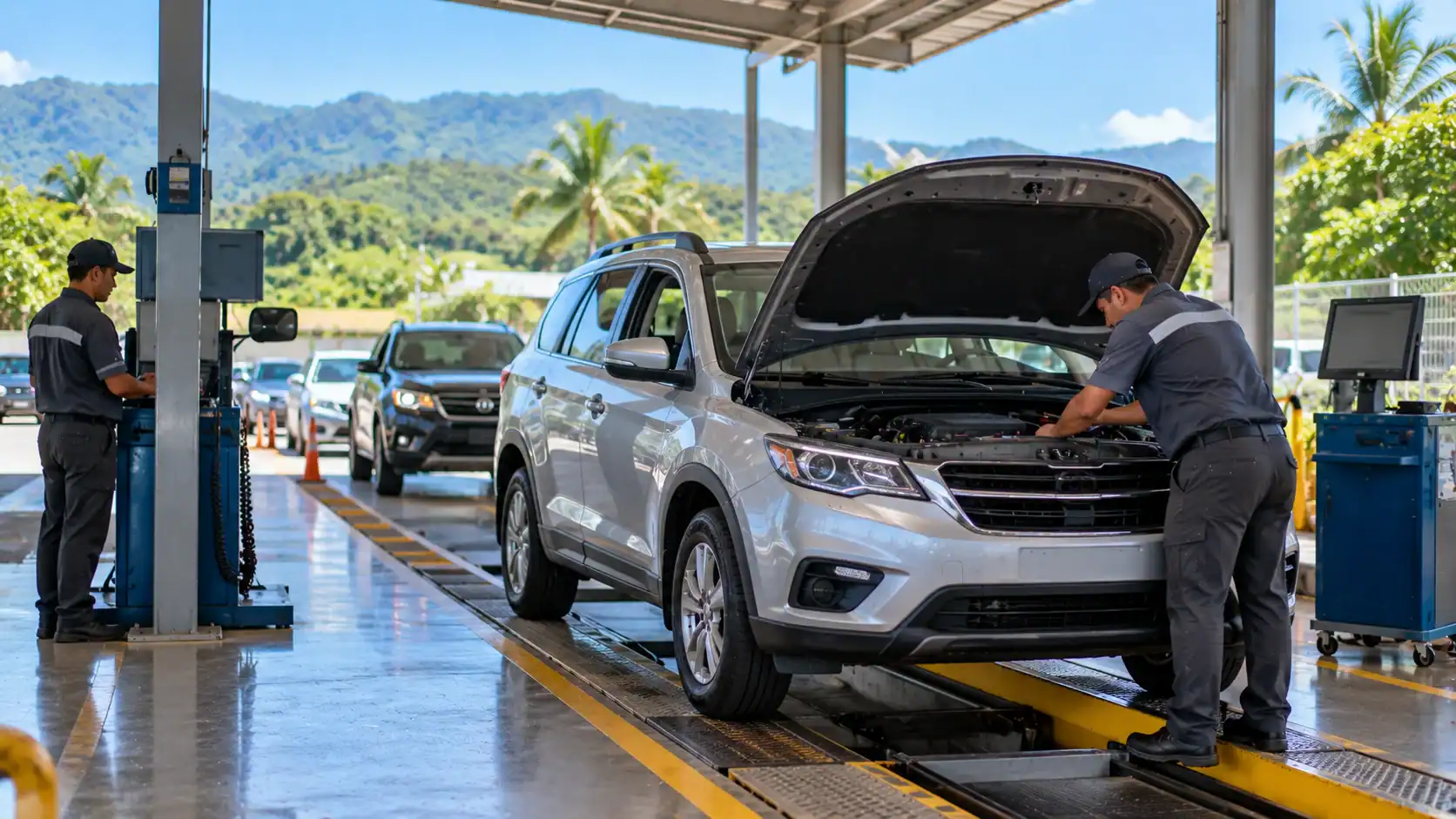
DEKRA’s official FAQ explains appointment arrangements and inspection schedules. Use the schedule for the vehicle’s category and registration circumstances, rather than assuming that every vehicle follows the same annual pattern. The FAQ also describes the option to inspect one month before the assigned month.
When booking, DEKRA requests the plate or DUA for a registration inspection, vehicle type, station, date and contact information. Check the documents required for your appointment and the licence needed by the person presenting the vehicle.
Inspection fees
The DEKRA tariff page, checked on 6 September 2026, listed these examples:
| Category | Inspection | Reinspection |
|---|---|---|
| Vehicle under 3.5 tonnes | ₡6,012 + IVA | ₡4,680 + IVA |
| Motorcycle | ₡4,562 + IVA | ₡3,877 + IVA |
| Electric, historic and other specified vehicle categories | ₡4,700 + IVA | ₡3,854 + IVA |
Consult the full list for other categories and confirm the applicable service. An inspection fee is separate from the marchamo.
Importing a vehicle: obtain an individual tax calculation
Do not use an age-only chart as a guaranteed import-tax quotation. Ask a qualified customs professional to identify the tariff classification, origin, valuation rules and applicable taxes for the exact vehicle. Supply its VIN, model year, specifications, purchase documents and shipping details.
Hacienda’s vehicle import-value tool describes its values and vehicle code as control parameters for determining the base of IVA and selective consumption tax at customs. ArancelNet provides tariff information. Neither a resale advertisement nor a generic online example settles the final customs assessment.
Ask which current resolution supports the valuation method in your estimate. A consultation draft or a past broker article should not be presented as the rule currently in force.
Compare the complete landed cost
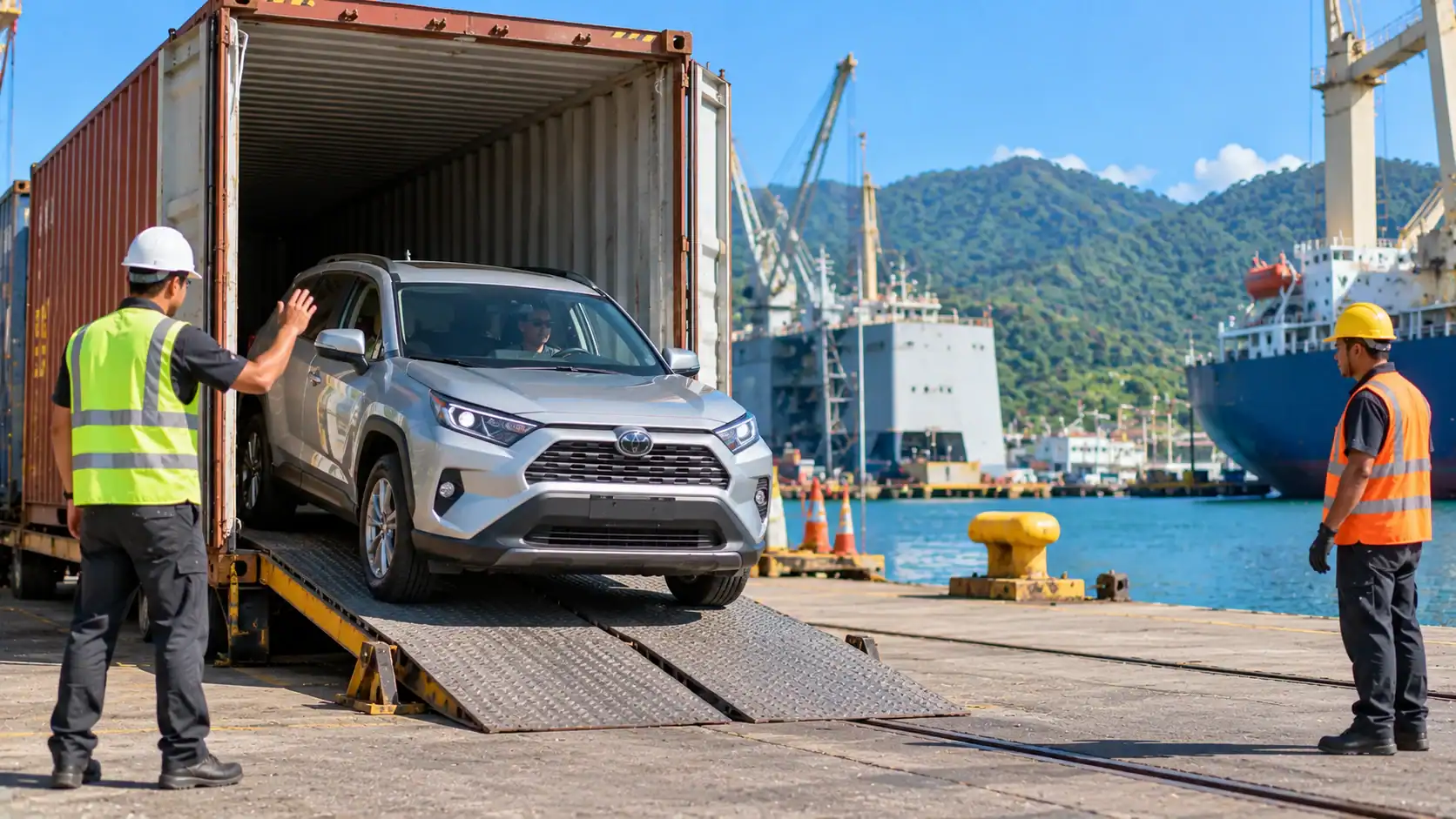
- Vehicle purchase price and any transport to the departure port.
- Freight, insurance and destination handling or storage.
- Applicable customs taxes and professional fees.
- Inspection, registration, plates and circulation charges.
- Repairs or modifications needed, plus local parts availability.
Get the assumptions in writing, including how currency conversion, delays or a different customs valuation could affect the total. Compare that estimate with a local vehicle of similar condition. Importing can make sense in some cases; this cannot be decided from a universal “yes” or “no.”
If you expect a tax exemption, verify eligibility and approval before shipping. Do not assume that an immigration category alone establishes an exemption for a particular vehicle.
Official INS, Hacienda and DEKRA information reviewed on 6 September 2026. Obtain a vehicle-specific calculation and check current implementation dates before paying or importing.
Thinking of moving to Costa Rica?
Get a free residency assessment. Tell Johanna, our immigration expert, about your situation, and she will tell you which residency fits you and what you need.
WhatsApp Johanna: +506 8373 2085Free assessment
Or email info@crie.cr