
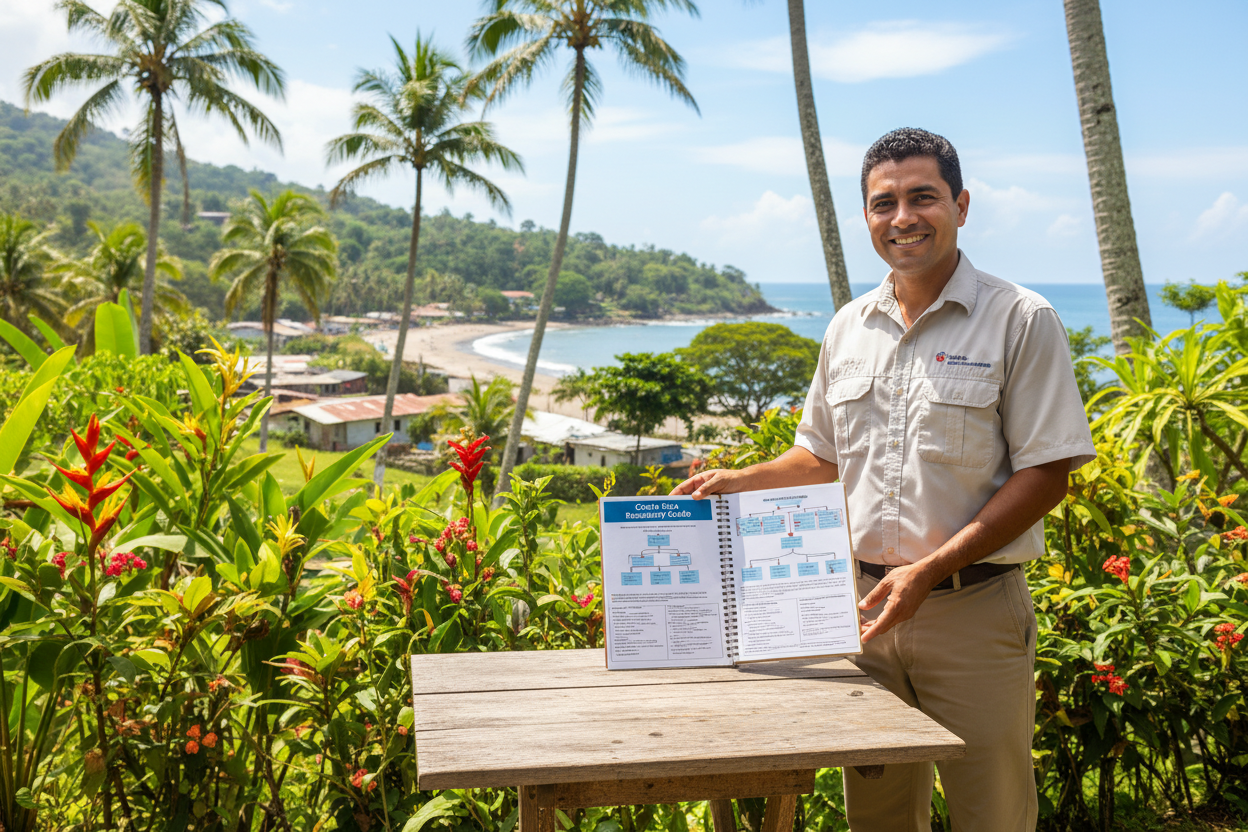
Nearly 70,000 Americans now call Costa Rica home, with that community growing about 14% each year. The appeal of a stable life amidst beaches and rainforests is clear. Yet, securing legal status requires navigating a detailed immigration process.
We’re CRIE, a provider of Costa Rica residency and immigration services. This guide offers a practical roadmap—not speed guarantees or pricing promises. We’ll walk you through who qualifies, what documents you need, and how the application process works.
A critical first step happens before you arrive. Organizing financial proof, securing apostilles, and arranging translations from home dramatically smooths the path. Understanding the specific requirements for your situation is essential.
Major pathways include the Pensionado, Rentista, and Inversionista programs. Each has distinct income or investment thresholds. The entire residency process typically takes between three and twelve months, depending on your category and preparation.
Introduction to Costa Rica Residency Options
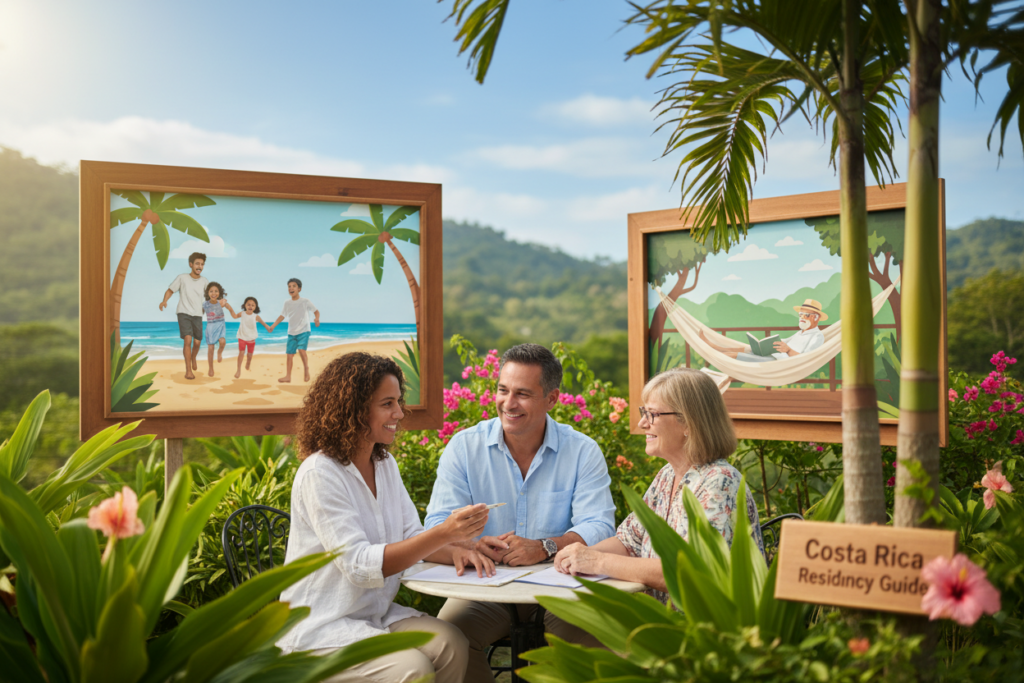
The foundation of a successful move to Costa Rica is built upon its Pensionado, Rentista, and Inversionista residency programs. These are the three primary pathways for foreign nationals seeking long-term legal status in the country.
Overview of Pensionado (Pensionado), Rentista (Rentista), and Inversionista
The Pensionado program is for retirees. It requires proof of a guaranteed lifetime pension of at least $1,000 USD per month.
Rentista residency serves individuals with stable passive income. You must show $2,500 USD per month for two years or make a $60,000 bank deposit.
The Inversionista category is for investors. It demands a minimum investment of $150,000 USD in local real estate or a business.
Clarifying the Digital Nomad Visa vs. Residency
Costa Rica also offers a Digital Nomad visa for remote workers. It requires $3,000 monthly income but is a temporary permit, not a residency.
This visa does not count toward permanent residency or citizenship. For remote workers seeking a real path to status, the Rentista option is the closest fit.
Understanding the Costa Rica Immigration Approval Timeline: Key Steps and Timelines
One of the most common questions we receive is about the duration of the residency application. The timeline is not a single fixed period. It depends heavily on your chosen category and the completeness of your file.
What to Expect from the Process
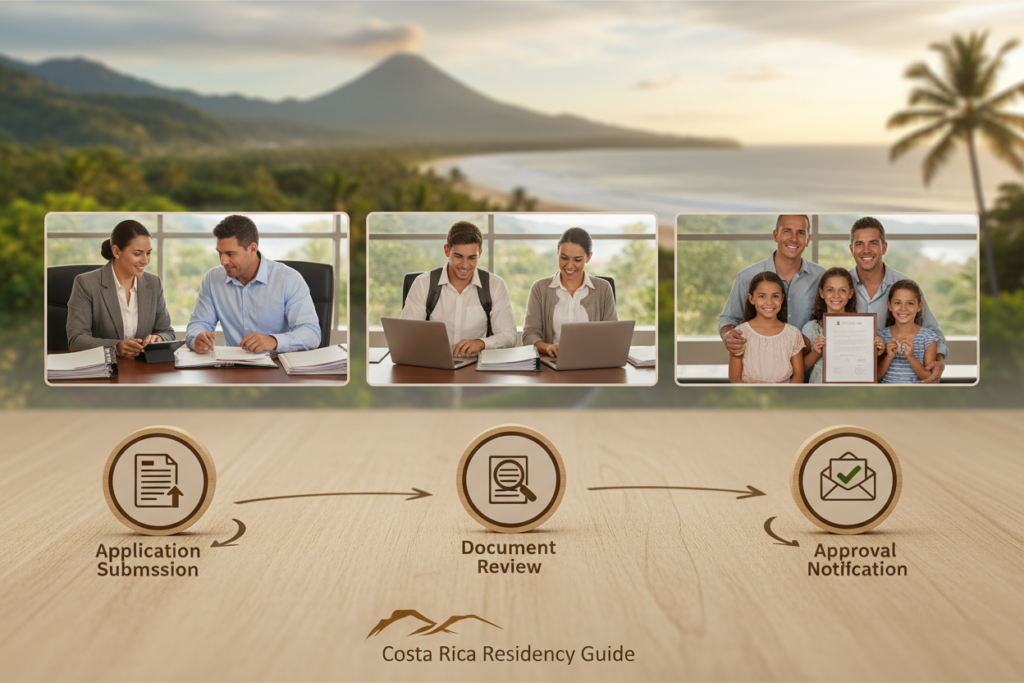
The immigration process unfolds in three main phases. First, you collect and authenticate documents from your home country. This can take several months if starting from scratch.
Second, you submit your application at the DGME offices in Costa Rica. Scheduling this appointment requires advance planning.
Finally, you enter the official waiting period for review and approval. Current estimates for 2024 show Pensionado taking 8-12 months, Rentista 6-10 months, and Inversionista 4-8 months. These are estimates, not guarantees.
Upon submission, you receive a comprobante (receipt). This document proves your application is pending. It allows you to stay in Costa Rica legally during the entire review period, even if your tourist visa expires.
If you must leave the country while waiting, you need an official exit permit. Leaving without it can cancel your application. We recommend building this realistic timeline into your plans. Many applicants submit their file and then temporarily return home to manage affairs.
For the most current official processing times, always verify directly at migracion.go.cr.
Who Qualifies for Costa Rica Residency?
Qualifying for legal status in Costa Rica hinges on meeting clear, documented criteria rather than personal desire. The government grants residency based on your ability to prove stable income, sufficient investment, or a genuine family connection.
Eligibility Requirements and Key Income Thresholds
For the Pensionado (Pensionado) category, you need proof of a permanent monthly pension of at least $1,000 USD. This must come from a guaranteed source like Social Security or a company retirement plan.
The Rentista (Rentista) program has a higher bar. You must show stable passive income of $2,500 USD per month for two years. Alternatively, a $60,000 deposit in a Costa Rican bank works.
The Inversionista category demands a minimum investment of $150,000 USD in local real estate or a business. A critical detail: the property must be in your personal name, not a corporation.
All pathways require a clean criminal record and authenticated personal documents. Family-based options exist for spouses, parents, or close relatives of Costa Rican citizens.
The key is proper documentation with apostilles and translations. We emphasize starting this verification work from your home country for a smoother process.
Preparing Your Documents Before Arrival
Successful residency applications are built on a foundation of meticulously prepared and authenticated documentation gathered well in advance. We emphasize starting this work from your home country because fixing document problems from abroad adds significant delays and stress to your process.
Apostilles, Translations, and Document Checklist
Your essential documents include a valid passport with six months’ validity, birth certificate, and marriage certificate if applicable. Each must receive an apostille (for Hague Convention countries) or consular authentication.
This certification, called an apostilla in Spanish, verifies the document’s authenticity for international use. Once authenticated, every paper requires translation into Spanish by an official translator within Costa Rica.
Pay special attention to criminal background checks. They’re only valid for six months from issue date. Time your application submission within this window.
Also check for name consistency across all documents. Mismatches between your passport, birth certificate, and other records will cause rejection. Create a detailed checklist for your specific residency category and verify it multiple times before traveling.
The Application Process: Step-by-Step Guidance
Submitting your residency application is a pivotal moment that requires careful execution. We provide clear guidance through each step to help you navigate this phase successfully.
How to Schedule and Submit Your Application at DGME
Your first action is to book a cita (appointment) via the DGME website. Create an account and schedule at least three to four weeks ahead due to backlogs in San José offices.
Before your meeting, visit any Banco de Costa Rica branch to pay the application fee—approximately $50 USD. Bring the payment receipt as proof; without it, your submission will be rejected.
On the day of your cita, bring all original documents with apostilles, official Spanish translations, and two sets of photocopies. Also bring passport photos, proof of Costa Rican address, and category-specific proofs like pension letters or bank statements.
At the DGME office, you’ll submit your package, provide fingerprints and a digital photo, and answer questions. You will receive an expediente (file) number for tracking. Write this number down and keep it safe.
Gathering and Organizing Required Documentation
We emphasize organizing your papers in labeled folders. Use a cover sheet listing every document. This professionalism helps the reviewing officer and reduces errors.
Upon submission, you’ll receive a comprobante (receipt). This document, combined with your passport, legally allows you to stay in Costa Rica during the entire processing period—even if your tourist visa expires.
The subsequent review involves verification of documents, background checks, and validation of your financial qualifications. You typically won’t hear updates unless there’s an issue, so thorough preparation is key.
Navigating the Waiting Period and Maintaining Legal Stay
Your legal status during the review period hinges on adhering to a few non-negotiable requirements. This phase, which can last several months, is not passive. You must actively manage your compliance to keep your application valid.
Managing Your Status While Awaiting Approval
Your comprobante receipt authorizes your legal stay in Costa Rica for the entire processing time. You do not need to exit every 90 days. This status is conditional on your application remaining active.
A mandatory step is enrolling in the CAJA healthcare system. This is required for all residency applicants. Monthly payments are income-based, typically ranging from $60 to $300.
CAJA provides comprehensive coverage without copays. If you must leave the country during this period, you must obtain an exit permit from DGME first. Leaving without this permit results in automatic cancellation of your residency application.
We recommend using this time productively. Establish local banking, secure long-term housing, and begin integrating into your new community. These steps ease your transition once final approval arrives.
Common Mistakes in the Residency Process
We consistently see the same critical mistakes derail otherwise solid residency applications in Costa Rica. These errors often relate to documentation and financial proof. Being aware of them can prevent costly delays.
Incomplete Documentation and Errors to Avoid
The most frequent error is submitting a criminal background check older than six months. This document expires, causing automatic rejection.
Name inconsistencies across your passport and birth certificate also raise red flags. Ensure all papers have apostilles and official Spanish translations.
Misunderstandings of Income and Investment Requirements
Many applicants mistakenly believe investment income qualifies for the Pensionado program. It does not—Pensionado requires guaranteed pension income.
For Rentista, you must prove the source of your $2,500 monthly income, not just show bank statements. Inversionista applicants often discover their property investment doesn’t qualify because the title must be in their personal name.
Language barriers and confusion about mandatory CAJA healthcare enrollment are other common pitfalls. Always work with a verified professional to avoid scams.
Special Considerations: Digital Nomad vs. Residency
A crucial distinction often overlooked by remote workers is the fundamental difference between a temporary visa and actual residency in Costa Rica. Many assume any long-term permit puts them on a path to permanent status. This is not the case with the popular Digital Nomad program.
Why the Digital Nomad Visa Doesn’t Count as Residency
The Digital Nomad visa requires $3,000 monthly income for individuals. It allows you to live and work remotely for a foreign employer for up to two years.
However, this visa is a temporary permit. It does not grant you residency status under Costa Rican immigration law. The years spent on it do not count toward permanent residency or citizenship.
This visa offers benefits like tax exemptions and no mandatory CAJA healthcare enrollment. Yet, it provides no progression toward long-term goals. When the visa expires, your time in the country resets to zero.
For remote workers seeking a real path to stay, we recommend the Rentista residency instead. It requires $2,500 monthly income and does count toward permanent status after three years.
The trade-off is CAJA enrollment and a longer application process. If your dream includes eventual citizenship, choosing the right category from the start saves years.
Expert Tips for a Smooth Residency Journey
The difference between a smooth residency journey and a frustrating one frequently lies in the quality of professional support you secure. We’ve guided hundreds of clients through Costa Rica’s residency process. Thorough preparation with expert guidance is the common thread in successful applications.
The Importance of Legal Guidance and Document Review
Legal guidance ensures your documents meet exact specifications. An experienced attorney reviews your apostilles, translations, and financial proofs. They catch errors like an expiring background check.
When choosing assistance, verify credentials like membership in Costa Rica’s Colegio de Abogados. Reasonable fees range from $600 for basic help to $5,000 for full-service packages. The cheapest option often leads to incomplete service and costly delays.
We position ourselves as guides for our clients, not promising outcomes. We ensure your application is complete and compliant. This professional support provides continuity throughout your entire residency journey.
Financial and Administrative Guidance Without Pricing Promises
Financial planning for your Costa Rica residency involves more than just the government’s official fees. A realistic budget must account for document preparation, mandatory healthcare, and ongoing administrative expenses.
We provide transparency by outlining typical costs, not specific quotes. Your total expenses will vary based on your category and preparation.
Understanding Official Fees and Document Expenses
Government fees are fixed. Expect roughly $50 for application filing, $100 for approval, and $123 for your DIMEX card. Document certification adds about $30 per paper.
Enrollment in the CAJA healthcare system is mandatory. Monthly premiums are income-based, typically $60 to $300. This system provides comprehensive care with no copays.
Document preparation creates upfront costs. Apostille services, official Spanish translations, and international shipping often add $500 to $1,000.
Professional legal fees vary widely. They reflect the expertise required to navigate the immigration process correctly. We do not make pricing promises for these services.
Consider a real-world example. A couple applying for Pensionado residency in 2023 reported total costs near $4,300. This included government fees, attorney assistance, document prep, and travel.
After approval, budget for annual costs. These include CAJA payments and DIMEX card renewal. For Inversionista applicants, the $150,000 minimum is an investment in local property or a business, not a fee.
Planning for these varied expenses leads to a smoother financial transition.
Transitioning from Temporary to Permanent Residency
Many residents view their temporary approval as the final goal, yet it’s actually the first phase in a multi-year process. Your initial status is a stepping stone toward greater stability and integration in Costa Rica.
Renewal Steps and Preparing for Citizenship
Temporary residency is typically valid for one to three years. You must file for renewal before it expires. This involves submitting updated proof of income or investment to the DGME.
Maintaining your path requires consistent compliance. Renew your DIMEX card on time and stay current with CAJA healthcare payments. You should also visit Costa Rica at least once per year if you travel frequently.
After three years of maintaining good standing, you become eligible for permanent residency. This status removes many work restrictions and requires far fewer administrative renewals.
Costa Rican citizenship becomes possible after seven years of legal residency. It requires passing a Spanish language and civics exam. U.S. citizens can maintain dual citizenship, enjoying the benefits of both passports.
Final Action Steps and Key Takeaways for Your Residency Journey
Taking the final step toward Costa Rica residency means translating knowledge into a clear, personalized strategy. Begin by identifying which residency option fits your financial situation and goals.
Start gathering and authenticating your documents now. Schedule your DGME appointment well in advance. Prepare your application thoroughly to avoid delays.
Budget for CAJA healthcare and all ongoing costs. An expert guide can simplify this complex process.
CRIE provides Costa Rica residency and immigration services only. We offer expert support without promises on approval speed.
Contact us via WhatsApp at +506 8706 3888, email at info@crie.cr, or visit www.crie.cr for a consultation. Your new life in Costa Rica awaits with proper preparation.
FAQ
What are the main residency options for moving to Costa Rica?
How long does the residency approval process typically take?
What are the most common mistakes people make in their application?
Does the Digital Nomad Visa lead to permanent residency?
Why is professional legal guidance important for this process?
What’s the difference between temporary and permanent residency?
Article by Glenn Tellier (Founder of CRIE and Grupo Gap)
Don't wait, contact us right now!
Call or WhatsApp Costa Rica +506 8373 2085 or +506 8706 3888
Call USA/Canada +1 305-906-6784