
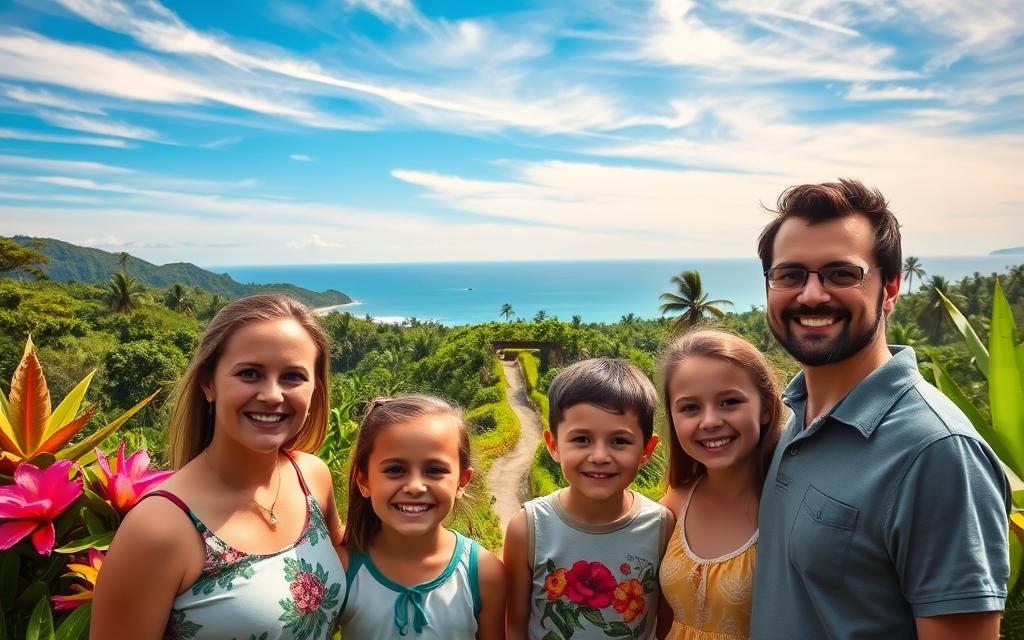
Moving to Costa Rica with your family can be a thrilling adventure, offering a unique blend of natural beauty and family-friendly culture. However, it requires careful planning to ensure a smooth transition.
Families considering relocating to Costa Rica need to consider several factors, including employment opportunities, education options, and healthcare access. Understanding the legal requirements and residency options is also crucial.
This guide draws from real experiences of families who have successfully made the move, offering practical advice and insights to help your family settle well in Costa Rica.
Why Families Choose Costa Rica
Costa Rica’s unique “pura vida” philosophy is a significant draw for families looking for a balanced and fulfilling lifestyle. This Central American country offers a blend of natural beauty, cultural richness, and a relaxed pace of life that appeals to families from around the world.
Natural Beauty and Outdoor Lifestyle
Costa Rica is renowned for its breathtaking landscapes, from lush rainforests to pristine beaches and majestic volcanoes. Families can enjoy a wide range of outdoor activities, including hiking, birdwatching, surfing, and zip-lining. The country’s commitment to environmental conservation not only provides a healthy living environment but also teaches children valuable lessons about sustainability and respect for nature.
Family-Friendly Culture
Costa Rican culture places a strong emphasis on family bonds and community connections, creating a welcoming atmosphere for expatriate families. The “pura vida” lifestyle promotes a balanced approach to life, prioritizing well-being, personal connections, and enjoying the present moment. Families come together for big meals, celebrate festivals, and participate in community activities, fostering a strong sense of family and cultural identity.
Quality of Life Benefits
Families in Costa Rica experience a significant improvement in their quality of life, thanks to access to fresh foods, outdoor activities, and a slower pace that allows for more quality time together. The country’s stable political climate and peaceful governance provide a sense of security and stability. Moreover, raising children in a bilingual environment offers cognitive and cultural benefits that will serve them throughout their lives.
- Costa Rica’s diverse landscapes offer endless opportunities for outdoor adventures.
- The country’s emphasis on environmental conservation instills important values in children.
- Costa Rican culture welcomes expatriate families with its strong family bonds.
- The “pura vida” lifestyle promotes a balanced and fulfilling life.
Income and Employment Opportunities
With its welcoming environment and diverse economy, Costa Rica provides numerous opportunities for families to secure their financial future. When considering a move to Costa Rica, families must think about how they will earn a living in their new home.
Working Online and Digital Nomad Options
Costa Rica has become a haven for digital nomads, thanks to its reliable internet infrastructure and growing community of remote workers. As of July 2022, Costa Rica introduced a digital nomad visa, allowing remote workers to stay in the country for up to two years. This visa category is particularly attractive for families with location-independent careers, enabling them to maintain their income streams while enjoying the benefits of living in Costa Rica.
The digital nomad visa program is a significant draw for expatriate families, as it provides a legal pathway to reside in Costa Rica while continuing to work online. With its lush landscapes and vibrant culture, Costa Rica is an ideal location for remote work, offering a unique blend of productivity and leisure.
Starting a Business in Costa Rica
Starting a business in Costa Rica presents viable opportunities, particularly in tourism, sustainable products, and services catering to both locals and the expatriate community. Entrepreneurs should be aware of the legal restrictions that limit foreigners’ roles in businesses until they obtain permanent residency, typically requiring local partners or employees.
For those looking to start a business, Costa Rica offers a range of options, from eco-tourism ventures to innovative tech startups. By understanding the local business environment and regulations, entrepreneurs can capitalize on the country’s growing economy.
Working for Costa Rican Companies
Working directly for Costa Rican companies can be challenging without permanent residency, as the government prioritizes job opportunities for locals. However, exceptions exist in specialized fields like education, where expatriates can bring valuable expertise to the local workforce.
Families moving to Costa Rica should be prepared to navigate the local job market and understand the requirements for securing employment. By having substantial savings as a safety net, families can maintain financial stability while establishing their income streams in their new home.
Choosing the Right Location for Your Family
When relocating to Costa Rica with family, one of the most critical decisions is choosing the right location. The diverse environments and communities across Costa Rica offer a wide range of lifestyles, making this decision crucial for family happiness.

Popular Expat Communities
Many families relocating to Costa Rica prefer areas with a significant expat population for the sense of community they provide. Popular expat areas include Jaco, Tamarindo, Playas del Coco, Nosara, Manuel Antonio, and Uvita/Dominical. These locations offer established infrastructure, English-speaking services, and social networks that ease the transition for new families.
Jaco and Manuel Antonio are conveniently located near San Jose, while Tamarindo and Playas del Coco are close to Liberia, with its international airport and shopping facilities. These areas also have a good selection of schools, making them attractive to families.
Urban vs. Rural Considerations
The choice between urban and rural locations depends on the family’s priorities. Urban areas like the Central Valley region offer proximity to San José’s amenities, international schools, and specialized healthcare. In contrast, rural locations provide authentic cultural immersion and natural beauty but may require adapting to limited services and infrastructure challenges.
Proximity to Essential Services
Families should consider the proximity to essential services such as grocery stores, medical facilities, and transportation hubs when choosing their Costa Rican home. Visiting potential locations during different seasons before committing can help identify the best fit for their needs and preferences. The expat community in various regions can also provide valuable support networks and practical advice for newcomers.
Education Options for Children
Costa Rica offers a range of education options for children, from public schools to private international institutions. Families relocating to Costa Rica must consider several factors when selecting the ideal educational pathway for their children.
For more information on relocating to Costa Rica, including costs and logistics, you can refer to our comprehensive guide on relocation costs.
Public Schools
Public schools in Costa Rica operate in Spanish, following the national curriculum. The school year runs from February to November, with a break in December and January. While public schools offer cultural immersion, they might be challenging for non-Spanish-speaking kids due to the language barrier.
Private and International Schools
Private and international schools in Costa Rica provide education in English or bilingual programs, following American, European, or International Baccalaureate curricula. Tuition fees vary significantly, ranging from $300 to $1,000+ monthly. Some private schools have a mix of Costa Rican and expat kids, offering a diverse learning environment.

Homeschooling Considerations
Homeschooling is another option for families in Costa Rica, although the country’s law does not officially recognize it. Many expatriate families maintain their children’s education through online programs or self-designed curricula. Homeschooling provides flexibility and can be tailored to a child’s individual needs.
Healthcare and Medical Facilities for Families
Costa Rica offers a unique blend of public and private healthcare options for families. This blend is a significant factor in the country’s appeal to expat families, providing them with comprehensive and affordable medical care. The country’s healthcare system is considered top-notch in Latin America.
Public Healthcare System (CCSS)
The public healthcare system in Costa Rica, known as the Caja Costarricense de Seguro Social (CCSS), provides comprehensive coverage for legal residents. The CCSS is funded by income-based contributions, ranging from 7% to 11% of monthly income. It focuses on preventive care, managing chronic diseases, and specialized treatments.
Private Healthcare Options
Costa Rica also boasts a strong private healthcare system, offering high-quality medical care with English-speaking doctors and modern equipment. Private healthcare facilities in major cities provide shorter wait times compared to the public system. Visiting a doctor costs between $60 to $75, and specialist consultations are around $100.
Pediatric Care and Family Medicine
Pediatric care is readily available in urban areas, with many private healthcare facilities offering specialized services. For families living in more remote regions, specialized pediatric services may require travel to San José. For more information on finding a family doctor in Costa Rica, families can visit https://crie.cr/finding-a-family-doctor-in-costa-rica/ to research their options.
Families should research healthcare options thoroughly and prepare questions about coverage, accessibility, and emergency services before finalizing their relocation plans. Both public and private hospitals offer maternity services at a fraction of the cost compared to the United States, making Costa Rica an attractive destination for families.
Tips for Moving to Costa Rica with Family
With its lush landscapes and welcoming culture, Costa Rica is an attractive destination for families looking to relocate. A successful move requires careful planning and preparation.
Essential Documents and Legal Requirements
Understanding the residency requirements in Costa Rica is crucial for families. To apply for residency, families will need to gather essential documents, including birth certificates, marriage certificates, police clearances, and school records, all of which should be apostilled.
- Research residency options carefully, with categories like Rentista, Pensionado, and Inversionista being most common for expatriates with children.
- Working with an experienced immigration attorney can simplify the residency process and help navigate Costa Rican bureaucracy.
What to Bring vs. What to Buy Locally
When packing for the move, prioritize items that are expensive or difficult to find locally, such as specific electronics and specialty foods. Many household goods and furniture can be purchased locally at reasonable prices, saving on shipping costs and supporting the local economy.
Transportation Considerations
Transportation options in Costa Rica vary widely by region. Families can choose to import a vehicle, although this can be expensive due to high import taxes, or purchase locally. Public transportation is excellent in urban areas but limited in rural locations, making car ownership essential for many families.
- Establishing banking relationships, setting up utilities, and securing insurance are practical things to address early in the relocation process.
- Families should plan for an adjustment period of at least six months, during which flexibility and patience will be essential qualities for all family members.
Cultural Adaptation and Lifestyle
As families settle into their new life in Costa Rica, they must navigate the process of cultural adaptation. This involves adjusting to the local customs, language, and way of life.
Learning Spanish and Communication
Learning Spanish is essential for families adapting to life in Costa Rica. It enhances daily interactions, builds deeper connections with local people, and demonstrates respect for the culture. Costa Rican Spanish has its own unique expressions and slang, and kids often pick up the language more quickly than their parents through immersion in schools and play.
Embracing the Pura Vida Lifestyle
The Pura Vida lifestyle represents more than just a saying—it’s a way of approaching life with positivity, patience, and an appreciation for simple pleasures. Many expatriate families come to embrace this lifestyle, which is characterized by a relaxed attitude towards life and a focus on enjoying every moment.
Building Community and Social Networks
Building community connections happens through participation in local events, volunteering, joining expatriate groups, and engaging with neighbors in authentic ways. Life in Costa Rica often involves adapting to different shopping patterns, meal times, and social customs that reflect the country’s unique cultural heritage.
- Participate in local events to meet new people and build connections.
- Join expatriate groups to connect with others who share similar experiences.
- Engage with neighbors and local community members to build relationships.
By embracing the local culture and building community connections, families can create a rich bicultural experience in Costa Rica. Patience and a sense of humor are essential qualities for navigating the inevitable challenges that arise during cultural adaptation.
Conclusion
Relocating to Costa Rica with your family can be a life-changing decision, offering a unique blend of cultural immersion and natural beauty. As you’ve seen, Costa Rica is renowned for its stunning landscapes, stable political system, and family-friendly culture, making it a top choice for families.
To ensure a smooth transition, it’s crucial to research thoroughly, considering factors like living costs, education options, and healthcare facilities. For more insights, you can explore resources like essential tips for moving to Costa. Families who take the time to plan are more likely to have a successful relocation experience.
The experience of raising kids in Costa Rica can provide them with bilingual abilities, a deep appreciation for nature, and unique cultural perspectives that will benefit them for years to come. With its welcoming attitude towards families and a lifestyle that promotes a high quality of life, Costa Rica can become a true home for expatriate families.
Call or WhatsApp CR: +506 8373-2085 or + 506 8706-3888
Call us from the USA: +1 305 906-6784
Call us from Canada: +1 416 900-5773
Article by Glenn Tellier (Founder of CRIE and Grupo Gap)
Don't wait, contact us right now!
Call or WhatsApp Costa Rica +506 8373 2085 or +506 8706 3888
Call USA/Canada +1 305-906-6784