
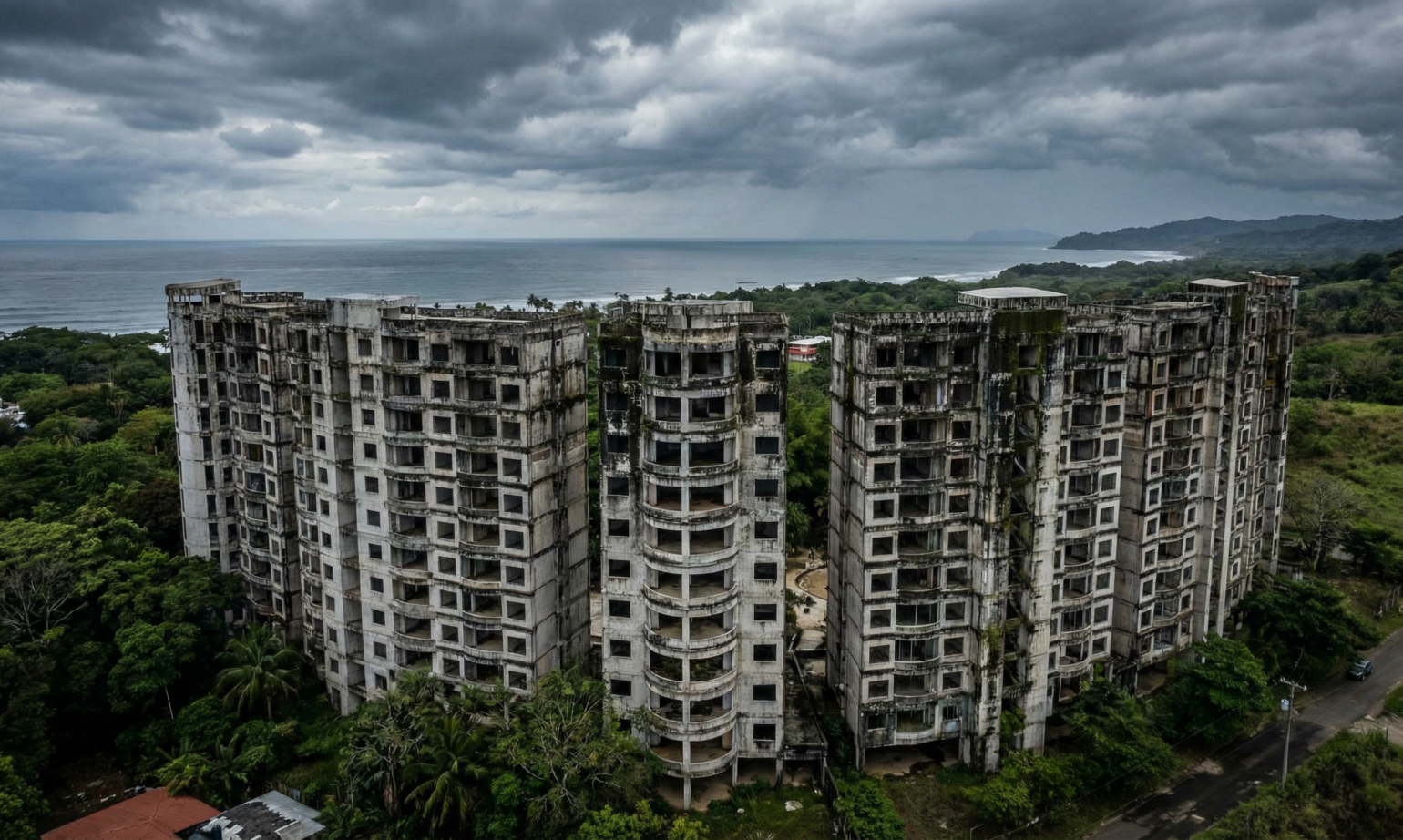
Once hailed as the future of luxury tourism in Costa Rica, the Sonesta Jacó Resort and Beach Club now stands as a haunting monument to unfulfilled dreams. Its skeletal remains, overlooking the Pacific, serve as a stark reminder of a financial catastrophe that left investors shattered and a community wondering what went wrong. This is the story of the rise and fall of the Sonesta project—a cautionary tale of ambition, legal battles, and the unpredictable nature of large-scale development.
The Grand Vision: A $70 Million Coastal Paradise

In the mid-2000s, Jacó was a booming beach town, attracting surfers, tourists, and expatriates drawn to its vibrant energy and stunning coastline. Riverside Developers, led by Joshua Ten Brink, saw an opportunity to redefine luxury in the region. Their vision was the Sonesta Jacó Resort, a sprawling $70 million project featuring over 200 opulent oceanfront condominiums, gourmet restaurants, a world-class spa, and cascading infinity pools.
The project was ambitious in every sense. The architectural plans showcased a modern, curved high-rise structure that would dominate the Jacó skyline while offering residents and guests unparalleled views of the Pacific Ocean. Each condominium was designed with premium finishes, spacious balconies, and access to resort-style amenities that promised a lifestyle of comfort and exclusivity. The development was marketed not just as a real estate investment, but as an entry point into Costa Rica’s burgeoning luxury tourism sector.
By 2007, the project had secured significant financing from the prestigious Central American Bank for Economic Integration (CABEI) and other private banks. With construction well underway and an aggressive marketing campaign, the dream quickly found buyers. By 2008, with construction reported to be over 80% complete, an estimated 75% of the condominiums were already sold. The future looked bright, and investors believed they were on the cusp of owning a piece of paradise.
The Sonesta hotel chain itself had already begun preparations to manage the property, lending credibility and prestige to the project. For many investors, the involvement of an internationally recognized brand was a sign that their money was in safe hands. The excitement was palpable, and the project was seen as a landmark achievement for Jacó and Costa Rica’s Pacific coast.
The Unraveling: A Cascade of Legal and Financial Disputes
The project’s momentum came to a screeching halt in 2009. CABEI, the primary financier, accused Riverside Developers of breaching their loan agreement. Instead of providing an opportunity to rectify the alleged breach, the bank accelerated the debt repayment, effectively cutting off the project’s financial lifeline. This single decision triggered a domino effect that would prove fatal.
The dispute quickly escalated into a protracted legal battle within the Costa Rican court system. While lawyers argued, construction ground to a halt in 2010. The promised delivery dates came and went, and the once-bustling construction site fell silent. The Sonesta hotel chain, which had already begun managing the property, was left with an empty shell. For the 155 investors who had poured their savings into the project, the dream had turned into a nightmare, with estimated losses totaling around $16 million.
According to legal experts familiar with the case, CABEI’s decision to accelerate the debt was controversial and potentially violated the terms of the original loan agreement. The developers attempted to negotiate with the bank, seeking a resolution that would allow construction to continue, but their efforts were met with resistance. The bank’s refusal to engage in meaningful dialogue left the project in a legal quagmire, with no clear path forward.
The financial collapse of the Sonesta project sent shockwaves through Costa Rica’s real estate community. Investors who had trusted in the project’s promise found themselves with no recourse, their deposits and payments lost in the legal maze. Many had planned to retire in their Jacó condominiums, while others had viewed the purchase as a sound investment in a growing market. Instead, they were left with nothing but broken promises and mounting frustration.
The Aftermath: An Abandoned Monument to a Failed Dream
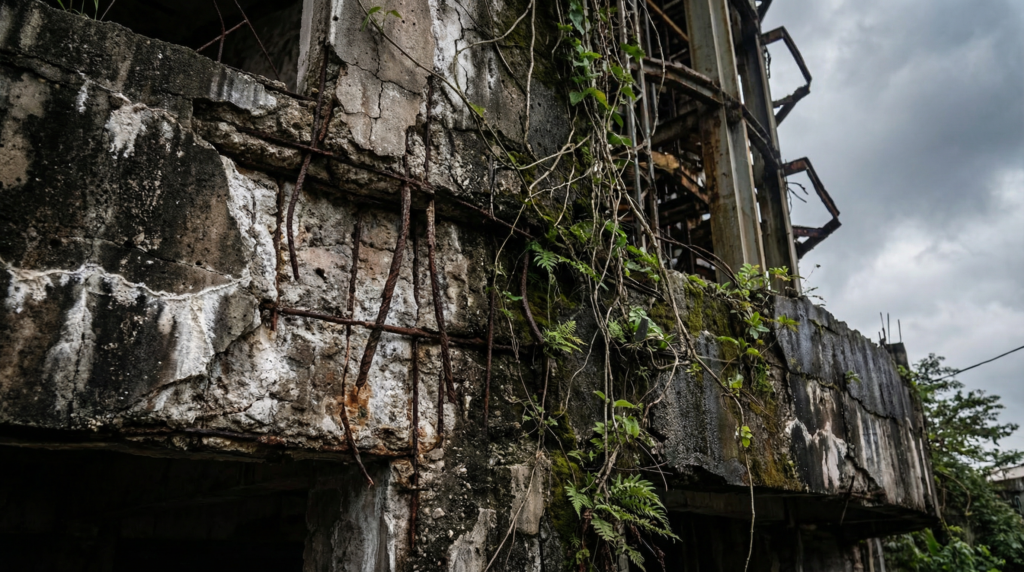
More than fifteen years later, the Sonesta Jacó Resort remains an unfinished ghost. The massive concrete structure, now heavily guarded and surrounded by barbed wire, is slowly being reclaimed by the salt-laced air and tropical climate. What was designed to be a beacon of luxury has become a local landmark for all the wrong reasons—a symbol of financial ruin and a stark warning to the development community.
The site is a constant topic of conversation among locals and tourists alike. Some see it as a tragic eyesore, while others view it as a fascinating piece of modern ruins. Urban explorers and photographers are drawn to its eerie, abandoned corridors, capturing images that tell a story of decay and neglect. The project’s failure has left a permanent scar on the Jacó landscape, both physically and economically.
The physical deterioration of the structure is striking. Years of exposure to the coastal elements have taken their toll. Concrete surfaces are cracked and stained, rusted rebar protrudes from unfinished walls, and tropical vegetation has begun to reclaim portions of the site. The once-pristine vision of a luxury resort has been replaced by a haunting reminder of what could have been.
Local residents have mixed feelings about the abandoned resort. Some view it as a blight on the community, a constant reminder of failed dreams and lost opportunities. Others see it as a cautionary symbol that serves an important purpose—reminding investors and developers of the risks inherent in large-scale projects. The structure has even become a dark tourist attraction of sorts, with visitors seeking out the site to witness the scale of the failure firsthand.
The Impact on Jacó and the Broader Community
The failure of the Sonesta project had ripple effects that extended far beyond the immediate investors. Local contractors, suppliers, and workers who had been employed during the construction phase suddenly found themselves without work. The economic boost that the project had promised to bring to Jacó evaporated overnight, leaving a void in the local economy.
The abandoned structure also raised questions about oversight and regulation in Costa Rica’s real estate sector. How could such a large project, backed by a prestigious regional bank, collapse so spectacularly? The case highlighted gaps in consumer protection and the need for stronger legal frameworks to safeguard investors in pre-construction developments.
For Jacó, the Sonesta project became a cautionary tale that tempered the enthusiasm for future large-scale developments. While the town continues to attract investment and tourism, the ghost of the Sonesta resort serves as a constant reminder of the risks involved. Developers proposing new projects in the area now face greater scrutiny from both the community and potential investors.
The Lingering Questions: Could the Project Be Revived?
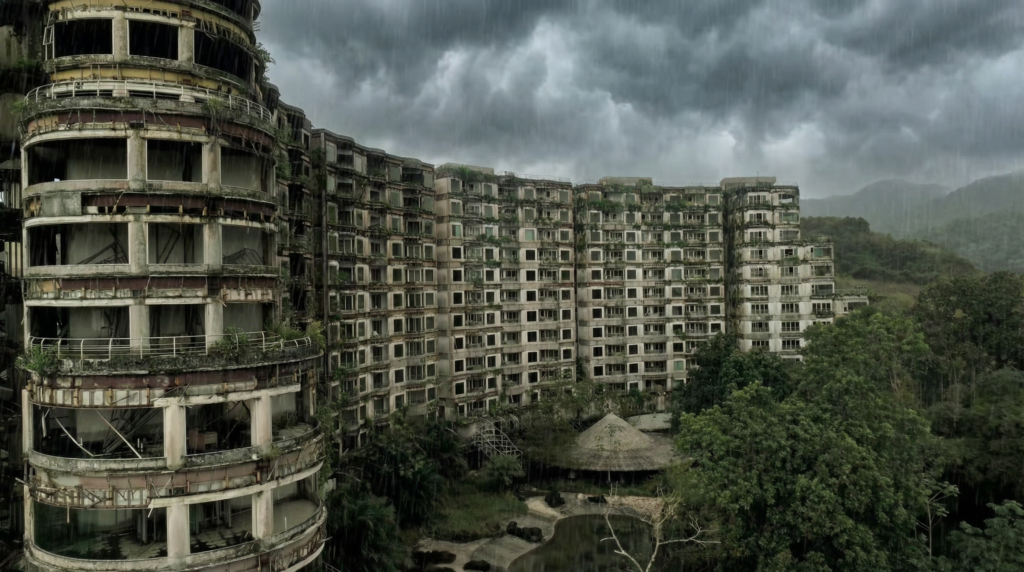
Despite the years of abandonment, the question of revival continues to surface. The project’s developers have reportedly sought reconciliation with the banks, hoping to find a path forward, but to no avail. The property remains under the control of a private bank, with no clear plans for its future. The cost of completing the project, coupled with the extensive repairs needed after years of neglect, makes any potential revival a monumental undertaking.
Community members have proposed alternative uses for the structure, from a public hospital to a community center, but none have gained traction. The legal and financial complexities surrounding the property have created a stalemate that seems impossible to break. For now, the Sonesta Jacó Resort remains in limbo, a silent testament to a grand vision that crumbled under the weight of its own ambition.
The question of revival is complicated by several factors. First, the legal disputes between the original developers and CABEI remain unresolved, creating uncertainty about who has the right to move forward with the property. Second, the cost of completing the project has likely increased significantly due to inflation, updated building codes, and the need to repair damage caused by years of neglect. Third, the market conditions that made the project attractive in the mid-2000s have changed, and it’s unclear whether there would be sufficient demand for luxury condominiums in Jacó today.
Some real estate experts believe that the property could be repurposed for a different use, such as a mixed-use development combining residential, commercial, and hospitality elements. Others suggest that the structure could be demolished and the land redeveloped from scratch. However, any such plans would require resolving the legal disputes and securing new financing—both formidable challenges.
Lessons for Investors in Costa Rica
The story of the Sonesta Jacó project offers critical lessons for anyone considering investing in real estate in Costa Rica, particularly in large-scale, pre-construction developments. It underscores the importance of comprehensive due diligence, understanding the legal framework, and ensuring that any investment is protected by solid contracts and transparent financing.
Conduct Thorough Due Diligence: Before investing in any pre-construction project, research the developer’s track record, financial stability, and previous projects. Verify that all necessary permits and approvals are in place, and ensure that the financing structure is sound.
Understand the Legal Framework: Costa Rica’s legal system can be complex, especially for foreign investors. Work with a reputable local attorney who specializes in real estate to review all contracts and ensure that your investment is protected. Understand the risks associated with pre-construction purchases and the legal recourse available if the project fails.
Diversify Your Investments: Avoid putting all your resources into a single project, no matter how promising it may seem. Diversification can help mitigate the risk of catastrophic loss if a project fails.
Be Wary of Presale Projects: While presale projects can offer attractive pricing, they also carry significant risk. If possible, consider investing in completed properties or developments with a proven track record of delivery.
While Costa Rica remains an attractive destination for investment, the Sonesta case proves that even the most promising projects can fail. It highlights the inherent risks of development in a foreign market and serves as a powerful reminder to proceed with caution. If you’re considering residency or investment in Costa Rica, understanding the legal landscape is paramount.
Frequently Asked Questions
What was the Sonesta Jacó Resort supposed to be?
The Sonesta Jacó Resort was a planned $70 million luxury development featuring over 200 oceanfront condominiums, a hotel, spa, restaurants, and high-end amenities. It was one of the most ambitious private projects in Costa Rica at the time.
Why was the Sonesta project in Jacó abandoned?
Construction was halted in 2010 due to a financial dispute between the developer, Riverside Developers, and the primary lender, the Central American Bank for Economic Integration (CABEI). The bank accelerated the debt, leading to a legal battle and the eventual abandonment of the project.
Who was the developer of the Sonesta Jacó project?
The project was led by Joshua Ten Brink of Riverside Developers.
How much money was lost in the Sonesta Jacó project?
It is estimated that investors lost approximately $16 million in the project’s collapse.
Can you visit the abandoned Sonesta resort in Jacó?
No, the site is on private property and is heavily guarded with fences, barbed wire, and 24-hour security. It is not open to the public, and trespassing is illegal.
What is the current status of the Sonesta Jacó project in 2025?
As of 2025, the project remains abandoned and has been for over 15 years. The structure is in a state of decay, and there are no official plans to resume construction or redevelop the site.
Are there other similar abandoned projects in Costa Rica?
While the Sonesta Jacó project is one of the most prominent examples, any large-scale development carries risks. Its failure serves as a cautionary tale for investors and developers in Costa Rica’s booming real estate market.
What does this story teach us about investing in Costa Rica?
The Sonesta project highlights the importance of thorough due diligence, secure financing, and strong legal contracts when investing in real estate, especially in pre-construction projects in a foreign country.
Conclusion
The unfinished Sonesta Jacó Resort is more than just an abandoned building; it’s a narrative of ambition, risk, and the harsh realities of real estate development. Its story is woven into the fabric of Jacó’s modern history, offering a somber lesson on the fragility of grand designs. While the ghost of the Sonesta project lingers, the allure of Costa Rica for investors and future residents remains strong. However, the lessons learned from this cautionary tale should guide anyone considering investment in the country’s real estate market. Proceed with caution, conduct thorough research, and always protect your interests with sound legal advice.
Article by Glenn Tellier (Founder of CRIE and Grupo Gap)
Don't wait, contact us right now!
Call or WhatsApp Costa Rica +506 8373 2085 or +506 8706 3888
Call USA/Canada +1 305-906-6784