
The Sonesta project in Jacó is a historical hotel and condominium development also associated with the name One Jaco Place. Old announcements, unfinished-building photographs and later reporting can be confusing when they appear together in search results. They should not be treated as a current booking offer or proof that a property is available for sale.
What was the Sonesta Jacó project?
An Associated Press report published by La Nación in January 2007 described an alliance between Sonesta and Riverside Developers to operate and administer a project previously called One Jaco Place. The report gave a planned construction value of about US$70 million and described a hotel-and-condominium development. Those were announced plans, not a statement of what was ultimately delivered.
Sonesta’s own 2007 annual report, filed with the U.S. Securities and Exchange Commission, described Sonesta Jaco Resort as under construction and anticipated an early-2009 first-phase opening. That confirms a historical brand connection. It does not establish current ownership, a continuing management agreement or present operating status.
What happened after the announcement?
The project became the subject of litigation. A judicial record concerning the One Jacó development discusses its financing and trust arrangements. A pleading’s requested damages are not the same thing as an award, and an account from one party should not be presented as a court’s finding of fault.
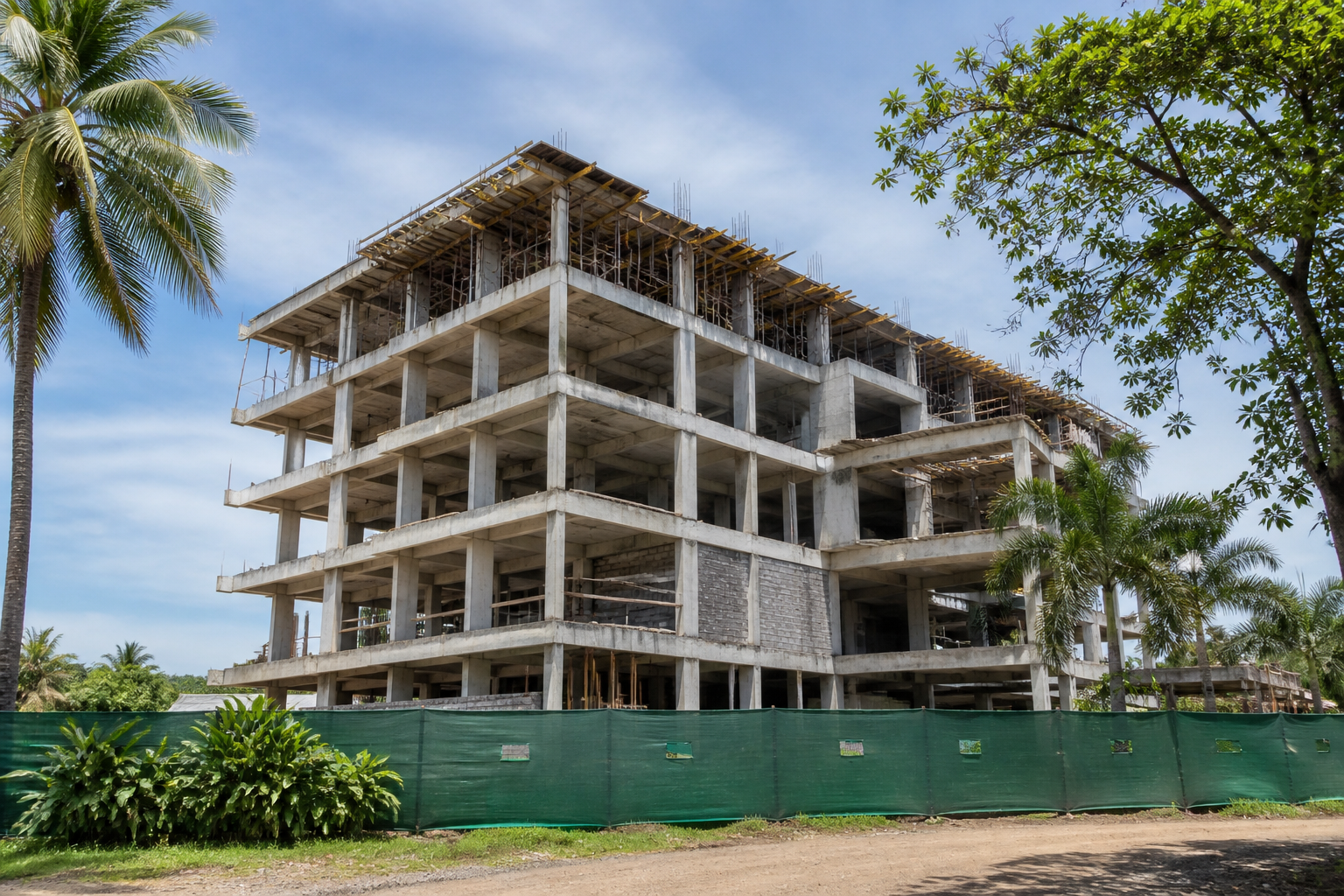
The Costa Rica News described the development as unfinished in November 2025. This is a dated report, not a September 2026 title search or site inspection. We cannot confirm a current relaunch, sale mandate or booking operation from these historical sources.
Can you book a stay or buy a unit?
For a hotel booking, check Sonesta’s official hotel search and obtain direct confirmation of the property, address and reservation. An old development name on another website is not confirmation that rooms are operating.
If someone offers a unit, a project interest or an assignment of a former buyer’s claim, obtain independent legal review of the actual documents. Ask for the registered property identification, current owner, seller’s authority, encumbrances and terms of the proposed transaction. The evidence needed for a property sale is different from the evidence needed for a historical article.
Questions to ask about any pre-construction purchase
The MEIC guide to authorization of future-execution real-estate sales is an official starting point for understanding the applicable consumer-protection process. Ask MEIC and your independent lawyer which rules apply to the specific sales plan and how its authorization can be checked. An old project’s arrangements should not be assumed to describe today’s requirements.
- Who is contractually responsible for completing and delivering the property?
- Which permits and sales authorizations apply, and are they current?
- Who holds your deposit, when can it be released, and what happens if construction stops?
- What are the completion conditions, refund rights and dispute procedures?
- What services and common facilities must be available before handover?
- What, precisely, has a named hotel brand agreed to do?
Request written answers and have the documents explained before transferring funds. Neither a familiar brand nor a largely completed structure answers all of these questions.
Property and residency planning
Do not infer immigration eligibility from a property sales pitch. Check the official DGME requirements for the category relevant to your situation before making an investment for that purpose. CRIE’s contact page is available for immigration-planning enquiries.
The illustrations on this page depict general construction and planning scenes. They are not photographs of the Sonesta development or proof of its condition.
Reviewed September 7, 2026. This historical overview does not verify current title, availability, claims or operating status.