
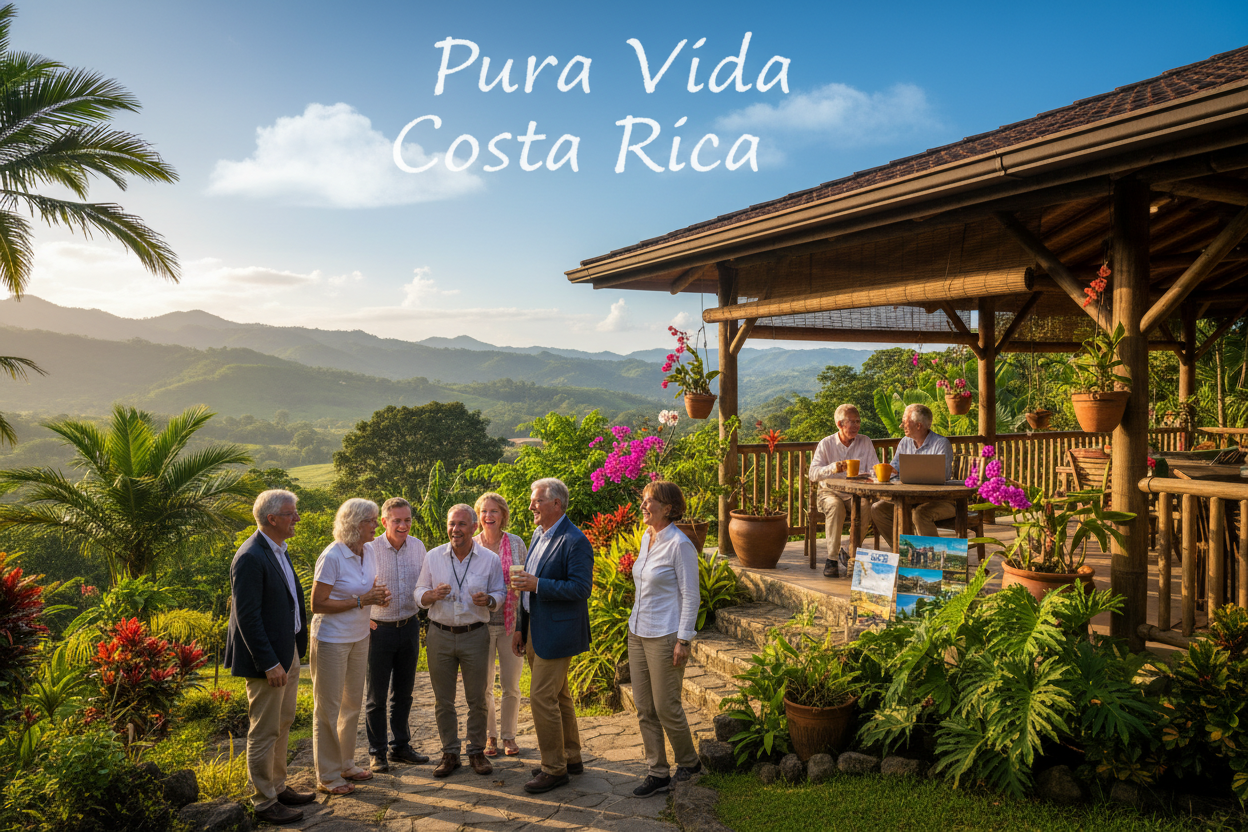
Tens of thousands of US citizens have already made Costa Rica their retirement home. They are drawn by its political stability—it’s one of Latin America’s most stable democracies—and its incredible natural beauty.
This comprehensive guide walks you through the essentials. We cover who qualifies, the required documents, realistic timelines, and common pitfalls to avoid.
At CRIE, we specialize exclusively in Costa Rica residency and immigration services. We provide expert, step-by-step guidance without making unrealistic promises. Our role is to be your knowledgeable partner through this complex process.
A successful application requires careful preparation. You’ll need proper documentation with apostilles and translations. We’ll explain all of this in clear, practical detail.
We’ll explore the three main residency pathways for retirees: Pensionado, Rentista, and Inversionista. Each has specific income thresholds and requirements that determine eligibility for US expats seeking a new life in Costa Rica.
Overview of Costa Rica as a Retirement Destination
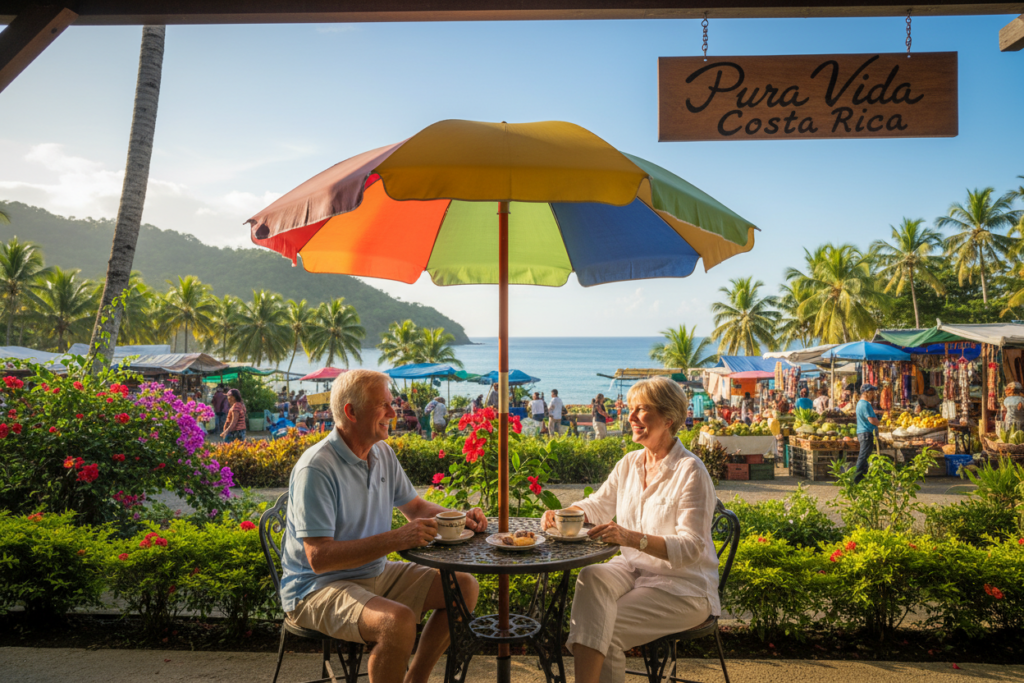
Costa Rica’s compact size belies its incredible geographic diversity, offering retirees a stunning array of landscapes within easy reach. You can find black sand beaches, lush rainforests, and majestic volcanoes like Arenal. Over 30 national parks protect this natural wealth.
The famous “Pura Vida” lifestyle defines daily life here. This “pure life” philosophy promotes a laid-back, positive attitude. It attracts many seeking a slower, more relaxed pace.
This country is one of Latin America’s safest and most stable democracies. It has maintained peace without a standing army since 1949. This political stability provides a secure environment for foreign retirees.
Well-established expat communities ease the transition for newcomers. Areas like the Central Valley and Guanacaste have strong concentrations of US and Canadian retirees. These networks offer practical support and social connection.
Costa Rica boasts a high standard of living for the region. Reliable infrastructure includes clean water, stable electricity, and good internet. The healthcare system is globally ranked, and a Blue Zone highlights exceptional longevity.
We must note that this exceptional quality of life comes at a cost. It is one of the more expensive Central American countries. We will address budgeting and affordability in detail later in this guide.
Understanding US Retirement and Costa Rican Residency Essentials
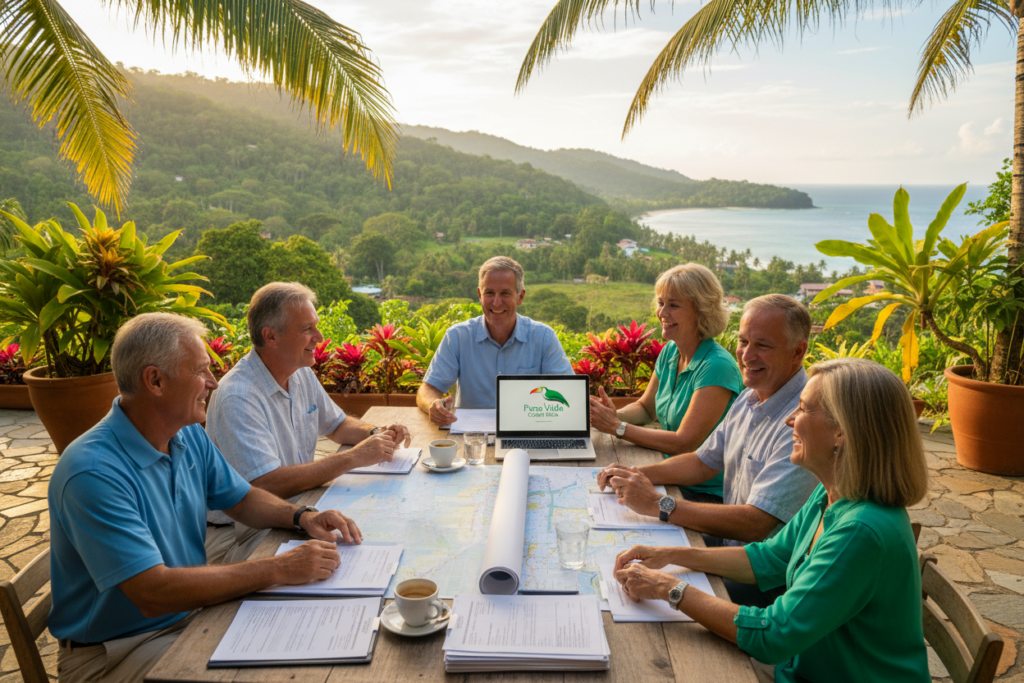
A common oversight among newcomers is confusing tourist permissions with formal residency status. US citizens can enter this country without a visa and receive a tourist stamp. However, this status is not designed for those aiming to retire in Costa Rica permanently.
While you can renew tourist status by leaving and re-entering, this isn’t suitable for retirees. Establishing legal resident status is essential for US citizens planning a full-time home in Costa Rica. It provides access to healthcare, banking, and legal protections.
We must address a key misconception. The Digital Nomad visa is not a residency program. It does not count toward permanent residency or citizenship.
For serious retirees, three legitimate pathways exist in Costa Rica: Pensionado, Rentista, and Inversionista. These programs grant actual legal resident status. They can lead to permanent residency after maintaining temporary status.
Our key recommendation is to start document preparation while still in the United States. Obtain necessary apostilles, translations, and certifications before arrival. This avoids complications and delays in the process.
Legal resident status opens doors to practical benefits like local bank accounts. For a detailed walkthrough, refer to this comprehensive guide for US retirees in Costa Rica.
Residency Programs for US Expats: Pensionado (Pensionado), Rentista (Rentista), and Inversionista (Inversionista)
For US citizens, securing legal status in Costa Rica involves selecting from three distinct programs. Each pathway—Pensionado, Rentista, and Inversionista—has specific financial thresholds that determine eligibility.
Eligibility Criteria for Each Category
The Pensionado (Pensionado) visa requires proof of at least $1,000 USD per month from a lifetime-guaranteed source like Social Security. We note that traditional IRAs usually do not qualify.
The Rentista (Rentista) option is for those with passive income. It demands documented proof of $2,500 USD monthly for two years. Alternatively, a $60,000 deposit in a local bank is accepted.
The Inversionista (Inversionista) pathway requires a minimum $150,000 USD investment in qualifying assets. The property must be held in the applicant’s personal name, not through a corporation.
Benefits and Limitations of the Programs
When one spouse qualifies, the other is covered as a dependent. Residency holders cannot work as local employees. However, they can own businesses or freelance for foreign clients.
After three years of temporary status, applicants may apply for permanent residency. Benefits include enrollment in the public healthcare system and tax exemptions for importing goods.
Key Financial Thresholds and Income Requirements for Retirement
Costa Rican immigration law sets clear minimum income levels for retirees seeking to establish legal residence. These thresholds ensure you can support yourself comfortably.
Pensionado: $1,000+ US dollars per month
This program requires proof of at least $1,000 in monthly income. Qualifying sources include Social Security benefits, government pensions, and lifetime annuities.
Traditional IRA distributions usually do not meet the “guaranteed for life” standard. You must obtain official documentation from providers before leaving the United States.
Rentista: $2,500 US dollars per month for 2 years
The Rentista option demands $2,500 per month from passive sources like rental properties or investment dividends. This income must be documented for a two-year period.
Alternatively, you can deposit $60,000 in a local bank. The bank then disburses $2,500 monthly to meet the requirement.
Approved residents must transfer their qualifying income into a Costa Rican bank account each month. This allows authorities to verify ongoing compliance.
We stress preparing all income verification letters, Social Security statements, and bank certifications while still in the US. These documents require apostilles and translations for submission.
Step-by-Step Guide to Preparing Your Documents
The foundation of your move to Costa Rica is a complete and properly certified set of personal documents. We strongly advise beginning this process while still in the United States. Having everything ready streamlines your application.
Document Checklist and Required Proofs
Your core checklist includes a valid passport, birth certificate, and marriage certificate if applicable. You also need a police background check and proof of income letters.
Most documents must be issued within six months of your application date. This timing is crucial to prevent expired paperwork. Income verification must meet the specific program requirements.
Apostilles, Translations, and Certification Process
An apostille is an international certification that validates your US documents for use here. You obtain it from the Secretary of State where your document was issued.
After apostilling, all English documents require translation into Spanish. This should be done by a certified translator in Costa Rica for acceptance.
Complete apostilling and preliminary translations before you leave. Trying to handle this from abroad causes significant delays. If you are unsure of any requirements, verify current details at the official migracion.go.cr website.
Timeline for the Residency Application Process
Many applicants are surprised by the total time required to secure legal resident status in Costa Rica. We set realistic expectations to help you plan effectively.
Estimated Processing Times and Milestones
Immigration processing here typically takes 6 to 12 months from submission to final approval. We cannot guarantee specific timeframes, as speeds vary.
The journey involves clear milestones. You’ll complete document preparation, submit your application, and undergo an initial review. Requests for more information are common.
After approval in principle, you’ll schedule an interview. Finally, you receive your temporary residency card, or cédula.
Temporary residency under Pensionado, Rentista, or Inversionista is granted for two years. You must renew it before it expires.
After maintaining legal status for a total of three years, you become eligible to apply for permanent residency. Patience is essential with Costa Rican bureaucracy.
The “mañana” reality means applications may sit untouched for weeks. Adopting an “in due time” mindset is crucial for expats.
Note a vital distinction: time on a Digital Nomad visa does not count toward permanent residency. Only Pensionado, Rentista, or Inversionista time qualifies.
Practical milestones include receiving a temporary document post-approval. You must then register with the CAJA healthcare system.
Many people underestimate the full timeline. From gathering documents to receiving your card, plan for 12 to 18 months. For more details on timelines, see our answers to common questions.
Common Mistakes to Avoid in the Application Process
One of the most critical aspects of securing residency in Costa Rica is avoiding common pitfalls that many applicants encounter. We see the same errors cause costly delays and rejections. Proper preparation is your best defense.
Issues in Documentation and Verification
A major error involves property investment. For the Inversionista program, the asset must be held in your personal name. Purchasing through a local corporation disqualifies it entirely.
Document expiration is another trap. Most papers must be issued within six months of submission. Gathering them too early leads to expired apostilles and retranslation costs.
Income verification mistakes are common. For the Pensionado route, IRA distributions often do not qualify as guaranteed lifetime income. You need Social Security or a qualifying annuity.
Tips to Prevent Delays and Rejections
Do not attempt to open a local bank account before securing legal status. Banks have strict requirements and will likely reject you without residency approval.
Always use a certified translator in Costa Rica. Online or cheap services result in rejected documents. This shortcut guarantees extra costs and setbacks.
After approval, remember to transfer your qualifying income into your Costa Rican account each month. Immigration monitors this for compliance.
Set realistic timeline expectations. Processing often takes 6 to 12 months. The “mañana” pace is normal here. We guide you to maximize approval chances, but outcomes are decided by immigration authorities.
Choosing the Best Location in Costa Rica for Retirees
Costa Rica offers a mosaic of living environments, each with distinct advantages for retirees from the US. Your choice depends on prioritizing climate, amenities, and community size.
Urban Centers, Beach Communities, and Rural Areas
San José and the Central Valley provide a temperate climate. These areas offer top healthcare and the largest expat communities.
Guanacaste Province features sunny beaches and established social scenes. Towns like Tamarindo attract many retirees seeking a resort lifestyle.
Quieter alternatives exist for different preferences. Ojochal offers peace, while Puerto Viejo has a distinct Caribbean culture.
We recommend renting in different regions first. This practical approach lets you experience the climate and community fit before any long-term commitment.
Healthcare and Financial Planning for US Retirees
A cornerstone of a secure retirement in Costa Rica is understanding its dual-track healthcare landscape. All legal residents must join the universal public system, Caja. Your monthly contribution is a percentage of your declared income, typically 7% to 11%.
Public Healthcare (Caja) vs. Private Options
Caja provides comprehensive coverage for doctor visits, hospital stays, and medications. After your monthly payment, it often covers 90-100% of costs. The trade-off can be longer wait times for non-urgent care.
Many expats use a hybrid approach. They rely on Caja for major needs while using private services for routine care. This offers faster access and English-speaking doctors.
Private insurance is available through local provider INS or international companies. Plans can range from $60 to over $300 monthly. Out-of-pocket costs are low—a specialist visit might be $80.
Top private hospitals include CIMA in Escazú and Clínica Bíblica in San José. The World Health Organization ranks the nation’s healthcare system in the global top 20. This quality comes at a fraction of U.S. prices.
Budgeting for Retirement Expenses
Build your healthcare budget around three parts. First, account for your mandatory Caja contribution. Second, consider supplemental private insurance for faster access.
Third, set aside funds for occasional private visits or medications. Exploring comprehensive international insurance options can be wise. Even with all three, total spending is often 50-70% less than in the United States.
Cost of Living Considerations for US Expats
Monthly costs can vary dramatically depending on your lifestyle choices and location. Overall, the cost of living here runs about 34% lower than in the United States when rent is included.
We must note that Costa Rica is one of the more expensive Central American countries. Still, it offers a high standard of living for less than the US, Canada, or Europe.
Monthly Expenses and Affordability Comparisons
Housing is your largest variable. Rent for a small home or condo ranges from $500 to over $2,000 monthly. A larger house with a yard can cost $1,200 to $5,000.
Everyday expenses are lower. Utilities average $84-$100. A simple restaurant meal costs about $10, and gasoline is around $6 per gallon.
Your actual budget depends heavily on location and habits. Many expats live comfortably on $2,000 to $3,500 per month. Choosing less touristy areas like Puerto Viejo can significantly reduce your cost of living.
Navigating US Tax Obligations While Living Abroad
The US is one of the few countries that taxes its citizens on worldwide income, regardless of where they reside. Moving abroad does not eliminate your requirement to file a US federal return each year.
You must file Form 1040, reporting all income. This includes Social Security, pensions, and investment earnings. Expats may use Form 2555 to exclude foreign-earned income or Form 1116 for tax credits.
Critical reporting rules also apply. File an FBAR if foreign account balances exceed $10,000. Form 8938 is needed for larger foreign asset holdings.
Costa Rica uses a territorial tax system. It only taxes income earned within the country. Your US retirement income and investments remain tax-free here.
Most retirees pay no local income tax, only their Caja contribution. We provide this as general information only. Always consult a qualified tax professional for advice.
retiring-in-costa-rica-what-us-expats-need-to-know: A Detailed Guide
Breaking down the residency application into distinct phases can transform a complex procedure into manageable tasks. We outline the key stages to secure your legal status.
Step-by-Step Residency Application Process
Start by gathering all required documents while still in the US. You need a valid passport, birth certificate, proof of income, and a background check.
Next, obtain apostilles and certified Spanish translations. This preparation is critical before submission.
You can submit your application through a Costa Rican consulate or the local immigration office. Pay all associated fees and complete fingerprinting.
The processing wait is typically six to twelve months. You must maintain valid documents and meet income requirements throughout.
Upon approval, you’ll receive your temporary residency card, or cédula. Then, register with the CAJA healthcare system.
Remember, this is the standard process. Requirements can change. For the latest information, always verify at migracion.go.cr.
Steps to Secure a Costa Rican Bank Account and Manage Finances
Establishing a reliable financial foundation in Costa Rica hinges on successfully navigating its banking system. Opening a local account is essential for residency applicants. Immigration requires your qualifying income to be transferred monthly to a Costa Rican bank.
Authorities monitor these transfers to verify ongoing compliance. This creates a common timing challenge. Most Costa Rican banks require proof of legal residency to open accounts.
Yet you need an account to receive income during the application process. It’s a classic chicken-and-egg situation that requires strategic planning.
Practical solutions exist. Some banks will open accounts for applicants with pending residency cases. This works if you provide your application receipt and work with a local attorney.
Alternatively, some people establish accounts during scouting trips while on tourist status. Major banks expats commonly use include Banco Nacional and BAC San José. Others are Banco de Costa Rica (BCR) and Scotiabank.
Each has different requirements, fees, and service levels for foreign residents. The documentation process is intensive. You’ll typically need your passport, proof of legal status, and income verification.
A utility bill showing your local address and references from your US bank are also required. Costa Rican banks comply with strict international anti-money laundering rules. They must verify the source of all funds and understand your financial activities.
We recommend establishing your account relationship early. Maintain minimum balances to avoid monthly fees. Set up online banking to monitor your required transfers.
Keep detailed records of all income movements for immigration. Some expats maintain US accounts for Social Security deposits. They then transfer the required amount monthly.
Others arrange direct deposit to their Costa Rican accounts. Both approaches work if properly documented. We can guide you through this complex process as part of our residency services.
Preparing for Cultural Adjustments and Embracing the Pura Vida Lifestyle
Embracing the “Pura Vida” lifestyle is more than a phrase; it’s a fundamental shift in how you experience daily life. This “pure life” philosophy embodies a positive, relaxed attitude that permeates greetings, work, and social interactions.
Perhaps the biggest adjustment is adapting to a slower pace. The “mañana” mindset means errands take longer and appointments may start late. This shift from efficiency to patience is a core part of the cultural transition.
Learning Spanish and Local Customs
While you can manage in major expat areas with English, learning Spanish dramatically improves your quality of life. Locals, or Ticos, genuinely appreciate any effort to speak their language.
We recommend taking affordable local classes and practicing with patient neighbors. This effort opens doors to deeper cultural connections and makes daily tasks smoother.
Integrating into Expat Communities
Well-established expat networks provide invaluable support. You’ll find active Facebook groups, WhatsApp chats, and regular social gatherings in most regions.
Many expats find a balanced approach works best. Connect with these communities for practical advice while also building friendships with Ticos. This dual strategy helps you navigate the new environment and truly experience the life that attracted you to this beautiful country.
Common challenges like the rainy season or bureaucratic patience are real. Yet, many expats find these initial frustrations give way to a profound appreciation for a less stressful, more connected way of life.
Your Next Steps: Contact CRIE for Expert Assistance
Navigating the path to legal residency in Costa Rica is a detailed process that benefits from expert guidance. Retiring here offers an exceptional blend of natural beauty, quality healthcare, and a welcoming community.
Success requires proper planning and correct documentation. While this guide outlines the main residency options, every situation is unique.
CRIE specializes exclusively in Costa Rica residency and immigration services. We do not sell real estate or provide tax advice. Our focus is guiding you through the application process.
We help you avoid common mistakes, like choosing the wrong residency category. Our team provides personalized checklists and assists with apostilles and translations.
We cannot guarantee approval or quote specific timelines. Immigration decisions rest with Costa Rican authorities. We recommend starting the conversation early, while still planning in the US.
Contact us via WhatsApp at +506 8706 3888, email info@crie.cr, or visit www.crie.cr. With expert support, you can confidently pursue your dream to retire in Costa Rica and enjoy the Pura Vida lifestyle.
FAQ
What is the easiest residency program for a US retiree in Costa Rica?
FAQ
What is the easiest residency program for a US retiree in Costa Rica?
The Pensionado program is often the most straightforward path. It requires proof of a guaranteed lifetime pension of at least
FAQ
What is the easiest residency program for a US retiree in Costa Rica?
The Pensionado program is often the most straightforward path. It requires proof of a guaranteed lifetime pension of at least $1,000 per month from a stable source, like Social Security. We find this program attractive for retirees because it offers permanent residency and access to the national healthcare system.
Can I use my US Medicare coverage in Costa Rica?
No, US Medicare does not provide coverage for healthcare services outside the United States. This is a critical financial planning point. Retirees typically join the Costa Rican public system, the Caja, or purchase private international insurance from providers like INS or Blue Cross Blue Shield to ensure comprehensive coverage.
Do I still have to file US taxes if I live in Costa Rica?
Yes, US citizens are required to file a federal tax return annually regardless of where they live, reporting their worldwide income. However, you may use the Foreign Earned Income Exclusion or the Foreign Tax Credit to avoid double taxation. We always recommend consulting a cross-border tax specialist to optimize your situation.
How difficult is it to open a Costa Rican bank account as a foreigner?
It is a regulated process but very manageable with proper preparation. Banks like BAC San José or Banco Nacional will require your passport, proof of legal residency status, proof of income, and sometimes a reference letter. Having all documents apostilled and officially translated streamlines the process significantly.
Is $2,000 a month enough to live comfortably in Costa Rica?
For a couple living a modest, local-influenced lifestyle outside the most expensive expat enclaves, $2,000 to $3,000 per month can be sufficient. This budget covers housing, utilities, groceries, and local healthcare. However, if you desire a larger home, frequent dining out, or travel, your monthly income requirement will be higher.
What is the biggest mistake people make in the residency application?
Incomplete or improperly certified documentation is the most common hurdle. Every US-sourced document, from birth certificates to income letters, must have an apostille and a certified Spanish translation. Submitting originals without these steps will cause immediate delays or rejection from immigration authorities.
Are there areas in Costa Rica I should avoid for retirement?
“Avoid” is subjective, but choice depends heavily on your preferred lifestyle. For a quiet, rural life, the Southern Zone offers great value. For amenities and a large expat network, the Central Valley excels. We suggest extended rental stays in different regions—like Guanacaste beach towns versus the San José suburbs—before committing to a property purchase.
How long does the residency process typically take from start to finish?
You should plan for a timeline of 6 to 12 months from initial document gathering to final approval. The process involves multiple steps with government agencies in both the US and Costa Rica. Working with a qualified residency expert can help navigate these steps efficiently and prevent costly delays.
,000 per month from a stable source, like Social Security. We find this program attractive for retirees because it offers permanent residency and access to the national healthcare system.
Can I use my US Medicare coverage in Costa Rica?
No, US Medicare does not provide coverage for healthcare services outside the United States. This is a critical financial planning point. Retirees typically join the Costa Rican public system, the Caja, or purchase private international insurance from providers like INS or Blue Cross Blue Shield to ensure comprehensive coverage.
Do I still have to file US taxes if I live in Costa Rica?
Yes, US citizens are required to file a federal tax return annually regardless of where they live, reporting their worldwide income. However, you may use the Foreign Earned Income Exclusion or the Foreign Tax Credit to avoid double taxation. We always recommend consulting a cross-border tax specialist to optimize your situation.
How difficult is it to open a Costa Rican bank account as a foreigner?
It is a regulated process but very manageable with proper preparation. Banks like BAC San José or Banco Nacional will require your passport, proof of legal residency status, proof of income, and sometimes a reference letter. Having all documents apostilled and officially translated streamlines the process significantly.
Is ,000 a month enough to live comfortably in Costa Rica?
For a couple living a modest, local-influenced lifestyle outside the most expensive expat enclaves, ,000 to ,000 per month can be sufficient. This budget covers housing, utilities, groceries, and local healthcare. However, if you desire a larger home, frequent dining out, or travel, your monthly income requirement will be higher.
What is the biggest mistake people make in the residency application?
Incomplete or improperly certified documentation is the most common hurdle. Every US-sourced document, from birth certificates to income letters, must have an apostille and a certified Spanish translation. Submitting originals without these steps will cause immediate delays or rejection from immigration authorities.
Are there areas in Costa Rica I should avoid for retirement?
“Avoid” is subjective, but choice depends heavily on your preferred lifestyle. For a quiet, rural life, the Southern Zone offers great value. For amenities and a large expat network, the Central Valley excels. We suggest extended rental stays in different regions—like Guanacaste beach towns versus the San José suburbs—before committing to a property purchase.
How long does the residency process typically take from start to finish?
You should plan for a timeline of 6 to 12 months from initial document gathering to final approval. The process involves multiple steps with government agencies in both the US and Costa Rica. Working with a qualified residency expert can help navigate these steps efficiently and prevent costly delays.
Can I use my US Medicare coverage in Costa Rica?
Do I still have to file US taxes if I live in Costa Rica?
How difficult is it to open a Costa Rican bank account as a foreigner?
Is ,000 a month enough to live comfortably in Costa Rica?
What is the biggest mistake people make in the residency application?
Are there areas in Costa Rica I should avoid for retirement?
How long does the residency process typically take from start to finish?
Article by Glenn Tellier (Founder of CRIE and Grupo Gap)
Don't wait, contact us right now!
Call or WhatsApp Costa Rica +506 8373 2085 or +506 8706 3888
Call USA/Canada +1 305-906-6784