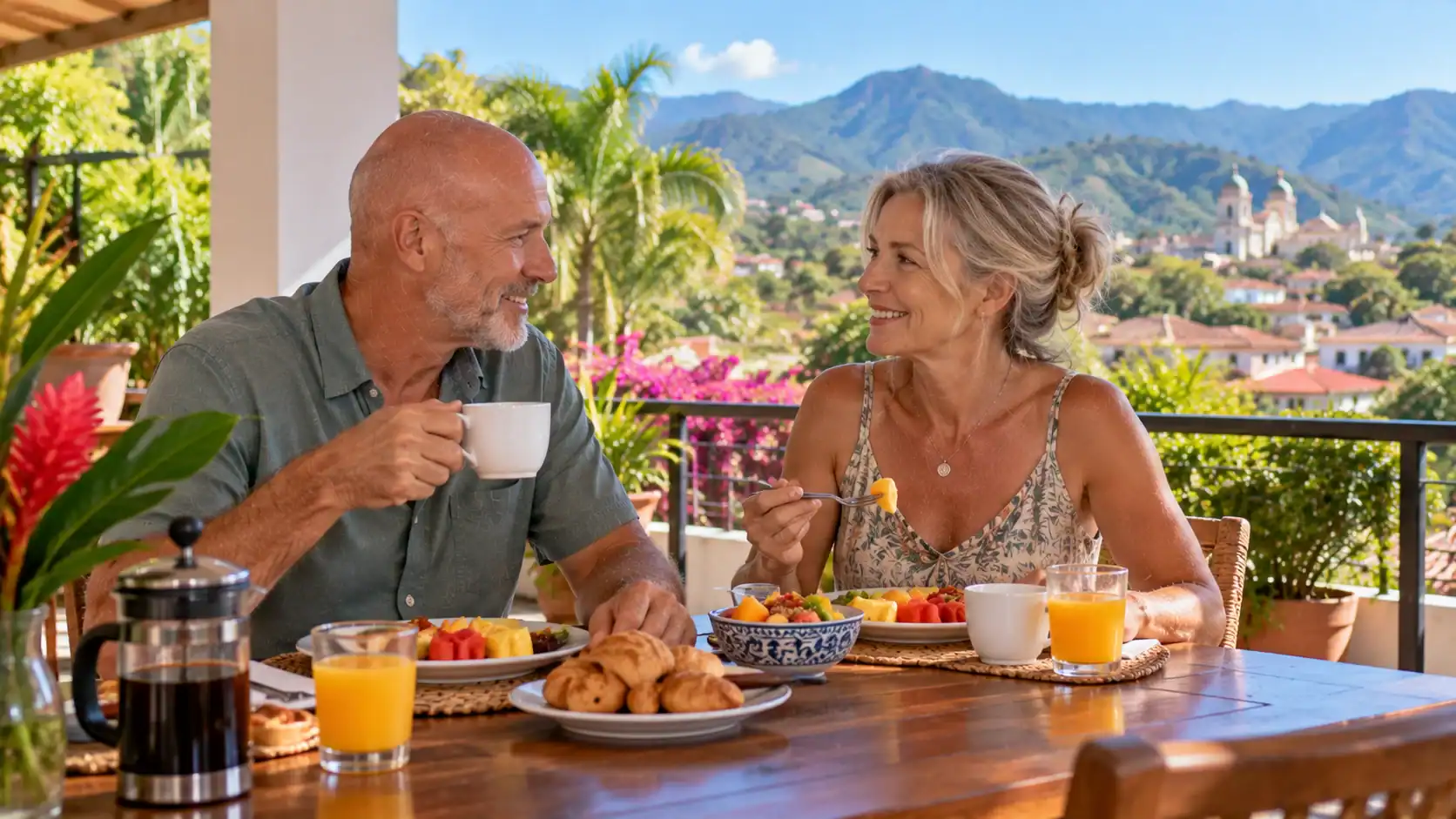
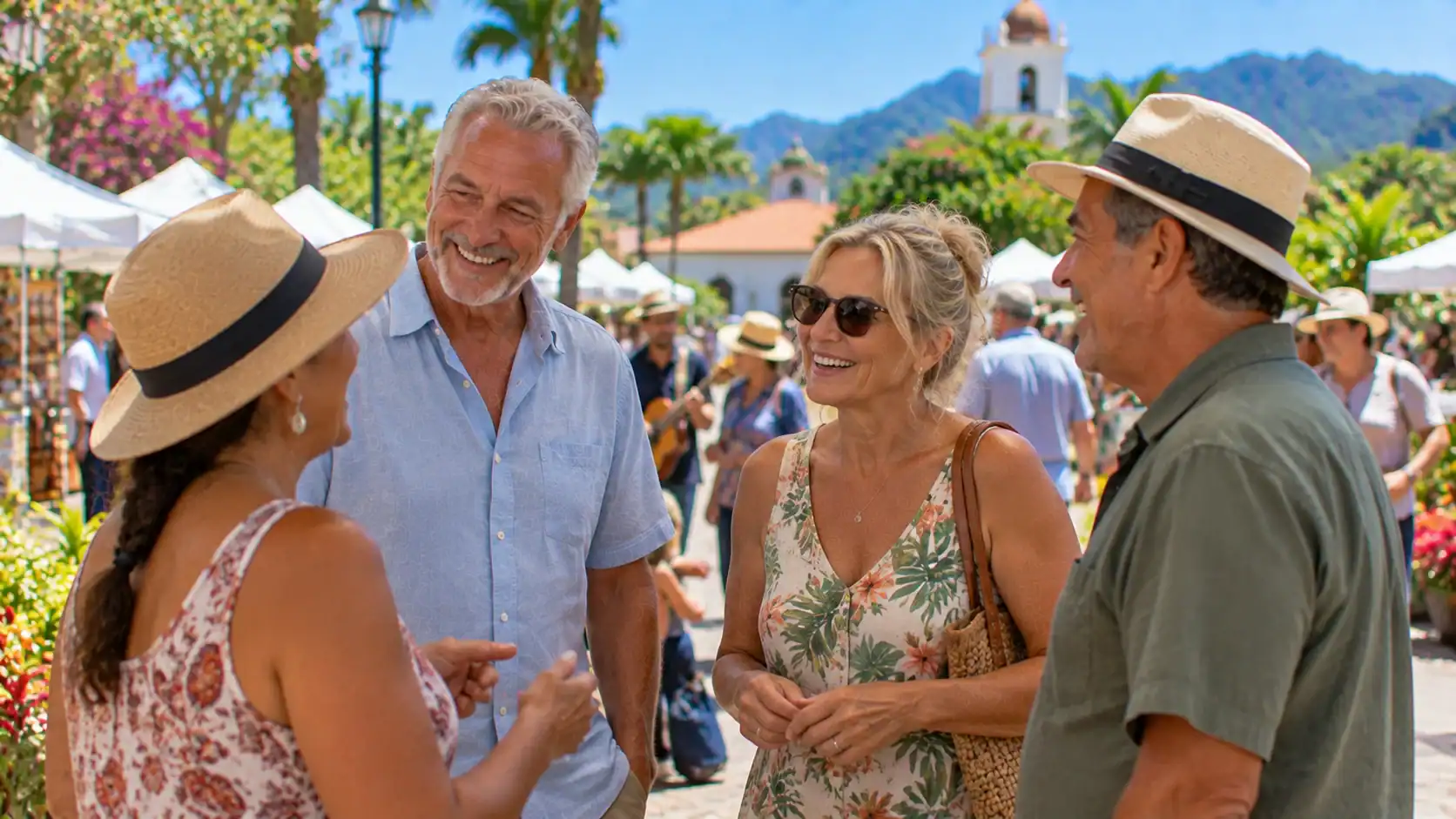
For over three decades, Costa Rica has been a premier destination for retirees and expats. More than 120,000 American citizens have already made the move.
They are drawn by stunning natural beauty, a stable democracy, and an affordable, welcoming culture. This peaceful nation abolished its military in 1948, earning a reputation as the “Switzerland of Central America.”
This guide provides a clear, step-by-step roadmap for obtaining legal residency. We focus on the legitimate programs administered by Costa Rican immigration authorities.
Our goal is to offer transparent, realistic information—not hype. We will help you understand who qualifies, what documents to prepare before you leave home, and the actual requirements involved.
We will explore the three main residency options: Pensionado for pension income, Rentista for passive income, and Inversionista for investors. Each has specific financial thresholds.
We emphasize starting your document preparation early. Gathering apostilles, translations, and background checks from your home country is far easier than trying to coordinate from abroad.
Note: This guide does not cover Digital Nomad visas, which do not lead to permanent residency or citizenship. We provide factual guidance to help you prepare properly for your new life.
Embracing Retirement in Costa Rica: Overview & Key Benefits

With its compact size and incredible biodiversity, this Central American nation packs a world of experience into a single, accessible country. The appeal for a new life here is both emotional and practical.
Costa Rica as an Expat Haven
You can find Pacific and Caribbean beaches, volcanic mountains, and rainforests all within a short drive. A year-round spring-like climate supports an active outdoor lifestyle.
Well-established expat communities throughout the country provide instant social networks. Many retired couples live well on a budget of around $2,000 monthly. Your actual cost of living depends on personal choices.
Access to quality, affordable healthcare is a major draw. The system includes both private clinics and the public Caja, which residents join. Popular areas for foreigners range from sunny Guanacaste to the lush Southern Zone.
Starting from Home: Gather Your Documents Early
While the dream is compelling, legal residency requires proper paperwork. The smartest move is to begin this process before you travel.
Obtaining apostilles, background checks, and official translations is far easier in your home country. Rushing to Costa Rica without these documents leads to frustrating delays and extra costs.
This preparation is your foundation. It unlocks healthcare enrollment and paves the way for permanent status. Completing it early puts you in control of your application timeline.
Understanding retirement-in-costa-rica: Residency at a Glance

To establish a long-term life here, understanding the official residency pathways is essential. These programs are your legitimate route to legal status, not tourist visas.
Overview of Residency Programs via CRIE
We help navigate three primary options administered by immigration authorities. The Pensionado program is for those with a verifiable pension of at least US$1,000 monthly.
The Rentista program suits early retirees with passive income. It requires proof of US$2,500 per month for two years or a US$60,000 deposit.
For investors, the Inversionista program demands a minimum US$150,000 investment in approved assets. Remember, the Digital Nomad visa does not lead to permanent residency.
Eligibility Criteria and Income Thresholds
These financial thresholds are set by the government and are subject to change. Always verify current requirements at migracion.go.cr before applying.
Your income or investment funds must be transferred into a local bank account. Beyond the income proof, budget for application fees, translations, and document authentication.
Initial residency is temporary, renewed every two years. After three renewals, you may apply for permanent resident status.
Exploring Residency Categories: Pensionado (Pensionado), Rentista (Rentista), and Inversionista (Inversionista)
The Pensionado, Rentista, and Inversionista programs each offer a legitimate route to legal status, tailored to different financial profiles. We guide you through the specific requirements for these three primary options.
Pensionado Program Requirements (US$1,000+/month pension)
This is the simplest path for retirees with a guaranteed pension. You need at least US$1,000 per month from sources like Social Security, an IRA, or a private fund.
The income must be transferred to a local bank account. Official documentation, apostilled and translated, proves your lifelong income stream.
Rentista and Inversionista Detailed Guidelines (US$2,500/month & US$150,000 minimum)
The Rentista program requires proof of US$2,500 in passive monthly income. Alternatively, a US$60,000 bank balance qualifies.
This suits early retirees with investment income or substantial savings. The Inversionista program demands a minimum US$150,000 investment.
Approved assets include real estate or a business. A critical rule: the property must be in your personal name, not a corporate entity.
Choose the option that aligns with your financial reality. Each leads to the same resident status in Costa Rica.
Who Qualifies and How to Get Your Documents in Order
The key to a smooth residency application lies in understanding and preparing the required paperwork from your home country. Beyond meeting financial thresholds, you must be of legal age and have a clean criminal background.
Essential Documentation and Personal Eligibility
You will need to prove your identity, income source, and clean record. Required documents include your passport, birth certificate, and proof of pension or bank statements.
If applying with a spouse or dependents, include marriage and birth certificates. A current background check from your home authorities is mandatory.
Apostilles and Translations: Preparing Before Arrival
An apostille is an international certification that validates your documents in Costa Rica. Obtaining these from your home country is far easier.
Every non-Spanish document must be translated by a certified translator. Starting this process early prevents costly delays and frustration.
We guide retirees through each step. This ensures your application meets all Costa Rican immigration requirements correctly the first time.
Step-by-Step Guidance Through the Application Process
Once your documents are prepared, the next phase is submitting your application to Costa Rican authorities. You have two primary paths: apply through a consulate in your home country or at the immigration office after arrival.
Each choice has distinct advantages for planning your new life.
Submission Process and Timelines
Applying via a consulate offers peace of mind before you move. You will pay a $250 application fee plus $40 per document for authentication.
If you enter the country on a tourist visa, you can submit in person at the Dirección General de Migración y Extranjería in San José. This allows you to get settled first.
Processing times are not guaranteed. They depend entirely on the immigration authority’s workload. Some cases take 3-6 months, while others extend past a year.
Clear Steps to Ensure a Smooth Application
A critical step is opening a local bank account. You must demonstrate the required monthly income transfer, whether $1,000 for Pensionado or $2,500 for Rentista.
Immigration will verify these funds are in Costa Rican banks. You will also complete fingerprinting and later receive a residency card, or cédula.
We help you compile everything and respond promptly to any requests from officials. Maintaining compliance during the review period is essential for success.
Your journey to legal residency requires patience and precise documentation. We guide you through each phase with transparent support.
Avoiding Common Pitfalls and Mistakes in Residency Applications
Many applicants encounter avoidable setbacks that can prolong their journey to legal residency. Learning from these common errors saves significant time and money.
Mistakes to Avoid During Your Application
A critical error is purchasing real estate through a corporation for the Inversionista program. The property must be in your personal name. Also, documents like background checks expire, often within six months.
Submitting unofficial translations or incorrect apostilles causes immediate delays. You must also maintain consistent monthly income transfers to your local bank account throughout the process.
Critical Best Practices for Success
Start gathering documents 3-6 months before you plan to apply. Verify all current requirements directly with official sources.
Consult a tax professional about ongoing US obligations. Plan for private healthcare coverage until your residency is approved.
Create a realistic monthly budget for your desired lifestyle in Costa Rica. Working with experienced professionals helps navigate these complexities efficiently.
Utilizing Local Resources: crie.cr and migracion.go.cr for Your Success
Accessing reliable resources is crucial for a successful transition to life in Costa Rica. We combine expert guidance with direct access to official information.
How CRIE Supports Your Residency Journey
We are your specialized partner for Costa Rica residency. Our team helps you choose the right program, prepares your documents, and manages submission.
We work within the official immigration system. While we cannot guarantee approval, we ensure your application is complete to avoid delays.
One major benefit of legal residency is enrolling in the public healthcare system. You pay 7-11% of your reported income for comprehensive coverage.
Direct Contact: WhatsApp +506 8706 3888 & info@crie.cr
Costa Rica offers a territorial tax system. Your Social Security and foreign income are not taxed locally. However, American retirees must still file US taxes.
Always verify current requirements at the official site, migracion.go.cr. For personalized support, contact us via WhatsApp at +506 8706 3888 or email info@crie.cr.
We provide clear guidance to help expats and retirees navigate the process with confidence.
Embarking on Your New Life in Costa Rica with Confidence
With over 120,000 American retirees already settled, Costa Rica presents a proven path to an enriching retirement. Your dream of an affordable life in a beautiful country is within reach.
The favorable cost of living and territorial tax system protect your savings. Quality healthcare through the Caja system is a major benefit for expats.
Success hinges on early planning and choosing the right residency program for your budget. We provide clear guidance to navigate the process efficiently.
Ready to begin? Review official requirements at migracion.go.cr. Then, contact us via WhatsApp at +506 8706 3888 or email info@crie.cr for personalized support.
FAQ
What are the main residency options for someone looking to retire in Costa Rica?
The primary pathways are the Pensionado, Rentista, and Inversionista programs. The Pensionado visa is for those with a guaranteed lifetime pension of at least
FAQ
What are the main residency options for someone looking to retire in Costa Rica?
The primary pathways are the Pensionado, Rentista, and Inversionista programs. The Pensionado visa is for those with a guaranteed lifetime pension of at least $1,000 per month. The Rentista visa requires proof of a $2,500 monthly income for two years. The Inversionista program requires a minimum investment of $150,000 in Costa Rican assets, like real estate.
How much income do I really need to live comfortably as a retiree in Costa Rica?
While official residency programs set minimums, actual living costs vary. Many expat couples live well on $2,000 to $3,000 per month outside the most expensive tourist areas. Your budget should account for housing, groceries, private healthcare, and local travel. We always advise creating a detailed budget based on your desired lifestyle.
Is the healthcare system in Costa Rica reliable for retirees?
Yes, Costa Rica’s healthcare is a major draw. The public system, Caja, offers low-cost care to residents and legal residents. Most retirees also opt for private insurance for faster service and access to private hospitals. The quality of care is excellent and costs are significantly lower than in the U.S.
What is the most common mistake people make when applying for residency?
The biggest pitfall is submitting incomplete or incorrectly prepared documents. Every foreign-issued document, like birth certificates or pension letters, typically needs an apostille and an official Spanish translation. Starting this process early and working with a trusted resource like CRIE can prevent lengthy delays.
Can I work or start a business in Costa Rica on a retirement visa?
No, the Pensionado and Rentista programs are designed for retirees with passive income and do not permit you to work for a local salary. If you wish to generate active income, you would need to explore a different residency category or establish a corporation under specific guidelines.
How long does the residency application process typically take?
From submission to approval, the process generally takes between 3 to 6 months, though timelines can vary. Using a facilitator ensures your application is complete upon submission, which helps avoid back-and-forth requests from immigration that can add months to the wait.
Do I need to speak Spanish to retire in Costa Rica?
While it’s not a legal requirement, learning basic Spanish greatly enriches daily life and helps with integration. In expat communities and many businesses, you’ll find English is widely spoken. However, dealing with government offices, local services, and building relationships with neighbors is easier with some language skills.
What are the tax implications for foreign retirees living in Costa Rica?
Costa Rica taxes residents on their worldwide income. However, you only become a tax resident after officially obtaining your residency card and spending more than 183 days per year in the country. It’s crucial to consult with a cross-border tax professional to understand your specific liabilities in both Costa Rica and your home country.
,000 per month. The Rentista visa requires proof of a ,500 monthly income for two years. The Inversionista program requires a minimum investment of 0,000 in Costa Rican assets, like real estate.
How much income do I really need to live comfortably as a retiree in Costa Rica?
While official residency programs set minimums, actual living costs vary. Many expat couples live well on ,000 to ,000 per month outside the most expensive tourist areas. Your budget should account for housing, groceries, private healthcare, and local travel. We always advise creating a detailed budget based on your desired lifestyle.
Is the healthcare system in Costa Rica reliable for retirees?
Yes, Costa Rica’s healthcare is a major draw. The public system, Caja, offers low-cost care to residents and legal residents. Most retirees also opt for private insurance for faster service and access to private hospitals. The quality of care is excellent and costs are significantly lower than in the U.S.
What is the most common mistake people make when applying for residency?
The biggest pitfall is submitting incomplete or incorrectly prepared documents. Every foreign-issued document, like birth certificates or pension letters, typically needs an apostille and an official Spanish translation. Starting this process early and working with a trusted resource like CRIE can prevent lengthy delays.
Can I work or start a business in Costa Rica on a retirement visa?
No, the Pensionado and Rentista programs are designed for retirees with passive income and do not permit you to work for a local salary. If you wish to generate active income, you would need to explore a different residency category or establish a corporation under specific guidelines.
How long does the residency application process typically take?
From submission to approval, the process generally takes between 3 to 6 months, though timelines can vary. Using a facilitator ensures your application is complete upon submission, which helps avoid back-and-forth requests from immigration that can add months to the wait.
Do I need to speak Spanish to retire in Costa Rica?
While it’s not a legal requirement, learning basic Spanish greatly enriches daily life and helps with integration. In expat communities and many businesses, you’ll find English is widely spoken. However, dealing with government offices, local services, and building relationships with neighbors is easier with some language skills.
What are the tax implications for foreign retirees living in Costa Rica?
Costa Rica taxes residents on their worldwide income. However, you only become a tax resident after officially obtaining your residency card and spending more than 183 days per year in the country. It’s crucial to consult with a cross-border tax professional to understand your specific liabilities in both Costa Rica and your home country.
Article by Glenn Tellier (Founder of CRIE and Grupo Gap)
Don't wait, contact us right now!
Call or WhatsApp Costa Rica +506 8373 2085 or +506 8706 3888
Call USA/Canada +1 305-906-6784