
Are you dreaming of working from a tropical paradise? Costa Rica offers an inviting option for remote professionals. With its stunning landscapes and vibrant culture, many choose to live and work here. This guide will help you navigate the residency options available for digital nomads.
One of the best features of this country is the ability to extend a 90-day tourist visa. This allows you to enjoy a full year or even longer in this beautiful location. Whether you are a freelancer or a remote employee, securing the right visa is crucial for a successful transition.
Understanding the legal framework is essential for anyone looking to establish a long-term base in this stunning country. Our goal is to simplify the complex application process so you can focus on enjoying your stay in this tropical paradise.
Understanding Costa Rica Residency and Immigration with CRIE
Envision a life where your work blends seamlessly with the rhythm of a tropical paradise. At CRIE, we have dedicated over 20 years to helping individuals and families navigate the complexities of immigration and residency in Costa Rica. Our expertise allows us to provide tailored support to each digital nomad seeking to make this beautiful country their home.
Our team specializes exclusively in residency and immigration services. This focus ensures that every worker receives the most accurate and practical guidance for their unique situation. We recognize that relocating involves many moving parts, and we are here to support you throughout the entire process.
With our extensive experience, we simplify the legal requirements for you. Our friendly and educational approach helps you understand what is needed to successfully transition to life in Costa Rica. Let us guide you on this exciting journey.
Overview of Costa Rica Digital Nomad Visa Program
Imagine working in a country where the sun shines brightly and the waves crash gently on the shore. The digital nomad visa in Costa Rica allows you to do just that. This program is designed to attract global talent, offering a stay of one full year with the option to renew for an additional year.
For any digital nomad looking to enjoy the pura vida lifestyle, this visa is a fantastic opportunity. To qualify for renewal, you must meet the requirement of staying in the country for at least 180 days.
The application process includes a one-time government fee, which is standard for all applicants. By choosing this visa, you gain the freedom to live in Costa Rica while working for companies based outside of the country. For more detailed insights, check out our guide on Costa Rica digital nomad vs residency.
Eligibility and Income Requirements for Remote Workers
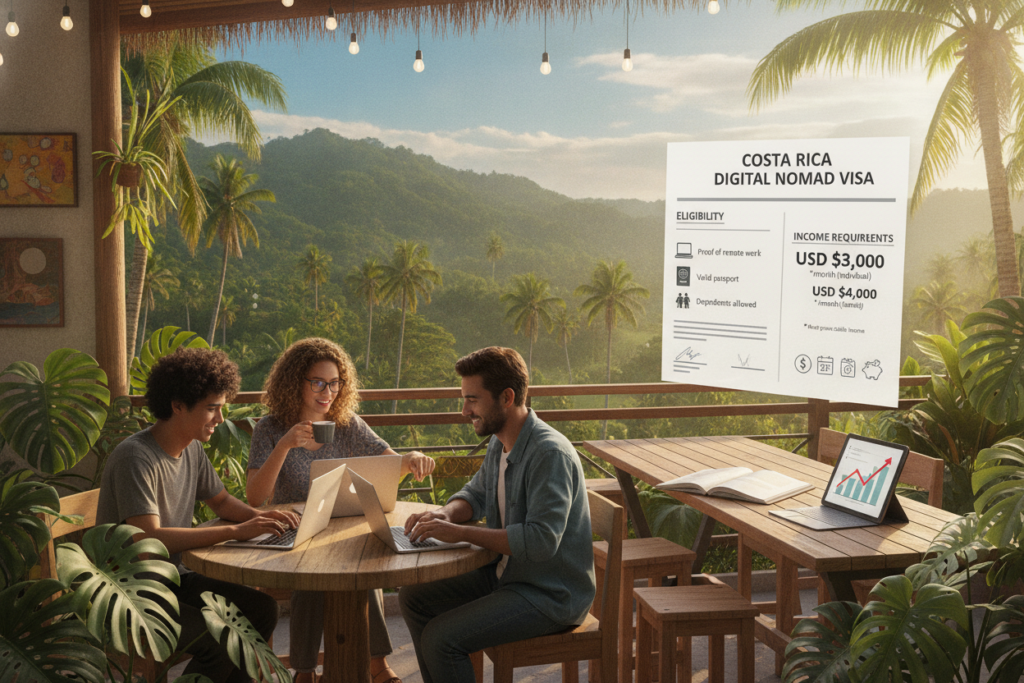
Picture yourself enjoying a fulfilling career while surrounded by lush landscapes and vibrant culture. To qualify for the digital nomad visa in Costa Rica, applicants must meet specific income requirements. This ensures that you can support yourself while living in this beautiful country.
For individual applicants, the minimum income requirement is at least $3,000 per month. Families, on the other hand, must show remote income from abroad of at least US$4,000 per month. These figures are crucial for meeting the financial eligibility for the visa.
To prove your income, you will need to provide official documents, such as bank statements, that verify your earnings come from foreign sources. Every digital nomad must adhere to these financial requirements to ensure a smooth transition into life in Costa Rica.
Our team is here to help you understand how to present these documents correctly, satisfying the immigration requirements for your visa application. For more detailed insights, check out our guide on Costa Rica digital nomad visa.
Preparing Your Application: Essential Documents and Steps
Starting your journey in a new country can be both exciting and daunting. To make the process smoother, it’s essential to gather the right documents and follow specific steps for your visa application.
First, here’s a list of required documentation:
- Proof of income from foreign sources.
- Official bank statements to verify earnings.
- Payment proof for the $100 government fee.
- Translated and legalized documents in Spanish.
- A completed application form.
To ensure a smooth application process, consider these tips:
- The application process typically takes 15 days for an initial review.
- Once approved, you have three months from notification to obtain your DIMEX.
- Organize your documents well in advance to avoid delays.
- Submit all required documents together to streamline the process.
Exploring residency-for-remote-workers-costa-rica Options
What if you could merge your professional life with the allure of a stunning beach? In Costa Rica, the choice between a digital nomad visa and a traditional tourist visa is significant. Each option has its benefits, but understanding the differences can help you make an informed decision.
Unlike a standard tourist visa, the digital nomad visa allows you to work remotely for foreign companies while living in Costa Rica. This means you can enjoy the pura vida lifestyle without the limitations of a tourist visa.
Many people previously relied on a tourist visa, but the new program offers a more stable way to stay in Costa Rica for a year. If you choose to work remotely, this visa provides a legal framework that is not available under a simple tourist visa status.
We help you compare these options so you can decide if the digital nomad visa is the right choice for your stay in Costa Rica. By securing this visa, you avoid the need for frequent border runs that were once common for those who wanted to work remotely.
How the Digital Nomad Visa Benefits Remote Workers in Costa Rica
Consider the advantages of working remotely while surrounded by stunning natural beauty. The digital nomad visa offers several financial benefits that can enhance your experience in this vibrant country.
One of the primary benefits of this visa is that your foreign-earned income is exempt from local income tax in Costa Rica. This means you can keep more of your earnings while enjoying the lifestyle here.
You are also permitted to open a local bank account, which simplifies managing your finances while you work remotely. Additionally, the visa allows you to import essential work equipment duty-free, providing significant financial advantages for any digital nomad.
To make the most of these benefits, we advise all clients to consult with a tax professional. Understanding how these advantages apply to your specific financial situation is crucial for a successful stay.
Living in Costa Rica: Lifestyle, Costs, and Community
Imagine living in a vibrant community while working remotely in a beautiful setting. Many digital nomads choose to settle in popular areas like San José or Tamarindo. These locations offer a balanced cost of living and high-quality infrastructure.
Understanding the financial aspects is crucial. You should maintain valid health insurance with at least $50,000 in coverage for the entire year you spend in Costa Rica. This requirement ensures you are protected during your stay.
Living in this country allows you to experience the local culture while maintaining a bank account for your daily expenses. We suggest researching the average cost of rent and utilities per month in your chosen city before finalizing your move.
Additionally, providing proof of your health insurance is a mandatory step. This documentation is essential for a smooth residency process.
Navigating the Application Process with CRIE’s Guidance
Consider the possibilities of working in a paradise that inspires creativity and productivity. At CRIE, we understand that applying for a visa can feel overwhelming. That’s why we offer step-by-step guidance to simplify the process for you.
Our immigration expert, Johanna Alvarez, is here to provide personalized assistance tailored to your needs. You can easily reach out to her via WhatsApp at +506 8373 2085 or email info@crie.cr. She will help you understand your specific situation and the necessary steps to take.
We ensure that every part of your application is handled with care. This not only saves you time but also reduces the risk of errors that could delay your visa approval. By collaborating with our team, you gain clear insights into the fees and documentation required to secure your status in Costa Rica.
For more information on how we can support your journey as a digital nomad, visit our website at crie.cr.
Staying Updated on Residency and Digital Nomad Visa Regulations
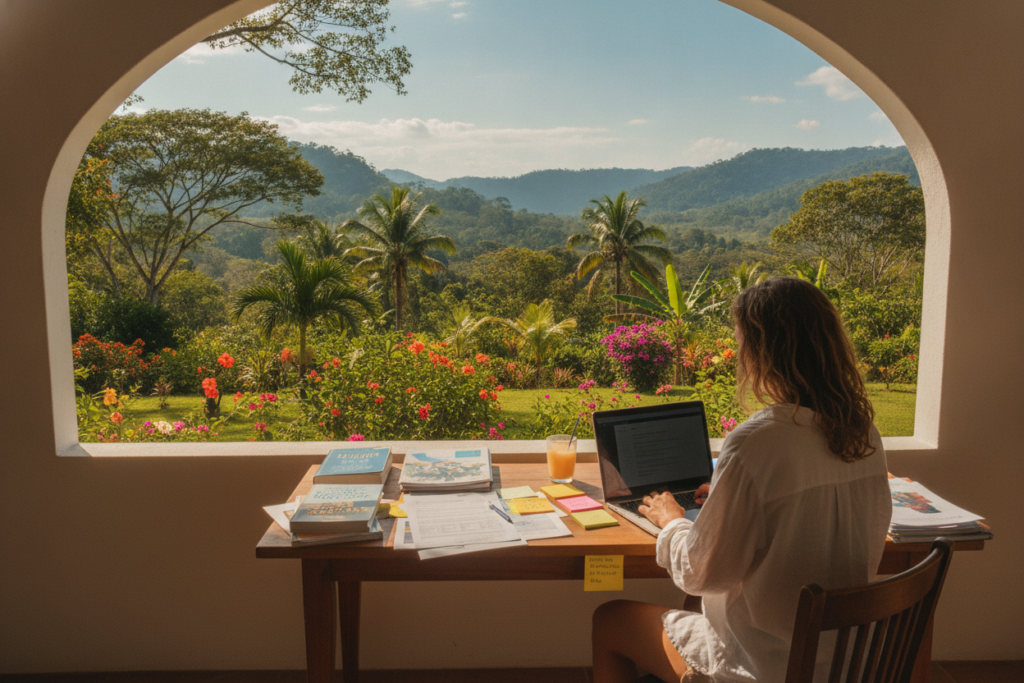
Staying informed about visa regulations is essential for anyone planning to live in Costa Rica. Regulations can change, and it’s vital to keep up with the latest requirements for your second year.
To qualify for a renewal of your status, you must spend at least 180 days in Costa Rica during your first year. This is a key requirement that ensures you maintain your residency.
Additionally, maintaining your health insurance coverage is a continuous requirement throughout your entire stay in the country. We monitor updates from the government to ensure our clients are always informed about any changes to the digital nomad program.
Staying compliant with the law ensures that you can continue to enjoy your life as a digital nomad in Costa Rica.
Ready to Start Your Residency Journey in Costa Rica?
If you are ready to embark on an exciting journey in a new land, now is the time to act. The process of applying for a digital nomad visa can be streamlined with the right support.
We are here to help you prepare your documents and navigate the application process with ease. Whether you plan to stay for one year or seek renewal, our team is dedicated to your success.
Don’t let the complexities of visa fees or health requirements deter you from your dream of living in this beautiful country. Reach out to us now to start your residency journey and join the thriving community of professionals in Costa Rica.
Contact Johanna Alvarez at CRIE today for personalized guidance and transparent pricing!

FAQ
What is the Costa Rica Digital Nomad Visa?
The Costa Rica Digital Nomad Visa allows remote workers paid from abroad to stay in the country, with the possibility of renewal. This visa is designed for individuals who can prove a stable income from outside Costa Rica.
What are the income requirements for the visa?
To qualify for the Digital Nomad Visa, applicants must demonstrate a minimum monthly income of at least,000. For families, the requirement increases to,000 per month.
What documents do we need to apply for the visa?
Essential documents include proof of income, a valid passport, health insurance coverage, and bank statements showing your financial stability. Additional documentation may be required based on individual circumstances.
How long does the application process take?
DGME states that it resolves a complete digital nomad application within 15 calendar days of filing. We recommend submitting your application well in advance to avoid delays.
Can we bring our family with us on this visa?
Yes, the Digital Nomad Visa allows for family members to accompany the primary applicant. However, the income requirements will be higher to accommodate additional dependents.
What are the tax implications for digital nomads in Costa Rica?
Digital nomads on this visa are generally exempt from local income tax on foreign earnings. However, it’s essential to consult with a tax professional to understand your specific obligations.
Is health insurance mandatory for the visa application?
Yes, having valid health insurance is a requirement for the Digital Nomad Visa. It ensures that you have access to medical care while living in Costa Rica.
What are the benefits of living in Costa Rica as a digital nomad?
Costa Rica offers a vibrant lifestyle, stunning natural beauty, and a welcoming community for digital nomads. The cost of living is generally lower than in many Western countries, making it an attractive destination for remote workers.
Can we apply for an extension of the Digital Nomad Visa?
Yes, it is possible to apply for an extension of the Digital Nomad Visa for an additional year. We recommend starting the renewal process at least 30 days before your current visa expires.
What is the process for converting a tourist visa to a digital nomad visa?
If you are already in Costa Rica on a tourist visa, you can apply for the Digital Nomad Visa. However, you must meet all eligibility requirements and submit your application before your tourist visa expires.