
Welcome to our comprehensive guide on obtaining residency in Costa Rica. This process is crucial for families seeking long-term stability in this beautiful country. We understand that moving to a new place is a significant decision, filled with both excitement and challenges.
Navigating the complex immigration regulations can be daunting. Our aim is to provide you with clear, factual information to help you avoid common pitfalls. Each family’s situation is unique, depending on nationality and immigration history. Therefore, personalized guidance is essential for a successful application.
As you embark on this journey, remember that careful planning is key. We invite you to explore our guide, which will help you structure your application and prepare for the necessary requirements. With the right information, you can achieve your dream of living in Costa Rica.
Looking at all your options? Read our complete guide to Costa Rica residency, with every category compared.
Understanding the Path to Costa Rica Residency for Families
Understanding the nuances of residency in Costa Rica can pave the way for a new life. This process is essential for families looking to establish themselves in a welcoming environment. Pursuing residency means gaining legal status, which is vital for building a stable future in this beautiful country.
Family ties play a significant role in the residency application process. If you are a parent of a Costa Rican citizen, this connection strengthens your application. It is crucial to document your relationship clearly to meet immigration standards.
According to a 2023 Forbes study, Costa Rica is the 5th preferred destination for foreigners, thanks to its medical access and stability. The 2021 InterNations survey also ranked it as the 3rd best country for starting anew. These factors make pursuing residency in Costa Rica an appealing option for families.
Introducing residency-for-families-costa-rica
For families, the path to residency in Costa Rica is filled with possibilities and essential steps to consider. One of the most appealing categories is designed specifically for those with a direct, first-degree family relationship to a Costa Rican national.
This residency category emphasizes the legal vínculo, or bond, between the applicant and their family member. Unlike other options that often require financial proof, this process focuses on verifying family relationships through official civil registry records.
Choosing the right category is crucial. It determines the specific documents and legal requirements you must fulfill. Many families find this option attractive, as it provides a stable, long-term solution for those looking to settle permanently in Costa Rica.
Key Requirements and Essential Documentation
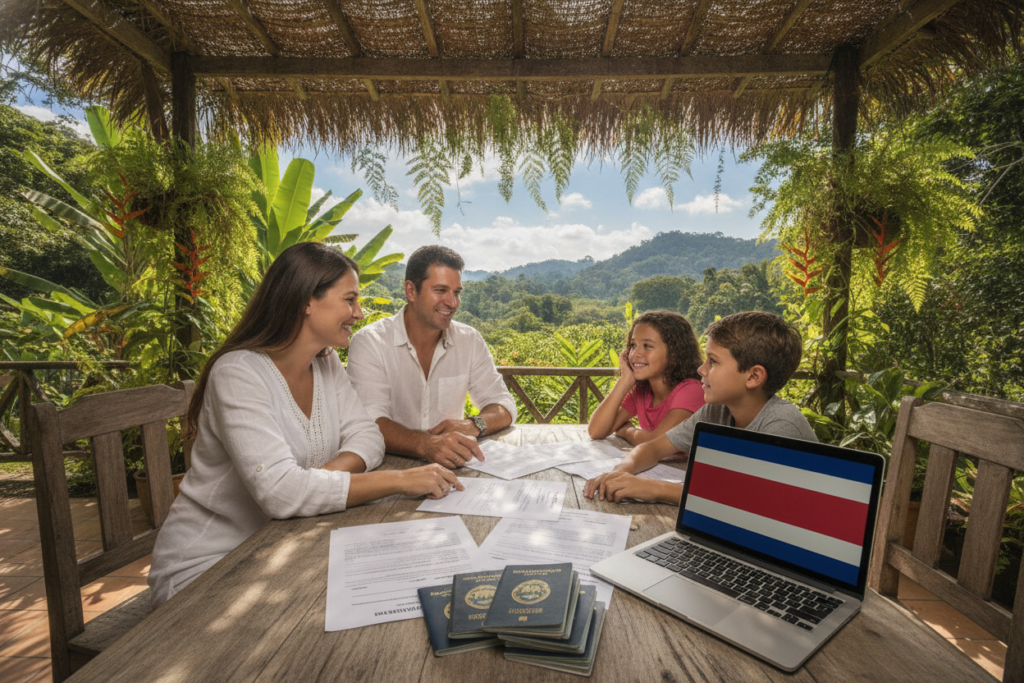
The journey to residency in Costa Rica involves understanding specific requirements and documentation. For families, proving a parent-child relationship is essential. This requires a valid birth certificate that lists the parent’s name and is properly apostilled or legalized for use in Costa Rica.
You must also gather necessary identity documents. A clean criminal background check from your country of origin is a standard requirement for all applicants. Each civil registry document, such as a marriage certificate or birth record, must be consistent across all files to avoid discrepancies during the review process.
Authentication of foreign documents is mandatory. Ensure all translations are performed by official translators recognized by the Costa Rican authorities. Providing clear proof of your relationship is the foundation of your application. Any inconsistency in your documentation can lead to significant delays.
Step-by-Step Guide to Starting Your Residency Application
Starting your residency application in Costa Rica requires careful planning and organization. We recommend that all applicants begin gathering and reviewing their documents while still in their home country. This ensures everything is correct and ready for submission.
Building a clean and consistent application is crucial. Every name and date must match perfectly across your passport, birth certificate, and other vital records. This attention to detail can significantly impact the success of your application.
Once you arrive in Costa Rica, remember to file your application within your authorised tourist stay, which the entry officer sets according to your nationality. The residency category you choose will determine the specific forms you need to complete and the order in which you must submit your evidence.
By preparing your file early, you can avoid common mistakes that often lead to application rejections by the immigration department.
Common Challenges and Practical Solutions
Navigating the residency application process in Costa Rica can be filled with hurdles. Families often face documentation inconsistencies, which are the primary cause of delays. These issues may require applicants to return to their home country to obtain corrected records.
Under Article 27 of the Reglamento de Extranjería, DGME has a maximum of three months to resolve an application once all requirements are met, so submit a complete file and keep your documents current. It is essential to be aware of this timeframe to manage expectations effectively.
Another critical aspect is ensuring that a child is correctly listed in the civil registry. This step is vital to prevent long-term delays in your case. We advise closely monitoring the expiration dates of your documents, as expired certificates will not be accepted by immigration authorities in Costa Rica.
Selecting the wrong residency category can lead to unnecessary complications. It is crucial to ensure that your legal basis matches your actual family situation. For more insights, you can visit this page.
Exploring Residency Categories for Families
When considering residency in Costa Rica, families have several attractive options to explore. Each category offers unique benefits and requirements that can suit different financial situations.
One option is the Investor Residency, which requires a minimum investment of $150,000 USD in real estate or a business. This choice appeals to families looking to establish roots while contributing to the local economy.
The Rentista Residency is another popular category. It necessitates proof of a stable recurring income of at least $2,500 USD per month for two years. This option is ideal for those with reliable income sources outside of Costa Rica.
Lastly, the Pensionado Residency caters to retirees, requiring a verified monthly pension of at least $1,000 USD for life. This category allows retirees to enjoy a peaceful life in a beautiful setting.
Permanent residency is often the goal for many families, especially for parents of Costa Rican citizens. Understanding these categories can help you make an informed decision that aligns with your financial and personal goals.
Tips for a Smooth Immigration Journey
Achieving residency in Costa Rica can be straightforward with the right preparation and foresight. Early document review is essential to ensure your application proceeds without unnecessary administrative hurdles. By being proactive, you can avoid common pitfalls that might delay your process.
We suggest that all applicants create a checklist of their documents. This will help you track the status of apostilles and translations well before your planned travel time. Staying organized is key to a successful application.
Maintaining legal stability in Costa Rica requires you to stay informed about your residency status. Ensure that your identification card is renewed on schedule to avoid complications. Working with a professional to review your file can also help identify potential issues before submission.
A well-prepared immigration journey allows you to focus on settling into your new life in Costa Rica rather than worrying about pending legal paperwork. For more insights on the application process, you can visit this page.
Leveraging Over 20 Years of CRIE’s Expertise
For over two decades, we have guided families through the intricate process of obtaining residency in Costa Rica. Our experience allows us to offer specialized support tailored to your unique situation.
We help you identify the correct residency category, ensuring your application meets all current legal requirements. This focus on detail helps applicants avoid common pitfalls.
Our team is dedicated to building a file that provides the stability your family needs for a successful life in Costa Rica. By leveraging our long-term experience, you gain access to clear guidance on managing your documentation.
A well-prepared case is the most reliable pathway to achieving your goal of living in Costa Rica. We are here to support your journey every step of the way.
Ready to Start Your Residency Journey in Costa Rica?
Are you ready to embark on your journey towards residency in Costa Rica? Every residency case is unique and depends on your specific nationality, family situation, documents, timing, and immigration history.
To receive personalized guidance and accurate pricing for your specific residency category, we encourage you to speak with our immigration expert, Johanna Alvarez. You can reach out to us today to start your pathway to a new life in Costa Rica with the support of our experienced team.
For direct assistance, please contact us via WhatsApp at +506 8373 2085, email info@crie.cr, or visit our website at crie.cr. We look forward to helping you navigate the immigration process and ensuring you have the correct information to move forward with your application.

FAQ
What are the basic requirements for obtaining residency in Costa Rica?
To obtain residency, we need to provide proof of income, valid identification, and documentation that supports our family ties or other residency categories.
How long does the residency application process take?
The processing time can vary, but typically it takes several months. We should prepare for potential delays and stay informed throughout the process.
What types of residency categories are available for families?
Families can apply for several categories, including parent-based residency, investor residency, and pensionado or rentista options, depending on our circumstances.
Do we need to provide documents for our children as part of the application?
Yes, we must include our children’s birth certificates and any other relevant documents to prove our parent-child relationship.
What should we do if our documents are in a different language?
All documents not in Spanish must be translated and authenticated. We should ensure that translations are accurate and comply with Costa Rican regulations.
Can we apply for residency while living outside of Costa Rica?
Yes, we can start our application process from abroad, but we will need to visit Costa Rica to finalize certain steps.
What are the financial requirements for the different residency categories?
Financial requirements vary by category. For example, the rentista category requires proof of a stable income, while the investor category necessitates a specific investment amount.
How can we ensure our application is consistent and complete?
We should review all documents carefully, ensure they match, and double-check that we have included everything required for our specific residency category.
What should we do if we encounter issues during the application process?
If we face challenges, it’s advisable to consult with an immigration expert who can guide us through potential solutions and help us navigate the process effectively.