Many families are drawn to Costa Rica for its safety, stable democracy, and vibrant culture. This Central American nation offers several pathways for individuals and families to settle here permanently.

Navigating the legal process to secure status for your child, however, requires a clear understanding of the available options. The rules can seem complex for parents who are citizens.

We provide essential information to help your family understand this important step. Our goal is to ensure a smooth transition into your new life together.

By choosing the correct residency pathway, your children can gain the stability and legal rights that come with living in this welcoming environment. Starting your application early is crucial to avoid common pitfalls.

Our team at CRIE is dedicated to guiding you through every requirement. For detailed guidance on eligibility, explore our resource on residency as a child of a Costa.

Understanding Costa Rican Residency: Family Ties and Eligibility

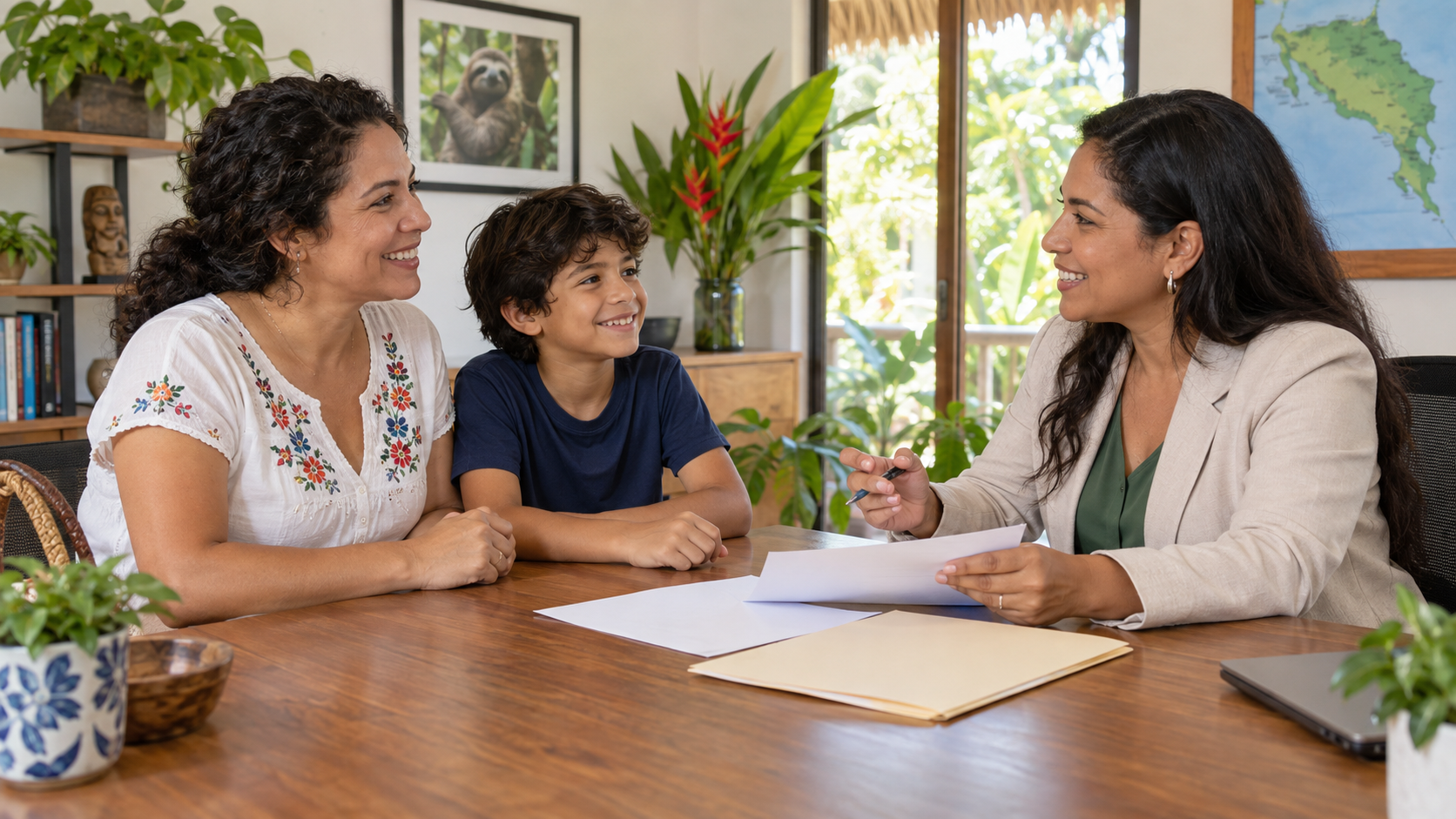
A welcoming family scene showcasing a diverse group of individuals discussing Costa Rican residency eligibility in an inviting office environment. In the foreground, two professionals in business casual attire, one Caucasian and one Latino, engage warmly, with documents about residency criteria spread on a sleek wooden desk. In the middle ground, a supportive family, including children, sits nearby, eagerly listening and looking hopeful. The background features a bright, airy office space adorned with plants and Costa Rican decor, symbolizing the "Pura Vida Costa Rica" lifestyle. Soft, natural lighting from large windows creates an optimistic and hopeful atmosphere, inviting a sense of community and family connections. The image composition focuses on unity and guidance, emphasizing the importance of family ties in residency eligibility.

For families considering a life in Costa Rica, understanding how residency ties into family status is the first critical step. The country’s immigration system provides clear pathways rooted in family connections.

Automatic Citizenship for Children of Citizens

Children born to Costa Rican citizens receive nationality by right of birth. This is a fundamental aspect of the law—it provides immediate stability and rights within the country.

Dependent Applications and Family-Based Residency

For families where the parents are not citizens, a common route is to include children as dependents on a primary application. This family-based category allows for relocation together.

Successfully obtaining status unlocks significant benefits. Families gain access to the national healthcare system, CAJA. They also enjoy visa-free access to over 150 countries.

We help families explore these options to ensure the chosen path aligns with their goals. For specific details on the process, review our guide on residency as a child of a Costa Rican.

Who Qualifies for Residency? Step-by-Step Eligibility Guidance

A professional office setting in Costa Rica showcasing residency eligibility guidance. In the foreground, a diverse group of Caucasian individuals dressed in casual business attire, such as polo shirts and button-downs, engaged in a friendly discussion around a modern conference table. In the middle, a large, colorful map of Costa Rica with highlighted regions indicating residency eligibility; beside it, a digital tablet displaying a checklist titled "Residency for Children of Costa Rican Citizens". In the background, a bright window views lush green landscapes typical of Costa Rica. Soft, natural lighting filters through, creating a warm, inviting atmosphere. Emphasize the text "Pura Vida Costa Rica" subtly integrated in the conference room design.

Costa Rica’s immigration system offers distinct pathways based on a child’s specific family circumstances. The process is different for those born to citizens versus those applying as dependents.

Eligibility for Children Born to Costa Rican Citizens

This is the most straightforward scenario. A child born to a Costa Rican citizen receives nationality by right of birth.

This automatic status grants full legal rights and residency from the moment of birth. No separate application for legal status is required.

Requirements for Dependent Applications

For other families, children can be included as dependents on a primary application. The standard rule sets an age limit of under 25 years.

Special considerations apply for children with physical or mental disabilities, regardless of age. We help families understand these specific requirements.

A crucial first step is ensuring every family member holds a valid tourist visa before applying. An expired visa can create immediate complications.

Our team at CRIE verifies your eligibility and guides you through proving your family relationship. We build your application on a solid foundation of accurate documentation to prevent delays.

Preparing Your Documents: Apostilles, Translations, and Legalization

The foundation of any successful residency application in Costa Rica lies in meticulous document preparation. Immigration authorities demand specific, verified paperwork from families.

We see this step as the most practical—yet often overlooked—part of the process. Getting it right from the start prevents frustrating delays.

Essential Documents: Birth Certificates, Passports, and ID Proofs

Every application requires core identity proofs. These include a valid passport and an official birth certificate for the child.

You must also provide clear proof of the family relationship to the primary applicant. Gathering these items early is a critical task for families.

Ensuring Apostilles and Official Spanish Translations

All foreign documents must be authenticated. This is done through an apostille or a legalization process to verify their legitimacy.

Furthermore, any document not in Spanish needs an official translation. The translator must be authorized by the Costa Rican Ministry of Foreign Affairs.

We review your paperwork to ensure it meets these strict standards. Our goal is to help you avoid rejection due to simple administrative errors.

We provide a detailed checklist so every requirement is addressed before you submit. Proper preparation builds a strong application for your children’s future.

residency-for-children-costa-rica: Building Your Application from Home

One of the most effective ways to manage the complexity of immigration is to tackle document preparation remotely. Beginning this process from your home country provides a significant advantage. It allows for a thorough review and correction of paperwork before you ever set foot in Costa Rica.

Start Early: Gathering and Reviewing Documents Remotely

We strongly advise families to initiate their residency process well in advance. Gathering birth certificates, passports, and relationship proofs from abroad can be time-consuming. Starting early gives you a buffer to handle unexpected delays.

Our team at CRIE offers a remote document review service for this exact purpose. We examine your paperwork to identify missing apostilles, incorrect translations, or other potential issues. This proactive step saves considerable time and stress later.

By coordinating with us from afar, you ensure your application is complete and consistent with all requirements. This organized approach is especially helpful for residency for parents navigating the system with their children. It leads to a more efficient submission and a smoother transition for your entire family.

Navigating the Application Timeline and Avoiding Common Mistakes

The timeline for processing a residency application in Costa Rica requires careful management and realistic expectations. We guide families through this waiting period to keep everything on track.

Understanding Processing Timelines

Review by immigration authorities typically spans several months. Upon submission, you receive a “Hoja trámite.” This document allows you to legally remain in the country during the processing time.

Pitfalls to Avoid and How to Prevent Delays

A common mistake is letting your tourist visa stamp expire. You need this stamp for driving privileges while your application is pending.

We help you avoid delays by providing ongoing support. We also advise on tracking your status through the official website at migracion.go.cr.

Patience and preparation are key. Our team ensures your journey remains smooth, much like we do for clients securing a temporary work permit.

Additional Residency Considerations: Digital Nomad vs. Traditional Options

A common point of confusion for newcomers is the distinction between temporary stays and genuine residency in Costa Rica. Families must understand that not every visa leads to permanent legal status.

Why the Digital Nomad Visa Does Not Count as Residency

Costa Rica introduced the digital nomad visa in July 2022. It allows remote workers to stay for up to one year, with a renewal option.

However, this visa is strictly a temporary permit. It does not qualify as a form of residency and offers no path to permanent status or citizenship.

Exploring the Closest Residency Alternatives

For families seeking a permanent future, traditional residency pathways are the correct choice. These options allow your time in the country to count toward long-term goals.

We help families identify the best alternative, such as family-based or investor categories. Our clear advice ensures you choose a pathway designed for stability.

Relying on the digital nomad visa for a family’s long-term plans is a mistake. We provide honest guidance to secure your children’s legal future in Costa Rica.

Meeting Income and Investment Thresholds When Needed

Beyond family connections, Costa Rica offers residency pathways based on financial criteria. These options are vital for families who do not qualify through citizenship ties.

Understanding Pensionado, Rentista, and Inversionista Criteria

The Pensionado category requires a stable monthly pension of at least US$1,000. This is a popular choice for retirees seeking to live in Costa Rica.

For the Rentista residency, applicants must prove a monthly income of US$2,500. This income must be guaranteed for two years to meet the requirement.

The Inversionista, or Investor, category demands a minimum investment of US$150,000. This investment must be made in the applicant’s personal name within Costa Rica.

We guide families through documenting these financial requirements. Proper evidence is crucial for a successful rentista residency or investor application.

Understanding these thresholds helps families choose the right pathway for their future in Costa Rica. Our team ensures your financial documentation meets all official criteria.

Your Path to a Secure Future in Costa Rica: Next Steps

Taking the final step toward legal status in Costa Rica marks the beginning of a new chapter for your family. Securing residency is a significant move that builds long-term stability here.

We encourage you to reach out to our team at CRIE. We can begin the process of confirming your eligibility and preparing your documentation properly.

You can contact us via WhatsApp at +506 8706 3888 or email us at info@crie.cr. Our experts provide professional guidance tailored to your specific situation.

By taking action now, you move closer to achieving the legal status that allows your family to thrive. We are committed to offering transparent and reliable information for your future in this welcoming nation.

FAQ

Is my child automatically a citizen if I am Costa Rican?

Yes. Children born abroad to a Costa Rican citizen parent are automatically citizens by birth. The process involves registering the foreign birth certificate with the Civil Registry in Costa Rica to obtain their Costa Rican cédula (national ID) and passport.

What if my child doesn’t qualify for automatic citizenship?

If a child doesn’t qualify for citizenship, they can apply for residency as a dependent. This is a common family-based pathway. The process requires proving the family relationship and that the sponsoring parent has legal status—like permanent residency or citizenship—in the country.

What documents are the most critical for the application?

The core documents are the child’s original birth certificate and passport, and the parent’s Costa Rican ID or residency card. Every foreign document must have an apostille (or legalization) and an official translation into Spanish. We always advise starting this document gathering early.

Can we start the residency process from our home country?

Absolutely. In fact, we recommend it. You can gather, apostille, and translate all required documentation remotely before arriving. This proactive planning is the best way to avoid significant delays once you are in Costa Rica and ready to submit the official application to immigration.

How long does the residency application typically take?

Processing times can vary, but you should plan for several months. The timeline depends on the immigration authority’s caseload and whether your application is complete and error-free. Submitting a perfect dossier from the start is the most effective strategy for a smoother, faster process.

Does a Digital Nomad Visa lead to residency for my family?

No, it does not. The Digital Nomad Visa is a temporary permit for remote workers. It does not count as legal residency and cannot be used as a basis to sponsor dependents for their own status. Families need to pursue a formal residency category together.

What are the main residency options if we don’t qualify by family ties?

The primary pathways are the Pensionado, Rentista, and Inversionista categories. Each has specific financial requirements, like proving a stable pension, a guaranteed income, or making a qualifying investment in Costa Rica. We can help you determine which option aligns with your situation.

What is the first step we should take?

Your first step is to confirm your specific eligibility. Gather your existing documents and consult with a professional who can review your family’s details. This clarity allows you to build a precise roadmap and document checklist, turning a complex process into a manageable, step-by-step plan.


Article by Glenn Tellier (Founder of CRIE and Grupo Gap)

Don't wait, contact us right now!
Call or WhatsApp Costa Rica +506 8373 2085 or +506 8706 3888
Call USA/Canada +1 305-906-6784

See If You Qualify For Residency Today!