Applying for legal residence in a new country is a significant step. Knowing where your application stands is about more than curiosity—it’s vital for compliance and planning your life here.

We understand the mix of excitement and anxiety. Our role is to guide you through both the technical steps and the personal journey.

Costa Rica attracts many with its natural beauty and stable democracy. The residency process, however, requires navigating specific bureaucratic requirements.

This guide focuses on official pathways like Pensionado, Rentista, and Inversionista programs. We provide concrete numbers and clear steps.

We’ll cover eligibility, document preparation you should start at home, and how to navigate the official system. We also highlight common pitfalls to avoid.

There are no shortcuts, but with proper preparation, the process becomes manageable. We emphasize starting your document work early, including apostilles and translations.

As expert advisors, we help simplify this complex immigration process. Always verify specific details with the official authority at migracion.go.cr for the most current information.

Understanding Costa Rica Residency Options (Residencia en Costa Rica)

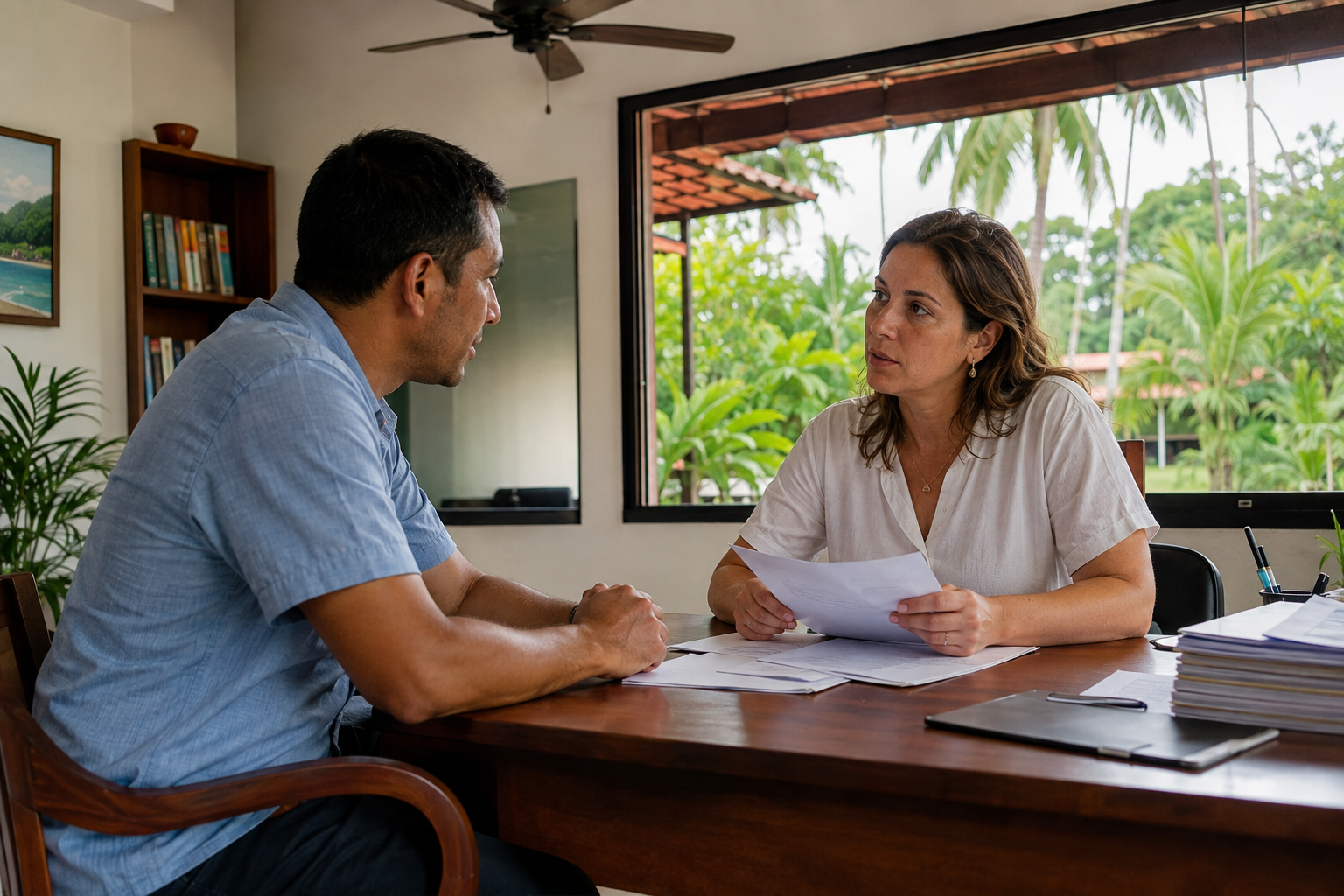
A serene office setting with a large window showcasing lush Costa Rican greenery outside, depicting the natural beauty of Costa Rica. In the foreground, a diverse group of three Caucasian professionals dressed in business casual attire discusses residency options at a wooden table filled with brochures and documents labeled "Pura Vida Costa Rica". A laptop with the Costa Rica immigration website is open, displaying strategic residency pathways. In the background, soft natural lighting brightens the space, creating a warm and inviting atmosphere. The scene conveys a sense of clarity and professional guidance, emphasizing a smooth process for understanding residency in Costa Rica, with vivid colors reflecting the tropical environment outside.

Costa Rican immigration law establishes clear residency categories for pensioners, income earners, and investors. We see three primary pathways for long-term stays. Each category serves different circumstances and carries specific financial thresholds.

These programs lead to temporary residency, which can later transition to permanent status. It’s crucial to select the right one from the start.

Eligibility Criteria for Pensionado (Pensionado) Applicants

The Pensionado category is for retirees with a verifiable lifetime pension. Applicants must prove a minimum income of US$1,000 per month from a government or institutional source.

This income must be permanent and guaranteed. Required documents include official pension letters and benefit statements. All papers need apostilles and certified Spanish translations before submission.

Income and Requirements for Rentista (Rentista) and Inversionista (Investor)

The Rentista program requires proof of US$2,500 in monthly income for two years. Alternatively, a US$60,000 deposit in a local bank meets this requirement. This grants a two-year temporary residency, which is renewable.

The Inversionista (Investor) category demands a minimum US$150,000 investment. Real estate must be registered in the applicant’s personal name, not a corporation. This is a common and costly mistake.

Note: Digital Nomad visas allow temporary stays but are not a formal residency category. They do not provide a path to citizenship. After three consecutive years of temporary residency, a person may apply for permanent status. Costa Rican laws require strict compliance, and each application is evaluated individually.

Preparing Your Application: Documents and Timelines

A modern, organized Costa Rica residency document checklist laid out on a wooden desk. In the foreground, various documents like application forms, identification, and proof of income are neatly arranged, some partially open to reveal text. In the middle ground, a well-organized folder labeled “Residency Application” holds additional paperwork, beside a laptop displaying the "Pura Vida Costa Rica" logo on the screen. The background features a soft-focus view of a warm, tropical office setting with potted plants and a bright window letting in natural light, creating an inviting atmosphere. The scene captures a professional, yet relaxed mood, ideal for individuals preparing their residency applications. Use a warm color palette to enhance the inviting feel.

The journey to residency begins long before you arrive, with meticulous paperwork gathering. We emphasize starting this process from your home country. Attempting to obtain documents from abroad creates expensive delays.

Essential Documents: Apostilles, Translations, and More

Your core file includes a birth certificate, police records, and financial proof. Each piece requires an apostille from the issuing state or federal authority.

Documents not in Spanish need certified translations. Using a bilingual friend won’t work—immigration requires official certification.

Step-by-Step Guidance on Pre-Arrival Preparation

First, confirm your residency category. Next, request all necessary papers from home authorities. Then, secure apostilles and arrange translations.

Allow 2-4 months for this document gathering step. Once your file is complete, you’ll request an appointment to submit.

The official submission window is 180 days from your start date. Always verify the latest requirements and information at migracion.go.cr.

How to Check Costa Rica Immigration Status Online

The official online portal offers real-time insights into your residency application. This transforms uncertainty into actionable information.

After months of preparation, you naturally want to know your file’s progress. Costa Rica’s digital system provides this transparency.

Navigating the Official migracion.go.cr Website

Visit the official immigration website. Locate the “Consulta de Trámites” or similar status portal.

You will need your passport number and the receipt number from your submission. Enter these details to access your current file status.

The interface is in Spanish. Key terms like “Consultar” mean “Check” and “Número de Pasaporte” is “Passport Number.”

Understanding Status Messages and Timelines

“SOLICITUD RECIBIDA” confirms your application is logged in the system. “PREVIO” signals a request for more documents from the authority.

Respond to a “PREVIO” notice quickly to avoid delays. “RESOLUCION FIRMAS” means your file is in final review, often resolved within 15 working days.

The “en tramite” status legally allows you to stay while your application processes. It prevents overstay penalties.

Check for updates weekly. Processing typically takes 3 to 8 months. The online portal is your most accurate source for real-time progress.

Common Pitfalls and Mistakes to Avoid

A single oversight in your documentation can lead to months of unnecessary delays. We identify frequent errors to help you navigate the process smoothly.

Frequent Documentation Errors and Overlooked Requirements

Incomplete apostilles top the list. Every official document requires this authentication. Submitting without it guarantees a “PREVIO” status.

Certified Spanish translations are mandatory by law. Using uncertified translators leads to rejection. Income proof must clearly meet your category’s thresholds.

For family applications, each person needs a complete document package. Overlooking police records for children over 12 stalls the entire application.

Clarifying Eligibility, Thresholds, and Misinterpretations

A common misinterpretation involves the Digital Nomad visa. It is a temporary permit, not a formal residency category. It offers no path to permanent status.

The “en tramite” status is often misunderstood. When your tourist visa expires during processing, you are legally allowed to stay. This protects applicants.

Confusing income requirements between Pensionado and Rentista is another error. For Inversionista, the investment must be in your personal name, not a corporation.

Careful preparation avoids these pitfalls. Always verify current requirements at migracion.go.cr.

Final Steps: Next Actions and How CRIE Can Assist You

Completing your residency quest hinges on clear next steps and reliable support.

After submission, monitor your file’s progress using the official portal. Respond promptly to any requests from the authority. Upon approval, you will collect your DIMEX card—your official ID within the country.

Remember, temporary residency requires renewal. Maintaining legal status for three consecutive years opens eligibility for permanent residency.

We provide guidance through this final phase. Our services include document review and process navigation. We help interpret updates and prepare responses. Final decisions always rest with Costa Rican immigration.

Ready for personalized assistance? Contact us via WhatsApp at +506 8706 3888 or email info@crie.cr. Always verify the latest information at migracion.go.cr.

FAQ

What’s the fastest way to see my application’s current stage?

The most direct method is using the official Migración portal at migracion.go.cr. You’ll need your file number or passport details to log into the system and view real-time updates on your case’s progress, from initial receipt to final resolution.

Which residency category is right for me if I have a stable pension?

The Pensionado visa is designed for you. It requires proof of a lifetime pension from a government or private entity, meeting a minimum monthly threshold set by immigration law. This category is popular for its straightforward financial requirement.

Why are apostilled documents so critical for my file?

Apostilles authenticate your documents for international use, a mandatory step under Costa Rican law. Without this certification, even perfectly valid foreign documents like birth certificates or police records will be rejected, causing significant delays in your process.

My status says "En Estudio." What does that mean?

“En Estudio” indicates your application is under active review by an officer. This is a standard phase where your documents are verified against requirements. Processing times can vary, but this status confirms your file is moving forward within the system.

What’s the most common mistake applicants make?

A frequent error is submitting documents that haven’t been properly apostilled or translated by an official Costa Rican translator. Another is misunderstanding the financial requirements, like providing bank statements instead of the legally mandated guarantee letter for certain visas.

How can CRIE assist if my application seems stalled?

We act as your local liaison. Our team can help interpret complex status messages, communicate directly with immigration authorities to seek clarification on your behalf, and ensure all follow-up documentation is submitted correctly to resolve any holds.


Article by Glenn Tellier (Founder of CRIE and Grupo Gap)

Don't wait, contact us right now!
Call or WhatsApp Costa Rica +506 8373 2085 or +506 8706 3888
Call USA/Canada +1 305-906-6784

See If You Qualify For Residency Today!