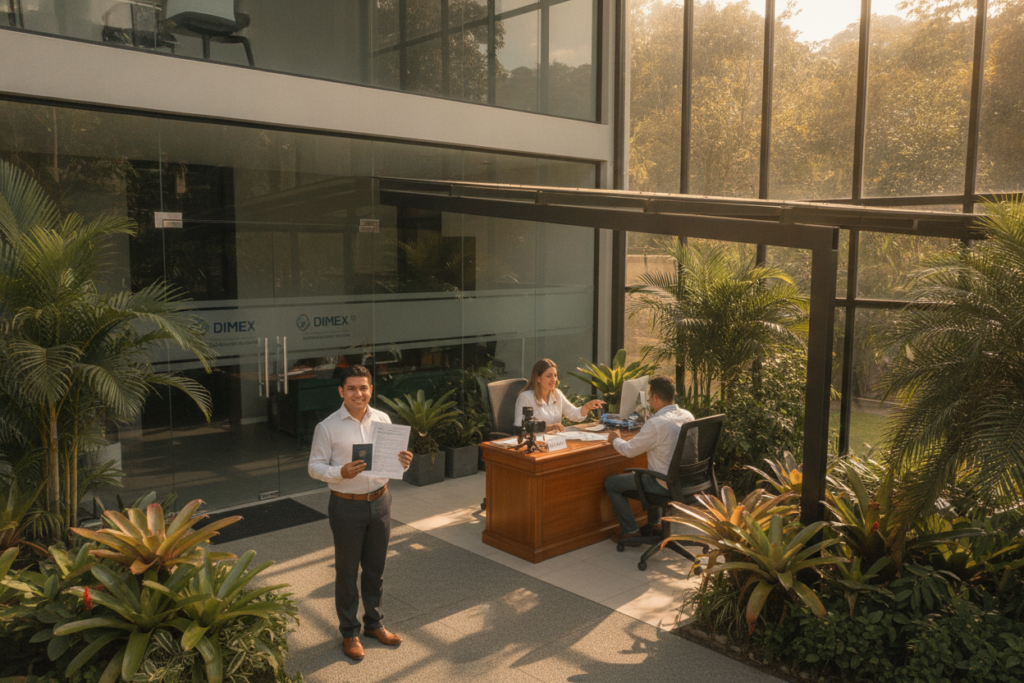
Starting a new life in Costa Rica is exciting, but formalizing your legal status requires careful attention to detail. A key part of this process is obtaining your DIMEX card. This official identification is issued by the Dirección General de Migración y Extranjería and serves as your primary ID while living here.
Since January 2, 2023, the DIMEX has been issued digitally. This shift makes understanding the specific photo specifications more important than ever. Submitting a non-compliant image is a common reason for application delays.
We guide you through this complex residency application process. Our goal is to ensure your documentation meets the strict standards set by Costa Rican immigration authorities. Proper preparation from the start builds a strong foundation for a successful outcome.
Think of us as your experienced partner. We help expats navigate the nuances of the application, preventing the common pitfalls that can slow down the administrative workflow. With the right support, you can secure your legal status and focus on enjoying your new home.
Understanding Costa Rica Residency: Who Qualifies (Residencia)

The path to Costa Rican residency begins with understanding which of the official categories aligns with your income or assets. This initial choice determines the documentation you’ll need to gather.
Eligibility for Pensionado, Rentista, Inversionista, and Vínculo
Costa Rica offers several primary residency pathways. The Pensionado category is for retirees with a guaranteed lifetime pension. The Rentista category suits those with stable, external income.
The Inversionista category is designed for investors making a significant capital commitment. There is also the Vínculo category for those with close family ties to a Costa Rican citizen.
Thresholds and Required Documentation
Each category has strict financial requirements. Pensionado applicants must prove a minimum pension of US$1,000 per month. Rentista applicants need to show US$2,500 in monthly income guaranteed for two years.
For the Inversionista category, a minimum investment of US$150,000 in the applicant’s personal name is required. It’s crucial to understand that the Digital Nomad visa is a separate status, not a residency category.
We help you identify which residency category fits your financial profile. Our guidance ensures you meet all legal requirements before your formal government submission.
Pre-Arrival Documentation Preparation: Apostilles and Translations

A significant portion of the residency process can—and should—be handled from your home country to prevent delays. Getting your paperwork in order before you travel is the single most effective way to streamline your application.
Organizing Your Paperwork from Home
We advise starting your document collection immediately. Vital records like your birth certificate and marriage certificate must typically carry an apostille from your home country’s authorities. This international certification is mandatory.
Create a master folder for all your original paper documents. We also recommend keeping secure digital backups. This dual-system protects against loss during your international move.
Common Document Preparation Mistakes to Avoid
A frequent error involves translations. All foreign-language documents must be officially translated within Costa Rica by an authorized translator. Translations prepared abroad are generally not accepted.
Another oversight is failing to verify that your marriage certificate is current and meets specific authentication standards. By preparing your paperwork early, you significantly reduce the need to request new documents from overseas later.
Step-by-Step Guidance for Scheduling Your Appointment
The appointment booking phase is where your preparation meets official procedure. Securing your slot is a straightforward but vital step.
You have several options for setting your meeting. Each government office has its own system.
Booking Your Appointment at DGME, BCR, or Correos
For appointments at a Banco de Costa Rica branch, call the dedicated hotline at 800-BCRCITA. This is the standard method for many applicants.
You can also use the national post office system. If you choose this post office route, bring exact cash for the ₡7,910 government processing fees. The DGME main office uses a different online booking platform.
We always advise confirming the specific process for your chosen location. Procedures can differ.
What to Expect During the Meeting
At the immigration office, you will provide your biometric data. This includes fingerprints and a digital signature.
You will then submit your organized paperwork to the attending official. They will conduct a preliminary review of your file.
Arrive at least ten minutes early. Late arrivals risk forfeiting your scheduled appointment slot. This is a strict policy.
With your documents in order and your time secured, you are ready for this key meeting.
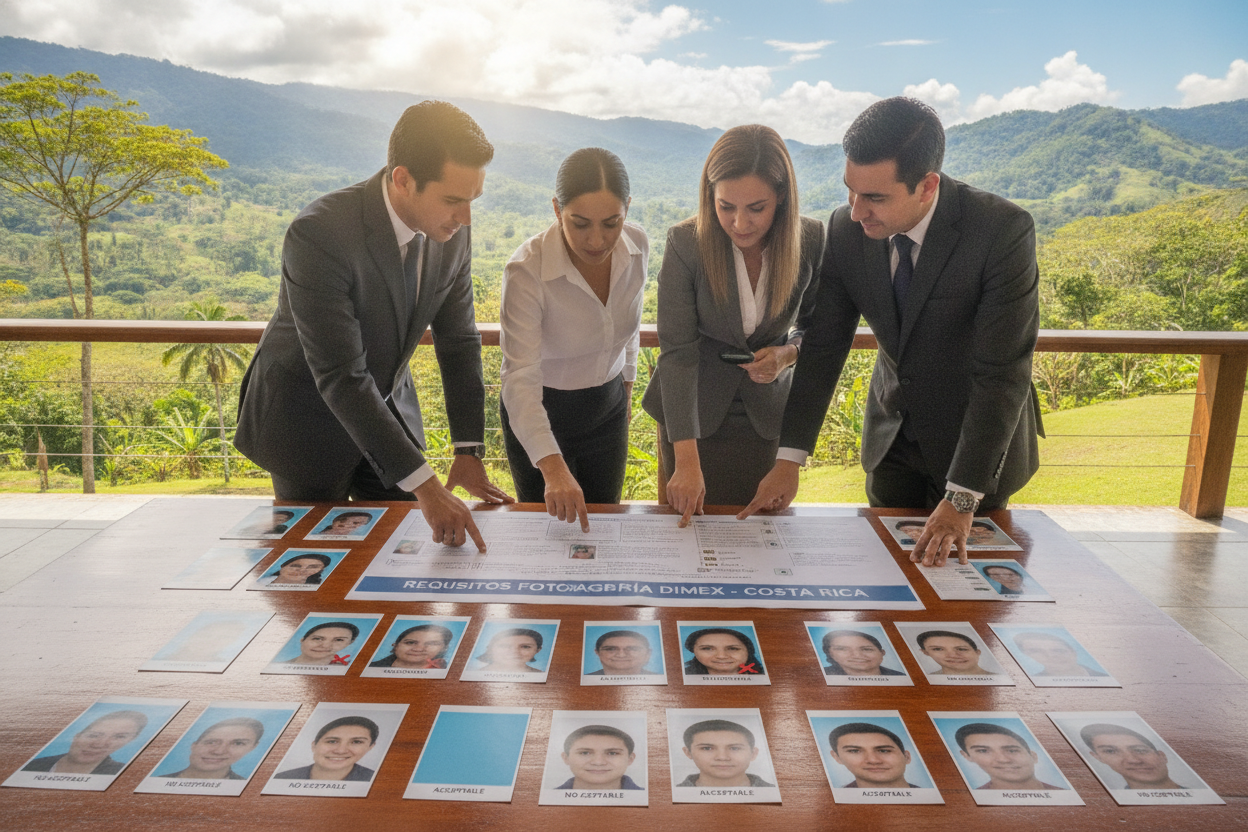
dimex-photo-requirements-costa-rica
One of the most common reasons for application delays stems from a simple oversight: the photo. This image becomes your official biometric identifier on both your digital and physical DIMEX card.
Getting it right from the start is crucial for a smooth application process.
Official Photo Standards and Tips for a Successful Application
Your submitted portrait must meet strict government specifications for clarity and dimensions. A non-compliant image is often rejected by the immigration processing system.
We provide precise guidance on these standards. Our goal is to help you avoid this easily preventable hurdle in your application.
Digital vs. Physical Card Considerations
Since January 2, 2023, a digital DIMEX issued as a secure PDF is legally valid alongside the traditional plastic card. This modern format offers convenient access.
However, many residents and local institutions still prefer the physical card for daily interactions. It’s practical for routine identification needs.
We help you navigate managing both formats effectively. This ensures you’re prepared for any situation requiring proof of your legal status in Costa Rica.
Navigating the Residency Process and Timelines
Understanding the timeline from application submission to card issuance helps manage expectations during this administrative process. This phase involves a period of waiting and active monitoring after your official meeting.
From Approval to Issuance of Your DIMEX
Shortly after your appointment, you will receive a digital version of your DIMEX card via email. This file serves as valid proof of your legal status while you wait for the physical document.
The standard delivery time for the physical residency card is approximately 22 business days. However, the total time can extend to several months based on government processing volumes.
We suggest planning for a wait time of 60 to 90 days from your appointment date. It’s crucial to monitor the delivery status, as the post office may not send a notification. For a smooth start to this final stage, review our detailed first appointment guide.
Maintaining your legal status requires patience. The processing time for your physical DIMEX card can vary, but tracking its progress provides peace of mind.
Avoiding Common Mistakes in Your Immigration Process
Many applicants find their progress stalled not by complex legal hurdles, but by avoidable administrative errors. These simple oversights can add weeks or months to your timeline. We see the same few issues causing the majority of delays.
Name Discrepancies and Late Arrivals
The spelling of your name must be identical on every document. A single letter difference between your passport and a supporting certificate can trigger an immediate rejection. This is a non-negotiable requirement in the immigration process.
You must verify all personal information in your application matches your official government identification. Inconsistent data forces officials to pause and request clarification.
Arriving late to your scheduled appointment is another common error. It can cause significant delays as you may forfeit your slot. Punctuality demonstrates respect for the official procedure.
We emphasize double-checking all requirements before your meeting. Missing one document can halt the entire processing of your file. A thorough final review is your best defense.
By carefully checking your application for errors in your name or other details, you avoid the frustration of restarting parts of the administrative process. Proactive planning is key, especially when preparing for your later residency renewal in Costa Rica.
Embracing the Digital Transformation in DIMEX Issuance
Receiving your legal residency proof via email marks a significant shift from traditional bureaucratic processes. This change, effective from January 2, 2023, modernizes how the government confirms your legal status.
We see this as a positive step for efficiency. The digital DIMEX system reduces paperwork and speeds up initial verification for new residents.
Benefits of the Digital DIMEX Format
The primary advantage is immediate access. Once approved, your digital DIMEX card arrives directly in your email inbox. This eliminates weeks of waiting for a physical document to be mailed.
You can store this secure PDF on your smartphone or in cloud storage. Having your proof of residency status digitally means it’s always accessible when you need it.
While the digital format is legally valid, we recommend printing a copy. Some local institutions may still request a paper version for their records.
The government continues to refine this paperless system. It represents a reliable, modern way to manage your official residency identification.
Working Within the Pura Vida Cultural Context
The ‘Pura Vida’ philosophy isn’t just a slogan—it deeply influences how administrative tasks are approached locally. This cultural mindset values well-being and personal connection over rigid efficiency.
For new residents, adapting to this perspective is crucial. It shapes every interaction within Costa Rica’s systems. The focus is on solving issues thoroughly, not quickly.
Understanding Local Administrative Rhythms
Administrative systems in Costa Rica often move at their own deliberate pace. They reflect a national philosophy that values presence over the frantic ticking of a clock.
We encourage you to embrace this unhurried rhythm. It is a fundamental part of the authentic Costa Rican experience for every resident.
Recognizing that the residency process may require more time than initially expected is vital. This understanding helps you manage expectations and significantly reduces transition stress.
By respecting these local administrative rhythms, you navigate your overall process with a more positive mindset. This approach leads to more effective problem-solving. For ongoing matters, such as verifying your DIMEX renewal amount, maintaining this patient perspective within Costa Rica’s framework is equally important.
Ensuring Document Security and Accuracy
A secure and organized document strategy is your best defense against future administrative complications. Protecting your sensitive personal information is an ongoing responsibility after your residency is approved.
Organizing Digital and Paper Copies
We recommend maintaining both physical and digital versions of all your vital paperwork. Keep your original paper documents organized in a dedicated, secure folder. This makes retrieving specific information during any future appointments straightforward.
Create a high-resolution digital copy of every document. Store these backups in multiple locations—like a secure cloud service and an external hard drive. This redundancy prevents catastrophic loss.
Maintaining Consistent Information Across Documents
Ensuring consistency is critical. Your name, birth date, and other personal details must match perfectly on every single form and certificate. Even a minor discrepancy can undermine the integrity of your entire residency file.
By proactively managing your digital and paper copies, you protect yourself. Replacing these official Costa Rican records is difficult and costly if they are lost or damaged.
Category-Specific Requirements and Updates
Investors and families seeking residency face unique documentation challenges that require careful advance planning. The rules for each pathway are precise and non-negotiable.
Special Considerations for Investors and Family-Based Cases
For the Inversionista category, the US$150,000 investment must be held in the applicant’s personal name. Using a corporate structure can disqualify the application.
Family-based cases, such as Vínculo, depend on authenticated proof of relationship. An official marriage certificate is often required and must remain current.
Financial thresholds are strict. The Pensionado category requires a minimum US$1,000 monthly pension. The Rentista category needs proof of US$2,500 monthly income guaranteed for two years.
We monitor updates to these requirements. Changes can directly impact your legal status and documentation needs.
Staying informed about your specific residency category’s rules is the best way to ensure ongoing compliance. This knowledge protects your status from unexpected complications.
Staying Informed with Official Resources and Support
Navigating residency in Costa Rica successfully depends on having access to reliable, up-to-date information. Your legal status requires ongoing attention as rules can evolve.
When to Contact CRIE via WhatsApp +506 8706 3888 or info@crie.cr
We provide personalized support for your DIMEX card and residency application. Our team offers expert guidance to help you maintain your legal status in this country.
Reach us directly via WhatsApp at +506 8706 3888 or by email at info@crie.cr. We answer your questions and help navigate the complexities of living here.
Verifying Details at migracion.go.cr
Always verify official details on the government website at migracion.go.cr. This source provides the latest updates on residency requirements and procedures.
Checking this site regularly ensures you have accurate information for your DIMEX. Combining official resources with our support gives you confidence.
Contact us today for assistance with your residency journey in Costa Rica.
Final Steps and Key Takeaways for a Smooth Residency Journey
Your successful DIMEX application is the key that unlocks long-term stability and peace of mind in your adopted home. Securing your residency in Costa Rica is a significant milestone, built on the careful preparation of your documentation.
Remember to have your parents’ full names and your current email address typed on separate sheets for the final processing steps. This small detail is often required but easily overlooked.
Your residency card is valid for several years. You must track your expiration date and begin the renewal process at least 90 days in advance to avoid any lapse in your legal status.
We have guided thousands of expats through this journey. By staying organized and proactive, you can enjoy the beauty of Costa Rica while maintaining your residency for many years to come.
FAQ
What are the official DIMEX photo requirements?
The official photo for your DIMEX card must be a recent, color passport-style image with a plain white background. You must face forward with a neutral expression, no glasses, and no headwear unless for religious purposes. The photo must be printed on matte photo paper at the correct size, as digital submissions are not accepted for the initial physical card. We always recommend having a professional in Costa Rica take the photo to ensure it meets the exact government standards and avoids application delays.
Who qualifies for residency in Costa Rica?
The main residency categories are Pensionado (retiree with a lifetime pension), Rentista (person with guaranteed stable income), Inversionista (investor), and Vínculo (family ties). Each category has specific financial thresholds—like a
FAQ
What are the official DIMEX photo requirements?
The official photo for your DIMEX card must be a recent, color passport-style image with a plain white background. You must face forward with a neutral expression, no glasses, and no headwear unless for religious purposes. The photo must be printed on matte photo paper at the correct size, as digital submissions are not accepted for the initial physical card. We always recommend having a professional in Costa Rica take the photo to ensure it meets the exact government standards and avoids application delays.
Who qualifies for residency in Costa Rica?
The main residency categories are Pensionado (retiree with a lifetime pension), Rentista (person with guaranteed stable income), Inversionista (investor), and Vínculo (family ties). Each category has specific financial thresholds—like a $1,000 monthly pension or a $150,000 investment—that must be proven with certified documentation. Determining your correct category is the critical first step, as it dictates the required documents and process.
How should I prepare my documents before arriving?
Start by obtaining official, apostilled copies of your birth certificate and marriage certificate (if applicable) from your home country. These must be translated into Spanish by a certified translator in Costa Rica. A common mistake is using documents without an apostille or bringing only one set of copies. We advise getting multiple certified copies of every document to streamline the process at various government offices.
How do I schedule my residency appointment?
Appointments are scheduled through the official DGME (Dirección General de Migración y Extranjería) portal. Availability can be limited, so we recommend checking the site frequently. You will select a location, such as a main DGME office, Banco de Costa Rica (BCR), or a Correos branch. Be prepared to present all your original documents and copies at this meeting for the initial review.
What is the timeline from application to receiving the card?
After your appointment and submission, the formal review by immigration can take several months. Once approved, you will receive notification to pay the final issuance fee. The physical DIMEX card is then typically ready for pickup within 30 to 60 days. It’s important to monitor your application status online and ensure your contact information is up-to-date throughout this period.
What are the most common mistakes to avoid?
The most frequent errors involve name discrepancies across documents and arriving late to appointments. Even a small difference, like a middle name on one paper and an initial on another, can cause significant setbacks. Always double-check that your full name is spelled identically on your passport, birth certificate, and application forms. Punctuality is also essential, as government offices may reschedule late arrivals for a future date.
What are the benefits of the digital DIMEX format?
The digital DIMEX, accessible via the “Mi DIMEX Digital” app, provides a secure, government-verified digital identity you can use immediately upon approval, before the physical card is printed. It’s legally valid for identification and simplifies processes like banking. However, you will still eventually receive a physical plastic card for everyday use, as both formats are issued.
How do I work effectively with local administrative processes?
Patience and preparation are key. Government processes in Costa Rica often follow their own timeline. We guide our clients to have all documents perfectly organized, submit well ahead of deadlines, and maintain a respectful, persistent follow-up routine. Understanding this cultural context—the “Pura Vida” pace—helps manage expectations and reduces frustration during your residency journey.
How should I organize my documents for security?
Create both digital scans and physical copies of every document. Keep the original apostilled and translated papers in a secure place, and only submit the certified copies when required. Use a simple filing system to track application dates, receipt numbers, and expiration dates. Consistency is crucial—ensure your address, email, and phone number are identical on every form you submit to any Costa Rican agency.
Where can I get official updates or help?
For the most current information, always verify details on the official immigration website at migracion.go.cr. If you encounter complex issues or need personalized guidance, you can contact the Costa Rica Immigration Experts (CRIE) via WhatsApp at +506 8706 3888 or email at info@crie.cr. They provide expert support for navigating the latest procedures and requirements.
,000 monthly pension or a 0,000 investment—that must be proven with certified documentation. Determining your correct category is the critical first step, as it dictates the required documents and process.
How should I prepare my documents before arriving?
Start by obtaining official, apostilled copies of your birth certificate and marriage certificate (if applicable) from your home country. These must be translated into Spanish by a certified translator in Costa Rica. A common mistake is using documents without an apostille or bringing only one set of copies. We advise getting multiple certified copies of every document to streamline the process at various government offices.
How do I schedule my residency appointment?
Appointments are scheduled through the official DGME (Dirección General de Migración y Extranjería) portal. Availability can be limited, so we recommend checking the site frequently. You will select a location, such as a main DGME office, Banco de Costa Rica (BCR), or a Correos branch. Be prepared to present all your original documents and copies at this meeting for the initial review.
What is the timeline from application to receiving the card?
After your appointment and submission, the formal review by immigration can take several months. Once approved, you will receive notification to pay the final issuance fee. The physical DIMEX card is then typically ready for pickup within 30 to 60 days. It’s important to monitor your application status online and ensure your contact information is up-to-date throughout this period.
What are the most common mistakes to avoid?
The most frequent errors involve name discrepancies across documents and arriving late to appointments. Even a small difference, like a middle name on one paper and an initial on another, can cause significant setbacks. Always double-check that your full name is spelled identically on your passport, birth certificate, and application forms. Punctuality is also essential, as government offices may reschedule late arrivals for a future date.
What are the benefits of the digital DIMEX format?
The digital DIMEX, accessible via the “Mi DIMEX Digital” app, provides a secure, government-verified digital identity you can use immediately upon approval, before the physical card is printed. It’s legally valid for identification and simplifies processes like banking. However, you will still eventually receive a physical plastic card for everyday use, as both formats are issued.
How do I work effectively with local administrative processes?
Patience and preparation are key. Government processes in Costa Rica often follow their own timeline. We guide our clients to have all documents perfectly organized, submit well ahead of deadlines, and maintain a respectful, persistent follow-up routine. Understanding this cultural context—the “Pura Vida” pace—helps manage expectations and reduces frustration during your residency journey.
How should I organize my documents for security?
Create both digital scans and physical copies of every document. Keep the original apostilled and translated papers in a secure place, and only submit the certified copies when required. Use a simple filing system to track application dates, receipt numbers, and expiration dates. Consistency is crucial—ensure your address, email, and phone number are identical on every form you submit to any Costa Rican agency.
Where can I get official updates or help?
For the most current information, always verify details on the official immigration website at migracion.go.cr. If you encounter complex issues or need personalized guidance, you can contact the Costa Rica Immigration Experts (CRIE) via WhatsApp at +506 8706 3888 or email at info@crie.cr. They provide expert support for navigating the latest procedures and requirements.
Article by Glenn Tellier (Founder of CRIE and Grupo Gap)
Don't wait, contact us right now!
Call or WhatsApp Costa Rica +506 8373 2085 or +506 8706 3888
Call USA/Canada +1 305-906-6784