
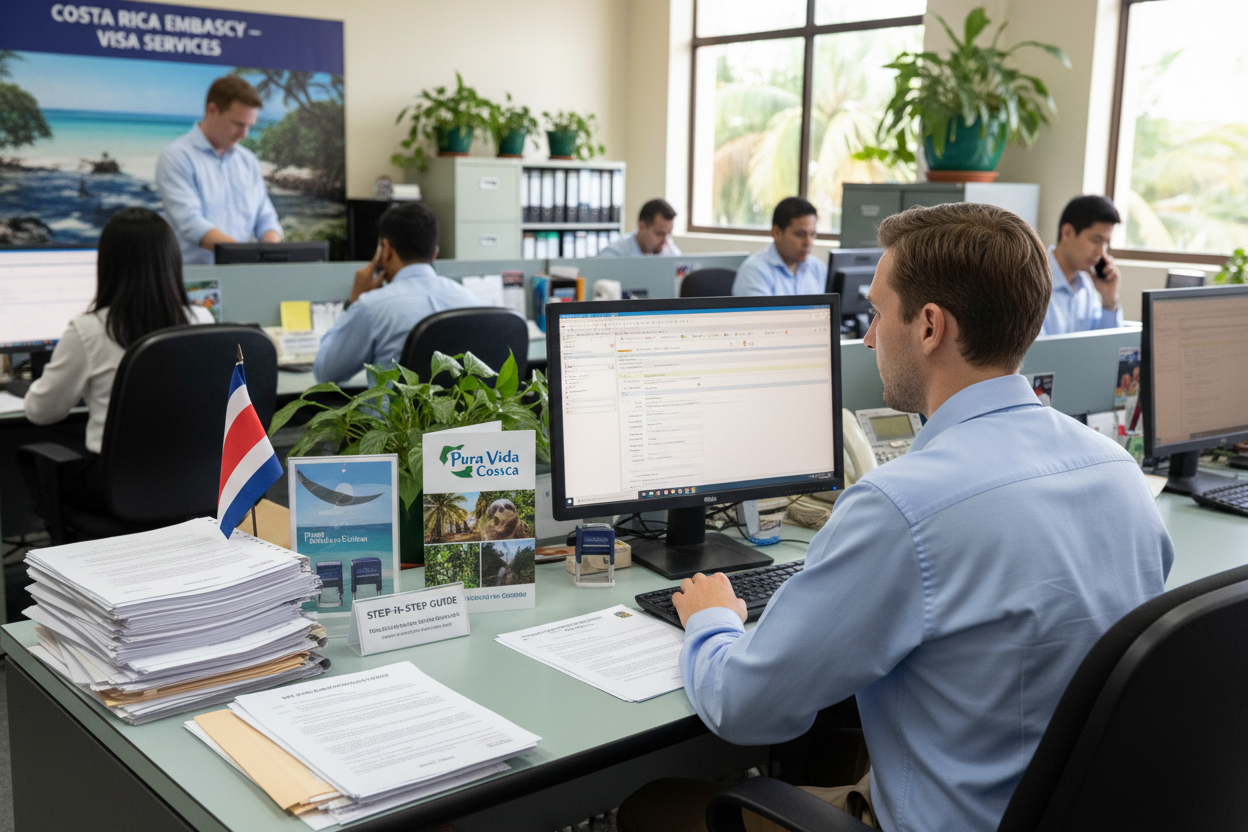
Many people search for information on a Costa Rica visa. It’s vital to understand the key difference between simple tourist entry and formal residency pathways.
Tourist entry is straightforward for citizens from many countries. You typically need a valid passport, proof of funds, and a return ticket. This grants a short-term stay but provides no path to live here permanently.
We at CRIE focus exclusively on residency and immigration. True residency requires applying under categories like Pensionado, Rentista, or Inversionista. Each has specific financial and document requirements.
Our guidance is transparent and realistic. The government process has no guarantees. Start preparing documents like apostilles and translations from home to avoid delays. For more on maintaining status, see our guide on visa renewal in Costa Rica.
Understanding Costa Rica Residency Options
To establish long-term roots in Costa Rica, foreign nationals must apply under one of three primary residency pathways. This formal immigration process is distinct from a simple tourist stay.
Eligibility Pathways: Pensionado, Rentista, and Inversionista
The Pensionado category is for retirees. It requires proof of a permanent pension of at least US$1,000 per month.
The Rentista pathway suits those with stable income. You must show guaranteed income of US$2,500 per month for two years.
The Inversionista option is for investors. A minimum investment of US$150,000 in Costa Rica is required. If buying property, the title must be in your personal name.
Digital Nomad Clarification: Why It Doesn’t Count for Residency
We must clarify a common point of confusion. The Digital Nomad visa is not a residency pathway.
It is an extended tourist permission. It does not count toward permanent residency or future citizenship.
For remote workers seeking real residency, the Rentista category is often the closest fit. All three formal pathways lead to temporary residency first. This is the required step before applying for permanent status.
Who Qualifies for a Costa Rica Visa for Foreigners (¿Quién Califica?)
Determining who qualifies for long-term residency in Costa Rica hinges on meeting specific financial criteria, not your passport’s country of origin.
Basic Requirements and Income Thresholds
The Pensionado category requires proof of a permanent pension of at least US$1,000 monthly. Sporadic income does not qualify.
Rentista applicants must show US$2,500 per month in guaranteed income for two years. This needs stable documentation.
The Inversionista pathway demands a minimum US$150,000 investment. If in real estate, the title must be in your personal name.
Common Pitfalls and Mistakes to Avoid
A common mistake is holding investment property in a corporation. This disqualifies you from the Inversionista category.
Citizens from certain countries face extra steps. Those from Sierra Leone, Burkina Faso, or the Democratic Republic of Congo must secure a restricted visa from a Costa Rican consulate before they can enter Costa Rica to apply.
Always verify your specific entry and residency requirements with your nearest consulate. Proper preparation avoids major delays.
Preparing Your Documents Before Arrival (Documentos Requeridos)
A successful residency application hinges on meticulous document preparation long before you board a plane. This is the most time-consuming phase. You must start in your home country.
Obtaining apostilles, background checks, and official certifications after you’ve left is difficult or impossible. We guide clients to begin this process 6-9 months ahead.
Essential Documentation: Apostilles, Translations, and More
All foreign documents need proper authentication. For most, this means an apostille from your home state or country. If your nation isn’t part of the Hague Convention, you need consular legalization at a Costa Rican consulate.
After authentication, every paper requires an official Spanish translation. This must be done by a translator authorized by Costa Rica’s government. Unauthorized translations are rejected.
Core documents include a valid passport, apostilled birth certificate, and a recent police background check. You also need apostilled financial proof like pension letters or bank statements.
Organizing Your Paperwork from Home
Create a detailed checklist. Obtain multiple certified copies of each document. You’ll need originals and copies for various authorities.
Keep digital scans as a backup. Common mistakes involve expired background checks or insufficient financial proof. Proper organization from home prevents major delays upon arrival.
Step-by-Step Timeline & Application Process
We outline a typical sequence of events, from initial preparation abroad to final approval in Costa Rica. This timeline helps manage expectations for a complex government process.
Application Steps and Estimated Deadlines
Start document preparation 3-6 months before your planned arrival. This includes gathering apostilles and official translations. You cannot rush this crucial phase.
Next, you must enter the country legally. Most travelers enter as tourists. Immigration grants a maximum stay of 90 days upon arrival. Have a valid passport and a return ticket ready.
File your complete application package with immigration authorities soon after entry. The review period varies widely, from 3 to 12 months. Patience is essential during this waiting phase.
After provisional approval, you’ll give fingerprints and receive a temporary residency card. You must renew this card annually and maintain your financial status.
The full process from start to card issuance often takes 9-18 months. Remember, government timelines fluctuate. No one can guarantee specific days or outcomes.
Costa-Rica-Visa-For-Foreigners: Detailed Residency Process
This section provides a focused look at the investor pathway. We detail its specific rules and share practical advice for a smoother application.
Investor (Inversionista) Requirements and Guidelines
Navigating the Inversionista category demands strict adherence to its core financial requirement and property ownership rules. A minimum investment of US$150,000 is mandatory. For real estate, the official title must be in your personal name.
Holding property through a corporation disqualifies it for this visa. Business investments or approved projects are alternative options. All investments require formal appraisal and documentation for the immigration file.
Tips for a Smooth Application and Avoiding Delays
Submit a complete application with all required documents. Each paper needs proper apostilles and translation by an authorized professional. You must also maintain valid legal status in the country throughout the entire process.
We strongly recommend working with experienced immigration attorneys. Government processing times vary and outcomes are not guaranteed. Proper preparation is your best strategy for navigating this complex procedure successfully.
Final Steps and Next Actions (Contacto y CTA)
Taking the final steps requires a clear understanding of the distinct processes for visiting versus living in the country.
Tourist entry is straightforward for many. Travelers from the United States typically receive a 90-day stay with just a valid passport and return ticket. A formal residency application is a separate, lengthy process.
Your immediate actions matter. First, confirm which residency category aligns with your finances. Then, begin collecting apostilled documents from your home country.
We can provide a professional assessment. Reach us via WhatsApp at +506 8706 3888 or email info@crie.cr for tailored guidance.
Always verify the latest official requirements at migracion.go.cr. Entry rules differ by country. Some nationals must obtain a visa from a Costa Rican consulate before their trip.
For detailed information on other permits, see our guide on work visa and permits. To understand long-term goals, review the citizenship by naturalization process.
FAQ
What is the main difference between a tourist visa and applying for residency?
I have a Digital Nomad Visa. Can I use it to apply for permanent residency later?
What are the minimum income requirements for the Pensionado and Rentista residency visas?
FAQ
What is the main difference between a tourist visa and applying for residency?
A tourist visa, or entry stamp, is for temporary visits—typically up to 90 days. It’s not a path to staying long-term. Applying for residency, like the Pensionado or Inversionista categories, is a formal legal process through Immigration (Dirección General de Migración y Extranjería). It grants you permission to live in the country indefinitely, with the goal of obtaining a cédula (national ID).
I have a Digital Nomad Visa. Can I use it to apply for permanent residency later?
No, you cannot. The Digital Nomad Visa is a separate, non-immigrant category. It does not count toward nor can it be converted into a permanent residency status like Pensionado or Rentista. If you wish to stay permanently, you must apply for a standard residency visa from the start, meeting its specific financial and documentation requirements.
What are the minimum income requirements for the Pensionado and Rentista residency visas?
A> For the Pensionado (Retiree) visa, you must prove a lifetime pension of at least
FAQ
What is the main difference between a tourist visa and applying for residency?
A tourist visa, or entry stamp, is for temporary visits—typically up to 90 days. It’s not a path to staying long-term. Applying for residency, like the Pensionado or Inversionista categories, is a formal legal process through Immigration (Dirección General de Migración y Extranjería). It grants you permission to live in the country indefinitely, with the goal of obtaining a cédula (national ID).
I have a Digital Nomad Visa. Can I use it to apply for permanent residency later?
No, you cannot. The Digital Nomad Visa is a separate, non-immigrant category. It does not count toward nor can it be converted into a permanent residency status like Pensionado or Rentista. If you wish to stay permanently, you must apply for a standard residency visa from the start, meeting its specific financial and documentation requirements.
What are the minimum income requirements for the Pensionado and Rentista residency visas?
A> For the Pensionado (Retiree) visa, you must prove a lifetime pension of at least $1,000 USD per month. For the Rentista (Person of Independent Means) visa, you must demonstrate a guaranteed, stable income of $2,500 USD per month for at least two years. These are minimums set by Costa Rican Immigration, and proof must come from official, apostilled documents.
Why is it so important to get my documents apostilled and translated before I arrive?
A> Costa Rican authorities require that foreign documents, like birth certificates and police records, be authenticated for international use. An apostille certifies the document’s validity. A certified Spanish translation is then required so officials can review them. Starting this process from your home country saves months of potential delays, as doing it from within Costa Rica is often much slower and more complex.
How long does the entire residency application process typically take?
A> The timeline can vary, but you should generally plan for 6 to 12 months from initial document submission to final approval. This includes time for filing with Immigration, background checks, and receiving your temporary residency card (carnet). Delays often happen if documents are incomplete or not properly prepared, which is why we emphasize meticulous organization from the outset.
What are the investment requirements for the Inversionista (Investor) residency visa?
A> To qualify for the Inversionista visa, you must make a minimum investment of $150,000 USD in a Costa Rican business, real estate, or other approved projects. You must provide official proof of this investment, such as property titles or corporate shares registered in the National Registry. This path is closely scrutinized, so all financial trails must be clear and documented.
What is the most common mistake people make that delays their application?
A> The most frequent pitfall is submitting documents that are not properly apostilled or translated into Spanish by an official translator recognized in Costa Rica. Another major error is not having a clear, consistent paper trail for income or investment funds. Immigration officials look for completeness and authenticity; any discrepancy or missing seal can stop the process for months.
,000 USD per month. For the Rentista (Person of Independent Means) visa, you must demonstrate a guaranteed, stable income of ,500 USD per month for at least two years. These are minimums set by Costa Rican Immigration, and proof must come from official, apostilled documents.
Why is it so important to get my documents apostilled and translated before I arrive?
A> Costa Rican authorities require that foreign documents, like birth certificates and police records, be authenticated for international use. An apostille certifies the document’s validity. A certified Spanish translation is then required so officials can review them. Starting this process from your home country saves months of potential delays, as doing it from within Costa Rica is often much slower and more complex.
How long does the entire residency application process typically take?
A> The timeline can vary, but you should generally plan for 6 to 12 months from initial document submission to final approval. This includes time for filing with Immigration, background checks, and receiving your temporary residency card (carnet). Delays often happen if documents are incomplete or not properly prepared, which is why we emphasize meticulous organization from the outset.
What are the investment requirements for the Inversionista (Investor) residency visa?
A> To qualify for the Inversionista visa, you must make a minimum investment of 0,000 USD in a Costa Rican business, real estate, or other approved projects. You must provide official proof of this investment, such as property titles or corporate shares registered in the National Registry. This path is closely scrutinized, so all financial trails must be clear and documented.
What is the most common mistake people make that delays their application?
A> The most frequent pitfall is submitting documents that are not properly apostilled or translated into Spanish by an official translator recognized in Costa Rica. Another major error is not having a clear, consistent paper trail for income or investment funds. Immigration officials look for completeness and authenticity; any discrepancy or missing seal can stop the process for months.
Why is it so important to get my documents apostilled and translated before I arrive?
How long does the entire residency application process typically take?
What are the investment requirements for the Inversionista (Investor) residency visa?
What is the most common mistake people make that delays their application?
Article by Glenn Tellier (Founder of CRIE and Grupo Gap)
Don't wait, contact us right now!
Call or WhatsApp Costa Rica +506 8373 2085 or +506 8706 3888
Call USA/Canada +1 305-906-6784