
Moving to a new country is an exciting adventure, but it comes with its challenges. Understanding the translation costs for your documents is a crucial step when planning to relocate to Costa Rica. At CRIE, we have spent over 20 years assisting families with their residency and immigration needs, ensuring a smooth transition.
Every translation project we handle is tailored to meet the specific requirements set by local authorities. This guarantees that your official residency application is processed without unnecessary delays. Our dedicated team is here to provide you with clear guidance, alleviating any stress or confusion that may arise during your relocation journey.
We focus on delivering accurate translation services, helping you move forward with confidence in this beautiful Central American country. For more information on who can assist with your immigration documents, visit this link.
Understanding Translation Costs in Costa Rica
Starting anew in a different country can be both thrilling and daunting. One essential aspect to consider is the translation costs for your documents. Understanding these rates will help you budget effectively for your immigration project.
Here’s a quick overview of the pricing:
- The basic translation rate for a document under 500 words is $25.00 USD, while longer texts are charged at $0.05 USD per word.
- For a certified translation, the price is $30.00 USD for documents under 430 words, with a rate of $0.07 USD per word for larger files.
- Specialized translation services for complex documents start at $35.00 USD, with per-word rates between $0.08 and $0.13 USD depending on the specific language requirements.
- Factors such as technical language, document illegibility, or the need for a rush translator can add between $0.01 and $0.02 USD to the per-word cost.
These standardized rates provide transparency regarding the cost of every single word. For more details on certified translation services, visit this link.
Our Role in Costa Rica Residency and Immigration
Embarking on a new life in a foreign land presents both opportunities and hurdles. At CRIE, we have over 20 years of experience helping individuals navigate the residency and immigration landscape in Costa Rica.
We focus exclusively on residency and immigration services. This ensures that your translation needs align with the specific requirements of immigration authorities. Our expertise allows us to guide you through the complex documentation process.
We understand that every residency application is unique. That’s why we tailor our services to meet your specific immigration and translation needs. By leveraging our long-standing experience, we help you avoid common pitfalls that can delay your residency process.
Different Pricing Tiers: Basic, Standard, and Specialized
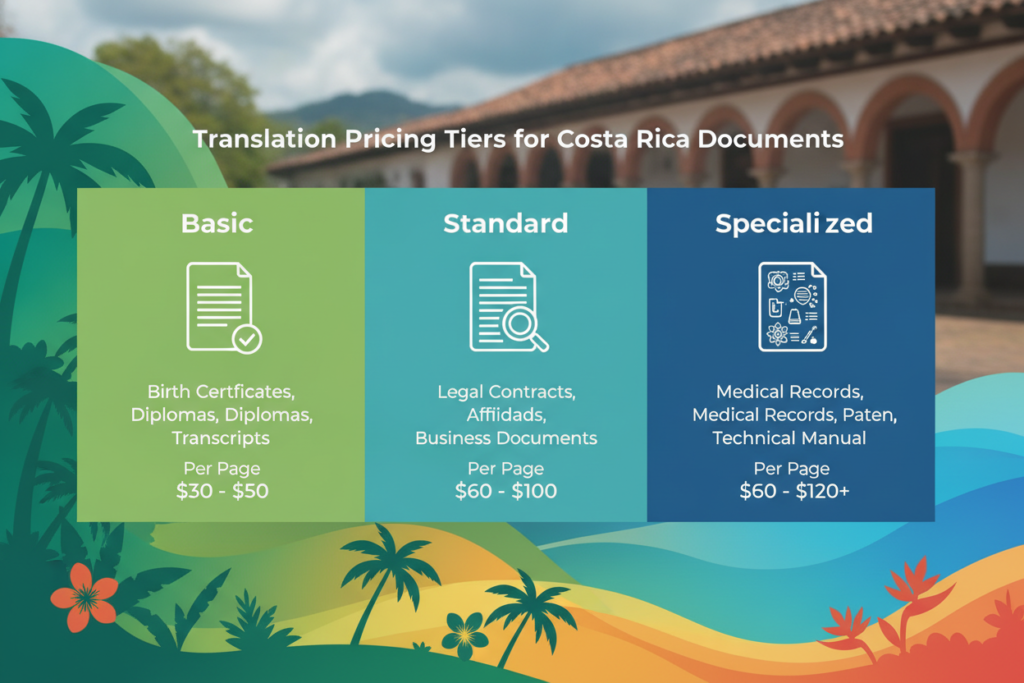
Transitioning to a new culture can be both exciting and overwhelming. One important aspect to consider is the pricing structure for translation services. We categorize your project into three tiers: basic, standard, and specialized. This ensures fair and transparent pricing for all your document needs.
A certified translation is essential for your residency application in Costa Rica. We guarantee that every document adheres to the strict standards required by local authorities. Our pricing structure accommodates various document types, providing you with a clear estimate before we begin.
We encourage you to request a quote early in your planning process. This will help you align your budget with the necessary translation services. By understanding the differences between these tiers, you can effectively manage your financial needs while ensuring your paperwork is ready for official submission.
How the Translation Process Works for Your Documents
Navigating the intricacies of moving abroad requires careful planning and preparation. One of the most critical steps is ensuring your documents are ready for translation.
Before you leave home, it’s essential to apostille every official document. This is a non-negotiable requirement for immigration to Costa Rica. Once you place your order, our team begins the translation process.
Typically, we complete translations within a turnaround time of 2-3 business days. We handle a wide variety of languages, ensuring your documents are accurately converted for official use.
Our streamlined order system allows you to track the progress of your translation. This provides peace of mind throughout the document preparation phase. Additionally, we offer secure delivery options for your completed materials, ensuring your certified documents arrive safely for your residency application submission.
Ensuring Quality and Compliance in Certified Translations
Understanding the requirements for certified translations is vital when applying for residency. These translations serve as legally binding instruments required by the DGME.
We provide high-quality certified translations that ensure your documents meet the standards set by immigration authorities in Costa Rica. Our team focuses on accuracy, reflecting every detail necessary for official acceptance.
These certified translations are crucial at various stages of your immigration journey. They assist from the initial filing to the final approval by relevant agencies.
By prioritizing compliance, we guarantee that your translated materials align with the rigorous standards expected by officials reviewing your residency file. We take pride in our professional services, guiding you through the complexities of the Costa Rica immigration system with confidence and accuracy.
Technical Considerations in Translation Services

Every detail matters when preparing for a significant life change, especially regarding your documents. Understanding the technical aspects of translation is crucial for ensuring accuracy and compliance.
Document complexity and the use of technical language can significantly affect the final price of our translation services. Here are some key points to consider:
- The complexity of your document, including technical language, directly influences the final cost.
- We carefully calculate the word count of every document to maintain transparency in billing.
- Whether translating personal records or intricate business documents, we apply the same precision to each project.
- Knowing how word count and document type affect costs helps you budget effectively for your move to Costa Rica.
- Our commitment to accuracy ensures that even the most technical documents meet high standards for official use.
Integrating Translation Costs into Your Residency Budget
Planning your budget for moving abroad is essential for a smooth transition. Proper budgeting for translation is a crucial step in the overall residency application process.
Integrating the cost of translation into your overall residency budget helps avoid surprises during your move to Costa Rica. We recommend planning your document preparation well in advance. This ensures that you have enough time for both translation and secure delivery.
Our team assists you in managing these costs by providing clear estimates. This allows you to focus on other aspects of your business or personal relocation. By accounting for these expenses early, you can streamline your application process and keep your residency project on track for success.
We provide reliable delivery of your documents, ensuring that your budget is well-spent on high-quality services that meet all official requirements.
translation-cost-costa-rica: Pricing Models and Service Process
Relocating to a new environment often brings excitement, but it also requires careful consideration. Understanding how translation costs are calculated is vital for your planning.
Our pricing model is transparent, allowing you to see how costs are determined based on the type of document or the word count. You can request a quote today by contacting our immigration expert, Johanna Alvarez. She will assist you in understanding your specific needs.
We offer certified translation services across various languages. Each document is managed with the expertise required for successful submission in this country. Our order process is efficient, ensuring timely delivery of your materials.
Whether you need a single page translated or a large volume of documents, our competitive rates reflect the high quality of our professional translator team.
Avoiding Common Pitfalls in Document Preparation and Translation
As you prepare to settle in a new land, it’s essential to navigate the documentation process with care. Many applicants encounter common pitfalls that can delay their residency applications.
One frequent mistake is failing to apostille your documents at home before sending them for translation. This step is crucial for your Costa Rican application.
We help you avoid these pitfalls by reviewing your materials to ensure they meet the strict standards required by the Costa Rican immigration authorities. Our guidance helps prevent delays that often occur when documents are improperly prepared or when the wrong type of translation is submitted.
By following our step-by-step system, you can ensure that your application is complete and accurate, saving you valuable time and effort. We prioritize the secure delivery of your translated documents, ensuring that your business or personal residency application proceeds without unnecessary setbacks in this country.
Ready to Start Your Residency Journey with Confident Translations?
Beginning your journey in a foreign land is thrilling, yet it requires careful navigation. With over 20 years of experience, we are here to assist you in starting your residency journey in Costa Rica with professional and accurate translation services.
Contact us today via WhatsApp at +506 8706 3888 or email info@crie.cr to discuss your specific residency needs and pricing with Johanna Alvarez.
Our team of expert translators is dedicated to delivering high-quality work for your official documents, whether for business or personal use. We handle a variety of languages and document types, ensuring your application is prepared with the expertise you expect from a trusted partner.
Let us help you finalize your paperwork so you can move forward with confidence, knowing your translation needs are in capable hands. For more information on translation costs, visit this link.
FAQ
What is the average cost of certified translations in Costa Rica?
The average cost for certified translations typically ranges from
FAQ
What is the average cost of certified translations in Costa Rica?
The average cost for certified translations typically ranges from $0.10 to $0.20 per word, depending on the document type and complexity.
How long does it take to get a translation done?
Turnaround times vary, but most standard translations can be completed within 3 to 5 business days. Rush services are available for urgent needs.
What types of documents require certified translation?
Documents such as birth certificates, marriage licenses, and legal contracts often require certified translation for official use.
Are there additional fees for technical documents?
Yes, technical documents may incur additional fees due to the specialized knowledge required for accurate translation.
How can we ensure the quality of our translations?
We employ experienced translators and conduct thorough quality checks to ensure that all translations meet the required standards.
What should we include when requesting a quote?
When requesting a quote, include the document type, word count, and any specific requirements, such as certification or urgency.
Do we need to prepare our documents before translation?
Yes, it’s essential to have your documents organized and complete, including any necessary apostille requirements for legal documents.
Can we translate documents for immigration purposes?
Absolutely, we specialize in translations for immigration, ensuring compliance with all legal requirements.
What are the different pricing tiers for translation services?
Our pricing tiers include basic, standard, and specialized services, each tailored to meet different needs and budgets.
How do we integrate translation costs into our residency budget?
We recommend allocating a portion of your budget specifically for translation services to avoid any unexpected expenses during your residency application process.
.10 to
FAQ
What is the average cost of certified translations in Costa Rica?
The average cost for certified translations typically ranges from $0.10 to $0.20 per word, depending on the document type and complexity.
How long does it take to get a translation done?
Turnaround times vary, but most standard translations can be completed within 3 to 5 business days. Rush services are available for urgent needs.
What types of documents require certified translation?
Documents such as birth certificates, marriage licenses, and legal contracts often require certified translation for official use.
Are there additional fees for technical documents?
Yes, technical documents may incur additional fees due to the specialized knowledge required for accurate translation.
How can we ensure the quality of our translations?
We employ experienced translators and conduct thorough quality checks to ensure that all translations meet the required standards.
What should we include when requesting a quote?
When requesting a quote, include the document type, word count, and any specific requirements, such as certification or urgency.
Do we need to prepare our documents before translation?
Yes, it’s essential to have your documents organized and complete, including any necessary apostille requirements for legal documents.
Can we translate documents for immigration purposes?
Absolutely, we specialize in translations for immigration, ensuring compliance with all legal requirements.
What are the different pricing tiers for translation services?
Our pricing tiers include basic, standard, and specialized services, each tailored to meet different needs and budgets.
How do we integrate translation costs into our residency budget?
We recommend allocating a portion of your budget specifically for translation services to avoid any unexpected expenses during your residency application process.
.20 per word, depending on the document type and complexity.
How long does it take to get a translation done?
Turnaround times vary, but most standard translations can be completed within 3 to 5 business days. Rush services are available for urgent needs.
What types of documents require certified translation?
Documents such as birth certificates, marriage licenses, and legal contracts often require certified translation for official use.
Are there additional fees for technical documents?
Yes, technical documents may incur additional fees due to the specialized knowledge required for accurate translation.
How can we ensure the quality of our translations?
We employ experienced translators and conduct thorough quality checks to ensure that all translations meet the required standards.
What should we include when requesting a quote?
When requesting a quote, include the document type, word count, and any specific requirements, such as certification or urgency.
Do we need to prepare our documents before translation?
Yes, it’s essential to have your documents organized and complete, including any necessary apostille requirements for legal documents.
Can we translate documents for immigration purposes?
Absolutely, we specialize in translations for immigration, ensuring compliance with all legal requirements.
What are the different pricing tiers for translation services?
Our pricing tiers include basic, standard, and specialized services, each tailored to meet different needs and budgets.
How do we integrate translation costs into our residency budget?
We recommend allocating a portion of your budget specifically for translation services to avoid any unexpected expenses during your residency application process.